Bluerides – Blue Rides - Book Liveaboards worldwideOCEAN ADVENTURES
River CruisesRiversNature & WildlifeOur Promise
River CruisesRiversNature & WildlifeOur PromiseSign In

River destinations

  • River destinations
  • Amazon
  • Danube
  • Rhine
  • Mekong
  • Nile

Ships & departures

  • River Cruise Search
  • Deals

Nature & Wildlife

  • Nature & Wildlife

Travel support

  • Our Promise
  • Contact

Contact

Get in Touch

Get in touch anytime, we're happy to help you find the right trip or sort out any question.

EmailWrite us, we usually reply within a few hours.
contact@bluerides.com
WhatsAppChat with us on WhatsApp, Mon–Fri 10:00–16:00 (CET).
Start WhatsApp Chat
PhoneCall us, we're happy to help.
Free call, Mon–Fri 10 AM – 8 PM (CET).
Europe+49 800 1144 990USA+1 888 557 7735UK+44 800 707 4152Australia+61 2 8599 6113Canada+1 888 557 7735
Which river journey is yours?Answer 8 quick questions and find the river cruise that fits you.
8 questions, 1 minute·Plus Gift
Secure Payment MethodsYour payments are fully secured with AES-256 encryption.
Powered byStripeWiseAMEXPayGoogle PaySEPABank
Imprint·Terms & Conditions·Privacy Policy·About·Contact·Liability Waiver·Affiliate Program·Cruise·
Visit us here

© 2026 Blue Rides. All rights reserved.·

Bluerides – Blue Rides - Book Liveaboards worldwideOCEAN ADVENTURES
River CruisesRiversNature & WildlifeOur Promise
River CruisesRiversNature & WildlifeOur PromiseSign In
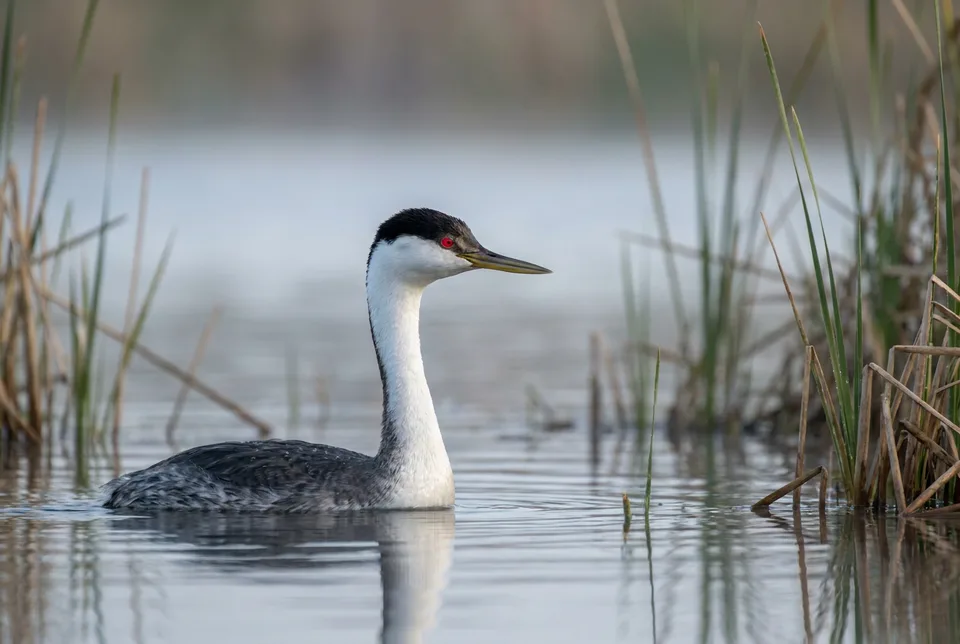
Western Grebe in wetland habitat — Columbia, River Cruises wildlife
Home›River Cruises›River Wildlife›Western Grebe

Western GrebeAechmophorus occidentalisWhere and when to see them

Previous speciesWattled JacanaNext speciesWestern Green Lizard

Western Grebe at a glance

Western Grebes are specialised diving waterbirds with long necks and pointed bills. Their apparently quiet surface presence hides an active underwater pursuit of fish. Cornell describes nesting on large freshwater lakes and marshes, followed by movements that can take many birds to coastal waters; smaller numbers remain inland in winter. The Columbia association here is more restricted than that continental pattern: it concerns Umatilla National Wildlife Refuge and the John Day pool around Boardman–Irrigon. A regional checklist confirms occurrence but does not demonstrate continuous occupation of that river reach. Species reference: https://www.allaboutbirds.org/guide/Western_Grebe/lifehistory
Behaviour & reproduction

Size
Species-specific length not verified.
Weight
Species-specific weight not verified.
Lifespan
Species-specific lifespan not verified.
Status
Formal global conservation assessment not verified in the retrieved source.

Feeding birds dive and swim with their wings mostly closed, pursuing prey below the surface. During nesting, both sexes help construct a vegetation platform anchored to plants or a submerged snag. Cornell also describes a post-breeding wing moult during which birds are temporarily flightless. These behaviours explain why shelter and unobstructed access to water matter, even when a grebe seems capable of escaping simply by diving. A checklist entry cannot tell visitors whether birds at a particular Columbia stop are feeding, moulting or merely passing through.

Top wildlife locations

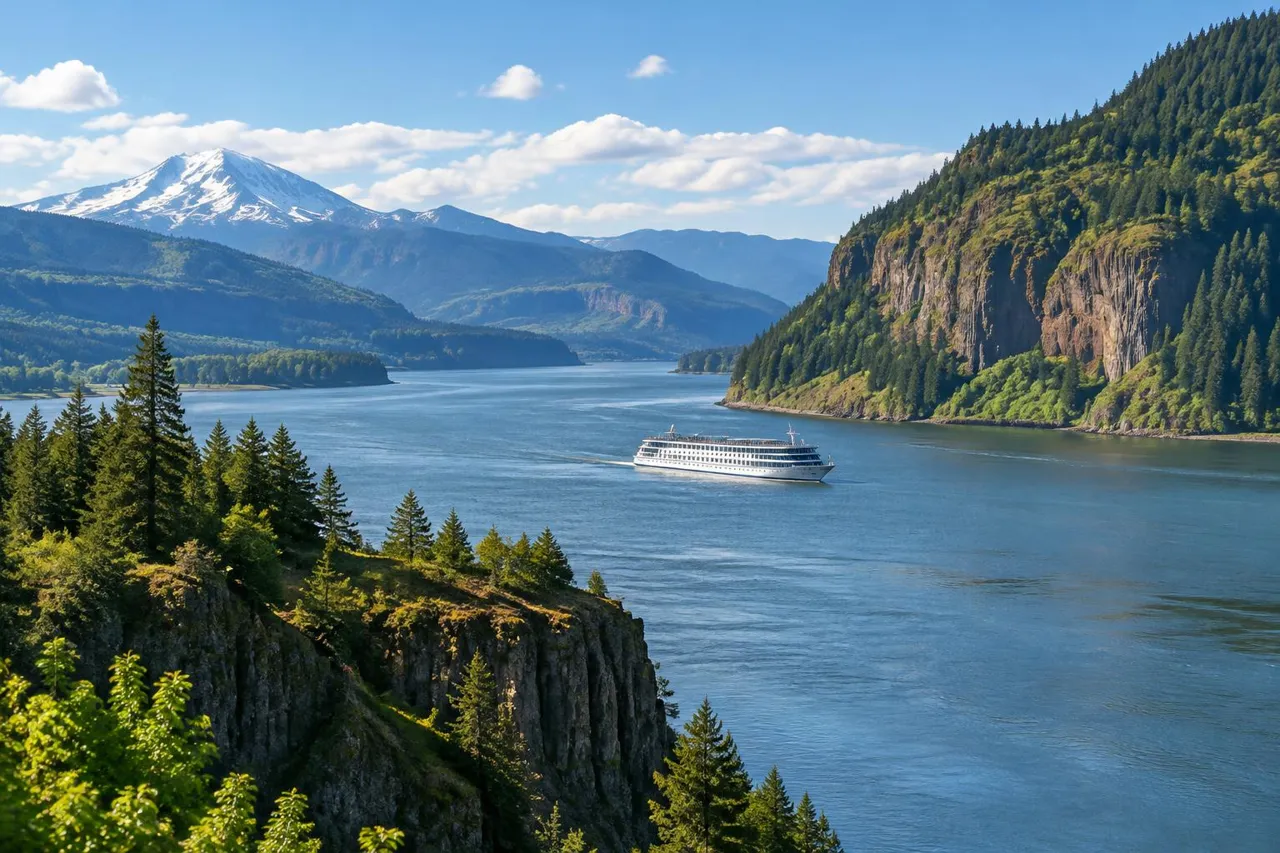
Columbia river landscape — River Cruises wildlife habitat

Columbia

Columbia — Umatilla NWR / John Day pool, Boardman–Irrigon River/slough scanning; refuge shore excursion improves views. Checklist confirms occurrence, not year-round presence; waterfowl mainly migration/winter, terns and swallows mainly warm season.
Explore river cruises

Destinations describe the species' habitat, not guaranteed cruise stops. Some animals require an optional inland excursion or are found in restricted reserves.

Fun facts about the Western Grebe

  • It catches most food underwater.
  • Fish dominate its diet.
  • Its wings are mostly closed during underwater pursuit.
  • Both sexes build the nest.
  • Nests are vegetation platforms anchored in place.
  • Many birds move towards coastal waters outside breeding.
  • Wing moult includes a flightless period.
  • Clark’s Grebe is an important identification comparison.

Best time to see the Western Grebe

No recurring numerical calendar for Western Grebes at Umatilla Refuge or the Boardman–Irrigon portion of John Day pool was verified. The regional checklist establishes presence, not year-round viewing. Cornell’s broad account of coastal winter movement cannot be used to eliminate or assign individual months on an inland reservoir. Months remain empty. Refuge staff and recent local reports are useful for planning a visit, especially because birds may be distant or concentrated away from public access even when present somewhere in the pool.

Western Grebe: season matrix by destination

Highlighted months reflect the stated local evidence, not guaranteed encounters. Neutral months mean no verified monthly viewing window, not absence. Observation records and recommended viewing windows are distinct.

Columbia

A recurring numerical observation calendar for this exact reach was not verified. The cited source supports occurrence only; survey, breeding and individual trip dates are not converted into months.

JanFebMarAprMayJunJulAugSepOctNovDec
Explore river cruises

Where the Western Grebe lives

Large freshwater lakes and marshes edged by reeds and rushes are important nesting habitats. Sheltered margins reduce wave exposure around floating nests, while more open water provides room for feeding. Beyond breeding sites, Western Grebes use coastal bays, estuaries and some inland lakes and rivers. For the registered Columbia location, examine the reservoir and slough landscape accessible through authorised refuge viewpoints. The presence of emergent vegetation is not itself evidence of an occupied nesting colony; no local colony location was verified for this profile.

What the Western Grebe eats

Fish make up most of the diet described by Cornell. Additional prey includes crustaceans, salamanders, aquatic insects and other small animals. A hunting grebe may seize prey between its mandibles or stab with a rapid bill movement, and some items are taken near the bottom. Those are species-level observations rather than a John Day pool prey survey. Avoid inferring feeding success solely from dive frequency: many captures occur underwater, and a bird may surface without showing an identifiable item.

Species at a glance

Common name
Western Grebe
Scientific name
Aechmophorus occidentalis
Animal group
Birds
Size
Species-specific length not verified.
Weight
Species-specific weight not verified.
Lifespan
Species-specific lifespan not verified.
Status
Formal global conservation assessment not verified in the retrieved source.
Identification
The Western Grebe has a long slender neck, contrasting black-and-white plumage, a red eye and a long pointed bill. Separation from Clark’s Grebe depends particularly on the face: Western usually has dark plumage surrounding the eye, while Clark’s typically has more white around it. Bill colour also helps when seen clearly. Distance, light and individual variation can obscure these distinctions. A black-and-white grebe on the Columbia should remain unresolved if the face and bill cannot be assessed adequately.

Western Grebe: frequently asked questions

Where can I see the Western Grebe?
Columbia. Use binoculars first, then a telescope if a bird is well offshore. Watch a diving bird long enough to check where it resurfaces and obtain a side view of the head. A shore excursion can improve the angle compared with scanning from a moving ship. Keep to refuge access routes and stay away from floating vegetation platforms or groups that repeatedly dive in response to approach. Do not drive a boat toward a bird merely to photograph the eye pattern.
When is the best time to see the Western Grebe?
No recurring numerical calendar for Western Grebes at Umatilla Refuge or the Boardman–Irrigon portion of John Day pool was verified. The regional checklist establishes presence, not year-round viewing. Cornell’s broad account of coastal winter movement cannot be used to eliminate or assign individual months on an inland reservoir. Months remain empty. Refuge staff and recent local reports are useful for planning a visit, especially because birds may be distant or concentrated away from public access even when present somewhere in the pool.
How big does the Western Grebe get?
Species-specific length not verified.. Adult weight: Species-specific weight not verified.. Size varies with age, sex and population.
How should I behave around the Western Grebe?
Use binoculars first, then a telescope if a bird is well offshore. Watch a diving bird long enough to check where it resurfaces and obtain a side view of the head. A shore excursion can improve the angle compared with scanning from a moving ship. Keep to refuge access routes and stay away from floating vegetation platforms or groups that repeatedly dive in response to approach. Do not drive a boat toward a bird merely to photograph the eye pattern.
What does the Western Grebe eat?
Fish make up most of the diet described by Cornell. Additional prey includes crustaceans, salamanders, aquatic insects and other small animals. A hunting grebe may seize prey between its mandibles or stab with a rapid bill movement, and some items are taken near the bottom. Those are species-level observations rather than a John Day pool prey survey. Avoid inferring feeding success solely from dive frequency: many captures occur underwater, and a bird may surface without showing an identifiable item.
Are wildlife sightings guaranteed on a river cruise?
No. Animals move freely and routes, weather, access restrictions and local conditions influence every outing. Confirm the actual itinerary and shore program before booking.

Compare wildlife in the same destinations

Explore other birds recorded in these destinations. Similar surroundings do not mean the animals share the same habits or viewing season.

Species comparison by animal group and destination
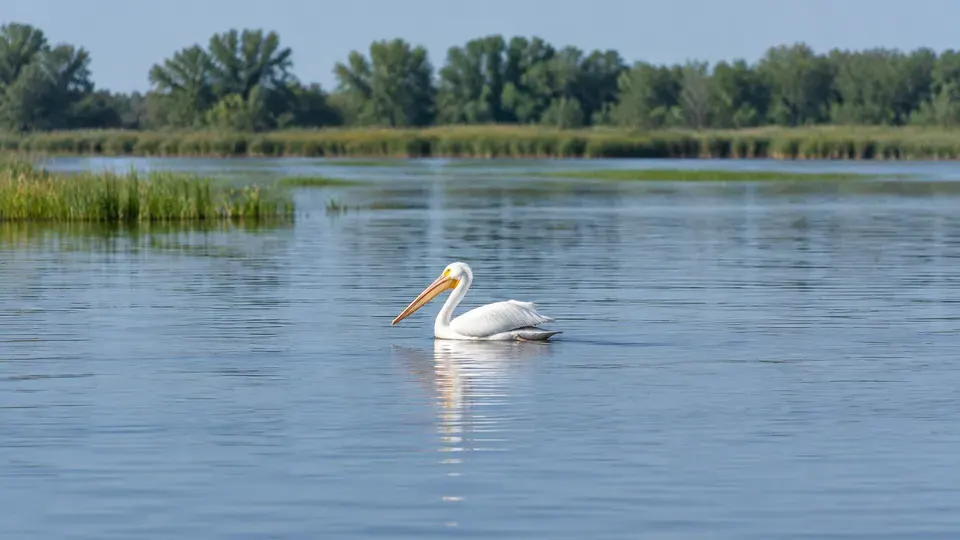
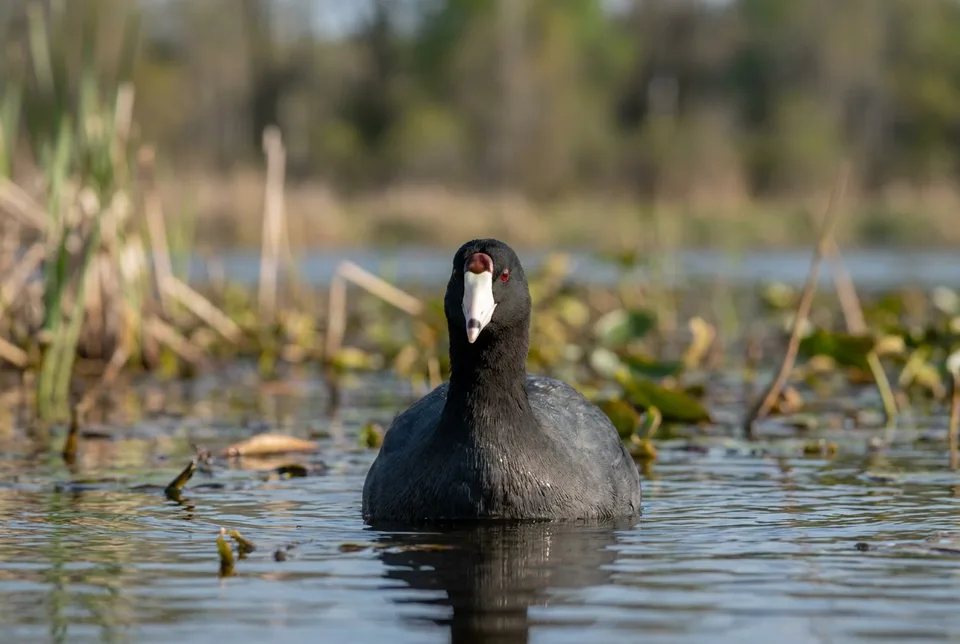
Western Grebe in wetland habitat — Columbia, River Cruises wildlifeWestern GrebeAmerican Coot in wetland habitat — Columbia, River Cruises wildlifeAmerican CootAmerican white pelican in wetland habitat — Columbia, Mississippi, River Cruises wildlifeAmerican White Pelican
Animal groupBirdsAnimal groupBirdsAnimal groupBirds
DestinationsColumbiaDestinationsColumbiaDestinationsColumbia, Mississippi
Scientific name
Aechmophorus occidentalis
Scientific name
Scientific name
Previous speciesWattled JacanaNext speciesWestern Green Lizard
All river wildlife
On this page
  • 01About
  • 02Behaviour & reproduction
  • 03Top wildlife locations
  • 04Fun facts
  • 05Best season
  • 06Season matrix by destination
  • 07Habitat
  • 08Diet
  • 09Species at a glance
  • 10Questions & answers
  • 11Compare

Find your river cruise

Plan your trip

Find your next river journey

Compare destinations, shore programs and dates with the animals and habitats you would love to see.

  • Daily shore excursions
  • Responsible wildlife watching
  • Boutique river ships
Explore river cruises