Bluerides – Blue Rides - Book Liveaboards worldwideOCEAN ADVENTURES
River CruisesRiversNature & WildlifeOur Promise
River CruisesRiversNature & WildlifeOur PromiseSign In

River destinations

  • River destinations
  • Amazon
  • Danube
  • Rhine
  • Mekong
  • Nile

Ships & departures

  • River Cruise Search
  • Deals

Nature & Wildlife

  • Nature & Wildlife

Travel support

  • Our Promise
  • Contact

Contact

Get in Touch

Get in touch anytime, we're happy to help you find the right trip or sort out any question.

EmailWrite us, we usually reply within a few hours.
contact@bluerides.com
WhatsAppChat with us on WhatsApp, Mon–Fri 10:00–16:00 (CET).
Start WhatsApp Chat
PhoneCall us, we're happy to help.
Free call, Mon–Fri 10 AM – 8 PM (CET).
Europe+49 800 1144 990USA+1 888 557 7735UK+44 800 707 4152Australia+61 2 8599 6113Canada+1 888 557 7735
Which river journey is yours?Answer 8 quick questions and find the river cruise that fits you.
8 questions, 1 minute·Plus Gift
Secure Payment MethodsYour payments are fully secured with AES-256 encryption.
Powered byStripeWiseAMEXPayGoogle PaySEPABank
Imprint·Terms & Conditions·Privacy Policy·About·Contact·Liability Waiver·Affiliate Program·Cruise·Blog·
Visit us here

© 2026 Blue Rides. All rights reserved.

Bluerides – Blue Rides - Book Liveaboards worldwideOCEAN ADVENTURES
River CruisesRiversNature & WildlifeOur Promise
River CruisesRiversNature & WildlifeOur PromiseSign In
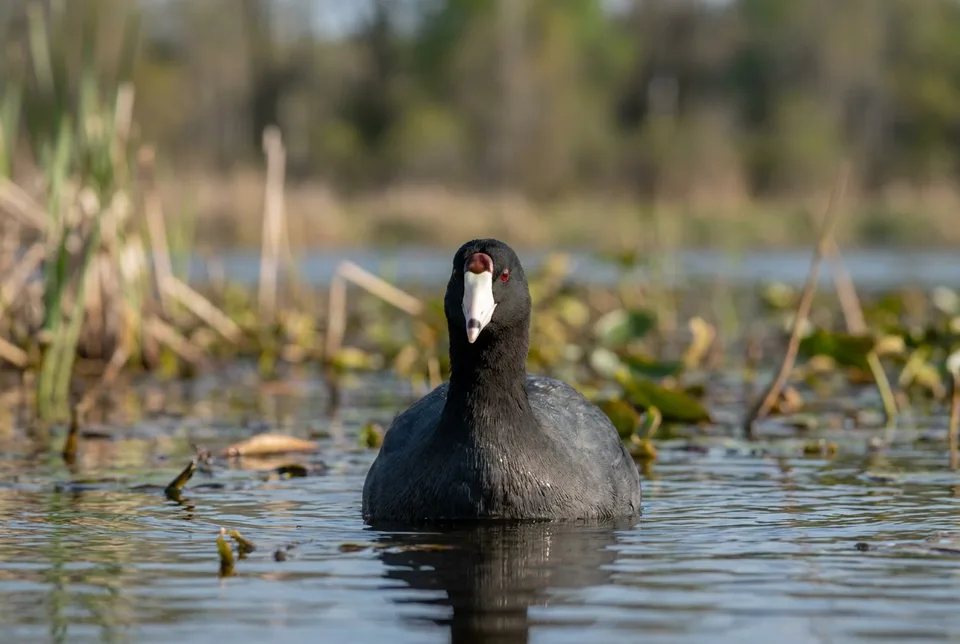
American Coot in wetland habitat — Columbia, River Cruises wildlifeAI-modified
Home›River Cruises›River Wildlife›American Coot

American CootFulica americanaWhere and when to see them

Previous speciesAmazon River DolphinNext speciesAmerican White Pelican

American Coot at a glance

The American Coot is a dark waterbird that is frequently mistaken for a duck, although it belongs to the rail family. Its pale bill, compact head and unusual feet become conspicuous when it approaches a bank or walks onto land. Instead of the continuous webbing of a duck's foot, each long toe carries broad lobes that assist swimming and support movement over soft ground. The River registry places it on the Columbia at Umatilla National Wildlife Refuge and the John Day pool, around Boardman and Irrigon. The registered checklist establishes occurrence at the refuge, not a year-round viewing promise along the whole Columbia. Cornell describes a bird capable of using many freshwater wetlands, from marshes to lake edges and artificial ponds. For a cruise visitor, sheltered sloughs and vegetated margins are therefore more informative places to search than a featureless expanse of deep navigation water.
Behaviour & reproduction

Size
About 38 cm (15 in) long; wingspan 58–71 cm (23–28 in)
Weight
Up to almost 0.9 kg (2.0 lb)
Lifespan
Average 9 years (up to 22 years)
Status
Least Concern

American Coots combine surface swimming, diving and surprisingly effective walking on land. The lobes on their toes assist propulsion in water and fold as the feet move, allowing a different gait from the familiar duck waddle. Outside the breeding period, coots can gather in substantial groups and mingle with ducks, making a careful scan of a mixed waterbird flock worthwhile. Breeding requires a different set of behaviours and habitat conditions: Cornell describes floating nests anchored among upright aquatic stems. Dense vegetation provides support and concealment, while standing water beneath the plants forms part of the nesting environment. Nest material is woven into a shallow basket rather than placed as a simple scrape on dry ground. These general species traits do not establish breeding at every Umatilla viewing site. Watch how birds move between open water and plant cover, but avoid approaching reed margins to search for nests or young.

Top wildlife locations

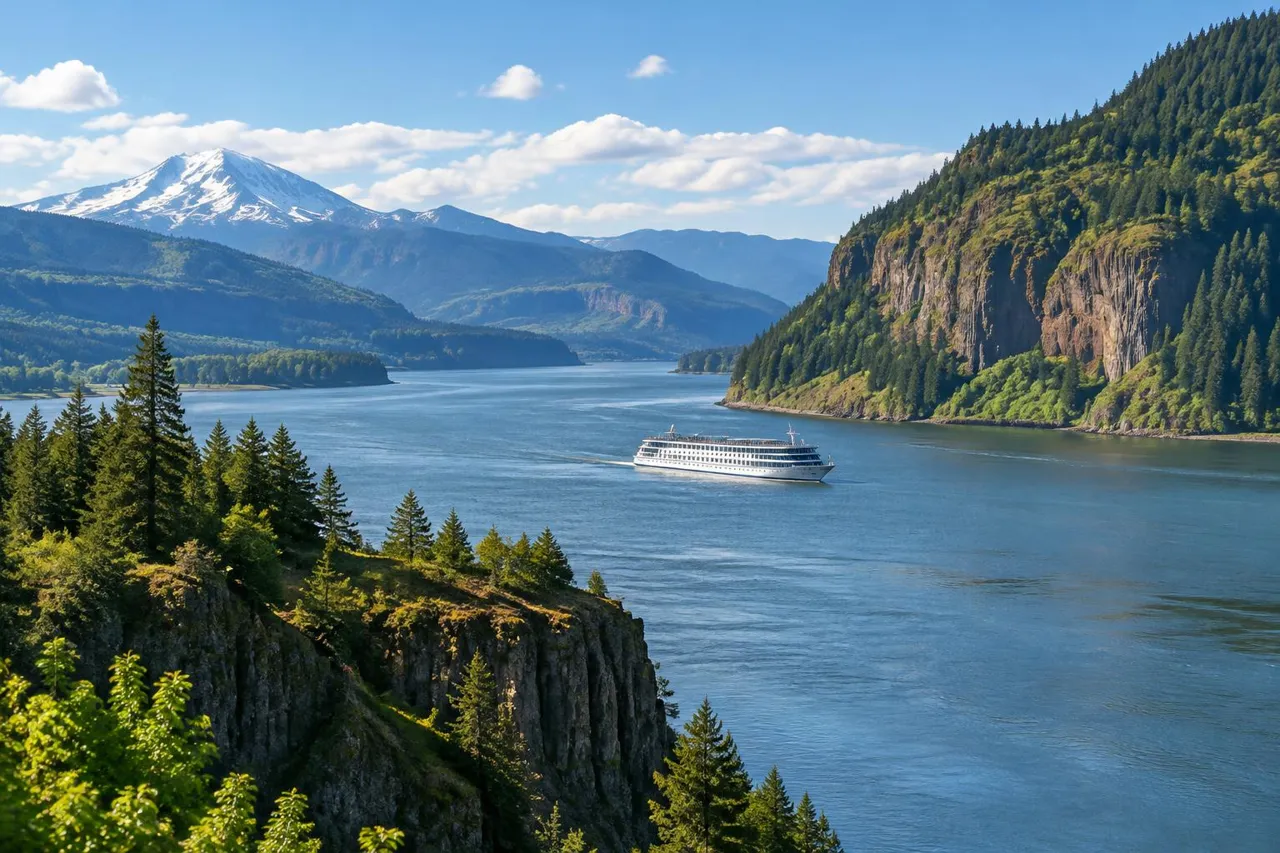
Columbia river landscape — River Cruises wildlife habitatAI-modified

Columbia

Umatilla National Wildlife Refuge / John Day pool, Boardman–Irrigon. Refuge overlooks or a permitted shore excursion improve habitat coverage.
Explore river cruises

Destinations describe the species' habitat, not guaranteed cruise stops. Some animals require an optional inland excursion or are found in restricted reserves.

Fun facts about the American Coot

  • It belongs to the rail family, not the duck family.
  • Each toe has a separate swimming lobe.
  • The toe lobes also help support movement on soft ground.
  • It can dive for food.
  • It also feeds while walking on land.
  • Plants dominate its diet, but animal food is also taken.
  • Its nest is normally a floating structure anchored to vegetation.
  • Nonbreeding groups can mix with ducks.
  • The registered Columbia association is Umatilla and the John Day pool.

Best time to see the American Coot

The registered Umatilla checklist supports American Coot occurrence but does not, in the evidence verified here, establish a species-specific monthly schedule. U.S. Fish and Wildlife Service material confirms that the refuge supports wintering waterfowl and protects nesting birds, yet those broad statements cannot be converted into coot months without additional species-level evidence. The location calendar is therefore empty. Cornell's account describes large nonbreeding flocks, which suggests the kind of behaviour visitors might seek, not a numerical forecast for this Columbia reach. Local water levels, vegetation and the distribution of feeding birds can change which viewing point is productive. Ask refuge staff or a local guide about recent coot observations and current access before choosing an excursion. A cruise operating in a generally favourable waterbird period may still pass unsuitable habitat. Treat the checklist as a reason to look carefully, while leaving the exact local season unresolved rather than borrowing dates from another refuge.

American Coot: season matrix by destination

Highlighted months reflect the stated local evidence, not guaranteed encounters. Neutral months mean no verified monthly viewing window, not absence. Observation records and recommended viewing windows are distinct.

Columbia

The registered checklist establishes occurrence. Refuge-wide winter-waterfowl information is not a species-specific coot calendar, so numerical local months remain unverified.

JanFebMarAprMayJunJulAugSepOctNovDec
Explore river cruises

Where the American Coot lives

Cornell identifies two recurring features of American Coot breeding habitat: substantial emergent vegetation along part of the shoreline and standing water within those plants. Across its range the species uses marshes, swamps, ponds and the edges of larger lakes, with seasonal water availability affecting which wetlands are suitable. At Umatilla, the U.S. Fish and Wildlife Service describes a Columbia River refuge containing waters, islands, shores, uplands and both natural and managed wetlands. That variety explains why a refuge excursion can provide more useful coot habitat than a brief scan from a passing ship. The registered reach is the John Day pool around Boardman–Irrigon; it should not be extended automatically to other Columbia sections. Vegetation structure, water depth and disturbance vary between sloughs and impoundments. Observe from designated public areas, recognising that closed islands and protected margins are part of the habitat system rather than missed opportunities for closer access.

What the American Coot eats

American Coots eat mainly plants, but they are not strict vegetarians. Cornell lists aquatic foods including algae, duckweed, sedges, waterlilies, cattails, water milfoil and other submerged or emergent vegetation. On land they may take terrestrial plants, grains and leaves. Animal foods include insects, crustaceans, snails and small vertebrates such as tadpoles or salamanders. This flexible diet helps explain why coots can use a wide range of wetlands, although food availability differs among sites and seasons. A bird may feed at the surface, dive for submerged material or leave the water to graze. Watching these methods can be more informative than trying to identify every mouthful. No Umatilla-specific dietary percentages were verified, so the general species account should not be presented as a measured local menu. Do not offer bread or other food: natural feeding behaviour provides the useful ecological observation without attracting birds towards people or boats.

Species at a glance

Common name
American Coot
Scientific name
Fulica americana
Animal group
Birds
Size
About 38 cm (15 in) long; wingspan 58–71 cm (23–28 in)
Weight
Up to almost 0.9 kg (2.0 lb)
Lifespan
Average 9 years (up to 22 years)
Status
Least Concern
Identification
An American Coot is a compact, dark waterbird with a conspicuous pale bill and forehead area, rather than a duck-shaped bird with a broad flattened bill. Cornell's overview emphasises the small head, dark body and yellow-green legs. The feet are especially distinctive when visible: long toes carry separate broad lobes instead of a continuous web. In a mixed flock, look at bill shape and head profile before relying on overall colour, since lighting can make several unrelated waterbirds appear nearly black. Swimming alone does not make a bird a duck, and a coot's diving behaviour is likewise not sufficient for identification. On land its longer-legged appearance can be revealing. Distant birds may hide the most useful features, so wait for a turn towards better light. A pale bill against a dark head is a strong starting point, but the full combination of structure, feet and plumage makes the identification more secure.

American Coot: frequently asked questions

Where can I see the American Coot?
Columbia. Scan sheltered water and vegetation edges with binoculars, separating the dark coots from ducks in any mixed flock. The bright bill may be the first visible feature, especially when the body blends into dark water or shaded reeds. Watch for a bird approaching land, because the lobed toes and comparatively upright walking action can clarify what you are seeing. A spotting scope from a designated refuge viewpoint is preferable to pushing closer through marsh vegetation. At Umatilla, follow public-access rules and do not land on closed islands; the refuge identifies island protection as important for nesting birds and wintering waterfowl. The registered reach is around Boardman and Irrigon in the John Day pool, not an assurance of sightings throughout the Columbia. If birds repeatedly swim away, stop approaching. Allowing the flock to resume feeding gives a better opportunity to study dives, grazing and interactions without changing its behaviour.
When is the best time to see the American Coot?
The registered Umatilla checklist supports American Coot occurrence but does not, in the evidence verified here, establish a species-specific monthly schedule. U.S. Fish and Wildlife Service material confirms that the refuge supports wintering waterfowl and protects nesting birds, yet those broad statements cannot be converted into coot months without additional species-level evidence. The location calendar is therefore empty. Cornell's account describes large nonbreeding flocks, which suggests the kind of behaviour visitors might seek, not a numerical forecast for this Columbia reach. Local water levels, vegetation and the distribution of feeding birds can change which viewing point is productive. Ask refuge staff or a local guide about recent coot observations and current access before choosing an excursion. A cruise operating in a generally favourable waterbird period may still pass unsuitable habitat. Treat the checklist as a reason to look carefully, while leaving the exact local season unresolved rather than borrowing dates from another refuge.
How big does the American Coot get?
About 38 cm (15 in) long; wingspan 58–71 cm (23–28 in). Adult weight: Up to almost 0.9 kg (2.0 lb). Size varies with age, sex and population.
How should I behave around the American Coot?
Scan sheltered water and vegetation edges with binoculars, separating the dark coots from ducks in any mixed flock. The bright bill may be the first visible feature, especially when the body blends into dark water or shaded reeds. Watch for a bird approaching land, because the lobed toes and comparatively upright walking action can clarify what you are seeing. A spotting scope from a designated refuge viewpoint is preferable to pushing closer through marsh vegetation. At Umatilla, follow public-access rules and do not land on closed islands; the refuge identifies island protection as important for nesting birds and wintering waterfowl. The registered reach is around Boardman and Irrigon in the John Day pool, not an assurance of sightings throughout the Columbia. If birds repeatedly swim away, stop approaching. Allowing the flock to resume feeding gives a better opportunity to study dives, grazing and interactions without changing its behaviour.
What does the American Coot eat?
American Coots eat mainly plants, but they are not strict vegetarians. Cornell lists aquatic foods including algae, duckweed, sedges, waterlilies, cattails, water milfoil and other submerged or emergent vegetation. On land they may take terrestrial plants, grains and leaves. Animal foods include insects, crustaceans, snails and small vertebrates such as tadpoles or salamanders. This flexible diet helps explain why coots can use a wide range of wetlands, although food availability differs among sites and seasons. A bird may feed at the surface, dive for submerged material or leave the water to graze. Watching these methods can be more informative than trying to identify every mouthful. No Umatilla-specific dietary percentages were verified, so the general species account should not be presented as a measured local menu. Do not offer bread or other food: natural feeding behaviour provides the useful ecological observation without attracting birds towards people or boats.
Are wildlife sightings guaranteed on a river cruise?
No. Animals move freely and routes, weather, access restrictions and local conditions influence every outing. Confirm the actual itinerary and shore program before booking.

Compare wildlife in the same destinations

Explore other birds recorded in these destinations. Similar surroundings do not mean the animals share the same habits or viewing season.

Species comparison by animal group and destination
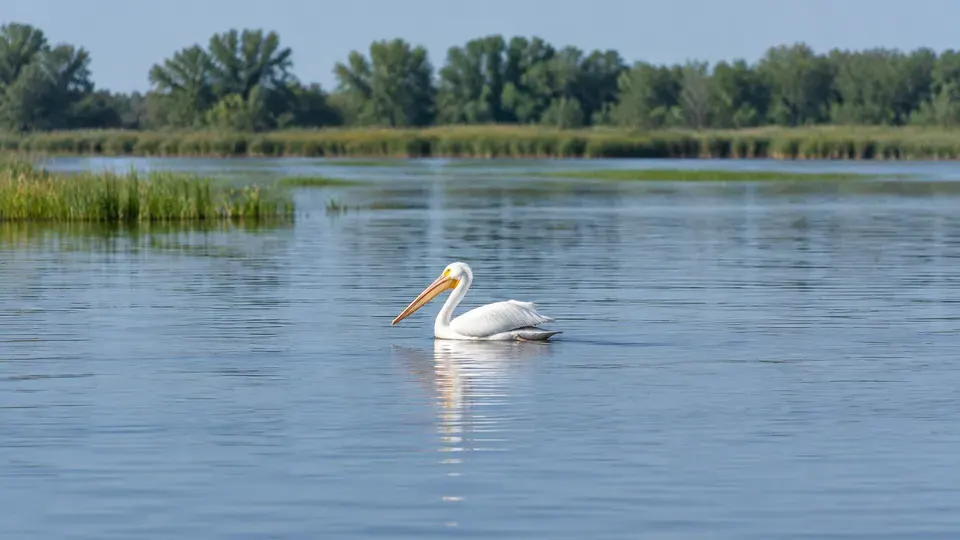
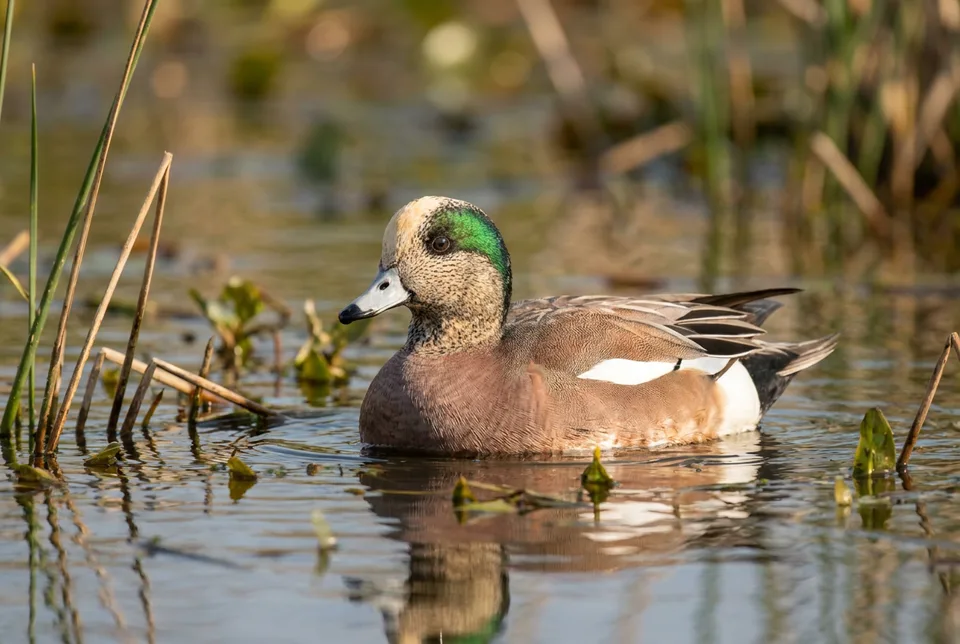
American Coot in wetland habitat — Columbia, River Cruises wildlifeAI-modifiedAmerican CootAmerican white pelican in wetland habitat — Columbia, Mississippi, River Cruises wildlifeAI-modifiedAmerican White PelicanAmerican Wigeon in wetland habitat — Columbia, Mississippi, River Cruises wildlifeAI-modifiedAmerican Wigeon
Animal groupBirdsAnimal groupBirdsAnimal groupBirds
DestinationsColumbiaDestinationsColumbia, MississippiDestinationsColumbia, Mississippi
Scientific name
Fulica americana
Scientific name
Scientific name
Previous speciesAmazon River DolphinNext speciesAmerican White Pelican
All river wildlife
On this page
  • 01About
  • 02Behaviour & reproduction
  • 03Top wildlife locations
  • 04Fun facts
  • 05Best season
  • 06Season matrix by destination
  • 07Habitat
  • 08Diet
  • 09Species at a glance
  • 10Questions & answers
  • 11Compare

Find your river cruise

AI-modified
Plan your trip

Find your next river journey

Compare destinations, shore programs and dates with the animals and habitats you would love to see.

  • Daily shore excursions
  • Responsible wildlife watching
  • Boutique river ships
Explore river cruises