Bluerides – Blue Rides - Book Liveaboards worldwideOCEAN ADVENTURES
River CruisesRiversNature & WildlifeOur Promise
River CruisesRiversNature & WildlifeOur PromiseSign In

River destinations

  • River destinations
  • Amazon
  • Danube
  • Rhine
  • Mekong
  • Nile

Ships & departures

  • River Cruise Search
  • Deals

Nature & Wildlife

  • Nature & Wildlife

Travel support

  • Our Promise
  • Contact

Contact

Get in Touch

Get in touch anytime, we're happy to help you find the right trip or sort out any question.

EmailWrite us, we usually reply within a few hours.
contact@bluerides.com
WhatsAppChat with us on WhatsApp, Mon–Fri 10:00–16:00 (CET).
Start WhatsApp Chat
PhoneCall us, we're happy to help.
Free call, Mon–Fri 10 AM – 8 PM (CET).
Europe+49 800 1144 990USA+1 888 557 7735UK+44 800 707 4152Australia+61 2 8599 6113Canada+1 888 557 7735
Which river journey is yours?Answer 8 quick questions and find the river cruise that fits you.
8 questions, 1 minute·Plus Gift
Secure Payment MethodsYour payments are fully secured with AES-256 encryption.
Powered byStripeWiseAMEXPayGoogle PaySEPABank
Imprint·Terms & Conditions·Privacy Policy·About·Contact·Liability Waiver·Affiliate Program·Cruise·Blog·
Visit us here

© 2026 Blue Rides. All rights reserved.

Bluerides – Blue Rides - Book Liveaboards worldwideOCEAN ADVENTURES
River CruisesRiversNature & WildlifeOur Promise
River CruisesRiversNature & WildlifeOur PromiseSign In
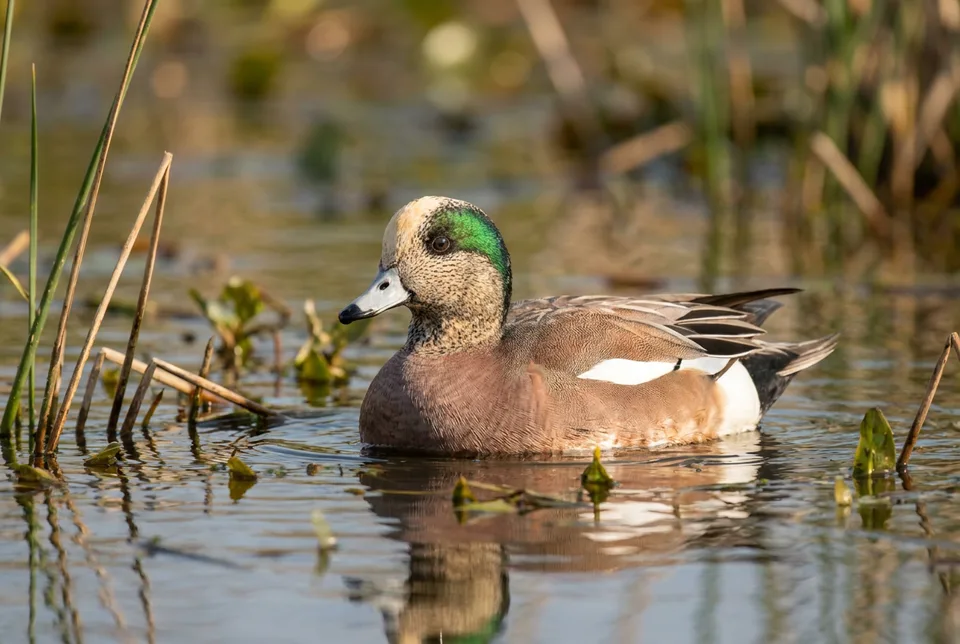
American Wigeon in wetland habitat — Columbia, Mississippi, River Cruises wildlifeAI-modified
Home›River Cruises›River Wildlife›American Wigeon

American WigeonMareca americanaWhere and when to see them

Previous speciesAmerican White PelicanNext speciesAnhinga

American Wigeon at a glance

The American Wigeon is a dabbling duck with a short bill well suited to cropping vegetation from water and land. Its River registry associations are the Columbia at Umatilla National Wildlife Refuge and the Upper Mississippi River National Wildlife and Fish Refuge. These are distinct local settings, and the available seasonal evidence is stronger for the Upper Mississippi than for Umatilla. Cornell describes a species that uses wetlands, rivers and lakes but also grazes in fields and other grassy places. This flexibility makes the edges of a wetland landscape important, not just its open-water centre. A feeding flock may include several duck species, so useful observation often begins with comparing head patterns, bill proportions and behaviour. The species' broad movements across North America should not be mistaken for year-round presence at every registered stop. Each river association needs to be interpreted through its own refuge habitat and original local evidence.
Behaviour & reproduction

Size
42–59 cm (16.5–23.2 in) long
Weight
512–1,330 g (18.1–46.9 oz)
Lifespan
Up to 21 years in the wild (record)
Status
Least Concern

American Wigeons feed by nibbling at the water surface, tipping forward to reach submerged vegetation and grazing on land. These different techniques can occur within one flock as birds move between a wetland and adjacent grassy ground. Cornell describes females choosing nest sites on dry ground, often some distance from water, with vegetation providing concealment. The nest is a shallow depression lined with plant material and down, and additional material may be added during laying and incubation. This differs from the over-water platforms used by some other wetland birds. Outside breeding, wigeons use a wider range of feeding and resting sites, including impoundments, estuaries and flooded fields. The Upper Mississippi refuge describes autumn groups in backwater areas, making flock scanning particularly relevant there. General breeding biology does not establish nesting at either registered cruise-viewing site, and observers should not enter tall grass or shoreline cover to investigate a suspected nest.

Top wildlife locations

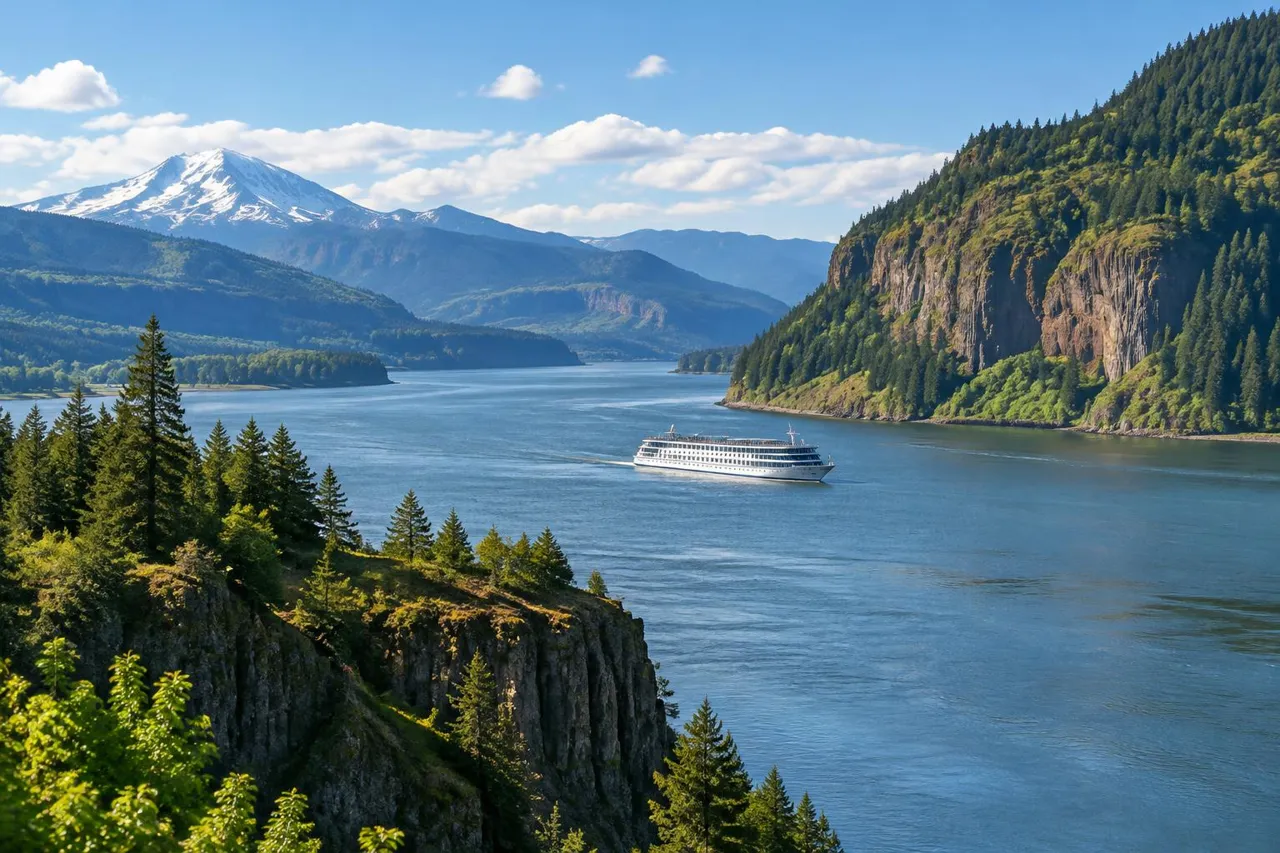
Columbia river landscape — River Cruises wildlife habitatAI-modified

Columbia

Umatilla National Wildlife Refuge / John Day pool, Boardman–Irrigon; registered checklist occurrence.
Explore river cruises
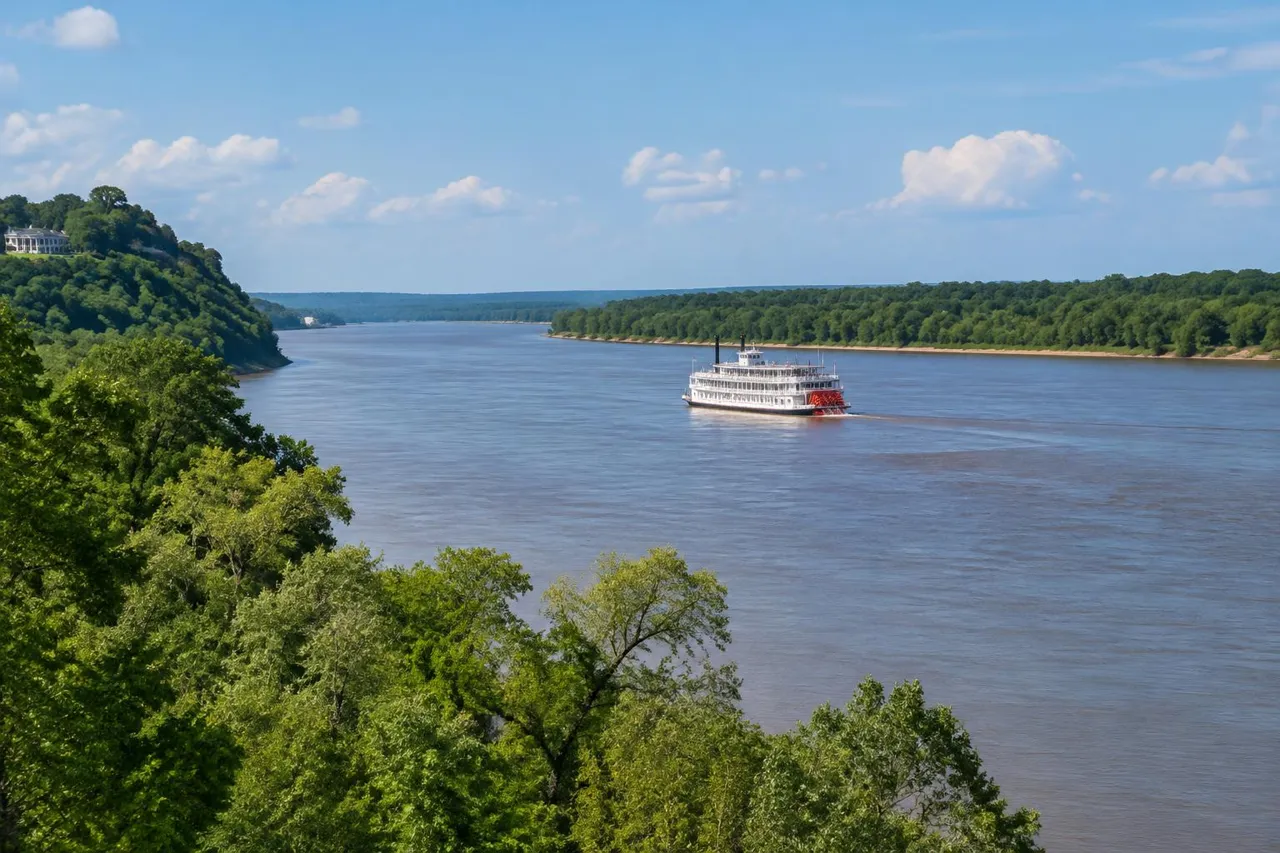
Mississippi river landscape — River Cruises wildlife habitatAI-modified

Mississippi

Upper Mississippi River National Wildlife and Fish Refuge, Wabasha MN–Rock Island IL; backwater overlooks are the locally recommended setting.

Explore river cruises

Destinations describe the species' habitat, not guaranteed cruise stops. Some animals require an optional inland excursion or are found in restricted reserves.

Fun facts about the American Wigeon

  • It is a dabbling duck.
  • Its short bill is useful for cropping vegetation.
  • It feeds on both aquatic and terrestrial plants.
  • It can graze on land.
  • Tipping up provides access to submerged food.
  • Females nest on dry ground rather than floating platforms.
  • Breeding females increase their intake of animal food.
  • The Upper Mississippi refuge explicitly names it in autumn backwater flocks.
  • Its Columbia and Mississippi seasonal evidence must be kept separate.

Best time to see the American Wigeon

The Upper Mississippi refuge provides unusually useful original seasonal guidance: American Wigeon is named among dabbling ducks gathering along backwaters from mid-to-late September through late October or early November. Accordingly, September, October and November are retained as supported months for that registered location, with the partial-month limits preserved in the location note. These are viewing guidance, not an assurance that the entire refuge or every day in November is equally productive. At Umatilla, the registered checklist establishes occurrence, while the refuge's general waterfowl information does not supply an equivalent species-specific monthly calendar. Columbia months therefore remain empty. Weather, water conditions and the timing of migration can alter flock distribution. Ask refuge staff which public overlooks currently hold feeding or resting ducks. Keeping the two river calendars separate is more informative than applying the better-documented Mississippi pattern to the Columbia without evidence.

American Wigeon: season matrix by destination

Highlighted months reflect the stated local evidence, not guaranteed encounters. Neutral months mean no verified monthly viewing window, not absence. Observation records and recommended viewing windows are distinct.

Columbia

Umatilla occurrence is registered, but no original species-specific monthly schedule was verified. General wintering-waterfowl information is not converted into wigeon months.

JanFebMarAprMayJunJulAugSepOctNovDec
Explore river cruises

Mississippi

FWS names American Wigeon in large backwater groups from mid-to-late September through late October or early November. The source does not imply equal suitability throughout all three months.

JanFebMarAprMayJunJulAugSepOctNovDec
Explore river cruises

Where the American Wigeon lives

Vegetation-rich water and adjacent terrestrial feeding areas are central to American Wigeon habitat. Cornell lists wetlands, ponds, lakes, marshes and rivers during breeding, while females place nests on nearby dry ground in grassland or fields. Outside breeding, birds also use impoundments, bays, estuaries, tidal flats and flooded agricultural land. The registered Columbia association is Umatilla's John Day pool around Boardman–Irrigon, where natural and managed wetlands occur within a larger river landscape. On the Upper Mississippi, the original refuge guidance specifically directs attention to backwater overlooks for autumn dabbling ducks. A broad navigation channel may contain passing birds, but sheltered, vegetated areas are more closely aligned with the feeding ecology described by Cornell. Neither refuge association extends automatically to every port along its river. View habitat from authorised access points and respect closures, particularly where quiet resting areas are being protected from repeated disturbance.

What the American Wigeon eats

American Wigeons eat mainly plants, including both aquatic vegetation and food cropped on land. Cornell lists leaves and stems of plants such as duckweed, sedges, cattails and water milfoil, alongside grasses, clover and agricultural grains. Their short bill is useful for plucking vegetation rather than filtering food in exactly the same way as a broad-billed shoveler. Birds can nibble at the surface, tip up to reach below it or graze on fields and lawns. Insects and other invertebrates become more important during breeding, with females requiring additional protein for egg production. Documented animal foods include aquatic insects, mollusks and crustaceans. These are species-level dietary examples, not measured proportions for the Columbia or Upper Mississippi. For a visitor, noting whether a flock is grazing, tipping or resting can reveal more than attempting to identify tiny food items. Never scatter grain or bread to bring birds closer to a viewpoint.

Species at a glance

Common name
American Wigeon
Scientific name
Mareca americana
Animal group
Birds
Size
42–59 cm (16.5–23.2 in) long
Weight
512–1,330 g (18.1–46.9 oz)
Lifespan
Up to 21 years in the wild (record)
Status
Least Concern
Identification
The short, relatively compact bill is a useful structural clue when comparing American Wigeons with other dabbling ducks. Adult males in conspicuous plumage show a pale crown and a green area through the side of the head, while females are more subdued, with a greyer head contrasting against warmer brown body tones. These broad patterns should be combined with a clear view of bill shape and overall proportions. Lighting, distance and seasonal plumage can weaken apparently familiar field marks, and sleeping birds may conceal the head completely. Do not identify every pale-crowned duck from a single brief glimpse. Feeding style can help locate candidates, especially birds grazing, but it is not diagnostic by itself. In mixed flocks at either registered refuge, compare several individuals and wait for birds to raise or turn their heads. A photograph is useful when obtained from the viewing point without pushing the flock away from its feeding area.

American Wigeon: frequently asked questions

Where can I see the American Wigeon?
Columbia, Mississippi. Use a refuge overlook to scan the sheltered backwaters before inspecting the main channel. Locate a mixed duck flock, then work through it slowly rather than assuming that the most conspicuous species represents every bird present. Look for wigeons feeding at the surface or on nearby grass, and use a scope if distance conceals the short bill and head pattern. On the Upper Mississippi, the official autumn guidance makes backwater overlooks a particularly relevant starting point. At Umatilla, use designated viewing areas and respect island closures rather than attempting a landing for closer photographs. Keep birds' access to both water and land unobstructed. If a flock becomes alert or moves away as a group, increase distance and allow it to settle. A cruise-deck sighting can be rewarding, but a permitted refuge excursion generally offers more time to compare feeding methods, plumage and the habitat differences between the two registered rivers.
When is the best time to see the American Wigeon?
The Upper Mississippi refuge provides unusually useful original seasonal guidance: American Wigeon is named among dabbling ducks gathering along backwaters from mid-to-late September through late October or early November. Accordingly, September, October and November are retained as supported months for that registered location, with the partial-month limits preserved in the location note. These are viewing guidance, not an assurance that the entire refuge or every day in November is equally productive. At Umatilla, the registered checklist establishes occurrence, while the refuge's general waterfowl information does not supply an equivalent species-specific monthly calendar. Columbia months therefore remain empty. Weather, water conditions and the timing of migration can alter flock distribution. Ask refuge staff which public overlooks currently hold feeding or resting ducks. Keeping the two river calendars separate is more informative than applying the better-documented Mississippi pattern to the Columbia without evidence.
How big does the American Wigeon get?
42–59 cm (16.5–23.2 in) long. Adult weight: 512–1,330 g (18.1–46.9 oz). Size varies with age, sex and population.
How should I behave around the American Wigeon?
Use a refuge overlook to scan the sheltered backwaters before inspecting the main channel. Locate a mixed duck flock, then work through it slowly rather than assuming that the most conspicuous species represents every bird present. Look for wigeons feeding at the surface or on nearby grass, and use a scope if distance conceals the short bill and head pattern. On the Upper Mississippi, the official autumn guidance makes backwater overlooks a particularly relevant starting point. At Umatilla, use designated viewing areas and respect island closures rather than attempting a landing for closer photographs. Keep birds' access to both water and land unobstructed. If a flock becomes alert or moves away as a group, increase distance and allow it to settle. A cruise-deck sighting can be rewarding, but a permitted refuge excursion generally offers more time to compare feeding methods, plumage and the habitat differences between the two registered rivers.
What does the American Wigeon eat?
American Wigeons eat mainly plants, including both aquatic vegetation and food cropped on land. Cornell lists leaves and stems of plants such as duckweed, sedges, cattails and water milfoil, alongside grasses, clover and agricultural grains. Their short bill is useful for plucking vegetation rather than filtering food in exactly the same way as a broad-billed shoveler. Birds can nibble at the surface, tip up to reach below it or graze on fields and lawns. Insects and other invertebrates become more important during breeding, with females requiring additional protein for egg production. Documented animal foods include aquatic insects, mollusks and crustaceans. These are species-level dietary examples, not measured proportions for the Columbia or Upper Mississippi. For a visitor, noting whether a flock is grazing, tipping or resting can reveal more than attempting to identify tiny food items. Never scatter grain or bread to bring birds closer to a viewpoint.
Are wildlife sightings guaranteed on a river cruise?
No. Animals move freely and routes, weather, access restrictions and local conditions influence every outing. Confirm the actual itinerary and shore program before booking.

Compare wildlife in the same destinations

Explore other birds recorded in these destinations. Similar surroundings do not mean the animals share the same habits or viewing season.

Species comparison by animal group and destination
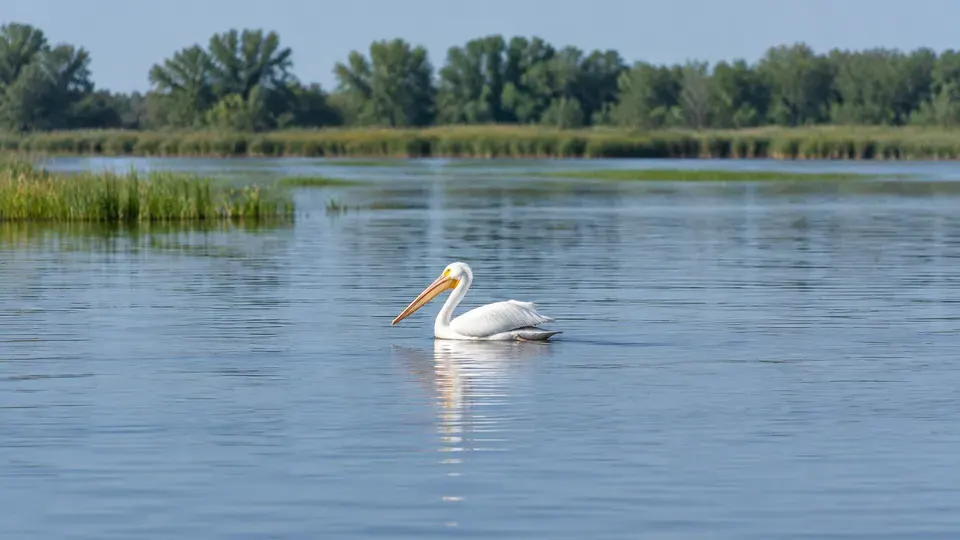
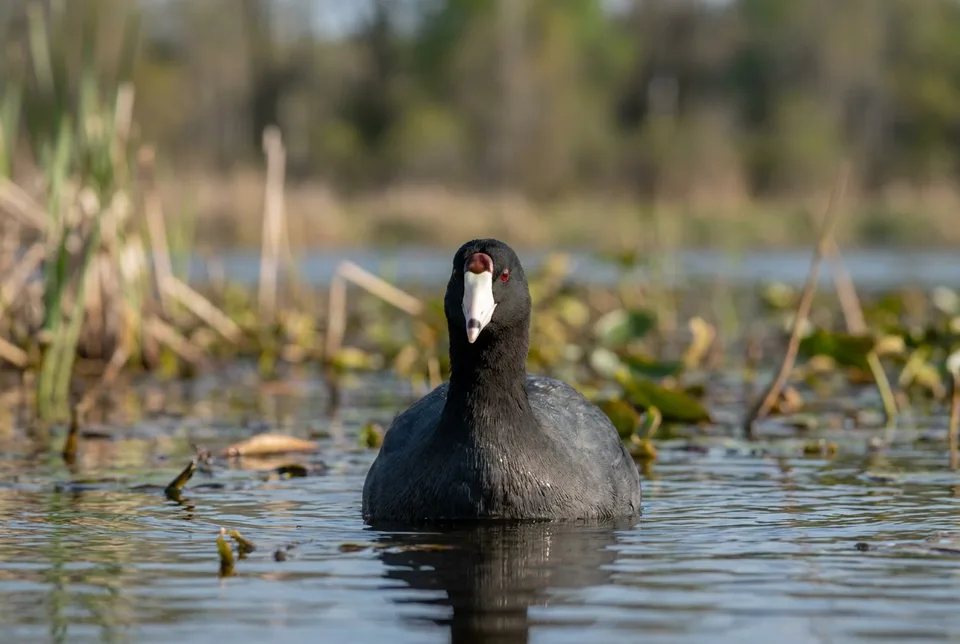
American Wigeon in wetland habitat — Columbia, Mississippi, River Cruises wildlifeAI-modifiedAmerican WigeonAmerican Coot in wetland habitat — Columbia, River Cruises wildlifeAI-modifiedAmerican CootAmerican white pelican in wetland habitat — Columbia, Mississippi, River Cruises wildlifeAI-modifiedAmerican White Pelican
Animal groupBirdsAnimal groupBirdsAnimal groupBirds
DestinationsColumbia, MississippiDestinationsColumbiaDestinationsColumbia, Mississippi
Scientific name
Mareca americana
Scientific name
Scientific name
Previous speciesAmerican White PelicanNext speciesAnhinga
All river wildlife
On this page
  • 01About
  • 02Behaviour & reproduction
  • 03Top wildlife locations
  • 04Fun facts
  • 05Best season
  • 06Season matrix by destination
  • 07Habitat
  • 08Diet
  • 09Species at a glance
  • 10Questions & answers
  • 11Compare

Find your river cruise

AI-modified
Plan your trip

Find your next river journey

Compare destinations, shore programs and dates with the animals and habitats you would love to see.

  • Daily shore excursions
  • Responsible wildlife watching
  • Boutique river ships
Explore river cruises