Bluerides – Blue Rides - Book Liveaboards worldwideOCEAN ADVENTURES
River CruisesRiversNature & WildlifeOur Promise
River CruisesRiversNature & WildlifeOur PromiseSign In

River destinations

  • River destinations
  • Amazon
  • Danube
  • Rhine
  • Mekong
  • Nile

Ships & departures

  • River Cruise Search
  • Deals

Nature & Wildlife

  • Nature & Wildlife

Travel support

  • Our Promise
  • Contact

Contact

Get in Touch

Get in touch anytime, we're happy to help you find the right trip or sort out any question.

EmailWrite us, we usually reply within a few hours.
contact@bluerides.com
WhatsAppChat with us on WhatsApp, Mon–Fri 10:00–16:00 (CET).
Start WhatsApp Chat
PhoneCall us, we're happy to help.
Free call, Mon–Fri 10 AM – 8 PM (CET).
Europe+49 800 1144 990USA+1 888 557 7735UK+44 800 707 4152Australia+61 2 8599 6113Canada+1 888 557 7735
Which river journey is yours?Answer 8 quick questions and find the river cruise that fits you.
8 questions, 1 minute·Plus Gift
Secure Payment MethodsYour payments are fully secured with AES-256 encryption.
Powered byStripeWiseAMEXPayGoogle PaySEPABank
Imprint·Terms & Conditions·Privacy Policy·About·Contact·Liability Waiver·Affiliate Program·Cruise·Blog·
Visit us here

© 2026 Blue Rides. All rights reserved.

Bluerides – Blue Rides - Book Liveaboards worldwideOCEAN ADVENTURES
River CruisesRiversNature & WildlifeOur Promise
River CruisesRiversNature & WildlifeOur PromiseSign In
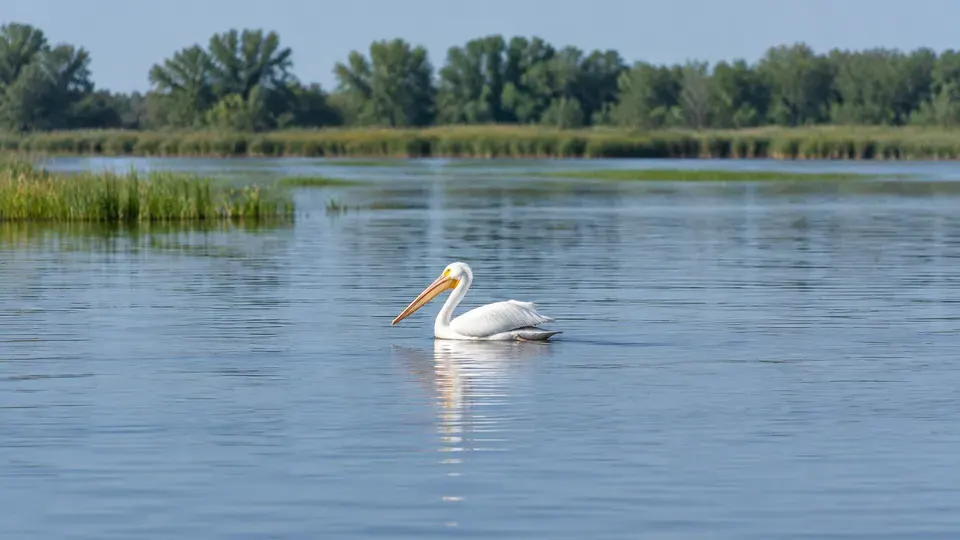
American white pelican in wetland habitat — Columbia, Mississippi, River Cruises wildlifeAI-modified
Home›River Cruises›River Wildlife›American White Pelican

American White PelicanPelecanus erythrorhynchosWhere and when to see them

Previous speciesAmerican CootNext speciesAmerican Wigeon

American White Pelican at a glance

The American White Pelican is a very large waterbird whose white body, contrasting dark flight feathers and substantial bill make it conspicuous on open water and in the air. Its River registry associations are Umatilla National Wildlife Refuge and the John Day pool on the Columbia, and the Upper Mississippi River National Wildlife and Fish Refuge. These locations offer different evidence: the Columbia association rests on registered occurrence, while the Mississippi refuge explicitly describes late-summer groups and autumn migration viewing. Cornell places the species in a wider network of shallow feeding wetlands, island breeding sites and migratory stopovers. A pelican seen on a river may therefore be feeding or resting far from its nesting colony. Its surface-feeding method is especially useful to observe, and should not be confused with the dramatic plunge-diving associated with Brown Pelicans. Large size makes it detectable from a cruise deck, but identification and behaviour are easier to study from a stable viewpoint.
Behaviour & reproduction

Size
About 1.5 m (5 ft) long, 2.7 m (9 ft) wingspan
Weight
5–9 kg (11–20 lb)
Lifespan
12–14 years
Status
Least Concern

American White Pelicans feed at the water surface rather than routinely plunging from the air. Birds may gather in groups, and the Upper Mississippi refuge describes large pods on the water during late summer. Such concentrations can provide opportunities to watch coordinated movement, repeated bill dips and alternating periods of feeding and rest. The species also travels efficiently between feeding and resting areas, so a soaring flock need not be directly above the wetland where it obtained food. Cornell notes that breeding birds can forage considerable distances from isolated nesting islands. Colony habitat and feeding habitat should therefore not be treated as the same place. A group resting on an exposed bar may be conserving energy rather than waiting to be approached. Keep boats well away from loafing groups and never interpret a flock's tolerance of distant vessels as permission to land beside it. Flight, feeding and resting each reveal different parts of the species' ecology.

Top wildlife locations

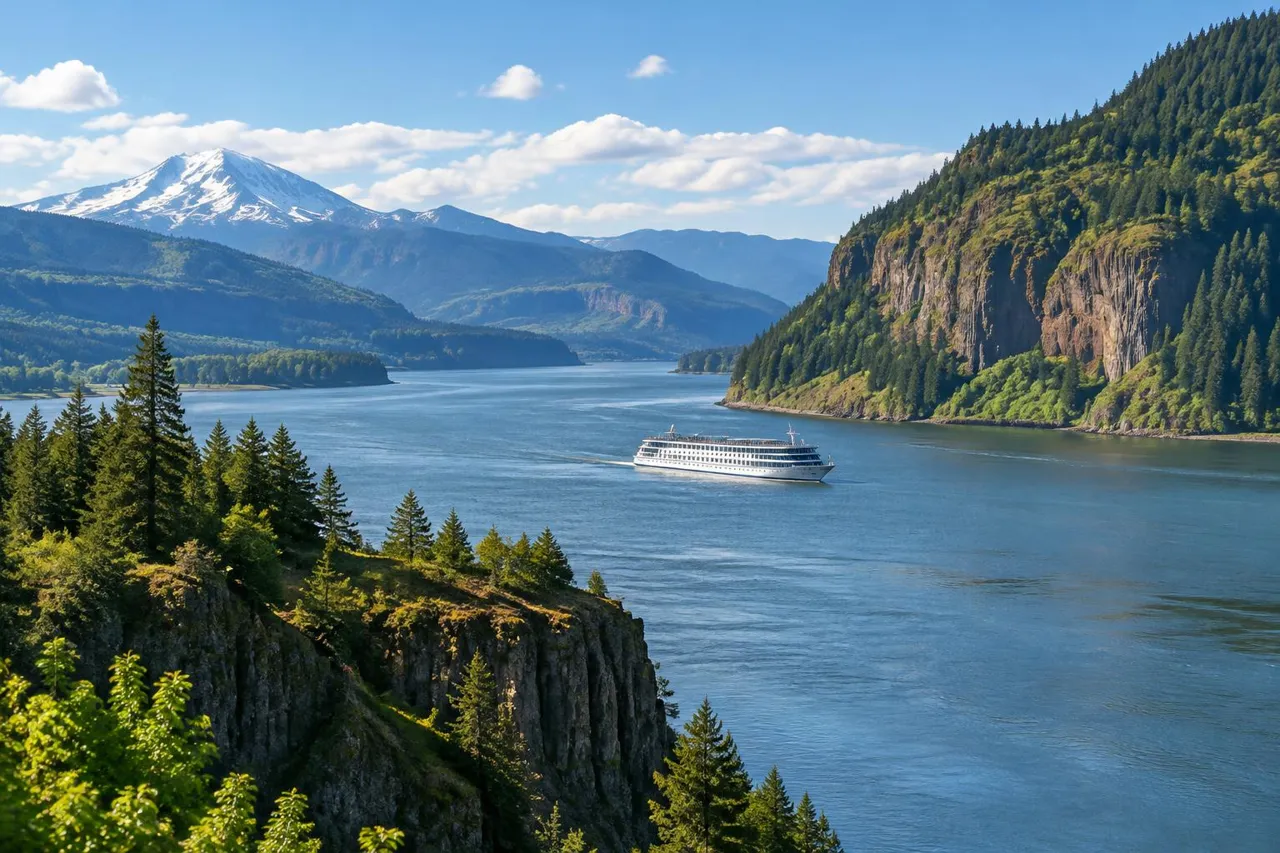
Columbia river landscape — River Cruises wildlife habitatAI-modified

Columbia

Umatilla National Wildlife Refuge / John Day pool, Boardman–Irrigon; registered occurrence, with refuge viewing and access restrictions.
Explore river cruises
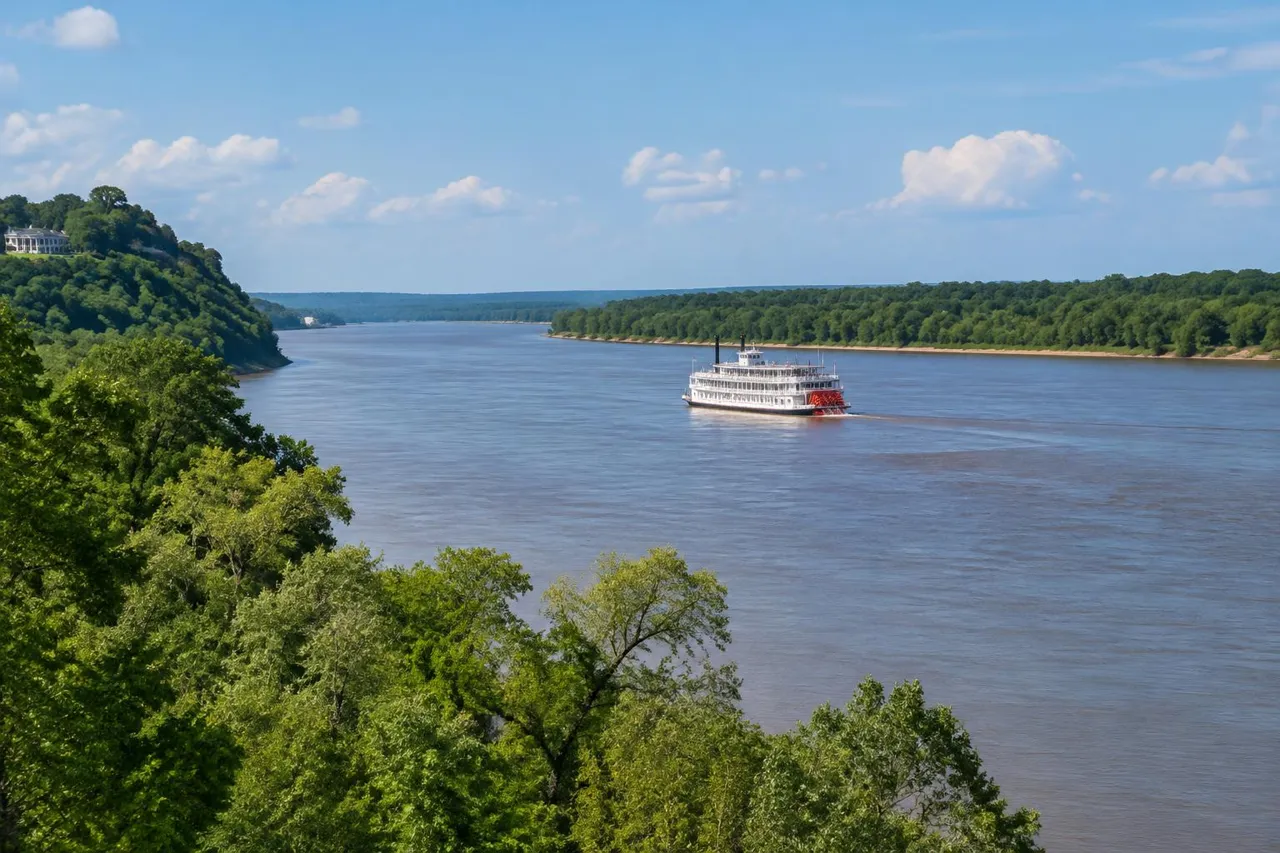
Mississippi river landscape — River Cruises wildlife habitatAI-modified

Mississippi

Upper Mississippi River National Wildlife and Fish Refuge, Wabasha MN–Rock Island IL; scan open water and quiet resting areas from permitted viewpoints.

Explore river cruises

Destinations describe the species' habitat, not guaranteed cruise stops. Some animals require an optional inland excursion or are found in restricted reserves.

Fun facts about the American White Pelican

  • It feeds mainly from the water surface.
  • Its throat pouch assists prey capture.
  • Dark flight feathers contrast with its white body.
  • Breeding sites are often isolated islands.
  • Feeding areas can be far from nesting islands.
  • Fish dominate the diet, but amphibians and crayfish are also taken.
  • Food use changes with prey availability and water conditions.
  • The Upper Mississippi refuge describes late-summer pods.
  • Both Columbia and Mississippi associations are retained in the registry.

Best time to see the American White Pelican

The Upper Mississippi refuge explicitly describes American White Pelicans gathering in large pods during late summer and includes them among autumn waterbird attractions. These original local seasonal descriptions are retained without translating late summer or fall into numerical months, because the source passages read do not attach a species-specific month range to the pelicans. The Mississippi location calendar therefore remains empty despite meaningful seasonal guidance. At Umatilla, the registered checklist establishes occurrence, but a local monthly pelican pattern was not verified. Columbia months also remain empty. Cornell's broader discussion of breeding, migration and winter habitat explains why movements occur, not exactly when birds will appear at either cruise stop. Ask refuge staff about recent concentrations and accessible viewpoints before planning an outing. Water levels, prey availability and disturbance can shift flock locations, making current site information more useful than a broad continental migration map for choosing an individual excursion.

American White Pelican: season matrix by destination

Highlighted months reflect the stated local evidence, not guaranteed encounters. Neutral months mean no verified monthly viewing window, not absence. Observation records and recommended viewing windows are distinct.

Columbia

The registered checklist confirms occurrence, but no original local species-specific monthly pelican calendar was verified.

JanFebMarAprMayJunJulAugSepOctNovDec
Explore river cruises

Mississippi

The official refuge checklist records this species in the listed locally defined seasons, including rare occurrences where coded, providing local guidance rather than a guarantee of sightings.

JanFebMarAprMayJunJulAugSepOctNovDec
Explore river cruises

Where the American White Pelican lives

Cornell describes breeding mainly on isolated islands in freshwater lakes or shallow wetlands, with feeding concentrated in relatively shallow waters along marshes, lake margins and river edges. During migration, similar habitats provide food and rest, while winter use often includes coastal bays, estuaries and sloughs. Some inland rivers can remain useful where moving water prevents ice formation. The registered Columbia setting is Umatilla and the John Day pool around Boardman–Irrigon, where open river water occurs beside islands and wetlands. The Upper Mississippi association covers the refuge corridor from Wabasha to Rock Island, with locally documented seasonal gatherings. A large expanse of water alone is not a full habitat description: prey accessibility, suitable resting sites and freedom from disturbance matter too. Do not infer a breeding colony from birds feeding nearby. Refuge islands and exposed bars can be important precisely because people do not regularly enter them.

What the American White Pelican eats

Small fish form the main diet of American White Pelicans, but Cornell also records salamanders, tadpoles and crayfish. The particular mixture changes with water levels and the prey available at a site. Fish common in shallow wetlands, including minnows, carp and suckers, are examples from the species account rather than a measured menu for either registered river reach. Pelicans capture prey by feeding from the surface, using the bill and expandable pouch as part of the capture process. This differs from storing fish permanently in the pouch or diving deeply after every meal. Shallow-water access helps explain the importance of marsh margins, river edges and seasonal concentrations of prey. A flock may change feeding areas as conditions change, even within the same refuge. Never provide fish or use discarded catch to attract birds. Observing an undisturbed group from a distance offers better information about natural foraging than a baited close-up.

Species at a glance

Common name
American White Pelican
Scientific name
Pelecanus erythrorhynchos
Animal group
Birds
Size
About 1.5 m (5 ft) long, 2.7 m (9 ft) wingspan
Weight
5–9 kg (11–20 lb)
Lifespan
12–14 years
Status
Least Concern
Identification
Look for a very large, predominantly white bird with a long bill and a conspicuous throat pouch. Dark flight feathers contrast sharply with the white wings when the bird flies or opens them, but can be much less obvious on a settled individual. The combination of size, bill structure and black-and-white wing pattern is more useful than white plumage alone, which is shared with swans, geese and several wading birds. A pelican floating on distant water can resemble a pale mound until it raises its head, so wait for the bill to become visible. Feeding style helps distinguish it from the Brown Pelican: American White Pelicans characteristically feed from the surface rather than using repeated aerial plunge-dives. Do not rely on behaviour alone if the view is poor. Record both the silhouette and flight pattern, and avoid assuming that every white flock over the river consists of pelicans without checking the bills and wing contrast.

American White Pelican: frequently asked questions

Where can I see the American White Pelican?
Columbia, Mississippi. Begin with open-water scans for bright white groups, then check exposed bars and quiet margins where birds may rest. A spotting scope can reveal bill movements and feeding sequences without requiring a close boat approach. In flight, watch for dark flight feathers contrasting with the white body and note whether birds are gliding or actively travelling. On the Upper Mississippi, the refuge's late-summer and autumn guidance gives a source-backed reason to search for groups, but it does not guarantee a flock near every port. At Umatilla, stay within public-access areas and respect island closures. Never land beside resting pelicans or steer towards a flock until it takes flight. Disturbance can remove birds from a useful feeding or resting site even when the encounter seems brief. Deck views are plausible for such a conspicuous bird, but a stationary refuge overlook usually provides a better opportunity to distinguish natural behaviour from vessel-induced movement.
When is the best time to see the American White Pelican?
The Upper Mississippi refuge explicitly describes American White Pelicans gathering in large pods during late summer and includes them among autumn waterbird attractions. These original local seasonal descriptions are retained without translating late summer or fall into numerical months, because the source passages read do not attach a species-specific month range to the pelicans. The Mississippi location calendar therefore remains empty despite meaningful seasonal guidance. At Umatilla, the registered checklist establishes occurrence, but a local monthly pelican pattern was not verified. Columbia months also remain empty. Cornell's broader discussion of breeding, migration and winter habitat explains why movements occur, not exactly when birds will appear at either cruise stop. Ask refuge staff about recent concentrations and accessible viewpoints before planning an outing. Water levels, prey availability and disturbance can shift flock locations, making current site information more useful than a broad continental migration map for choosing an individual excursion.
How big does the American White Pelican get?
About 1.5 m (5 ft) long, 2.7 m (9 ft) wingspan. Adult weight: 5–9 kg (11–20 lb). Size varies with age, sex and population.
How should I behave around the American White Pelican?
Begin with open-water scans for bright white groups, then check exposed bars and quiet margins where birds may rest. A spotting scope can reveal bill movements and feeding sequences without requiring a close boat approach. In flight, watch for dark flight feathers contrasting with the white body and note whether birds are gliding or actively travelling. On the Upper Mississippi, the refuge's late-summer and autumn guidance gives a source-backed reason to search for groups, but it does not guarantee a flock near every port. At Umatilla, stay within public-access areas and respect island closures. Never land beside resting pelicans or steer towards a flock until it takes flight. Disturbance can remove birds from a useful feeding or resting site even when the encounter seems brief. Deck views are plausible for such a conspicuous bird, but a stationary refuge overlook usually provides a better opportunity to distinguish natural behaviour from vessel-induced movement.
What does the American White Pelican eat?
Small fish form the main diet of American White Pelicans, but Cornell also records salamanders, tadpoles and crayfish. The particular mixture changes with water levels and the prey available at a site. Fish common in shallow wetlands, including minnows, carp and suckers, are examples from the species account rather than a measured menu for either registered river reach. Pelicans capture prey by feeding from the surface, using the bill and expandable pouch as part of the capture process. This differs from storing fish permanently in the pouch or diving deeply after every meal. Shallow-water access helps explain the importance of marsh margins, river edges and seasonal concentrations of prey. A flock may change feeding areas as conditions change, even within the same refuge. Never provide fish or use discarded catch to attract birds. Observing an undisturbed group from a distance offers better information about natural foraging than a baited close-up.
Are wildlife sightings guaranteed on a river cruise?
No. Animals move freely and routes, weather, access restrictions and local conditions influence every outing. Confirm the actual itinerary and shore program before booking.

Compare wildlife in the same destinations

Explore other birds recorded in these destinations. Similar surroundings do not mean the animals share the same habits or viewing season.

Species comparison by animal group and destination
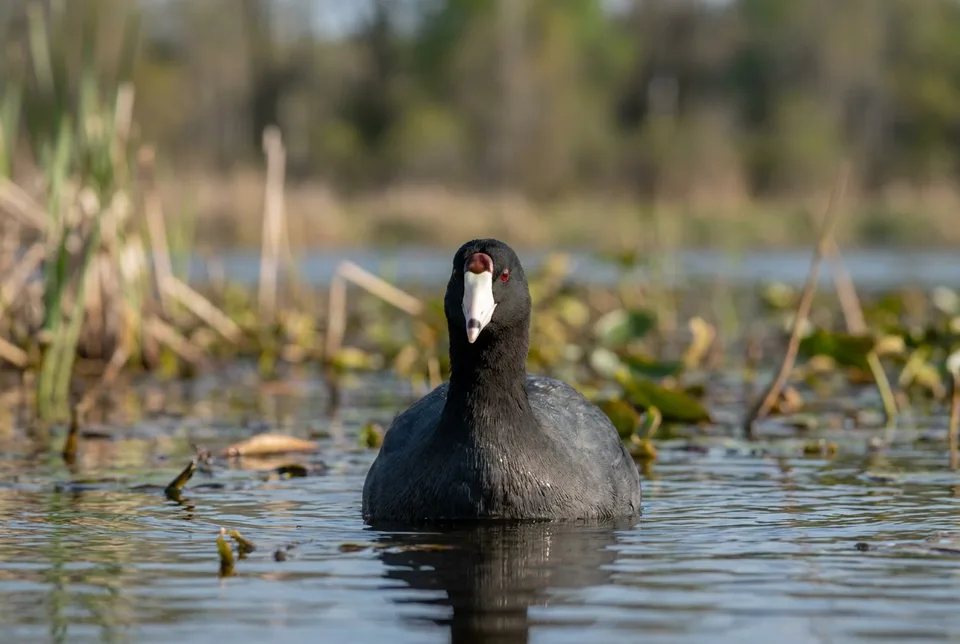
American white pelican in wetland habitat — Columbia, Mississippi, River Cruises wildlifeAI-modifiedAmerican White PelicanAmerican Coot in wetland habitat — Columbia, River Cruises wildlifeAI-modifiedAmerican CootAmerican Wigeon in wetland habitat — Columbia, Mississippi, River Cruises wildlifeAI-modifiedAmerican Wigeon
Animal groupBirdsAnimal groupBirdsAnimal groupBirds
DestinationsColumbia, MississippiDestinationsColumbiaDestinationsColumbia, Mississippi
Scientific name
Pelecanus erythrorhynchos
Scientific name
Scientific name
Previous speciesAmerican CootNext speciesAmerican Wigeon
All river wildlife
On this page
  • 01About
  • 02Behaviour & reproduction
  • 03Top wildlife locations
  • 04Fun facts
  • 05Best season
  • 06Season matrix by destination
  • 07Habitat
  • 08Diet
  • 09Species at a glance
  • 10Questions & answers
  • 11Compare

Find your river cruise

AI-modified
Plan your trip

Find your next river journey

Compare destinations, shore programs and dates with the animals and habitats you would love to see.

  • Daily shore excursions
  • Responsible wildlife watching
  • Boutique river ships
Explore river cruises