Bluerides – Blue Rides - Book Liveaboards worldwideOCEAN ADVENTURES
River CruisesRiversNature & WildlifeOur Promise
River CruisesRiversNature & WildlifeOur PromiseSign In

River destinations

  • River destinations
  • Amazon
  • Danube
  • Rhine
  • Mekong
  • Nile

Ships & departures

  • River Cruise Search
  • Deals

Nature & Wildlife

  • Nature & Wildlife

Travel support

  • Our Promise
  • Contact

Contact

Get in Touch

Get in touch anytime, we're happy to help you find the right trip or sort out any question.

EmailWrite us, we usually reply within a few hours.
contact@bluerides.com
WhatsAppChat with us on WhatsApp, Mon–Fri 10:00–16:00 (CET).
Start WhatsApp Chat
PhoneCall us, we're happy to help.
Free call, Mon–Fri 10 AM – 8 PM (CET).
Europe+49 800 1144 990USA+1 888 557 7735UK+44 800 707 4152Australia+61 2 8599 6113Canada+1 888 557 7735
Which river journey is yours?Answer 8 quick questions and find the river cruise that fits you.
8 questions, 1 minute·Plus Gift
Secure Payment MethodsYour payments are fully secured with AES-256 encryption.
Powered byStripeWiseAMEXPayGoogle PaySEPABank
Imprint·Terms & Conditions·Privacy Policy·About·Contact·Liability Waiver·Affiliate Program·Cruise·Blog·
Visit us here

© 2026 Blue Rides. All rights reserved.

Bluerides – Blue Rides - Book Liveaboards worldwideOCEAN ADVENTURES
River CruisesRiversNature & WildlifeOur Promise
River CruisesRiversNature & WildlifeOur PromiseSign In
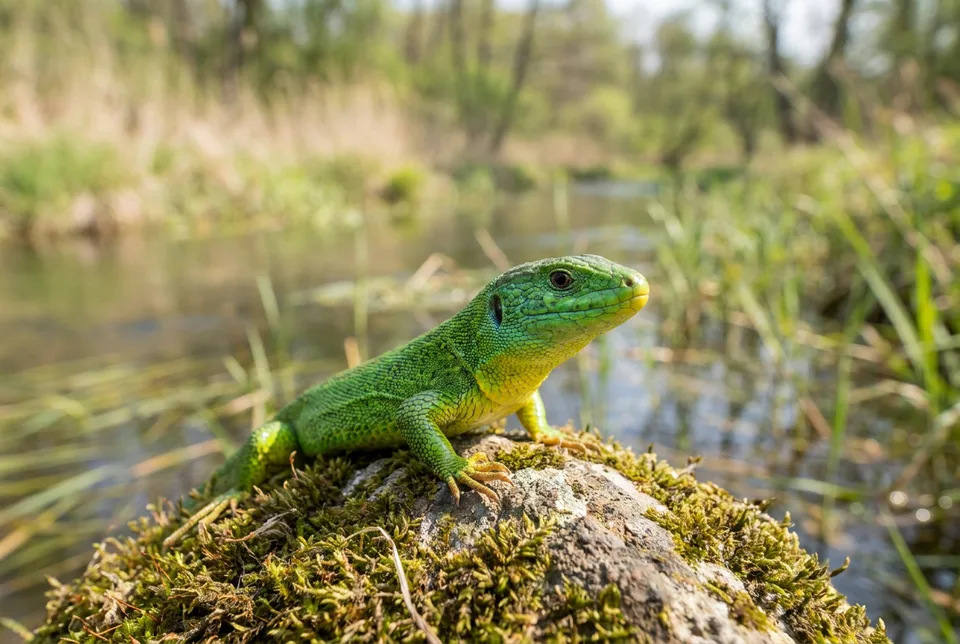
Western Green Lizard in wetland habitat — Saone, River Cruises wildlifeAI-modified
Home›River Cruises›River Wildlife›Western Green Lizard

Western Green LizardLacerta bilineataWhere and when to see them

Previous speciesWestern GrebeNext speciesWestern Marsh Harrier

Western Green Lizard at a glance

The Western Green Lizard brings a terrestrial element to a Saône wildlife excursion. It is not an aquatic reptile: the relevant opportunity is a shore walk through sunny vegetation on the lower river’s landscaped and semi-natural margins. The Grand Lyon guide lists the vernacular lézard vert, rather than presenting a diagnostic scientific identification. This profile retains the requested Lacerta bilineata while making that evidence limit explicit. The reach is the Rives de Saône promenade between Rochetaillée, Fontaines and Lyon, upstream of the Rhône confluence; it is not a claim for every Saône port. Species reference: https://doi.org/10.1080/11250009709356207
Behaviour & reproduction

Size
Approximately 13 cm (5.1 in) excluding tail; up to 40 cm (15.7 in) including tail, as summarised by the retrieved species account.
Weight
Approximately 35 g (1.2 oz) in the retrieved species summary; local range not verified.
Lifespan
Species-specific lifespan not verified.
Status
Least Concern as reported by the retrieved species summary; original current assessment not independently verified.

A lizard may be noticed while exposed at a vegetation edge, then retreat rapidly into cover when approached. Waiting still is preferable to repeatedly following it through plants. The long tail and quick movement can make a fleeting animal appear larger than the body alone. Adult and juvenile ecology need not be identical: a published central Italian study found age-related differences in prey composition and suggested different microhabitat use as an explanation. That interpretation is not a measured result for Lyon, but it cautions against describing all individuals as using exactly the same resources.

Top wildlife locations

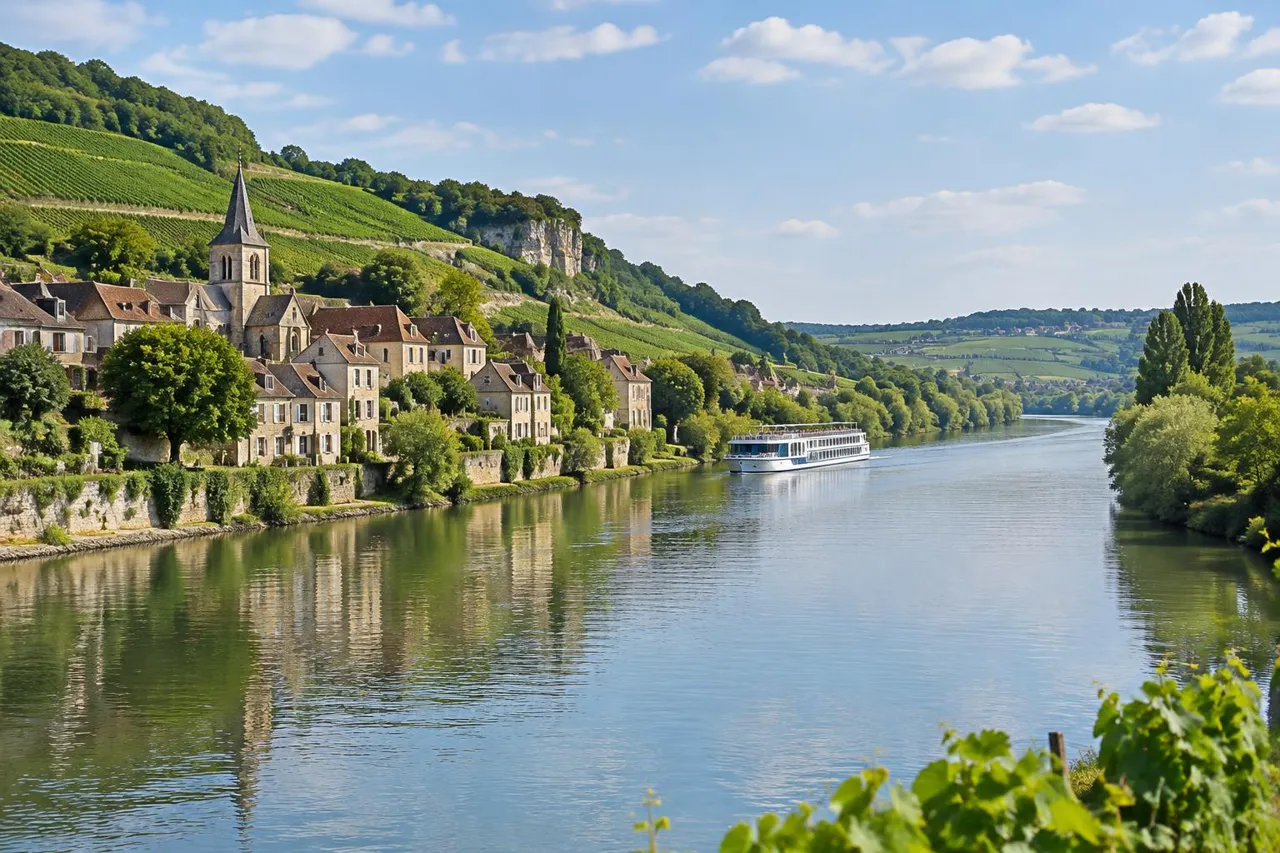
Saone river landscape — River Cruises wildlife habitatAI-modified

Saone

Lower Saône: Grand Lyon Rives de Saône promenade, Rochetaillée-sur-Saône–Fontaines-sur-Saône–Lyon, upstream of the Rhône confluence. Warm-season sunny vegetation; elusive, shore walk. Source uses vernacular lézard vert.
Explore river cruises

Destinations describe the species' habitat, not guaranteed cruise stops. Some animals require an optional inland excursion or are found in restricted reserves.

Fun facts about the Western Green Lizard

  • It is a terrestrial lizard rather than a river swimmer.
  • Males often have a blue throat.
  • Juveniles can be brown and striped.
  • The tail accounts for much of total length.
  • Its scientific epithet refers to two lines.
  • An Italian study found age-related dietary differences.
  • Adults in that study mainly ate beetles and isopods.
  • The local guide uses a vernacular green-lizard name.

Best time to see the Western Green Lizard

The registry suggests warm-season viewing in sunny vegetation. That qualitative guidance is not a recurring local month calendar, and the Grand Lyon species list supplies no verified numerical observation range. Months remain empty. Suitable weather may alter whether a lizard is visible during a particular walk, but weather is not a substitute for annual occurrence evidence. Ask local naturalists about responsible viewing and remember that a bright animal can still remain hidden for the duration of a shore stop.

Western Green Lizard: season matrix by destination

Highlighted months reflect the stated local evidence, not guaranteed encounters. Neutral months mean no verified monthly viewing window, not absence. Observation records and recommended viewing windows are distinct.

Saone

A recurring numerical observation calendar for this exact reach was not verified. The cited source supports occurrence only; survey, breeding and individual trip dates are not converted into months.

JanFebMarAprMayJunJulAugSepOctNovDec
Explore river cruises

Where the Western Green Lizard lives

The registered viewing setting is sunny vegetation beside the lower Saône promenade, not the river channel. Edges where cover lies close to exposed patches give a visitor a possible line of sight without entering habitat. The local biodiversity guide supports green-lizard occurrence at the promenade scale but does not map occupied territories or distinguish every observation taxonomically. A continuous paved path should not be mistaken for uniformly suitable habitat. Leave bankside vegetation intact and follow any closures affecting embankments or restoration areas.

What the Western Green Lizard eats

A central Italian study of Lacerta bilineata found that adults chiefly consumed beetles and isopods, while juveniles more often took orthopterans, spiders and true bugs. Small vertebrate predation and cannibalism were rare in that study. These are actual species-specific findings, but their geographic scope matters: they are not a Saône dietary census. The work also showed that faecal analysis could describe prey composition without killing study animals. Visitors should not collect droppings, uncover refuges or offer insects simply to reproduce a feeding observation.

Species at a glance

Common name
Western Green Lizard
Scientific name
Lacerta bilineata
Animal group
Reptiles
Size
Approximately 13 cm (5.1 in) excluding tail; up to 40 cm (15.7 in) including tail, as summarised by the retrieved species account.
Weight
Approximately 35 g (1.2 oz) in the retrieved species summary; local range not verified.
Lifespan
Species-specific lifespan not verified.
Status
Least Concern as reported by the retrieved species summary; original current assessment not independently verified.
Identification
Adults are characteristically green, and males often show a blue throat and relatively large head. Juveniles can be brown with pale longitudinal lines, so an absence of bright green does not rule out the species. The tail can account for much of total length. Distinguishing Western from other green lizards requires appropriate regional knowledge and more than colour alone. Because the local guide says only lézard vert, this profile should not be read as a new diagnostic verification of that underlying record.

Western Green Lizard: frequently asked questions

Where can I see the Western Green Lizard?
Saone. Walk slowly along the authorised promenade and check exposed edges before moving close. Stop if a lizard is seen and allow it to choose whether to remain visible. A camera zoom can capture flank pattern and head colour without handling. Never pull a tail, lift stones or drive an animal from shrubs for identification. The local source’s vernacular wording also makes careful documentation valuable: a photograph can be checked by a regional reptile specialist without converting an uncertain green-lizard glimpse into a confirmed species record.
When is the best time to see the Western Green Lizard?
The registry suggests warm-season viewing in sunny vegetation. That qualitative guidance is not a recurring local month calendar, and the Grand Lyon species list supplies no verified numerical observation range. Months remain empty. Suitable weather may alter whether a lizard is visible during a particular walk, but weather is not a substitute for annual occurrence evidence. Ask local naturalists about responsible viewing and remember that a bright animal can still remain hidden for the duration of a shore stop.
How big does the Western Green Lizard get?
Approximately 13 cm (5.1 in) excluding tail; up to 40 cm (15.7 in) including tail, as summarised by the retrieved species account.. Adult weight: Approximately 35 g (1.2 oz) in the retrieved species summary; local range not verified.. Size varies with age, sex and population.
How should I behave around the Western Green Lizard?
Walk slowly along the authorised promenade and check exposed edges before moving close. Stop if a lizard is seen and allow it to choose whether to remain visible. A camera zoom can capture flank pattern and head colour without handling. Never pull a tail, lift stones or drive an animal from shrubs for identification. The local source’s vernacular wording also makes careful documentation valuable: a photograph can be checked by a regional reptile specialist without converting an uncertain green-lizard glimpse into a confirmed species record.
What does the Western Green Lizard eat?
A central Italian study of Lacerta bilineata found that adults chiefly consumed beetles and isopods, while juveniles more often took orthopterans, spiders and true bugs. Small vertebrate predation and cannibalism were rare in that study. These are actual species-specific findings, but their geographic scope matters: they are not a Saône dietary census. The work also showed that faecal analysis could describe prey composition without killing study animals. Visitors should not collect droppings, uncover refuges or offer insects simply to reproduce a feeding observation.
Are wildlife sightings guaranteed on a river cruise?
No. Animals move freely and routes, weather, access restrictions and local conditions influence every outing. Confirm the actual itinerary and shore program before booking.

Compare wildlife in the same destinations

Explore other reptiles recorded in these destinations. Similar surroundings do not mean the animals share the same habits or viewing season.

Species comparison by animal group and destination
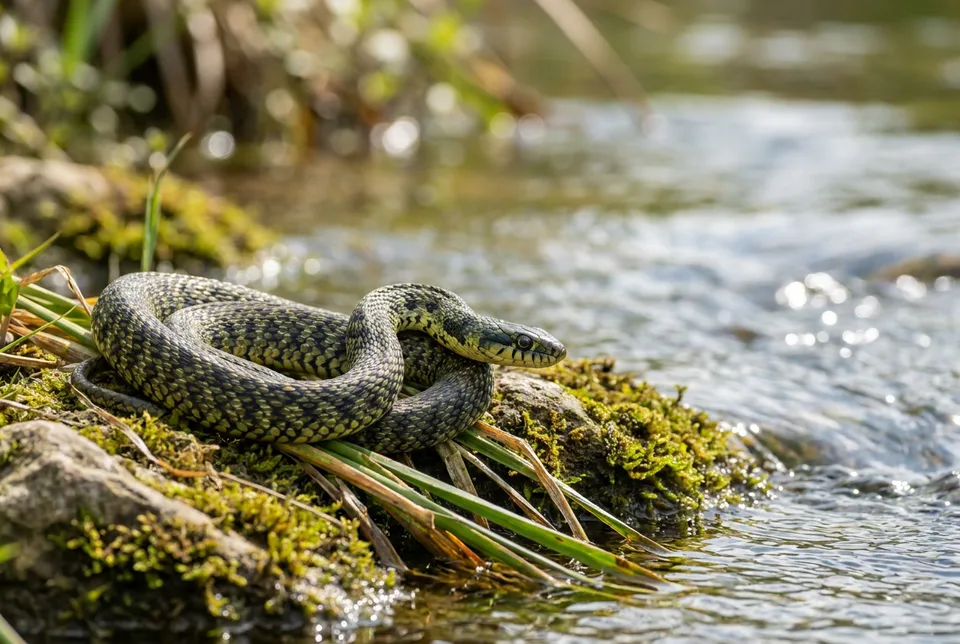
Western Green Lizard in wetland habitat — Saone, River Cruises wildlifeAI-modifiedWestern Green LizardGreen Whip Snake in wetland habitat — Saone, River Cruises wildlifeAI-modifiedGreen Whip Snake
Animal groupReptilesAnimal groupReptiles
DestinationsSaoneDestinationsSaone
Scientific name
Lacerta bilineata
Scientific name
Previous speciesWestern GrebeNext speciesWestern Marsh Harrier
All river wildlife
On this page
  • 01About
  • 02Behaviour & reproduction
  • 03Top wildlife locations
  • 04Fun facts
  • 05Best season
  • 06Season matrix by destination
  • 07Habitat
  • 08Diet
  • 09Species at a glance
  • 10Questions & answers
  • 11Compare

Find your river cruise

AI-modified
Plan your trip

Find your next river journey

Compare destinations, shore programs and dates with the animals and habitats you would love to see.

  • Daily shore excursions
  • Responsible wildlife watching
  • Boutique river ships
Explore river cruises