Bluerides – Blue Rides - Book Liveaboards worldwideOCEAN ADVENTURES
River CruisesRiversNature & WildlifeOur Promise
River CruisesRiversNature & WildlifeOur PromiseSign In

River destinations

  • River destinations
  • Amazon
  • Danube
  • Rhine
  • Mekong
  • Nile

Ships & departures

  • River Cruise Search
  • Deals

Nature & Wildlife

  • Nature & Wildlife

Travel support

  • Our Promise
  • Contact

Contact

Get in Touch

Get in touch anytime, we're happy to help you find the right trip or sort out any question.

EmailWrite us, we usually reply within a few hours.
contact@bluerides.com
WhatsAppChat with us on WhatsApp, Mon–Fri 10:00–16:00 (CET).
Start WhatsApp Chat
PhoneCall us, we're happy to help.
Free call, Mon–Fri 10 AM – 8 PM (CET).
Europe+49 800 1144 990USA+1 888 557 7735UK+44 800 707 4152Australia+61 2 8599 6113Canada+1 888 557 7735
Which river journey is yours?Answer 8 quick questions and find the river cruise that fits you.
8 questions, 1 minute·Plus Gift
Secure Payment MethodsYour payments are fully secured with AES-256 encryption.
Powered byStripeWiseAMEXPayGoogle PaySEPABank
Imprint·Terms & Conditions·Privacy Policy·About·Contact·Liability Waiver·Affiliate Program·Cruise·Blog·
Visit us here

© 2026 Blue Rides. All rights reserved.

Bluerides – Blue Rides - Book Liveaboards worldwideOCEAN ADVENTURES
River CruisesRiversNature & WildlifeOur Promise
River CruisesRiversNature & WildlifeOur PromiseSign In
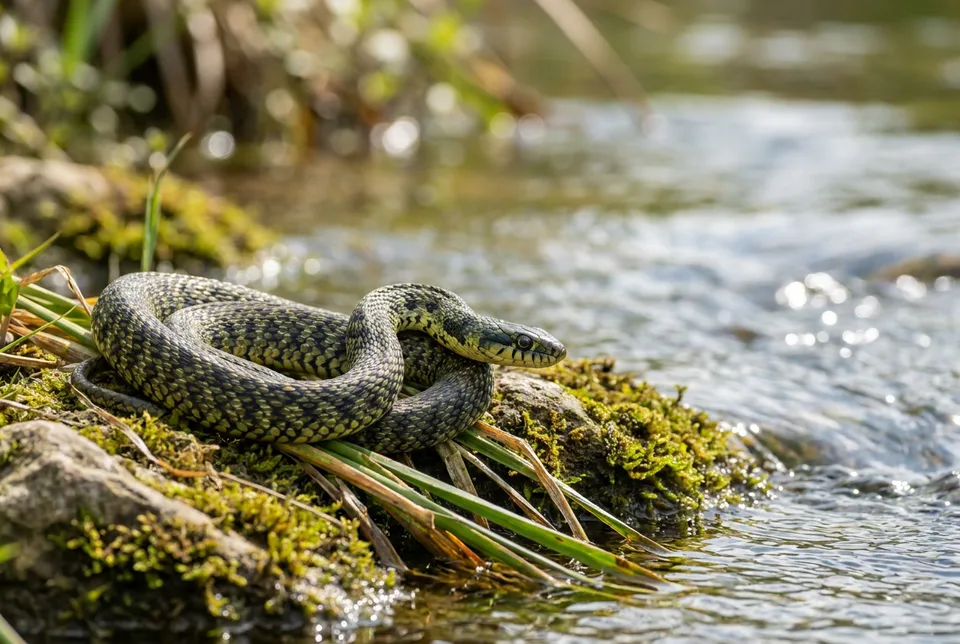
Green Whip Snake in wetland habitat — Saone, River Cruises wildlifeAI-modified
Home›River Cruises›River Wildlife›Green Whip Snake

Green Whip SnakeHierophis viridiflavusWhere and when to see them

Previous speciesGreen KingfisherNext speciesGreen-tailed Jacamar

Green Whip Snake at a glance

The Green Whip Snake belongs to the wildlife of the Saône's banks rather than its open channel. Its registered location is the Grand Lyon Rives de Saône promenade, from Rochetaillée-sur-Saône through Fontaines-sur-Saône towards Lyon, above the Rhône confluence. The name should not encourage visitors to search only for a bright green animal: this is a long, patterned European snake whose appearance is quite unlike a uniformly green tropical tree snake. The useful cruise context is an authorised riverside walk with attention to vegetation edges. There is no verified probability of seeing one on a particular walk. Published research also warns against treating populations as interchangeable: growth and longevity studies have found substantial differences among populations of European whip snakes. That makes unsourced local lifespan figures especially inappropriate here. Species account: https://www.sciencedirect.com/science/article/pii/S2351989422002414
Behaviour & reproduction

Size
100–179 cm (39.4–70.5 in) total length, reported by Zootierliste; not a local average.
Weight
not verified
Lifespan
not verified
Status
Least Concern reported by Zootierliste; current assessment date not verified.

A snake moving into bank vegetation may disappear before its pattern can be checked. Stop and let it leave instead of following it into cover. Its presence on a path is not an invitation to block its escape or attempt handling. The retrieved demographic study used skeletal growth marks from specimens to compare European populations, illustrating how difficult the life history of an elusive snake can be to measure in the wild. It does not provide a behavioural timetable for Lyon's riverfront. Activity duration, home-range size and the frequency of basking at this specific reach were not verified. Visitors should distinguish a general expectation of seeing reptiles during suitable conditions from an evidence-based local observation season. If a snake remains visible, watch from outside its escape route and allow normal movement to continue.

Top wildlife locations

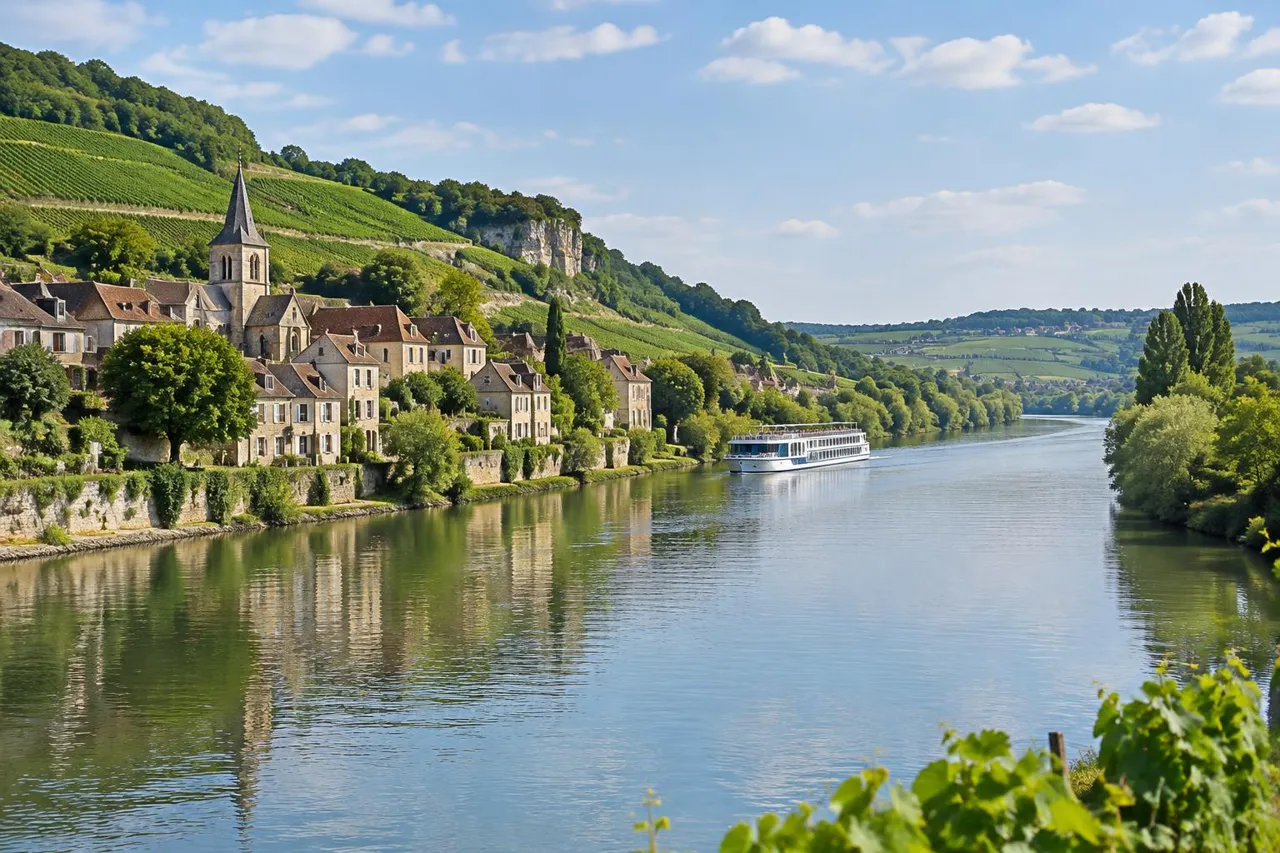
Saone river landscape — River Cruises wildlife habitatAI-modified

Saone

Lower Saône: Grand Lyon Rives de Saône promenade, Rochetaillée-sur-Saône–Fontaines-sur-Saône–Lyon, upstream of the Rhône confluence. Warm season; elusive in bank vegetation; shore walk only.
Explore river cruises

Destinations describe the species' habitat, not guaranteed cruise stops. Some animals require an optional inland excursion or are found in restricted reserves.

Fun facts about the Green Whip Snake

  • A riverside record need not mean an aquatic species.
  • The registered Saône site is upstream of the Rhône confluence.
  • A Swiss study verified small mammals and reptiles as prey.
  • Diet research used DNA from stomach contents.
  • Growth studies found population differences.
  • Total length is not the same as body mass.
  • A brief glimpse may not permit safe identification.

Best time to see the Green Whip Snake

The registry suggests warm-season shore encounters, but no original recurring source was retrieved that converts this into specific months on the Grand Lyon promenade. The Saône location therefore retains an empty array. Temperature, sunshine and a reptile's need to regulate body temperature do not establish a published local calendar. The demographic research from France and Italy likewise concerns life history rather than a visitor observation season for Lyon. For a practical visit, ask a local naturalist about recent conditions and any restrictions on access to vegetated banks. Do not confuse advice about the weather on the day with evidence of recurring monthly occurrence. A snake can remain concealed during an otherwise suitable walk, so the profile does not present the absence of a sighting as evidence that the reach is unoccupied.

Green Whip Snake: season matrix by destination

Highlighted months reflect the stated local evidence, not guaranteed encounters. Neutral months mean no verified monthly viewing window, not absence. Observation records and recommended viewing windows are distinct.

Saone

A recurring local source with an explicit monthly observation calendar was not verified. Registry guidance: Warm season; elusive in bank vegetation; shore walk only.

JanFebMarAprMayJunJulAugSepOctNovDec
Explore river cruises

Where the Green Whip Snake lives

The registry identifies bank vegetation along an urban Saône promenade, a much narrower claim than occurrence throughout the Saône basin. Search effort should remain on designated paths where vegetation, shelter and open edges can be viewed without entering sensitive patches. A manicured quay and a more structurally varied vegetated bank do not offer the same cover, even when they are close together. The profile does not establish which exact embankment supports a persistent population. Nor does the river association mean this is an aquatic specialist to seek by scanning the shipping channel. Local management, mowing and construction may change the amount of usable cover. A current biodiversity walk or naturalist familiar with the promenade is a better basis for choosing a stopping place than assuming every riverside landing offers equivalent habitat.

What the Green Whip Snake eats

A 2022 study in Switzerland used DNA from stomach contents to investigate this species' diet and found mainly small mammals and reptiles. This is a species-specific research source, but it is not a food study of the lower Saône population. Its reported proportions, and especially its findings about threatened Swiss prey, must not be transferred to Lyon. The important verified distinction is that this snake is a predator of other animals, not a consumer of riverside plants. A brief encounter rarely reveals what an individual has eaten, and a visible swelling is not enough to identify prey. Leave both snake and potential prey undisturbed. Supplying mice or attempting to provoke a feeding response would alter behaviour and create an unnecessary welfare risk. A local dietary breakdown remains not verified.

Species at a glance

Common name
Green Whip Snake
Scientific name
Hierophis viridiflavus
Animal group
Reptiles
Size
100–179 cm (39.4–70.5 in) total length, reported by Zootierliste; not a local average.
Weight
not verified
Lifespan
not verified
Status
Least Concern reported by Zootierliste; current assessment date not verified.
Identification
The common name is not a sufficient identification character. A long snake glimpsed at speed along a French riverbank could belong to more than one species, and colour can be distorted by shade and vegetation. A verified diagnostic comparison for all local look-alikes was not retrieved, so this profile does not supply a simplified head-shape rule or an unreliable checklist based on pupil appearance. Record the visible body pattern, overall proportions and head markings in a photograph taken without handling. The published total-length range is descriptive, not a field measurement to estimate from a fleeting view. Avoid identifying an animal solely from the location assigned in the registry. If the image does not show enough detail, retain the record as an unidentified snake and seek a qualified regional opinion.

Green Whip Snake: frequently asked questions

Where can I see the Green Whip Snake?
Saone. Keep to the riverside promenade and scan ahead before approaching a vegetated edge. If a snake is on the path, leave it an unobstructed route to cover and keep other walkers or dogs back without surrounding it. Use a zoom lens rather than trying to capture or reposition the animal. A photograph that includes the head and a substantial length of body is more useful than an extreme close-up of an indistinct patch of scales. Avoid putting hands into vegetation or beneath stones to search. Identification should be confirmed by someone familiar with local reptiles, particularly when only a small part of the animal was seen. The intended experience is a chance observation during a shore walk, not a targeted disturbance of shelter sites or a guaranteed cruise-deck encounter.
When is the best time to see the Green Whip Snake?
The registry suggests warm-season shore encounters, but no original recurring source was retrieved that converts this into specific months on the Grand Lyon promenade. The Saône location therefore retains an empty array. Temperature, sunshine and a reptile's need to regulate body temperature do not establish a published local calendar. The demographic research from France and Italy likewise concerns life history rather than a visitor observation season for Lyon. For a practical visit, ask a local naturalist about recent conditions and any restrictions on access to vegetated banks. Do not confuse advice about the weather on the day with evidence of recurring monthly occurrence. A snake can remain concealed during an otherwise suitable walk, so the profile does not present the absence of a sighting as evidence that the reach is unoccupied.
How big does the Green Whip Snake get?
100–179 cm (39.4–70.5 in) total length, reported by Zootierliste; not a local average.. Adult weight: not verified. Size varies with age, sex and population.
How should I behave around the Green Whip Snake?
Keep to the riverside promenade and scan ahead before approaching a vegetated edge. If a snake is on the path, leave it an unobstructed route to cover and keep other walkers or dogs back without surrounding it. Use a zoom lens rather than trying to capture or reposition the animal. A photograph that includes the head and a substantial length of body is more useful than an extreme close-up of an indistinct patch of scales. Avoid putting hands into vegetation or beneath stones to search. Identification should be confirmed by someone familiar with local reptiles, particularly when only a small part of the animal was seen. The intended experience is a chance observation during a shore walk, not a targeted disturbance of shelter sites or a guaranteed cruise-deck encounter.
What does the Green Whip Snake eat?
A 2022 study in Switzerland used DNA from stomach contents to investigate this species' diet and found mainly small mammals and reptiles. This is a species-specific research source, but it is not a food study of the lower Saône population. Its reported proportions, and especially its findings about threatened Swiss prey, must not be transferred to Lyon. The important verified distinction is that this snake is a predator of other animals, not a consumer of riverside plants. A brief encounter rarely reveals what an individual has eaten, and a visible swelling is not enough to identify prey. Leave both snake and potential prey undisturbed. Supplying mice or attempting to provoke a feeding response would alter behaviour and create an unnecessary welfare risk. A local dietary breakdown remains not verified.
Are wildlife sightings guaranteed on a river cruise?
No. Animals move freely and routes, weather, access restrictions and local conditions influence every outing. Confirm the actual itinerary and shore program before booking.

Compare wildlife in the same destinations

Explore other reptiles recorded in these destinations. Similar surroundings do not mean the animals share the same habits or viewing season.

Species comparison by animal group and destination
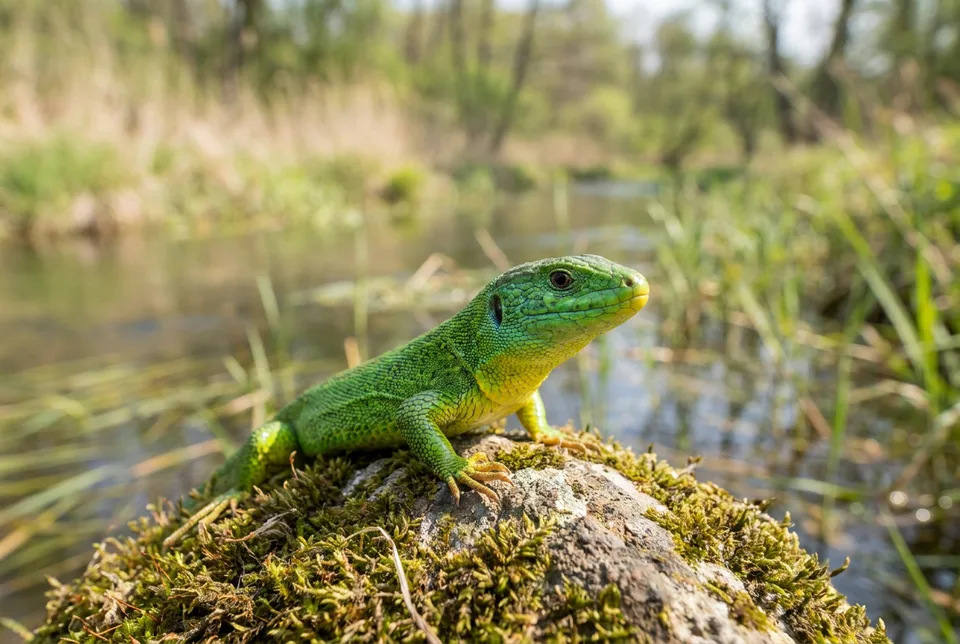
Green Whip Snake in wetland habitat — Saone, River Cruises wildlifeAI-modifiedGreen Whip SnakeWestern Green Lizard in wetland habitat — Saone, River Cruises wildlifeAI-modifiedWestern Green Lizard
Animal groupReptilesAnimal groupReptiles
DestinationsSaoneDestinationsSaone
Scientific name
Hierophis viridiflavus
Scientific name
Previous speciesGreen KingfisherNext speciesGreen-tailed Jacamar
All river wildlife
On this page
  • 01About
  • 02Behaviour & reproduction
  • 03Top wildlife locations
  • 04Fun facts
  • 05Best season
  • 06Season matrix by destination
  • 07Habitat
  • 08Diet
  • 09Species at a glance
  • 10Questions & answers
  • 11Compare

Find your river cruise

AI-modified
Plan your trip

Find your next river journey

Compare destinations, shore programs and dates with the animals and habitats you would love to see.

  • Daily shore excursions
  • Responsible wildlife watching
  • Boutique river ships
Explore river cruises