Bluerides – Blue Rides - Book Liveaboards worldwideOCEAN ADVENTURES
River CruisesRiversNature & WildlifeOur Promise
River CruisesRiversNature & WildlifeOur PromiseSign In

River destinations

  • River destinations
  • Amazon
  • Danube
  • Rhine
  • Mekong
  • Nile

Ships & departures

  • River Cruise Search
  • Deals

Nature & Wildlife

  • Nature & Wildlife

Travel support

  • Our Promise
  • Contact

Contact

Get in Touch

Get in touch anytime, we're happy to help you find the right trip or sort out any question.

EmailWrite us, we usually reply within a few hours.
contact@bluerides.com
WhatsAppChat with us on WhatsApp, Mon–Fri 10:00–16:00 (CET).
Start WhatsApp Chat
PhoneCall us, we're happy to help.
Free call, Mon–Fri 10 AM – 8 PM (CET).
Europe+49 800 1144 990USA+1 888 557 7735UK+44 800 707 4152Australia+61 2 8599 6113Canada+1 888 557 7735
Which river journey is yours?Answer 8 quick questions and find the river cruise that fits you.
8 questions, 1 minute·Plus Gift
Secure Payment MethodsYour payments are fully secured with AES-256 encryption.
Powered byStripeWiseAMEXPayGoogle PaySEPABank
Imprint·Terms & Conditions·Privacy Policy·About·Contact·Liability Waiver·Affiliate Program·Cruise·
Visit us here

© 2026 Blue Rides. All rights reserved.·

Bluerides – Blue Rides - Book Liveaboards worldwideOCEAN ADVENTURES
River CruisesRiversNature & WildlifeOur Promise
River CruisesRiversNature & WildlifeOur PromiseSign In
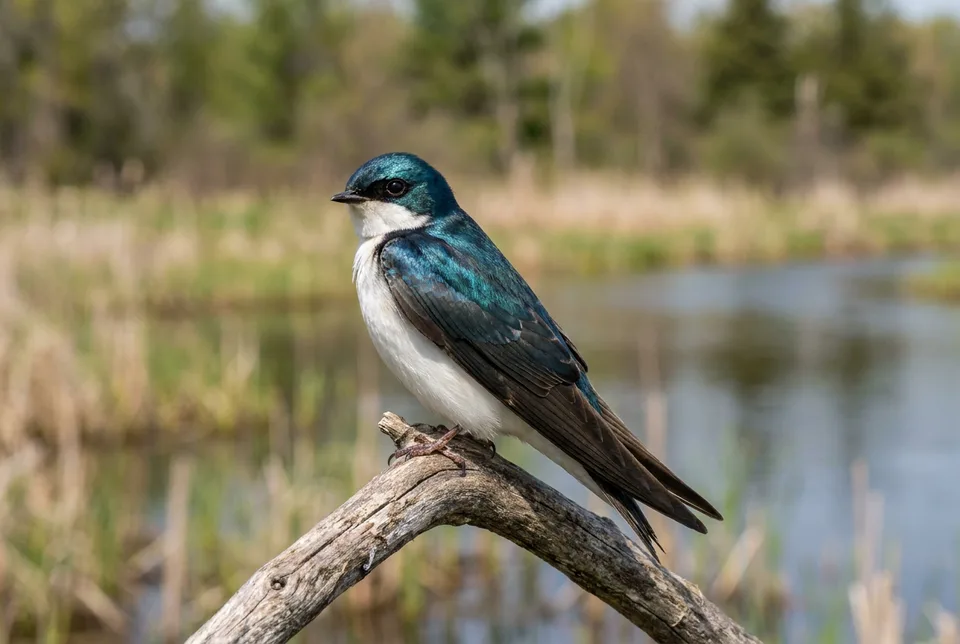
Tree Swallow in wetland habitat — Mississippi, River Cruises wildlife
Home›River Cruises›River Wildlife›Tree Swallow

Tree SwallowTachycineta bicolorWhere and when to see them

Previous speciesStriped WoodcreeperNext speciesTucuxi

Tree Swallow at a glance

The Tree Swallow is a glossy-backed aerial insectivore whose association with river wetlands depends on both food and nesting cavities. This profile concerns the Upper Mississippi refuge from Wabasha to Rock Island. It is a bird to look for over backwaters and shorelines, not simply any swallow seen following the main navigation channel. Species reference: https://www.allaboutbirds.org/guide/Tree_Swallow/lifehistory

Behaviour & reproduction

Size
12–15 cm (4.7–5.9 in) total length, Macalester College species account (https://www.macalester.edu/ordway/biodiversity/inventory/treeswallow/).
Weight
16–25 g (0.56–0.88 oz), Macalester College species account.
Lifespan
Species-specific lifespan not verified.
Status
Formal global conservation category not verified.

Fast turns and repeated passes over sheltered water reflect aerial hunting. Birds may gather where insects concentrate, while nest-site activity brings repeated returns to a cavity or box. Cornell describes existing holes rather than excavation of a new tunnel: this distinguishes its nesting requirements from those of Sand Martins and other bank-nesting swallows.

Top wildlife locations

Mississippi river landscape — River Cruises wildlife habitat

Mississippi

Upper Mississippi — Upper Mississippi River NWR, Wabasha MN–Rock Island IL Deck/riverbank scanning; optional refuge overlooks or backwater outing for closer views. Spring/summer; binoculars needed.
Explore river cruises

Destinations describe the species' habitat, not guaranteed cruise stops. Some animals require an optional inland excursion or are found in restricted reserves.

Fun facts about the Tree Swallow

  • It nests in existing cavities.
  • Old woodpecker holes can be used.
  • Nest boxes can provide breeding sites.
  • Flying insects dominate its diet.
  • It can also eat plant foods.
  • The refuge checklist records spring, summer and fall presence.

Best time to see the Tree Swallow

The refuge’s long-term checklist marks Tree Swallow abundant in spring and summer and common in fall. It explicitly defines those seasons as March–May, June–August and September–November. March–November is therefore supported as a seasonal-presence matrix for the registered refuge, with abundance and weather varying within that interval.

Tree Swallow: season matrix by destination

Highlighted months reflect the stated local evidence, not guaranteed encounters. Neutral months mean no verified monthly viewing window, not absence. Observation records and recommended viewing windows are distinct.

Mississippi

Refuge-wide long-term seasonal checklist supports spring, summer and fall presence; months follow its explicit definitions, not uniform abundance or guaranteed sightings. Species row is transcribed from the PDF table.

JanFebMarAprMayJunJulAugSepOctNovDec
Explore river cruises

Where the Tree Swallow lives

Fields, marshes, shorelines and wooded swamps are documented breeding habitats, usually close to insect-producing water. Dead trees and old woodpecker holes can supply nest sites. Refuge wetland mosaics therefore offer both hunting space and potential cavities, though an occupied box should never be assumed merely because swallows are feeding nearby.

What the Tree Swallow eats

Flying insects dominate. Cornell lists flies, mayflies, caddisflies, dragonflies and many other groups, while also documenting occasional other animal and plant foods. During poor conditions, berries can supplement the diet. No Upper Mississippi dietary percentages were verified, and the presence of a visible insect hatch does not identify every swallow attending it.

Species at a glance

Common name
Tree Swallow
Scientific name
Tachycineta bicolor
Animal group
Birds
Size
12–15 cm (4.7–5.9 in) total length, Macalester College species account (https://www.macalester.edu/ordway/biodiversity/inventory/treeswallow/).
Weight
16–25 g (0.56–0.88 oz), Macalester College species account.
Lifespan
Species-specific lifespan not verified.
Status
Formal global conservation category not verified.
Identification
Adults combine glossy blue-green upperparts with clean white underparts and a relatively short, slightly forked tail. Young birds and some younger females are browner, so gloss is not universal. Compare breast pattern carefully with Bank Swallow and other species in mixed flocks; a brown swallow is not automatically a different species.

Tree Swallow: frequently asked questions

Where can I see the Tree Swallow?
Mississippi. From deck or bank, track one bird against a plain background until the underside and upperparts are both visible. Refuge overlooks and guided backwater outings may provide easier comparisons than fast main-channel flybys. Keep away from nest-box entrances and do not open boxes or use playback to obtain a perched view.
When is the best time to see the Tree Swallow?
The refuge’s long-term checklist marks Tree Swallow abundant in spring and summer and common in fall. It explicitly defines those seasons as March–May, June–August and September–November. March–November is therefore supported as a seasonal-presence matrix for the registered refuge, with abundance and weather varying within that interval.
How big does the Tree Swallow get?
12–15 cm (4.7–5.9 in) total length, Macalester College species account (https://www.macalester.edu/ordway/biodiversity/inventory/treeswallow/).. Adult weight: 16–25 g (0.56–0.88 oz), Macalester College species account.. Size varies with age, sex and population.
How should I behave around the Tree Swallow?
From deck or bank, track one bird against a plain background until the underside and upperparts are both visible. Refuge overlooks and guided backwater outings may provide easier comparisons than fast main-channel flybys. Keep away from nest-box entrances and do not open boxes or use playback to obtain a perched view.
What does the Tree Swallow eat?
Flying insects dominate. Cornell lists flies, mayflies, caddisflies, dragonflies and many other groups, while also documenting occasional other animal and plant foods. During poor conditions, berries can supplement the diet. No Upper Mississippi dietary percentages were verified, and the presence of a visible insect hatch does not identify every swallow attending it.
Are wildlife sightings guaranteed on a river cruise?
No. Animals move freely and routes, weather, access restrictions and local conditions influence every outing. Confirm the actual itinerary and shore program before booking.

Compare wildlife in the same destinations

Explore other birds recorded in these destinations. Similar surroundings do not mean the animals share the same habits or viewing season.

Species comparison by animal group and destination
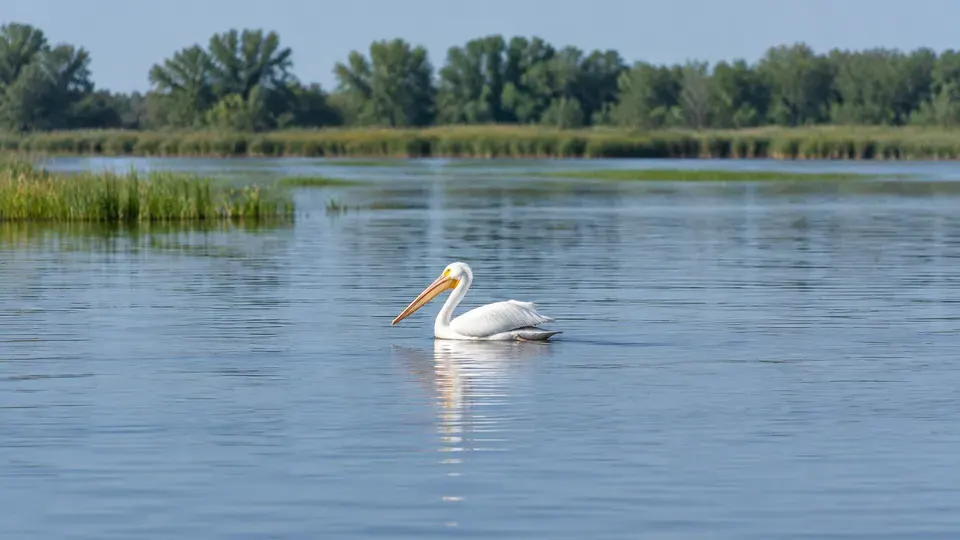
Tree Swallow in wetland habitat — Mississippi, River Cruises wildlifeTree SwallowAmerican white pelican in wetland habitat — Columbia, Mississippi, River Cruises wildlifeAmerican White PelicanAmerican Wigeon in wetland habitat — Columbia, Mississippi, River Cruises wildlifeAmerican Wigeon
Animal groupBirdsAnimal groupBirdsAnimal groupBirds
DestinationsMississippiDestinationsColumbia, MississippiDestinationsColumbia, Mississippi
Scientific name
Tachycineta bicolor
Scientific name
Scientific name
Previous speciesStriped WoodcreeperNext speciesTucuxi
All river wildlife
On this page
  • 01About
  • 02Behaviour & reproduction
  • 03Top wildlife locations
  • 04Fun facts
  • 05Best season
  • 06Season matrix by destination
  • 07Habitat
  • 08Diet
  • 09Species at a glance
  • 10Questions & answers
  • 11Compare

Find your river cruise

Plan your trip

Find your next river journey

Compare destinations, shore programs and dates with the animals and habitats you would love to see.

  • Daily shore excursions
  • Responsible wildlife watching
  • Boutique river ships
Explore river cruises