Bluerides – Blue Rides - Book Liveaboards worldwideOCEAN ADVENTURES
River CruisesRiversNature & WildlifeOur Promise
River CruisesRiversNature & WildlifeOur PromiseSign In

River destinations

  • River destinations
  • Amazon
  • Danube
  • Rhine
  • Mekong
  • Nile

Ships & departures

  • River Cruise Search
  • Deals

Nature & Wildlife

  • Nature & Wildlife

Travel support

  • Our Promise
  • Contact

Contact

Get in Touch

Get in touch anytime, we're happy to help you find the right trip or sort out any question.

EmailWrite us, we usually reply within a few hours.
contact@bluerides.com
WhatsAppChat with us on WhatsApp, Mon–Fri 10:00–16:00 (CET).
Start WhatsApp Chat
PhoneCall us, we're happy to help.
Free call, Mon–Fri 10 AM – 8 PM (CET).
Europe+49 800 1144 990USA+1 888 557 7735UK+44 800 707 4152Australia+61 2 8599 6113Canada+1 888 557 7735
Which river journey is yours?Answer 8 quick questions and find the river cruise that fits you.
8 questions, 1 minute·Plus Gift
Secure Payment MethodsYour payments are fully secured with AES-256 encryption.
Powered byStripeWiseAMEXPayGoogle PaySEPABank
Imprint·Terms & Conditions·Privacy Policy·About·Contact·Liability Waiver·Affiliate Program·Cruise·Blog·
Visit us here

© 2026 Blue Rides. All rights reserved.

Bluerides – Blue Rides - Book Liveaboards worldwideOCEAN ADVENTURES
River CruisesRiversNature & WildlifeOur Promise
River CruisesRiversNature & WildlifeOur PromiseSign In
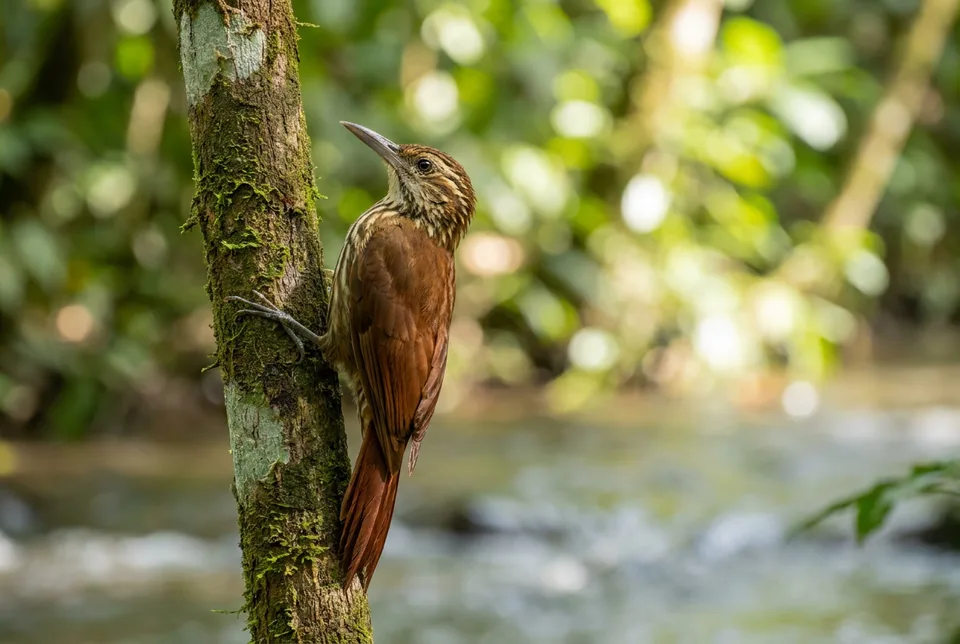
Striped Woodcreeper in wetland habitat — Amazon, River Cruises wildlifeAI-modified
Home›River Cruises›River Wildlife›Striped Woodcreeper

Striped WoodcreeperXiphorhynchus obsoletusWhere and when to see them

Previous speciesStriated HeronNext speciesTree Swallow

Striped Woodcreeper at a glance

The Striped Woodcreeper is a trunk-foraging forest bird particularly associated with Amazonian woodland near water. It is not a European treecreeper, despite the similar English description of climbing behaviour. The registered cruise opportunity is on the Rio Negro’s Anavilhanas islands in Brazil, where a specialist canoe or island-forest outing is needed. Species reference: https://birdsoftheworld.org/bow/species/strwoo2/cur/introduction

Behaviour & reproduction

Size
18–20.5 cm (7.1–8.1 in) total length, secondary summary of species account (https://en.wikipedia.org/wiki/Striped_Woodcreeper).
Weight
Males 27–37 g (0.95–1.3 oz); females 24–36 g (0.85–1.3 oz), secondary species summary.
Lifespan
Species-specific lifespan not verified.
Status
Least Concern in secondary species summary; formal assessment date not verified.

Birds of the World describes regular participation in mixed-species flocks, from understorey to canopy, and a preference for inspecting relatively slender trunks. A passing flock may therefore provide a brief opportunity before moving on. Follow the guide’s directions from a permitted position rather than chasing individual birds through flooded forest.

Top wildlife locations

Amazon river landscape — River Cruises wildlife habitatAI-modified

Amazon

Brazil — Rio Negro, Anavilhanas National Park islands Optional guided canoe/island forest excursion; small forest birds require close-range birding.
Explore river cruises

Destinations describe the species' habitat, not guaranteed cruise stops. Some animals require an optional inland excursion or are found in restricted reserves.

Fun facts about the Striped Woodcreeper

  • It belongs to the ovenbird family.
  • River islands are important habitat.
  • It mainly eats insects.
  • Small prey are commonly selected.
  • It joins mixed-species flocks.
  • It often inspects relatively slender trunks.

Best time to see the Striped Woodcreeper

No recurring, species-specific monthly series was verified for the Anavilhanas islands. General Amazon flooding patterns are not a substitute for occurrence data. The location months remain empty, with access and recent bird activity best discussed with an authorised local guide before arranging a close-range forest excursion.

Striped Woodcreeper: season matrix by destination

Highlighted months reflect the stated local evidence, not guaranteed encounters. Neutral months mean no verified monthly viewing window, not absence. Observation records and recommended viewing windows are distinct.

Amazon

No recurring species-specific monthly source verified for this exact Amazon reach. Historical itinerary evidence and general water-level cycles do not establish observation months.

JanFebMarAprMayJunJulAugSepOctNovDec
Explore river cruises

Where the Striped Woodcreeper lives

Evergreen forest close to rivers and lakes, particularly large river islands, is central to the published account. Most occurrence is in lowlands below 500 metres. This unusually close ecological fit makes the Anavilhanas registration meaningful, but it still does not establish abundance on a particular island or guarantee access during a cruise visit.

What the Striped Woodcreeper eats

Insects dominate, and Birds of the World notes selection of small prey. The relevant action is close inspection of bark and associated surfaces, not fishing or feeding over open river water. A local prey inventory and seasonal diet for Anavilhanas were not verified. Bark should never be stripped to reveal food for a photograph.

Species at a glance

Common name
Striped Woodcreeper
Scientific name
Xiphorhynchus obsoletus
Animal group
Birds
Size
18–20.5 cm (7.1–8.1 in) total length, secondary summary of species account (https://en.wikipedia.org/wiki/Striped_Woodcreeper).
Weight
Males 27–37 g (0.95–1.3 oz); females 24–36 g (0.85–1.3 oz), secondary species summary.
Lifespan
Species-specific lifespan not verified.
Status
Least Concern in secondary species summary; formal assessment date not verified.
Identification
The useful combination is a moderately sized woodcreeper with a fairly slim, slightly curved bill, pale streaking and a rufous-toned tail and wings. Other woodcreepers can share parts of that pattern. Compare the face, underpart streaking and bill proportions, preferably with photographs and a local field guide rather than colour alone.

Striped Woodcreeper: frequently asked questions

Where can I see the Striped Woodcreeper?
Amazon. Listen and watch for a moving mixed flock, then check narrow trunks for an upright brown bird. A stable canoe position may be more productive than repeated repositioning. On land, stay on authorised routes and let the flock move naturally. A telescope aimed into open water is unlikely to solve this particular identification challenge.
When is the best time to see the Striped Woodcreeper?
No recurring, species-specific monthly series was verified for the Anavilhanas islands. General Amazon flooding patterns are not a substitute for occurrence data. The location months remain empty, with access and recent bird activity best discussed with an authorised local guide before arranging a close-range forest excursion.
How big does the Striped Woodcreeper get?
18–20.5 cm (7.1–8.1 in) total length, secondary summary of species account (https://en.wikipedia.org/wiki/Striped_Woodcreeper).. Adult weight: Males 27–37 g (0.95–1.3 oz); females 24–36 g (0.85–1.3 oz), secondary species summary.. Size varies with age, sex and population.
How should I behave around the Striped Woodcreeper?
Listen and watch for a moving mixed flock, then check narrow trunks for an upright brown bird. A stable canoe position may be more productive than repeated repositioning. On land, stay on authorised routes and let the flock move naturally. A telescope aimed into open water is unlikely to solve this particular identification challenge.
What does the Striped Woodcreeper eat?
Insects dominate, and Birds of the World notes selection of small prey. The relevant action is close inspection of bark and associated surfaces, not fishing or feeding over open river water. A local prey inventory and seasonal diet for Anavilhanas were not verified. Bark should never be stripped to reveal food for a photograph.
Are wildlife sightings guaranteed on a river cruise?
No. Animals move freely and routes, weather, access restrictions and local conditions influence every outing. Confirm the actual itinerary and shore program before booking.

Compare wildlife in the same destinations

Explore other birds recorded in these destinations. Similar surroundings do not mean the animals share the same habits or viewing season.

Species comparison by animal group and destination
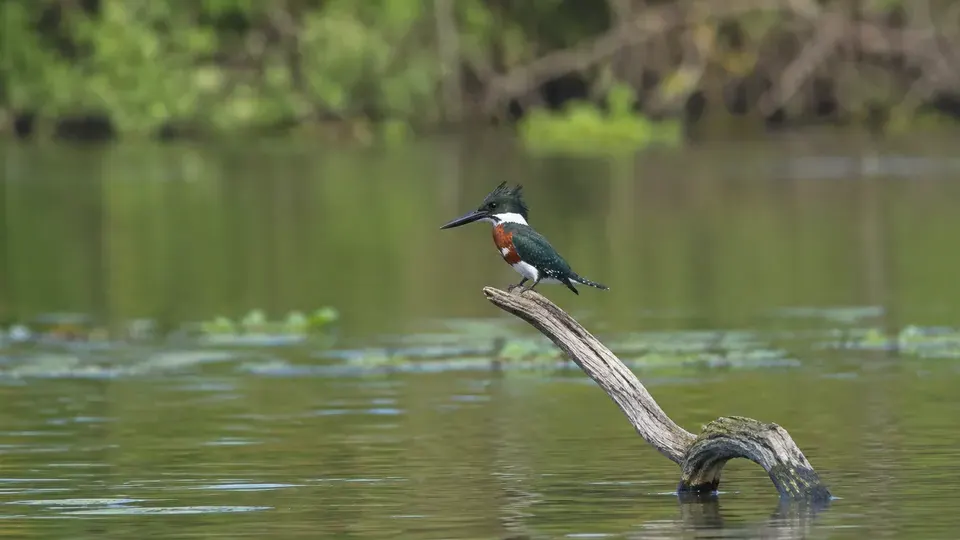
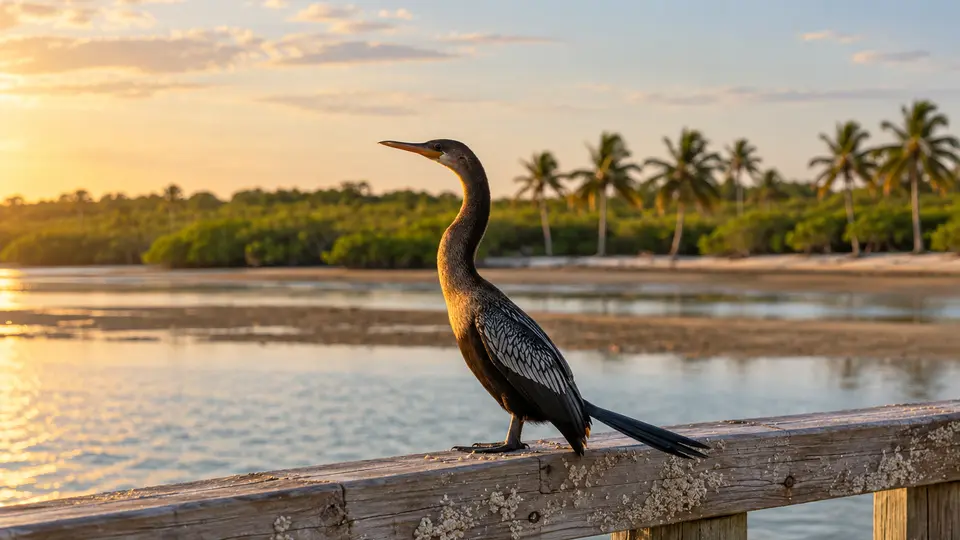
Striped Woodcreeper in wetland habitat — Amazon, River Cruises wildlifeAI-modifiedStriped WoodcreeperAmazon kingfisher in wetland habitat — Amazon, River Cruises wildlifeAI-modifiedAmazon KingfisherAnhinga in wetland habitat — Amazon, River Cruises wildlifeAI-modifiedAnhinga
Animal groupBirdsAnimal groupBirdsAnimal groupBirds
DestinationsAmazonDestinationsAmazonDestinationsAmazon
Scientific name
Xiphorhynchus obsoletus
Scientific name
Scientific name
Previous speciesStriated HeronNext speciesTree Swallow
All river wildlife
On this page
  • 01About
  • 02Behaviour & reproduction
  • 03Top wildlife locations
  • 04Fun facts
  • 05Best season
  • 06Season matrix by destination
  • 07Habitat
  • 08Diet
  • 09Species at a glance
  • 10Questions & answers
  • 11Compare

Find your river cruise

AI-modified
Plan your trip

Find your next river journey

Compare destinations, shore programs and dates with the animals and habitats you would love to see.

  • Daily shore excursions
  • Responsible wildlife watching
  • Boutique river ships
Explore river cruises