Bluerides – Blue Rides - Book Liveaboards worldwideOCEAN ADVENTURES
River CruisesRiversNature & WildlifeOur Promise
River CruisesRiversNature & WildlifeOur PromiseSign In

River destinations

  • River destinations
  • Amazon
  • Danube
  • Rhine
  • Mekong
  • Nile

Ships & departures

  • River Cruise Search
  • Deals

Nature & Wildlife

  • Nature & Wildlife

Travel support

  • Our Promise
  • Contact

Contact

Get in Touch

Get in touch anytime, we're happy to help you find the right trip or sort out any question.

EmailWrite us, we usually reply within a few hours.
contact@bluerides.com
WhatsAppChat with us on WhatsApp, Mon–Fri 10:00–16:00 (CET).
Start WhatsApp Chat
PhoneCall us, we're happy to help.
Free call, Mon–Fri 10 AM – 8 PM (CET).
Europe+49 800 1144 990USA+1 888 557 7735UK+44 800 707 4152Australia+61 2 8599 6113Canada+1 888 557 7735
Which river journey is yours?Answer 8 quick questions and find the river cruise that fits you.
8 questions, 1 minute·Plus Gift
Secure Payment MethodsYour payments are fully secured with AES-256 encryption.
Powered byStripeWiseAMEXPayGoogle PaySEPABank
Imprint·Terms & Conditions·Privacy Policy·About·Contact·Liability Waiver·Affiliate Program·Cruise·
Visit us here

© 2026 Blue Rides. All rights reserved.·

Bluerides – Blue Rides - Book Liveaboards worldwideOCEAN ADVENTURES
River CruisesRiversNature & WildlifeOur Promise
River CruisesRiversNature & WildlifeOur PromiseSign In
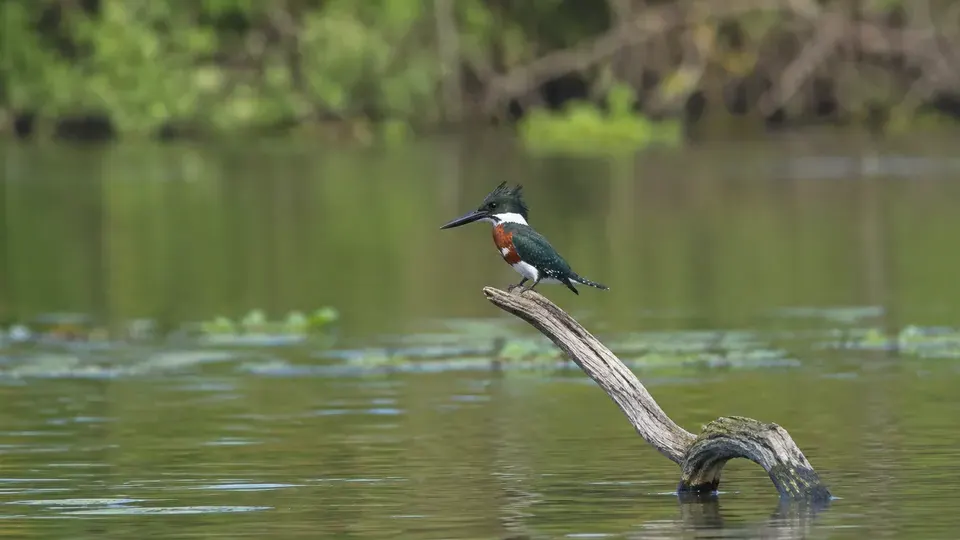
Amazon kingfisher in wetland habitat — Amazon, River Cruises wildlife
Home›River Cruises›River Wildlife›Amazon Kingfisher

Amazon KingfisherChloroceryle amazonaWhere and when to see them

Previous speciesAlpine SwiftNext speciesAmazon River Dolphin

Amazon Kingfisher at a glance

The Amazon Kingfisher is a substantial green kingfisher of lakeshores and large, slow-flowing rivers across much of tropical America. Cornell's Birds of the World describes its bronzy-green upperparts, ragged crest and contrasting pale underparts. The name can be misleading geographically: its range extends well beyond the Amazon basin. Within the River registry, however, the association is specifically a Peruvian Amazon cruise around Iquitos and Nauta, the Ucayali and connected tributaries. The original March 2017 expedition list describes it as the second most commonly encountered kingfisher on that trip, often seen flying low over water. That observation is useful historical cruise evidence without establishing present-day abundance. This is a perch-hunting bird, so river-edge branches and exposed banks deserve more attention than the distant centre of the channel. Its heavier bill and larger build help distinguish it from the smaller Green Kingfisher, which can occur in the same waterways.
Behaviour & reproduction

Size
29–30 cm (11.4–11.8 in) long
Weight
110–140 g (3.9–4.9 oz)
Lifespan
Up to 10 years in the wild
Status
Least Concern

Amazon Kingfishers commonly watch the water from an exposed perch, dive to capture prey and return to a perch to handle it. Birds of the World also records occasional hovering before a dive. A hunting bird may remain still for long enough to be overlooked, then reveal itself through a sudden plunge or low flight along the bank. Original research in Panama found both sexes participating equally in nest excavation, while females incubated more often in the studied population. The same study linked male foraging performance and courtship feeding with aspects of female laying decisions. Those findings demonstrate how food access can influence reproductive behaviour, but they are not a breeding calendar for Peru. Nest tunnels are excavated in suitable earth, including erosion gullies or road cuts near water. Observers should therefore avoid approaching bank holes or repeatedly positioning a skiff beside a bird that may be attending a nesting area.

Top wildlife locations

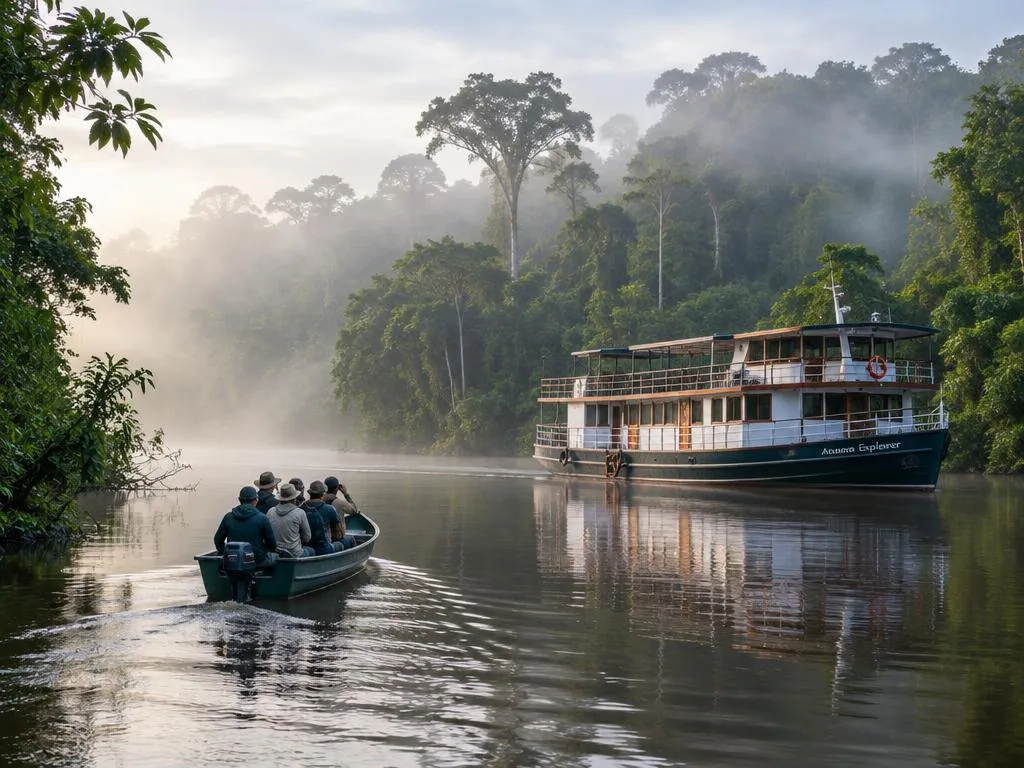
Amazon river landscape — River Cruises wildlife habitat

Amazon

Peru: Iquitos/Nauta, Ucayali and connected tributaries visited on the 2017 cruise; guided skiff and side-channel observation, not a main-ship guarantee.
Explore river cruises

Destinations describe the species' habitat, not guaranteed cruise stops. Some animals require an optional inland excursion or are found in restricted reserves.

Fun facts about the Amazon Kingfisher

  • Its range extends beyond the Amazon basin.
  • Adults have bronzy-green upperparts.
  • The crest can look ragged.
  • Males and females differ in breast pattern.
  • Fish and crustaceans are documented prey.
  • It can occasionally hover before diving.
  • Prey is handled on a perch and swallowed head first.
  • Both sexes excavated nests in the Panama breeding study.
  • The registered Peruvian cruise record dates to March 2017.

Best time to see the Amazon Kingfisher

The original Naturalist Journeys species list covers 18–26 March 2017 and records Amazon Kingfishers during the Peruvian Amazon cruise. March can therefore be included as a documented historical observation month for this registered reach. It is not presented as an annually superior month, a peak season or a guarantee of sightings on another itinerary. Birds of the World describes the species as resident across its range, but broad residency does not provide a verified month-by-month record at every Peruvian channel. Water conditions can change the accessibility of side channels, the position of useful perches and the distance between a boat and the bank. Ask the operator about current river levels and recent sightings on the actual excursion route. A guide's choice of a quiet tributary and a slow approach may matter more than the calendar. Keep the distinction clear between the dated trip evidence and any future seasonal prediction.

Amazon Kingfisher: season matrix by destination

Highlighted months reflect the stated local evidence, not guaranteed encounters. Neutral months mean no verified monthly viewing window, not absence. Observation records and recommended viewing windows are distinct.

Amazon

The original species list covers 18–26 March 2017 and records this species. March denotes historical occurrence only, not an established annual peak or complete local season.

JanFebMarAprMayJunJulAugSepOctNovDec
Explore river cruises

Where the Amazon Kingfisher lives

Large slow-flowing rivers, lakeshores and suitable waterside perches are characteristic Amazon Kingfisher habitat in the Cornell account. The registered Peruvian setting includes the Ucayali and connected channels visited from the Iquitos–Nauta cruise corridor. Tributaries and sheltered margins can offer closer views than the main river because branches, banks and fishing perches are easier to inspect at a respectful distance. Habitat needs extend beyond the water itself: the bird requires places to watch for prey and suitable earthen sites for excavating nest tunnels. A heavily altered bank may therefore differ markedly from an apparently similar reach with overhanging vegetation and exposed soil. The species' broad distribution across tropical America should not be used to promise it at every Amazon landing. On a particular excursion, channel width, visibility, water conditions and local disturbance influence whether a guide can locate a bird without leaving the authorised route or disturbing the bank.

What the Amazon Kingfisher eats

Birds of the World describes fish and crustaceans as Amazon Kingfisher prey. The bird typically hunts from a perch, making a plunge into the water and returning with its catch. Prey can be stunned before being swallowed head first, a handling sequence that may be visible through binoculars from a stationary skiff. Occasional hovering provides another way to position a dive, but an exposed perch remains a useful place to begin searching. The Panama breeding study shows that access to fish can affect courtship provisioning and subsequent reproductive decisions, demonstrating that food availability has consequences beyond the immediate capture. No equivalent dietary proportions or breeding-food study were verified for the registered Peruvian cruise reach. It would therefore be inappropriate to name particular local fish as dominant prey without evidence. Never throw fish into the water, bait a perch or ask a guide to manipulate prey for a photograph.

Species at a glance

Common name
Amazon Kingfisher
Scientific name
Chloroceryle amazona
Animal group
Birds
Size
29–30 cm (11.4–11.8 in) long
Weight
110–140 g (3.9–4.9 oz)
Lifespan
Up to 10 years in the wild
Status
Least Concern
Identification
Look for a large green kingfisher with a substantial dark bill, shaggy or ragged crest, white throat and collar, and pale belly. Cornell describes the upperparts as dark bronzy green. Adult males show a rufous breast area, whereas females have a narrower green breast band or patches against the pale breast. The smaller Green Kingfisher is an important comparison: Amazon Kingfisher is larger and heavier-billed and often uses more conspicuous perches. Apparent size can still be difficult to judge across water, so combine bill proportions, breast pattern and overall build rather than using one feature alone. Low flight over the river is helpful behaviour but is not diagnostic, because other kingfishers can move similarly. Wait for a settled view if possible. Strong shade can suppress the green gloss and obscure breast colour, so an uncertain distant bird should remain unidentified rather than being assigned from the trip's historical frequency.

Amazon Kingfisher: frequently asked questions

Where can I see the Amazon Kingfisher?
Amazon. On a guided skiff excursion, scan exposed branches above the water and listen to the guide before searching only for birds in flight. A perched kingfisher can blend into shaded foliage, while its long bill and upright posture may stand out against open water behind it. If a bird flies low along the channel, note where it lands rather than pursuing at speed. A quiet pause often gives a better view of the next natural hunting attempt. Keep enough distance that the bird continues watching the water instead of repeatedly moving away. Avoid earthen bank holes, which may be nest entrances, and never touch or probe them. The registry supports the Iquitos–Nauta, Ucayali and tributary cruise setting, not unrestricted occurrence throughout every Amazon itinerary. Main-ship views are possible but less controllable; smaller-channel observation with a knowledgeable guide is the more realistic way to study identification and feeding behaviour.
When is the best time to see the Amazon Kingfisher?
The original Naturalist Journeys species list covers 18–26 March 2017 and records Amazon Kingfishers during the Peruvian Amazon cruise. March can therefore be included as a documented historical observation month for this registered reach. It is not presented as an annually superior month, a peak season or a guarantee of sightings on another itinerary. Birds of the World describes the species as resident across its range, but broad residency does not provide a verified month-by-month record at every Peruvian channel. Water conditions can change the accessibility of side channels, the position of useful perches and the distance between a boat and the bank. Ask the operator about current river levels and recent sightings on the actual excursion route. A guide's choice of a quiet tributary and a slow approach may matter more than the calendar. Keep the distinction clear between the dated trip evidence and any future seasonal prediction.
How big does the Amazon Kingfisher get?
29–30 cm (11.4–11.8 in) long. Adult weight: 110–140 g (3.9–4.9 oz). Size varies with age, sex and population.
How should I behave around the Amazon Kingfisher?
On a guided skiff excursion, scan exposed branches above the water and listen to the guide before searching only for birds in flight. A perched kingfisher can blend into shaded foliage, while its long bill and upright posture may stand out against open water behind it. If a bird flies low along the channel, note where it lands rather than pursuing at speed. A quiet pause often gives a better view of the next natural hunting attempt. Keep enough distance that the bird continues watching the water instead of repeatedly moving away. Avoid earthen bank holes, which may be nest entrances, and never touch or probe them. The registry supports the Iquitos–Nauta, Ucayali and tributary cruise setting, not unrestricted occurrence throughout every Amazon itinerary. Main-ship views are possible but less controllable; smaller-channel observation with a knowledgeable guide is the more realistic way to study identification and feeding behaviour.
What does the Amazon Kingfisher eat?
Birds of the World describes fish and crustaceans as Amazon Kingfisher prey. The bird typically hunts from a perch, making a plunge into the water and returning with its catch. Prey can be stunned before being swallowed head first, a handling sequence that may be visible through binoculars from a stationary skiff. Occasional hovering provides another way to position a dive, but an exposed perch remains a useful place to begin searching. The Panama breeding study shows that access to fish can affect courtship provisioning and subsequent reproductive decisions, demonstrating that food availability has consequences beyond the immediate capture. No equivalent dietary proportions or breeding-food study were verified for the registered Peruvian cruise reach. It would therefore be inappropriate to name particular local fish as dominant prey without evidence. Never throw fish into the water, bait a perch or ask a guide to manipulate prey for a photograph.
Are wildlife sightings guaranteed on a river cruise?
No. Animals move freely and routes, weather, access restrictions and local conditions influence every outing. Confirm the actual itinerary and shore program before booking.

Compare wildlife in the same destinations

Explore other birds recorded in these destinations. Similar surroundings do not mean the animals share the same habits or viewing season.

Species comparison by animal group and destination
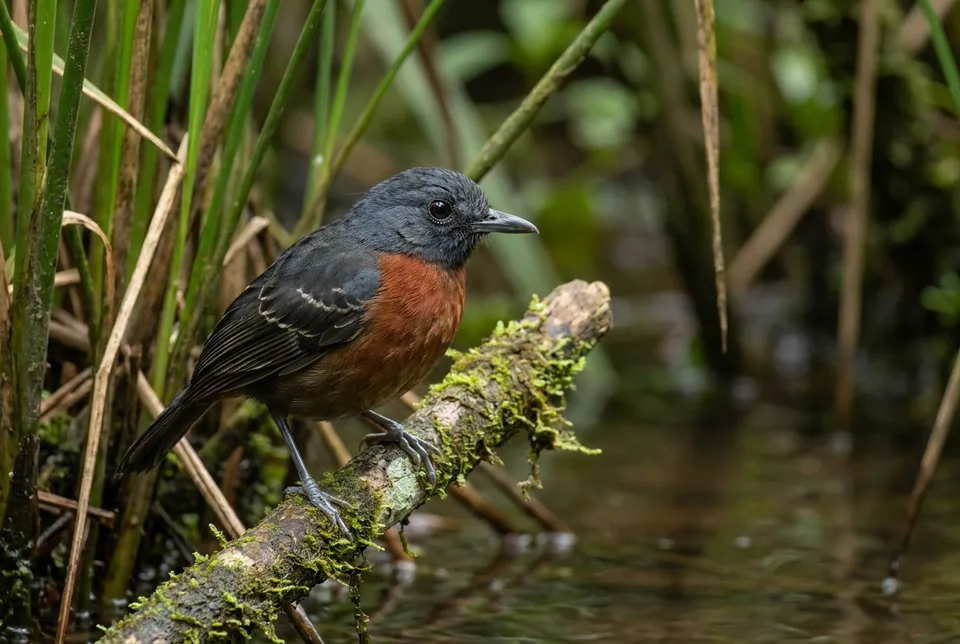
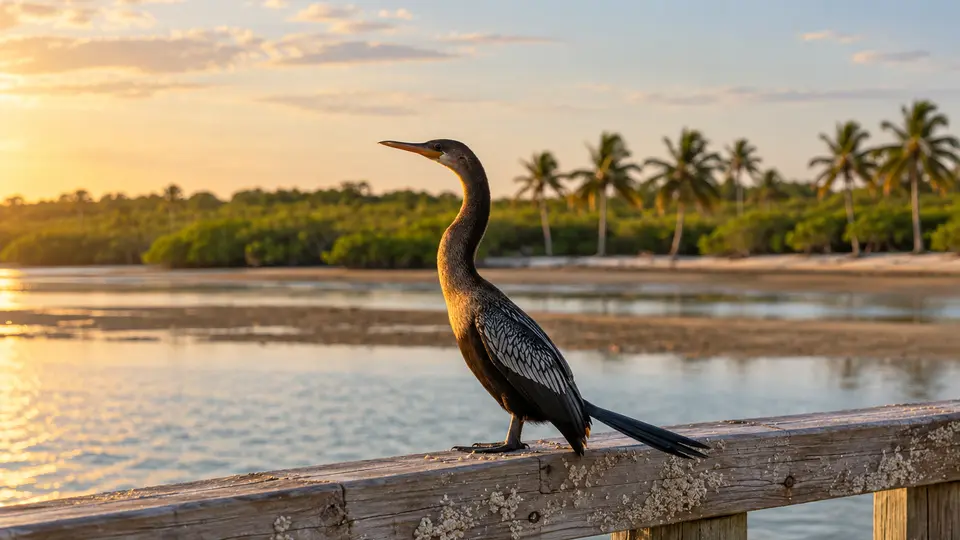
Amazon kingfisher in wetland habitat — Amazon, River Cruises wildlifeAmazon KingfisherAnhinga in wetland habitat — Amazon, River Cruises wildlifeAnhingaAsh-breasted Antbird in wetland habitat — Amazon, River Cruises wildlifeAsh-breasted Antbird
Animal groupBirdsAnimal groupBirdsAnimal groupBirds
DestinationsAmazonDestinationsAmazonDestinationsAmazon
Scientific name
Chloroceryle amazona
Scientific name
Scientific name
Previous speciesAlpine SwiftNext speciesAmazon River Dolphin
All river wildlife
On this page
  • 01About
  • 02Behaviour & reproduction
  • 03Top wildlife locations
  • 04Fun facts
  • 05Best season
  • 06Season matrix by destination
  • 07Habitat
  • 08Diet
  • 09Species at a glance
  • 10Questions & answers
  • 11Compare

Find your river cruise

Plan your trip

Find your next river journey

Compare destinations, shore programs and dates with the animals and habitats you would love to see.

  • Daily shore excursions
  • Responsible wildlife watching
  • Boutique river ships
Explore river cruises