Bluerides – Blue Rides - Book Liveaboards worldwideOCEAN ADVENTURES
River CruisesRiversNature & WildlifeOur Promise
River CruisesRiversNature & WildlifeOur PromiseSign In

River destinations

  • River destinations
  • Amazon
  • Danube
  • Rhine
  • Mekong
  • Nile

Ships & departures

  • River Cruise Search
  • Deals

Nature & Wildlife

  • Nature & Wildlife

Travel support

  • Our Promise
  • Contact

Contact

Get in Touch

Get in touch anytime, we're happy to help you find the right trip or sort out any question.

EmailWrite us, we usually reply within a few hours.
contact@bluerides.com
WhatsAppChat with us on WhatsApp, Mon–Fri 10:00–16:00 (CET).
Start WhatsApp Chat
PhoneCall us, we're happy to help.
Free call, Mon–Fri 10 AM – 8 PM (CET).
Europe+49 800 1144 990USA+1 888 557 7735UK+44 800 707 4152Australia+61 2 8599 6113Canada+1 888 557 7735
Which river journey is yours?Answer 8 quick questions and find the river cruise that fits you.
8 questions, 1 minute·Plus Gift
Secure Payment MethodsYour payments are fully secured with AES-256 encryption.
Powered byStripeWiseAMEXPayGoogle PaySEPABank
Imprint·Terms & Conditions·Privacy Policy·About·Contact·Liability Waiver·Affiliate Program·Cruise·Blog·
Visit us here

© 2026 Blue Rides. All rights reserved.

Bluerides – Blue Rides - Book Liveaboards worldwideOCEAN ADVENTURES
River CruisesRiversNature & WildlifeOur Promise
River CruisesRiversNature & WildlifeOur PromiseSign In
Ash-breasted Antbird in wetland habitat — Amazon, River Cruises wildlifeAI-modified
Home›River Cruises›River Wildlife›Ash-breasted Antbird

Ash-breasted AntbirdMyrmoborus lugubrisWhere and when to see them

Previous speciesAnhingaNext speciesAsian Openbill

Ash-breasted Antbird at a glance

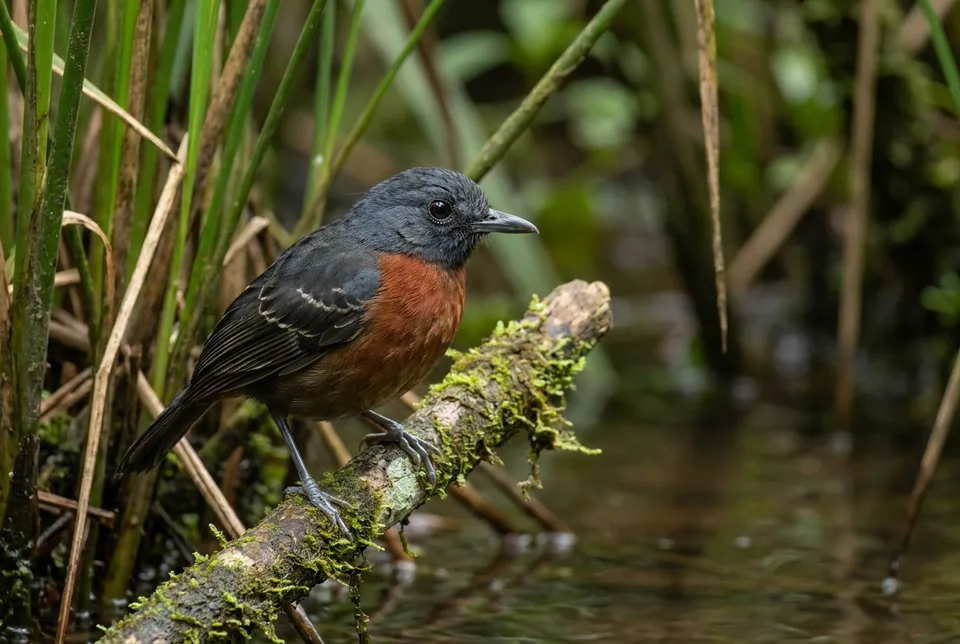
The Ash-breasted Antbird is a small forest-understory bird whose relationship with rivers is unusually close even though it does not swim or feed in open water. Cornell's Birds of the World describes a narrow distribution following the Amazon and some major tributaries, with habitat concentrated in lowland riverside forest, river islands and tangled floodplain vegetation. The registered River association is the Brazilian Rio Negro at islands within Anavilhanas National Park. A Field Guides report from September 2022 specifically records the species in flooded forest on an island there. This is a specialist guided-birding encounter rather than typical wildlife visible from the main ship. Males and females look markedly different, an important point when a pair moves through dense cover. The species illustrates why an Amazon wildlife inventory includes forest animals as well as conspicuous waterbirds: floodplain structure, island vegetation and the river's ecological influence extend beyond the visible surface of the channel.
Behaviour & reproduction

Size
Species-specific measurement not verified from the original authoritative material read.
Weight
Species-specific weight not verified.
Lifespan
Species-specific lifespan not verified.
Status
See sourced assessment

Birds of the World describes Ash-breasted Antbirds occurring in relatively close-knit pairs and foraging near the ground, generally apart from mixed-species flocks. This offers a useful search strategy: once a guide locates one bird, the partner may be nearby, but neither is necessarily moving with the busy flock overhead. Dense vegetation can allow short, partially obscured views, so patience and attention to the guide's directions are more productive than repeated repositioning. The name antbird should not be treated as proof that every encounter involves a swarm of army ants; the retrieved account instead highlights paired understory foraging. The September 2022 Anavilhanas report establishes a successful flooded-forest observation without detailing a local breeding cycle. Nesting dates, incubation and juvenile development were not verified for this draft. Avoid playback or entering thickets simply to prolong a view, and allow a feeding pair to move naturally through its cover.

Top wildlife locations

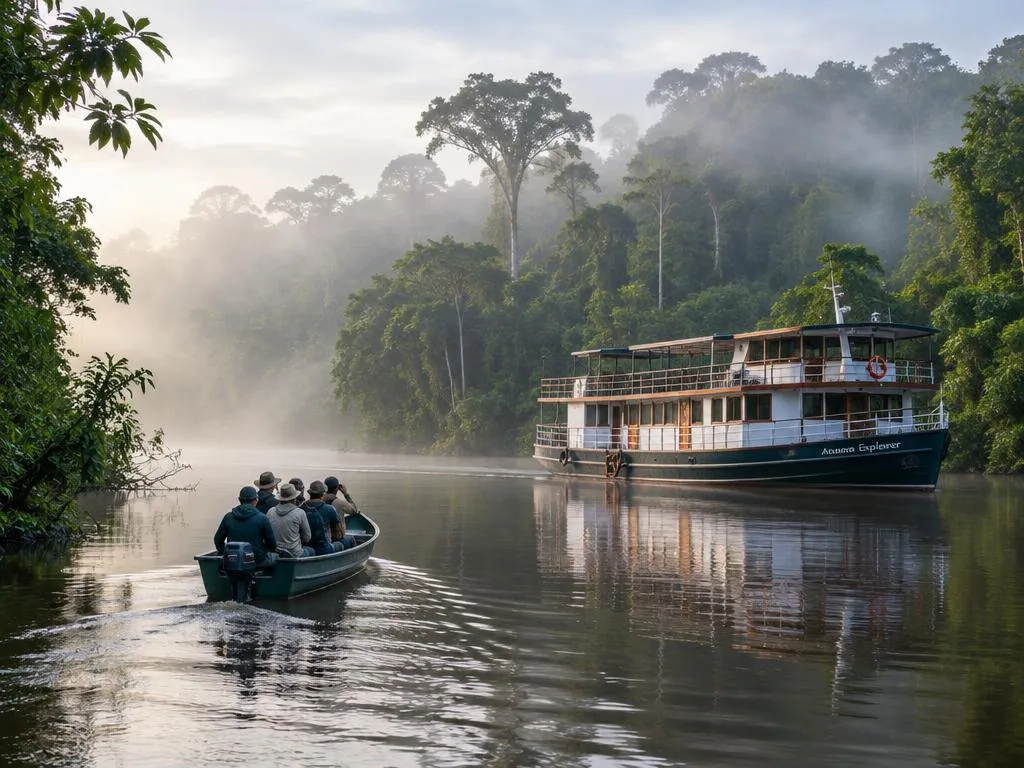
Amazon river landscape — River Cruises wildlife habitatAI-modified

Amazon

Brazil: Rio Negro, Anavilhanas National Park islands; specialist guided canoe or island-forest excursion, not ordinary main-ship viewing.
Explore river cruises

Destinations describe the species' habitat, not guaranteed cruise stops. Some animals require an optional inland excursion or are found in restricted reserves.

Fun facts about the Ash-breasted Antbird

  • Its distribution closely follows the Amazon and major tributaries.
  • It is a member of the typical antbird family, Thamnophilidae.
  • Pairs forage close to the ground.
  • Cornell describes it as generally apart from mixed-species flocks.
  • Males have a black face and throat.
  • Females are much warmer brown above.
  • Female plumage varies among recognised subspecies.
  • Black-water floodplain forest is included in its habitat.
  • The registered Anavilhanas observation comes from September 2022.

Best time to see the Ash-breasted Antbird

The original Field Guides report covers 3–18 September 2022 and records Ash-breasted Antbird in flooded forest on an Anavilhanas National Park island. September is therefore retained as a documented historical observation month for this registered Amazon association. One successful tour does not establish September as the best annual season, and BirdLife's nonmigrant classification does not supply twelve verified local months. The relationship between river level, island access and the visibility of understory vegetation can affect how a guided outing is conducted. Ask a local specialist which permitted island routes are appropriate under current conditions rather than assuming that the same canoe or walking route is available every year. The bird's low foraging position also makes habitat quality and patient close-range birding important regardless of date. Keep the calendar scoped to the dated observation, while treating broader seasonal planning as a matter requiring current, place-specific information.

Ash-breasted Antbird: season matrix by destination

Highlighted months reflect the stated local evidence, not guaranteed encounters. Neutral months mean no verified monthly viewing window, not absence. Observation records and recommended viewing windows are distinct.

Amazon

The original 3–18 September 2022 Field Guides report records the species in island flooded forest. September is historical occurrence evidence, not a proven annual peak.

JanFebMarAprMayJunJulAugSepOctNovDec
Explore river cruises

Where the Ash-breasted Antbird lives

The species' habitat is lowland evergreen forest influenced by rivers, especially island and floodplain understory. Cornell specifically mentions white-water river islands and vine-tangled black-water floodplain forest, making the Anavilhanas setting ecologically meaningful rather than merely a convenient tour stop. The River registry retains the Rio Negro islands within Anavilhanas National Park, supported by an original tour observation of a bird in flooded forest. This does not establish occurrence on every island or along every bank near Manaus. Understory structure matters: a broad view across the channel can miss the dense vegetation where the bird actually lives. Access also changes with water conditions, so a route suitable for a canoe on one visit may offer a different viewing arrangement later. Use an authorised local guide and remain within permitted routes. Protecting riverside forest continuity and island vegetation is more relevant to this species than maintaining open water without its adjoining wooded habitat.

What the Ash-breasted Antbird eats

The Ash-breasted Antbird is an insect-eating understory bird, and Cornell describes pairs foraging close to the ground. That combination places attention on the low vegetation and forest-floor zone rather than the river surface or canopy fruit crop. However, the original authoritative passages retrieved for this profile do not provide a detailed prey inventory, feeding percentages or an Anavilhanas-specific diet study. Those unknowns should remain explicit instead of being filled with lists borrowed from other antbirds. Nor does the family name justify describing the species as dependent on ants or as an obligatory army-ant follower. The verified account is more specific about habitat, paired activity and foraging height than about individual prey. Observers can still learn from how a bird searches stems, leaves and nearby cover without identifying each captured item. Do not scatter insects, disturb leaf litter or use food to draw a bird out of the understory.

Species at a glance

Common name
Ash-breasted Antbird
Scientific name
Myrmoborus lugubris
Animal group
Birds
Size
Species-specific measurement not verified from the original authoritative material read.
Weight
Species-specific weight not verified.
Lifespan
Species-specific lifespan not verified.
Status
The BirdLife factsheet read for this research presents a 2023 Least Concern assessment, a decreasing population trend and an unquantified population size.
Identification
Cornell describes males as mainly grey above, with a black face and throat, red eyes and pale greyish-white underparts. Females are warmer buffy-brown above, with pale spots on the wing coverts, a white throat and pale or greyish underparts. Female facial pattern varies among recognised subspecies, so a single illustration should not be assumed to represent every population exactly. The account notes four subspecies and identifies female plumage as an important source of their differences. In dense forest, red eye colour or wing spots may be difficult to resolve, making a combination of plumage, paired behaviour, low foraging position and local expertise valuable. Do not use floodplain habitat alone as identification, because several small antbirds can occur in riverside forest. A male and female seen together can look surprisingly unlike one another. Record the separate features of each bird rather than assuming that differently coloured individuals must belong to different species.

Ash-breasted Antbird: frequently asked questions

Where can I see the Ash-breasted Antbird?
Amazon. Arrange a specialist island or flooded-forest outing rather than expecting to recognise this bird from the main ship. Follow the guide's instructions about where to watch within the low vegetation, and remain still when movement is detected. Short gaps between leaves may provide the best views, so repeatedly shifting position can make an already difficult bird harder to follow. Look for a second individual nearby if one member of a pair is located, remembering that the sexes differ strongly in plumage. Use binoculars suited to close forest viewing and avoid flash, baiting or clearing vegetation. The registered evidence belongs to Anavilhanas National Park islands on the Rio Negro, not to all Amazon forest excursions. A heard-only or partially seen encounter should be recorded honestly if diagnostic features were not obtained. Quiet observation that lets a pair continue foraging is preferable to forcing a prolonged exposed view through playback or pursuit.
When is the best time to see the Ash-breasted Antbird?
The original Field Guides report covers 3–18 September 2022 and records Ash-breasted Antbird in flooded forest on an Anavilhanas National Park island. September is therefore retained as a documented historical observation month for this registered Amazon association. One successful tour does not establish September as the best annual season, and BirdLife's nonmigrant classification does not supply twelve verified local months. The relationship between river level, island access and the visibility of understory vegetation can affect how a guided outing is conducted. Ask a local specialist which permitted island routes are appropriate under current conditions rather than assuming that the same canoe or walking route is available every year. The bird's low foraging position also makes habitat quality and patient close-range birding important regardless of date. Keep the calendar scoped to the dated observation, while treating broader seasonal planning as a matter requiring current, place-specific information.
How big does the Ash-breasted Antbird get?
Species-specific measurement not verified from the original authoritative material read.. Adult weight: Species-specific weight not verified.. Size varies with age, sex and population.
How should I behave around the Ash-breasted Antbird?
Arrange a specialist island or flooded-forest outing rather than expecting to recognise this bird from the main ship. Follow the guide's instructions about where to watch within the low vegetation, and remain still when movement is detected. Short gaps between leaves may provide the best views, so repeatedly shifting position can make an already difficult bird harder to follow. Look for a second individual nearby if one member of a pair is located, remembering that the sexes differ strongly in plumage. Use binoculars suited to close forest viewing and avoid flash, baiting or clearing vegetation. The registered evidence belongs to Anavilhanas National Park islands on the Rio Negro, not to all Amazon forest excursions. A heard-only or partially seen encounter should be recorded honestly if diagnostic features were not obtained. Quiet observation that lets a pair continue foraging is preferable to forcing a prolonged exposed view through playback or pursuit.
What does the Ash-breasted Antbird eat?
The Ash-breasted Antbird is an insect-eating understory bird, and Cornell describes pairs foraging close to the ground. That combination places attention on the low vegetation and forest-floor zone rather than the river surface or canopy fruit crop. However, the original authoritative passages retrieved for this profile do not provide a detailed prey inventory, feeding percentages or an Anavilhanas-specific diet study. Those unknowns should remain explicit instead of being filled with lists borrowed from other antbirds. Nor does the family name justify describing the species as dependent on ants or as an obligatory army-ant follower. The verified account is more specific about habitat, paired activity and foraging height than about individual prey. Observers can still learn from how a bird searches stems, leaves and nearby cover without identifying each captured item. Do not scatter insects, disturb leaf litter or use food to draw a bird out of the understory.
Are wildlife sightings guaranteed on a river cruise?
No. Animals move freely and routes, weather, access restrictions and local conditions influence every outing. Confirm the actual itinerary and shore program before booking.

Compare wildlife in the same destinations

Explore other birds recorded in these destinations. Similar surroundings do not mean the animals share the same habits or viewing season.

Species comparison by animal group and destination
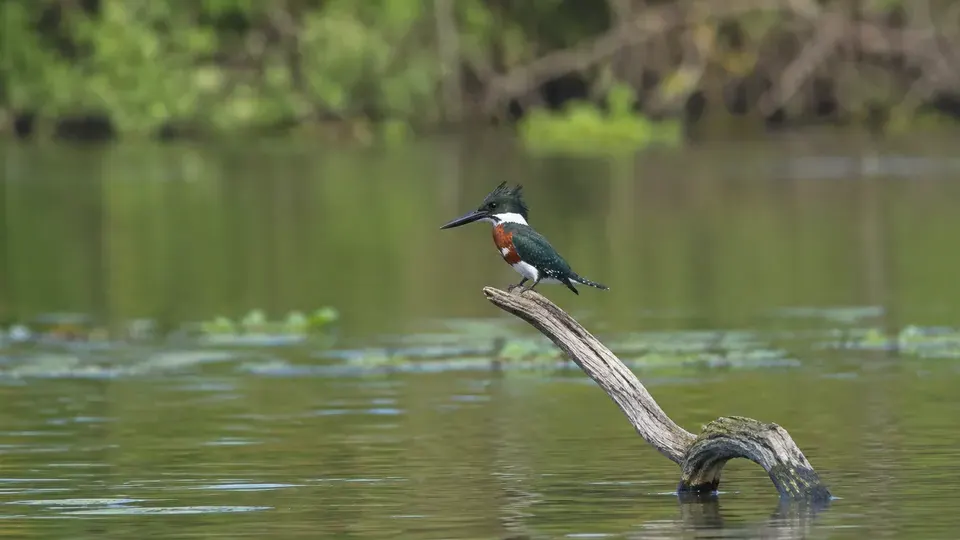
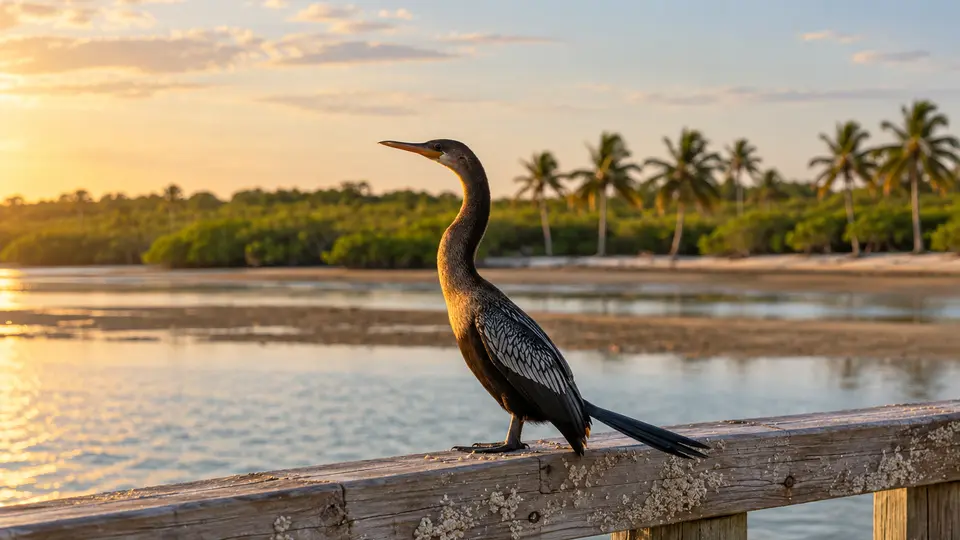
Ash-breasted Antbird in wetland habitat — Amazon, River Cruises wildlifeAI-modifiedAsh-breasted AntbirdAmazon kingfisher in wetland habitat — Amazon, River Cruises wildlifeAI-modifiedAmazon KingfisherAnhinga in wetland habitat — Amazon, River Cruises wildlifeAI-modifiedAnhinga
Animal groupBirdsAnimal groupBirdsAnimal groupBirds
DestinationsAmazonDestinationsAmazonDestinationsAmazon
Scientific name
Myrmoborus lugubris
Scientific name
Scientific name
Previous speciesAnhingaNext speciesAsian Openbill
All river wildlife
On this page
  • 01About
  • 02Behaviour & reproduction
  • 03Top wildlife locations
  • 04Fun facts
  • 05Best season
  • 06Season matrix by destination
  • 07Habitat
  • 08Diet
  • 09Species at a glance
  • 10Questions & answers
  • 11Compare

Find your river cruise

AI-modified
Plan your trip

Find your next river journey

Compare destinations, shore programs and dates with the animals and habitats you would love to see.

  • Daily shore excursions
  • Responsible wildlife watching
  • Boutique river ships
Explore river cruises