Bluerides – Blue Rides - Book Liveaboards worldwideOCEAN ADVENTURES
River CruisesRiversNature & WildlifeOur Promise
River CruisesRiversNature & WildlifeOur PromiseSign In

River destinations

  • River destinations
  • Amazon
  • Danube
  • Rhine
  • Mekong
  • Nile

Ships & departures

  • River Cruise Search
  • Deals

Nature & Wildlife

  • Nature & Wildlife

Travel support

  • Our Promise
  • Contact

Contact

Get in Touch

Get in touch anytime, we're happy to help you find the right trip or sort out any question.

EmailWrite us, we usually reply within a few hours.
contact@bluerides.com
WhatsAppChat with us on WhatsApp, Mon–Fri 10:00–16:00 (CET).
Start WhatsApp Chat
PhoneCall us, we're happy to help.
Free call, Mon–Fri 10 AM – 8 PM (CET).
Europe+49 800 1144 990USA+1 888 557 7735UK+44 800 707 4152Australia+61 2 8599 6113Canada+1 888 557 7735
Which river journey is yours?Answer 8 quick questions and find the river cruise that fits you.
8 questions, 1 minute·Plus Gift
Secure Payment MethodsYour payments are fully secured with AES-256 encryption.
Powered byStripeWiseAMEXPayGoogle PaySEPABank
Imprint·Terms & Conditions·Privacy Policy·About·Contact·Liability Waiver·Affiliate Program·Cruise·Blog·
Visit us here

© 2026 Blue Rides. All rights reserved.

Bluerides – Blue Rides - Book Liveaboards worldwideOCEAN ADVENTURES
River CruisesRiversNature & WildlifeOur Promise
River CruisesRiversNature & WildlifeOur PromiseSign In
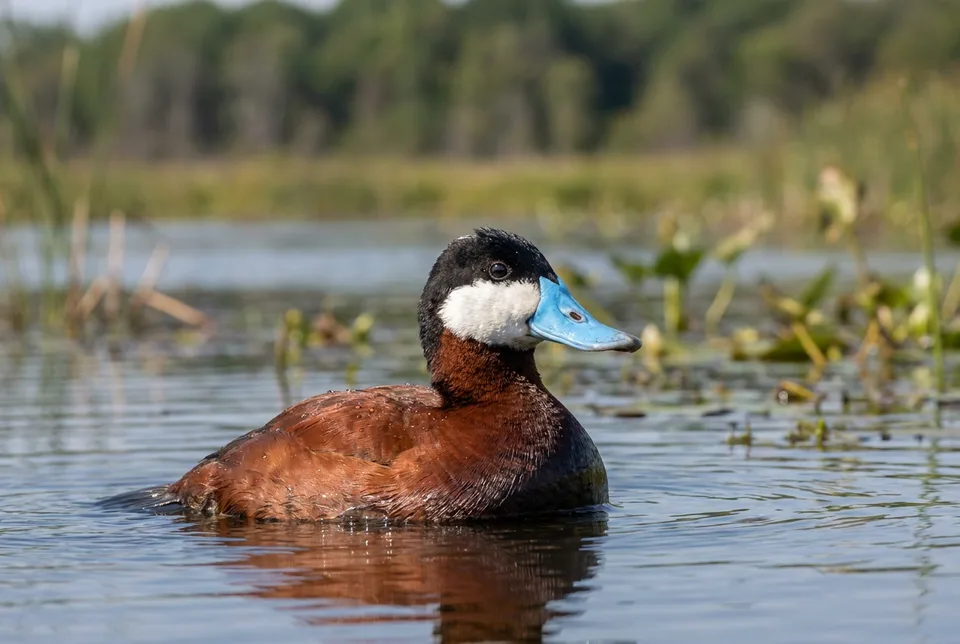
Ruddy Duck in wetland habitat — Mississippi, River Cruises wildlifeAI-modified
Home›River Cruises›River Wildlife›Ruddy Duck

Ruddy DuckOxyura jamaicensisWhere and when to see them

Previous speciesRock BuntingNext speciesRuddy turnstone

Ruddy Duck at a glance

The Ruddy Duck is a small, compact diving duck with a large-looking head, scoop-shaped bill and long stiff tail. Breeding males show a chestnut body, blue bill and white cheeks, but those colours are not a reliable expectation for every visit. Females and immature birds are browner, and nonbreeding males lose the bright breeding colours. The river association here is a checklist record at St. Catherine Creek National Wildlife Refuge near Natchez, not evidence of regular sightings from a Mississippi cruise deck.
Behaviour & reproduction

Size
Not verified
Weight
Not verified
Lifespan
Not verified
Status
Global status not verified

Feeding Ruddy Ducks dive to the bottom of shallow ponds and strain mud through thin plates in the bill. This makes their method of feeding quite different from a bird pursuing individual fish. Cornell also describes occasional feeding at the water surface. A breeding male may beat his bill against his chest during courtship, producing tapping sounds before a belch-like call. This is a breeding display, not a behaviour that should be promised on a refuge outing. The tail can be raised or laid flat on the water.

Top wildlife locations

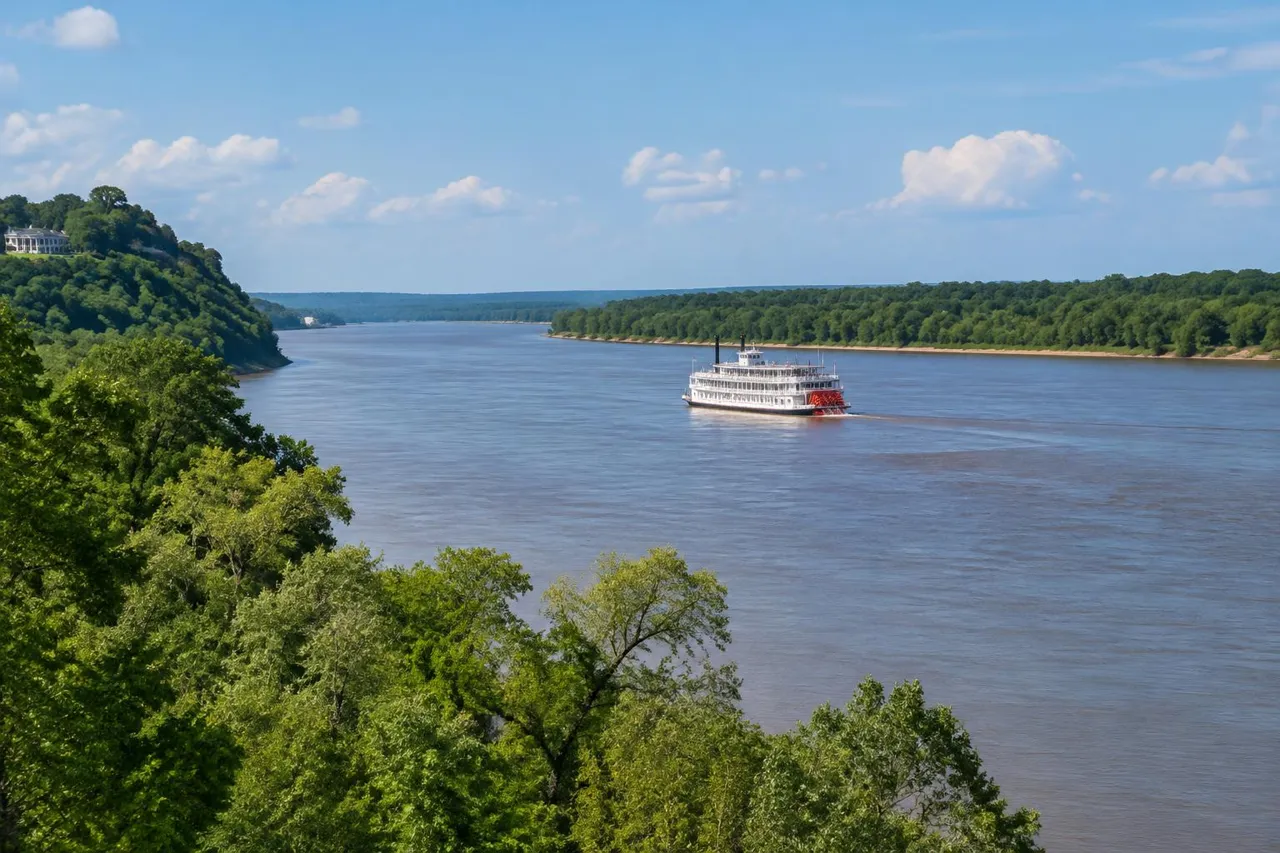
Mississippi river landscape — River Cruises wildlife habitatAI-modified

Mississippi

St. Catherine Creek National Wildlife Refuge near Natchez, Mississippi; optional wetland shore visit, not a main-channel sighting promise.
Explore river cruises

Destinations describe the species' habitat, not guaranteed cruise stops. Some animals require an optional inland excursion or are found in restricted reserves.

Fun facts about the Ruddy Duck

  • Its long, pointed tail places it among the ducks called stiff-tails.
  • The tail can be held upright or flat.
  • Breeding males have blue bills.
  • Females show a dark line across a pale cheek.
  • Nonbreeding males retain solid white cheeks.
  • Food is strained from mud through plates in the bill.
  • Midge larvae are an important food.
  • Adults and ducklings both eat aquatic invertebrates.
  • A male courtship display includes bill tapping and a belch-like call.

Best time to see the Ruddy Duck

The St. Catherine Creek checklist supplies local occurrence evidence, not a recurring monthly viewing calendar. Cornell describes wintering and migratory habitats across a broad North American range, but those range-wide patterns cannot establish precise viewing months for this refuge. All local months therefore remain unselected. Before planning a visit, confirm current refuge access and ask for recent observations from the specific wetland. Even a recent sighting would describe present conditions rather than prove a repeatable annual best season.

Ruddy Duck: season matrix by destination

Highlighted months reflect the stated local evidence, not guaranteed encounters. Neutral months mean no verified monthly viewing window, not absence. Observation records and recommended viewing windows are distinct.

Mississippi

No repeatable, species-specific local viewing months verified. Empty months indicate insufficient evidence, not absence.

JanFebMarAprMayJunJulAugSepOctNovDec
Explore river cruises

Where the Ruddy Duck lives

Cornell describes breeding habitat that includes large marshes, stock ponds, reservoirs and deep natural basins. Migrating birds use large permanent wetlands, lakes and reservoirs; winter habitat can also include brackish bays, coastal marshes and tidal estuaries. These are species-wide habitat descriptions, not evidence that all such habitats near Natchez are occupied. The local registry refers specifically to St. Catherine Creek National Wildlife Refuge. Visiting that wetland is a separate shore activity and should not be confused with observing the main navigation channel.

What the Ruddy Duck eats

Adults and ducklings eat aquatic insects, crustaceans, zooplankton and other invertebrates, with smaller amounts of aquatic plants and seeds. Midge larvae form an important part of the diet. Cornell lists other prey including worms, amphipods, snails, caddisfly larvae and dragonfly nymphs. The duck typically dives into shallow water and strains mouthfuls of mud, retaining food with the plates along its bill. Plant material is more prominent during migration and winter than in the breeding season. No Natchez-specific prey study was checked.

Species at a glance

Common name
Ruddy Duck
Scientific name
Oxyura jamaicensis
Animal group
Birds
Size
Not verified
Weight
Not verified
Lifespan
Not verified
Status
Global status not verified
Identification
Breeding males combine a chestnut body, black cap, white cheek patch and blue bill. Females and immatures are brownish, with a dark cap, black bill and pale cheek crossed by a darker line. Nonbreeding males have a dark cap and solid white cheek but lack the full breeding appearance. The compact shape and stout scoop-shaped bill help when plumage colours are difficult to see. Do not require an upright tail: Cornell illustrates birds carrying it both raised and flat on the surface.

Ruddy Duck: frequently asked questions

Where can I see the Ruddy Duck?
Mississippi. Use binoculars or a telescope from permitted refuge viewpoints and scan suitable open water without moving closer to resting or feeding birds. Start with the compact body, large head and scoop-shaped bill, then check the cheeks and tail posture. A feeding bird may disappear beneath the surface, so allow time for another view rather than assigning an identification from a single glimpse. The refuge checklist does not identify a currently occupied pool or guarantee that a cruise excursion visits the right habitat.
When is the best time to see the Ruddy Duck?
The St. Catherine Creek checklist supplies local occurrence evidence, not a recurring monthly viewing calendar. Cornell describes wintering and migratory habitats across a broad North American range, but those range-wide patterns cannot establish precise viewing months for this refuge. All local months therefore remain unselected. Before planning a visit, confirm current refuge access and ask for recent observations from the specific wetland. Even a recent sighting would describe present conditions rather than prove a repeatable annual best season.
How big does the Ruddy Duck get?
Not verified. Adult weight: Not verified. Size varies with age, sex and population.
How should I behave around the Ruddy Duck?
Use binoculars or a telescope from permitted refuge viewpoints and scan suitable open water without moving closer to resting or feeding birds. Start with the compact body, large head and scoop-shaped bill, then check the cheeks and tail posture. A feeding bird may disappear beneath the surface, so allow time for another view rather than assigning an identification from a single glimpse. The refuge checklist does not identify a currently occupied pool or guarantee that a cruise excursion visits the right habitat.
What does the Ruddy Duck eat?
Adults and ducklings eat aquatic insects, crustaceans, zooplankton and other invertebrates, with smaller amounts of aquatic plants and seeds. Midge larvae form an important part of the diet. Cornell lists other prey including worms, amphipods, snails, caddisfly larvae and dragonfly nymphs. The duck typically dives into shallow water and strains mouthfuls of mud, retaining food with the plates along its bill. Plant material is more prominent during migration and winter than in the breeding season. No Natchez-specific prey study was checked.
Are wildlife sightings guaranteed on a river cruise?
No. Animals move freely and routes, weather, access restrictions and local conditions influence every outing. Confirm the actual itinerary and shore program before booking.

Compare wildlife in the same destinations

Explore other birds recorded in these destinations. Similar surroundings do not mean the animals share the same habits or viewing season.

Species comparison by animal group and destination
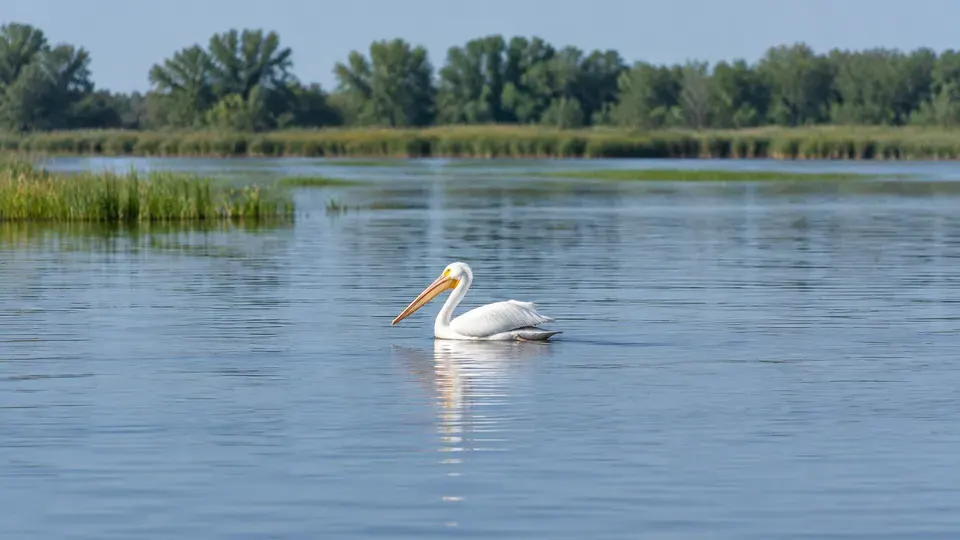
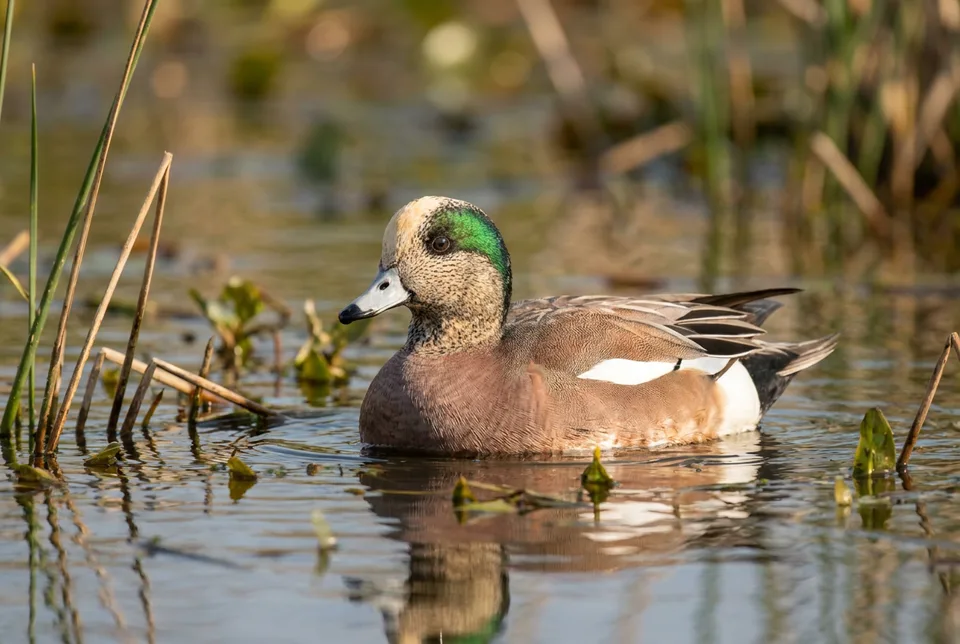
Ruddy Duck in wetland habitat — Mississippi, River Cruises wildlifeAI-modifiedRuddy DuckAmerican white pelican in wetland habitat — Columbia, Mississippi, River Cruises wildlifeAI-modifiedAmerican White PelicanAmerican Wigeon in wetland habitat — Columbia, Mississippi, River Cruises wildlifeAI-modifiedAmerican Wigeon
Animal groupBirdsAnimal groupBirdsAnimal groupBirds
DestinationsMississippiDestinationsColumbia, MississippiDestinationsColumbia, Mississippi
Scientific name
Oxyura jamaicensis
Scientific name
Scientific name
Previous speciesRock BuntingNext speciesRuddy turnstone
All river wildlife
On this page
  • 01About
  • 02Behaviour & reproduction
  • 03Top wildlife locations
  • 04Fun facts
  • 05Best season
  • 06Season matrix by destination
  • 07Habitat
  • 08Diet
  • 09Species at a glance
  • 10Questions & answers
  • 11Compare

Find your river cruise

AI-modified
Plan your trip

Find your next river journey

Compare destinations, shore programs and dates with the animals and habitats you would love to see.

  • Daily shore excursions
  • Responsible wildlife watching
  • Boutique river ships
Explore river cruises