Bluerides – Blue Rides - Book Liveaboards worldwideOCEAN ADVENTURES
River CruisesRiversNature & WildlifeOur Promise
River CruisesRiversNature & WildlifeOur PromiseSign In

River destinations

  • River destinations
  • Amazon
  • Danube
  • Rhine
  • Mekong
  • Nile

Ships & departures

  • River Cruise Search
  • Deals

Nature & Wildlife

  • Nature & Wildlife

Travel support

  • Our Promise
  • Contact

Contact

Get in Touch

Get in touch anytime, we're happy to help you find the right trip or sort out any question.

EmailWrite us, we usually reply within a few hours.
contact@bluerides.com
WhatsAppChat with us on WhatsApp, Mon–Fri 10:00–16:00 (CET).
Start WhatsApp Chat
PhoneCall us, we're happy to help.
Free call, Mon–Fri 10 AM – 8 PM (CET).
Europe+49 800 1144 990USA+1 888 557 7735UK+44 800 707 4152Australia+61 2 8599 6113Canada+1 888 557 7735
Which river journey is yours?Answer 8 quick questions and find the river cruise that fits you.
8 questions, 1 minute·Plus Gift
Secure Payment MethodsYour payments are fully secured with AES-256 encryption.
Powered byStripeWiseAMEXPayGoogle PaySEPABank
Imprint·Terms & Conditions·Privacy Policy·About·Contact·Liability Waiver·Affiliate Program·Cruise·
Visit us here

© 2026 Blue Rides. All rights reserved.·

Bluerides – Blue Rides - Book Liveaboards worldwideOCEAN ADVENTURES
River CruisesRiversNature & WildlifeOur Promise
River CruisesRiversNature & WildlifeOur PromiseSign In
Ring-necked Duck in wetland habitat — Mississippi, River Cruises wildlife
Home›River Cruises›River Wildlife›Ring-necked Duck

Ring-necked DuckAythya collarisWhere and when to see them

Previous speciesRing-billed GullNext speciesRinged Kingfisher

Ring-necked Duck at a glance

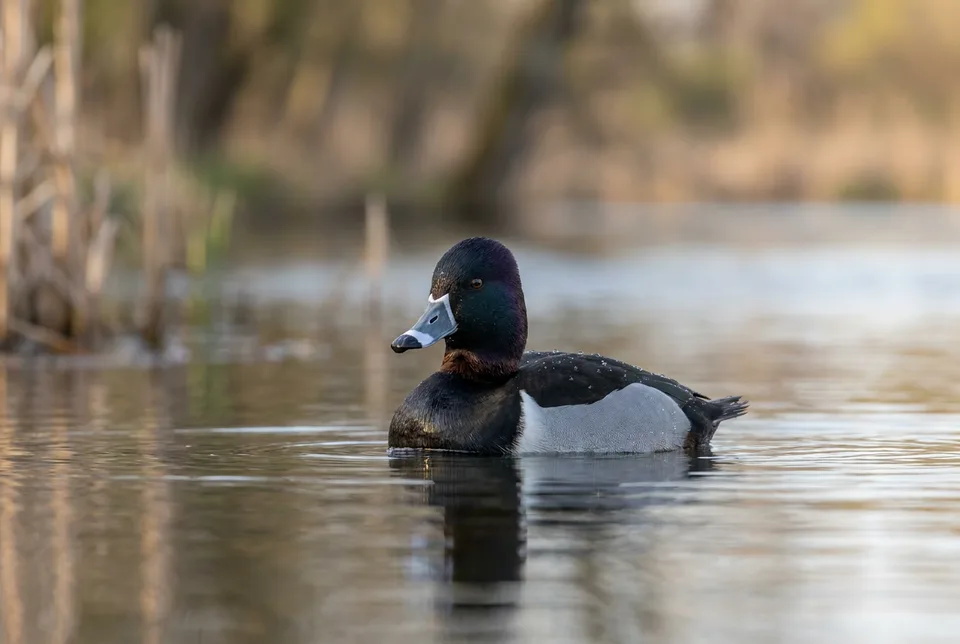
The Ring-necked Duck is better recognised by its peaked head than by the feature in its name. Cornell explains that the chestnut neck collar is hard to see on a living bird, while the male’s black, grey and white pattern and pale bill ring are much more useful. Females are brown with a delicate face pattern. Although a diving duck, the species readily uses small shallow wetlands, making it a rewarding target away from the widest river pools. The registered Upper Mississippi association should guide a search of backwaters and connected wetland habitat rather than a search for a neck ring on every distant dark duck.

Behaviour & reproduction

Size
Not verified
Weight
Not verified
Lifespan
Not verified
Status
Not verified

Ring-necked Ducks dive for food but often remain in shallow, vegetated waters. Migrating groups can gather in substantial numbers, while a small pond may hold a more approachable group for careful study from a distance. Pairs inspect nesting areas by swimming along vegetation edges or circling above potential sites. Nests are placed among dense emergent plants, directly over water or on floating vegetation, reducing access for land predators. These concealed sites are not appropriate viewing targets. Watch feeding, resting and flock movements from an established overlook, and allow birds that dive out of sight to reappear before deciding that the group has moved away.

Top wildlife locations

Mississippi river landscape — River Cruises wildlife habitat

Mississippi

Upper Mississippi — Upper Mississippi River NWR, Wabasha MN–Rock Island IL
Explore river cruises

Destinations describe the species' habitat, not guaranteed cruise stops. Some animals require an optional inland excursion or are found in restricted reserves.

Fun facts about the Ring-necked Duck

  • The namesake neck collar is hard to see.
  • A peaked head is a useful field mark.
  • Males show a pale bill ring.
  • Females are brown with a delicate face pattern.
  • The species often uses shallow water.
  • Small ponds can attract migrating birds.
  • The diet includes submerged plants.
  • Aquatic invertebrates are also eaten.
  • Nests can be placed on floating vegetation.

Best time to see the Ring-necked Duck

No numerical local viewing calendar is verified for the registered Mississippi association. Cornell notes migration stopovers in small shallow ponds as well as winter use of floodplains. Large fall gatherings on certain Minnesota lakes are not automatically evidence for the registered Upper Mississippi refuge reach.

Ring-necked Duck: season matrix by destination

Highlighted months reflect the stated local evidence, not guaranteed encounters. Neutral months mean no verified monthly viewing window, not absence. Observation records and recommended viewing windows are distinct.

Mississippi

The official refuge checklist records this species in the listed locally defined seasons, including rare occurrences where coded, providing local guidance rather than a guarantee of sightings.

JanFebMarAprMayJunJulAugSepOctNovDec
Explore river cruises

Where the Ring-necked Duck lives

Boreal freshwater marshes and bogs are characteristic breeding habitat, with open water fringed by sedges, lilies, shrubs and other vegetation. Beaver ponds and impoundments are also used. Migration and winter habitats include shallow lakes, floodplains, sloughs, swamps and managed freshwater pools, with some use of brackish estuaries. For the Upper Mississippi refuge record, look for the connection between open feeding patches and dense plant cover. A small backwater can fit this habitat description better than a deep exposed channel. Follow current refuge access advice and do not push through emergent vegetation, where nesting structures or concealed waterbirds may be present even when the visible surface looks empty.

What the Ring-necked Duck eats

Submerged plants and aquatic invertebrates both contribute to the diet. Cornell lists leaves, stems, seeds and tubers from a variety of wetland plants, including wild rice and pondweeds. Mollusks, snails, aquatic insects, worms and leeches are also recorded. Animal foods become particularly important during breeding, while plant foods grow more prominent during fall migration. These changes reflect feeding needs and availability rather than a fixed menu at every river site. A series of dives does not reveal the precise food below the surface. Watch where birds feed in relation to vegetation and water depth, recording visible handling only when a food item can actually be resolved.

Species at a glance

Common name
Ring-necked Duck
Scientific name
Aythya collaris
Animal group
Birds
Size
Not verified in the accessible source text.
Weight
Not verified in the accessible source text.
Lifespan
Wild lifespan not verified in the accessible source text.
Status
Current global conservation assessment not verified.
Identification
Adult males show a dark head and breast, grey sides and a white patch near the front of the flanks, with a pale ring on the bill. Females are brown with subtler face markings. In both sexes, the peaked head is a useful starting point, especially at distance, but it should be combined with bill and body pattern. Do not make the difficult chestnut neck collar a required field mark: Cornell specifically warns against relying on it. Other diving ducks can look similar in glare or transitional plumage. Seek several clear views, and preserve uncertainty if the head profile and bill are hidden or distorted by resting posture.

Ring-necked Duck: frequently asked questions

Where can I see the Ring-necked Duck?
Mississippi. Inspect small shallow wetlands as well as broad refuge pools. A scope helps reveal the male’s bill pattern and the peaked head of birds resting farther out; binoculars are useful for following nearby divers. Wait for a relaxed side profile because alert posture and wind can change the apparent head shape. Brown females need careful attention rather than being assigned automatically to scaup or another diving duck. The Upper Mississippi association is not evidence for importing dates from famous wild-rice flocks on other Minnesota lakes. Remain at a quiet viewpoint and count over several scans so that birds temporarily underwater are not overlooked or repeatedly counted as new arrivals.
When is the best time to see the Ring-necked Duck?
No numerical local viewing calendar is verified for the registered Mississippi association. Cornell notes migration stopovers in small shallow ponds as well as winter use of floodplains. Large fall gatherings on certain Minnesota lakes are not automatically evidence for the registered Upper Mississippi refuge reach.
How big does the Ring-necked Duck get?
Not verified in the accessible source text.. Adult weight: Not verified in the accessible source text.. Size varies with age, sex and population.
How should I behave around the Ring-necked Duck?
Inspect small shallow wetlands as well as broad refuge pools. A scope helps reveal the male’s bill pattern and the peaked head of birds resting farther out; binoculars are useful for following nearby divers. Wait for a relaxed side profile because alert posture and wind can change the apparent head shape. Brown females need careful attention rather than being assigned automatically to scaup or another diving duck. The Upper Mississippi association is not evidence for importing dates from famous wild-rice flocks on other Minnesota lakes. Remain at a quiet viewpoint and count over several scans so that birds temporarily underwater are not overlooked or repeatedly counted as new arrivals.
What does the Ring-necked Duck eat?
Submerged plants and aquatic invertebrates both contribute to the diet. Cornell lists leaves, stems, seeds and tubers from a variety of wetland plants, including wild rice and pondweeds. Mollusks, snails, aquatic insects, worms and leeches are also recorded. Animal foods become particularly important during breeding, while plant foods grow more prominent during fall migration. These changes reflect feeding needs and availability rather than a fixed menu at every river site. A series of dives does not reveal the precise food below the surface. Watch where birds feed in relation to vegetation and water depth, recording visible handling only when a food item can actually be resolved.
Are wildlife sightings guaranteed on a river cruise?
No. Animals move freely and routes, weather, access restrictions and local conditions influence every outing. Confirm the actual itinerary and shore program before booking.

Compare wildlife in the same destinations

Explore other birds recorded in these destinations. Similar surroundings do not mean the animals share the same habits or viewing season.

Species comparison by animal group and destination
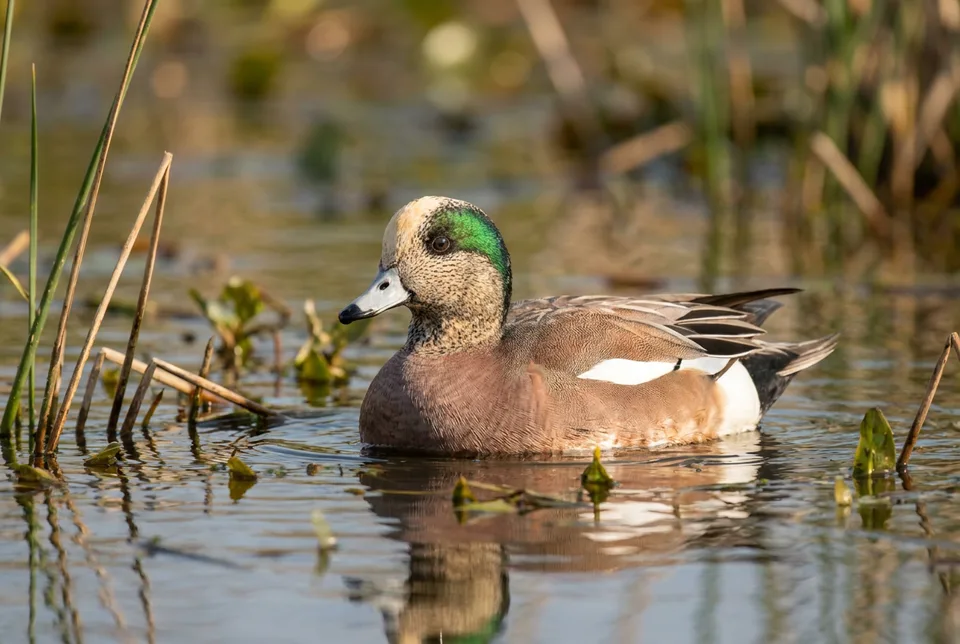
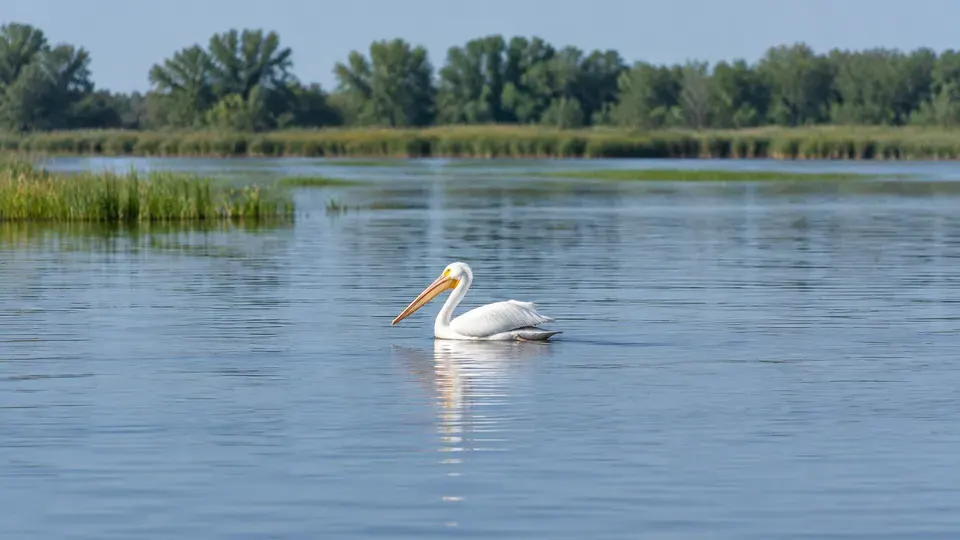
Ring-necked Duck in wetland habitat — Mississippi, River Cruises wildlifeRing-necked DuckAmerican white pelican in wetland habitat — Columbia, Mississippi, River Cruises wildlifeAmerican White PelicanAmerican Wigeon in wetland habitat — Columbia, Mississippi, River Cruises wildlifeAmerican Wigeon
Animal groupBirdsAnimal groupBirdsAnimal groupBirds
DestinationsMississippiDestinationsColumbia, MississippiDestinationsColumbia, Mississippi
Scientific name
Aythya collaris
Scientific name
Scientific name
Previous speciesRing-billed GullNext speciesRinged Kingfisher
All river wildlife
On this page
  • 01About
  • 02Behaviour & reproduction
  • 03Top wildlife locations
  • 04Fun facts
  • 05Best season
  • 06Season matrix by destination
  • 07Habitat
  • 08Diet
  • 09Species at a glance
  • 10Questions & answers
  • 11Compare

Find your river cruise

Plan your trip

Find your next river journey

Compare destinations, shore programs and dates with the animals and habitats you would love to see.

  • Daily shore excursions
  • Responsible wildlife watching
  • Boutique river ships
Explore river cruises