Bluerides – Blue Rides - Book Liveaboards worldwideOCEAN ADVENTURES
River CruisesRiversNature & WildlifeOur Promise
River CruisesRiversNature & WildlifeOur PromiseSign In

River destinations

  • River destinations
  • Amazon
  • Danube
  • Rhine
  • Mekong
  • Nile

Ships & departures

  • River Cruise Search
  • Deals

Nature & Wildlife

  • Nature & Wildlife

Travel support

  • Our Promise
  • Contact

Contact

Get in Touch

Get in touch anytime, we're happy to help you find the right trip or sort out any question.

EmailWrite us, we usually reply within a few hours.
contact@bluerides.com
WhatsAppChat with us on WhatsApp, Mon–Fri 10:00–16:00 (CET).
Start WhatsApp Chat
PhoneCall us, we're happy to help.
Free call, Mon–Fri 10 AM – 8 PM (CET).
Europe+49 800 1144 990USA+1 888 557 7735UK+44 800 707 4152Australia+61 2 8599 6113Canada+1 888 557 7735
Which river journey is yours?Answer 8 quick questions and find the river cruise that fits you.
8 questions, 1 minute·Plus Gift
Secure Payment MethodsYour payments are fully secured with AES-256 encryption.
Powered byStripeWiseAMEXPayGoogle PaySEPABank
Imprint·Terms & Conditions·Privacy Policy·About·Contact·Liability Waiver·Affiliate Program·Cruise·Blog·
Visit us here

© 2026 Blue Rides. All rights reserved.

Bluerides – Blue Rides - Book Liveaboards worldwideOCEAN ADVENTURES
River CruisesRiversNature & WildlifeOur Promise
River CruisesRiversNature & WildlifeOur PromiseSign In
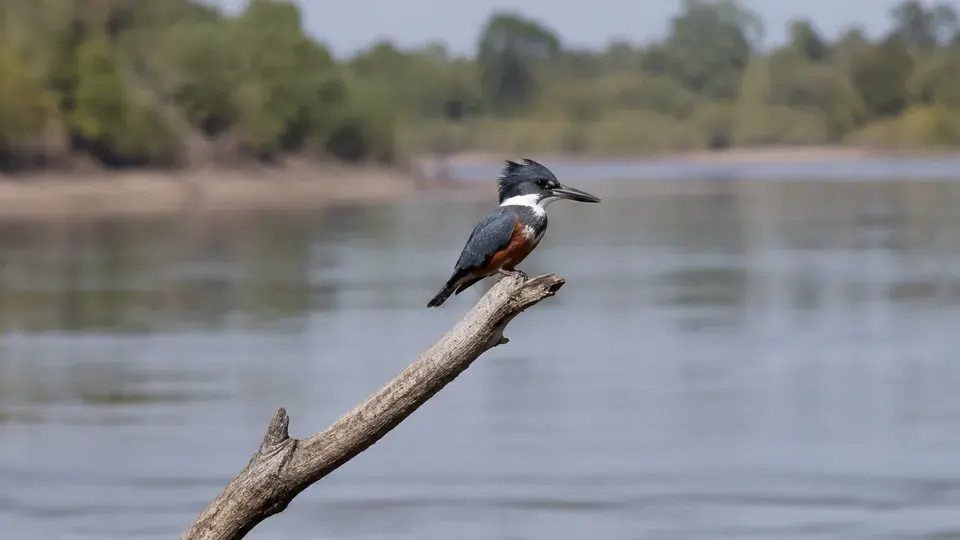
Ringed kingfisher in wetland habitat — Amazon, River Cruises wildlifeAI-modified
Home›River Cruises›River Wildlife›Ringed Kingfisher

Ringed KingfisherMegaceryle torquataWhere and when to see them

Previous speciesRing-necked DuckNext speciesRock Bunting

Ringed Kingfisher at a glance

The Ringed Kingfisher is a large, heavy-billed kingfisher with blue-grey upperparts and rich chestnut underparts. A high exposed perch above a river is a promising search point. Here the Amazon association means the documented Peruvian Iquitos–Nauta and Ucayali tributary itinerary, not every part of the basin. Species reference: https://www.allaboutbirds.org/guide/Ringed_Kingfisher/lifehistory

Behaviour & reproduction

Size
Species-specific body-length measurement not verified.
Weight
Species-specific weight not verified.
Lifespan
Species-specific lifespan not verified.
Status
A current formal global assessment was not verified.

A bird watches from a convenient perch, dives to seize prey and returns above the water. Cornell notes that hovering occurs less often than in Belted Kingfishers. Fish are swallowed head first. Excavated nesting burrows in earthen banks are important but must never be approached for a close look inside.

Top wildlife locations

Amazon river landscape — River Cruises wildlife habitatAI-modified

Amazon

Peru — Iquitos/Nauta, Ucayali and connected tributaries (2017 cruise) Guided skiff/side-channel viewing; not guaranteed from main ship. Scan river-edge trees, banks and open water.
Explore river cruises

Destinations describe the species' habitat, not guaranteed cruise stops. Some animals require an optional inland excursion or are found in restricted reserves.

Fun facts about the Ringed Kingfisher

  • It has a heavy bill and ragged crest.
  • Fish are swallowed head first.
  • Females show a blue-grey breast band.
  • It nests in earthen burrows.
  • It usually hunts from a perch.
  • Its diet is mainly fish.

Best time to see the Ringed Kingfisher

The local cruise account records a single March 2017 itinerary and cannot support an annually recurring season. No numerical months are assigned. The availability of a visible hunting perch matters during an excursion, but regional hydrology alone is not evidence for a month-by-month occurrence calendar.

Ringed Kingfisher: season matrix by destination

Highlighted months reflect the stated local evidence, not guaranteed encounters. Neutral months mean no verified monthly viewing window, not absence. Observation records and recommended viewing windows are distinct.

Amazon

The March 2017 cruise list is a single dated itinerary, not a recurring seasonal source. No months assigned.

JanFebMarAprMayJunJulAugSepOctNovDec
Explore river cruises

Where the Ringed Kingfisher lives

Rivers, lakes and ponds with hunting perches are characteristic. The species can use other waters too, provided prey can be detected and suitable perches are available. Small dark shaded creeks are less typical. Along the registered itinerary, exposed branches over side channels are more useful search targets than the canopy interior.

What the Ringed Kingfisher eats

Freshwater fish predominate, with crustaceans, amphibians, reptiles and large insects also reported. Cornell describes prey being located from above and captured with the bill. A fish held at a distance is rarely identifiable to species. No quantified diet from the registered Peruvian cruise reach was verified.

Species at a glance

Common name
Ringed Kingfisher
Scientific name
Megaceryle torquata
Animal group
Birds
Size
Species-specific body-length measurement not verified.
Weight
Species-specific weight not verified.
Lifespan
Species-specific lifespan not verified.
Status
A current formal global assessment was not verified.
Identification
The large bill, ragged crest, broad white neck collar and chestnut belly are important. Adult males are chestnut from breast through belly; females have a blue-grey breast band separated from the chestnut by a narrow pale border. Immatures can show intermediate-looking features, so assess the complete pattern.

Ringed Kingfisher: frequently asked questions

Where can I see the Ringed Kingfisher?
Amazon. Follow the guide’s scan of bare branches and riverbank supports. Wait through a hunting attempt instead of moving directly under the bird. Keep well away from bank burrows, where boat wake and close approaches can be harmful. A side-channel skiff usually offers better opportunities than a fast-moving main vessel.
When is the best time to see the Ringed Kingfisher?
The local cruise account records a single March 2017 itinerary and cannot support an annually recurring season. No numerical months are assigned. The availability of a visible hunting perch matters during an excursion, but regional hydrology alone is not evidence for a month-by-month occurrence calendar.
How big does the Ringed Kingfisher get?
Species-specific body-length measurement not verified.. Adult weight: Species-specific weight not verified.. Size varies with age, sex and population.
How should I behave around the Ringed Kingfisher?
Follow the guide’s scan of bare branches and riverbank supports. Wait through a hunting attempt instead of moving directly under the bird. Keep well away from bank burrows, where boat wake and close approaches can be harmful. A side-channel skiff usually offers better opportunities than a fast-moving main vessel.
What does the Ringed Kingfisher eat?
Freshwater fish predominate, with crustaceans, amphibians, reptiles and large insects also reported. Cornell describes prey being located from above and captured with the bill. A fish held at a distance is rarely identifiable to species. No quantified diet from the registered Peruvian cruise reach was verified.
Are wildlife sightings guaranteed on a river cruise?
No. Animals move freely and routes, weather, access restrictions and local conditions influence every outing. Confirm the actual itinerary and shore program before booking.

Compare wildlife in the same destinations

Explore other birds recorded in these destinations. Similar surroundings do not mean the animals share the same habits or viewing season.

Species comparison by animal group and destination
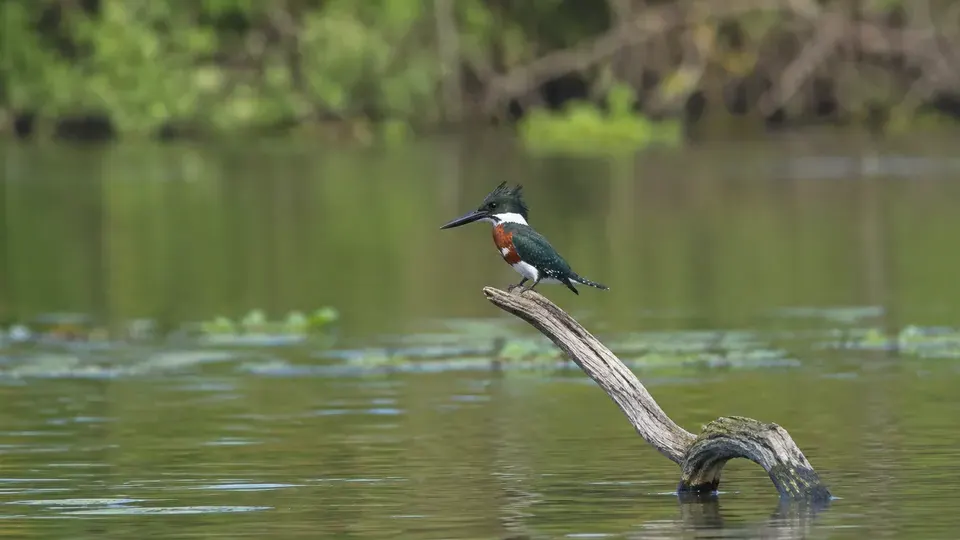
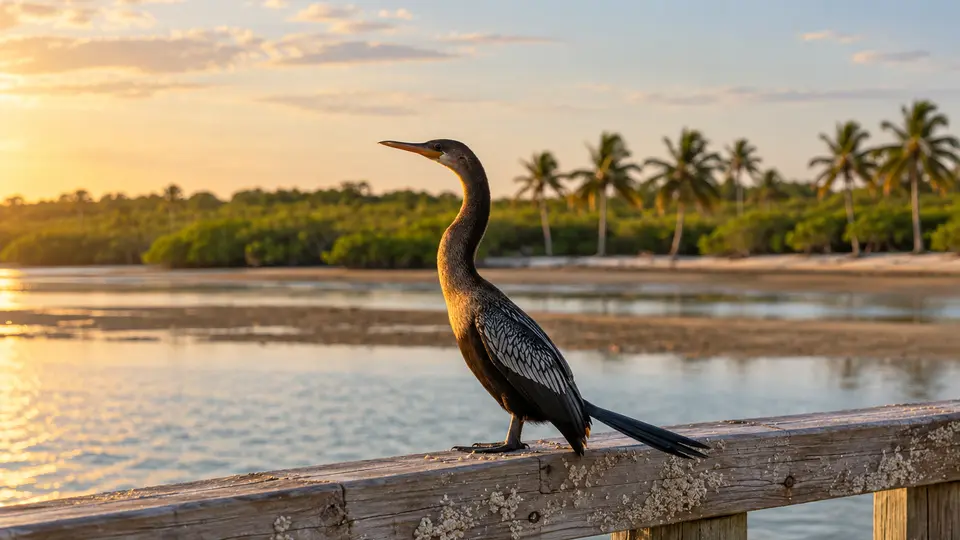
Ringed kingfisher in wetland habitat — Amazon, River Cruises wildlifeAI-modifiedRinged KingfisherAmazon kingfisher in wetland habitat — Amazon, River Cruises wildlifeAI-modifiedAmazon KingfisherAnhinga in wetland habitat — Amazon, River Cruises wildlifeAI-modifiedAnhinga
Animal groupBirdsAnimal groupBirdsAnimal groupBirds
DestinationsAmazonDestinationsAmazonDestinationsAmazon
Scientific name
Megaceryle torquata
Scientific name
Scientific name
Previous speciesRing-necked DuckNext speciesRock Bunting
All river wildlife
On this page
  • 01About
  • 02Behaviour & reproduction
  • 03Top wildlife locations
  • 04Fun facts
  • 05Best season
  • 06Season matrix by destination
  • 07Habitat
  • 08Diet
  • 09Species at a glance
  • 10Questions & answers
  • 11Compare

Find your river cruise

AI-modified
Plan your trip

Find your next river journey

Compare destinations, shore programs and dates with the animals and habitats you would love to see.

  • Daily shore excursions
  • Responsible wildlife watching
  • Boutique river ships
Explore river cruises