Bluerides – Blue Rides - Book Liveaboards worldwideOCEAN ADVENTURES
River CruisesRiversNature & WildlifeOur Promise
River CruisesRiversNature & WildlifeOur PromiseSign In

River destinations

  • River destinations
  • Amazon
  • Danube
  • Rhine
  • Mekong
  • Nile

Ships & departures

  • River Cruise Search
  • Deals

Nature & Wildlife

  • Nature & Wildlife

Travel support

  • Our Promise
  • Contact

Contact

Get in Touch

Get in touch anytime, we're happy to help you find the right trip or sort out any question.

EmailWrite us, we usually reply within a few hours.
contact@bluerides.com
WhatsAppChat with us on WhatsApp, Mon–Fri 10:00–16:00 (CET).
Start WhatsApp Chat
PhoneCall us, we're happy to help.
Free call, Mon–Fri 10 AM – 8 PM (CET).
Europe+49 800 1144 990USA+1 888 557 7735UK+44 800 707 4152Australia+61 2 8599 6113Canada+1 888 557 7735
Which river journey is yours?Answer 8 quick questions and find the river cruise that fits you.
8 questions, 1 minute·Plus Gift
Secure Payment MethodsYour payments are fully secured with AES-256 encryption.
Powered byStripeWiseAMEXPayGoogle PaySEPABank
Imprint·Terms & Conditions·Privacy Policy·About·Contact·Liability Waiver·Affiliate Program·Cruise·
Visit us here

© 2026 Blue Rides. All rights reserved.·

Bluerides – Blue Rides - Book Liveaboards worldwideOCEAN ADVENTURES
River CruisesRiversNature & WildlifeOur Promise
River CruisesRiversNature & WildlifeOur PromiseSign In
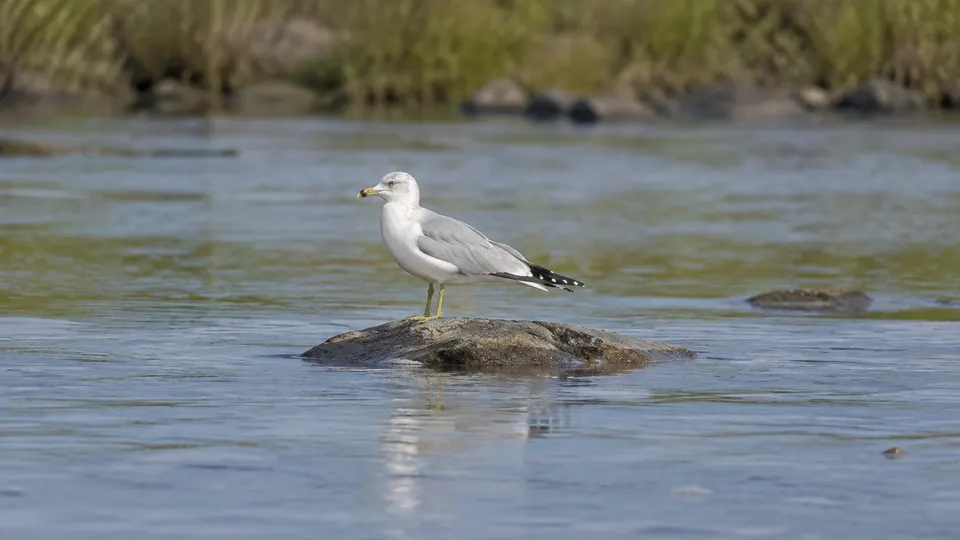
Ring-billed gull in wetland habitat — Columbia, River Cruises wildlife
Home›River Cruises›River Wildlife›Ring-billed Gull

Ring-billed GullLarus delawarensisWhere and when to see them

Previous speciesRedheadNext speciesRing-necked Duck

Ring-billed Gull at a glance

The Ring-billed Gull is a medium-sized North American gull that readily uses inland waters. An adult’s dark bill band is memorable, but young birds are much less tidy-looking. The registered Columbia reach is Umatilla refuge and the John Day pool between Boardman and Irrigon. Species reference: https://www.allaboutbirds.org/guide/Ring-billed_Gull/id Measurements: https://en.wikipedia.org/wiki/Ring_billed_gull

Behaviour & reproduction

Size
43–54 cm (17–21 in) long.
Weight
300–700 g (11–25 oz).
Lifespan
Species-specific lifespan not verified.
Status
A current formal global assessment was not verified.

Birds forage while walking, swimming or flying and can assemble in mixed gull groups. Their adaptability makes them familiar around human activity, but an approachable gull is not necessarily tame. Do not feed birds from a vessel or encourage them to follow it; natural behaviour offers better identification evidence.

Top wildlife locations

Columbia river landscape — River Cruises wildlife habitat

Columbia

Columbia — Umatilla NWR / John Day pool, Boardman–Irrigon River/slough scanning; refuge shore excursion improves views. Checklist confirms occurrence, not year-round presence; waterfowl mainly migration/winter, terns and swallows mainly warm season.
Explore river cruises

Destinations describe the species' habitat, not guaranteed cruise stops. Some animals require an optional inland excursion or are found in restricted reserves.

Fun facts about the Ring-billed Gull

  • Adults have yellow legs.
  • The black bill band gives the species its name.
  • Juveniles are mottled rather than clean grey and white.
  • It regularly uses inland waters.
  • The adult eye is pale.
  • Umatilla includes John Day pool wetlands.

Best time to see the Ring-billed Gull

The retrieved eBird list includes dated observations, not a recurring local month matrix. Refuge-wide comments about seasonal waterfowl cannot be applied to gulls. Months remain empty. A May sighting is evidence of that encounter alone, not proof that May is the preferred annual viewing month.

Ring-billed Gull: season matrix by destination

Highlighted months reflect the stated local evidence, not guaranteed encounters. Neutral months mean no verified monthly viewing window, not absence. Observation records and recommended viewing windows are distinct.

Columbia

Dated eBird observations are not a recurring local calendar; general refuge waterfowl seasonality is not applied to gulls.

JanFebMarAprMayJunJulAugSepOctNovDec
Explore river cruises

Where the Ring-billed Gull lives

Lakes, rivers and shores are part of its wider habitat use. At Umatilla, the refuge includes sloughs and wetlands influenced by the John Day pool, as well as riparian vegetation. That local setting supports the association without implying equal use of every reservoir bay or boat landing.

What the Ring-billed Gull eats

The species has an opportunistic diet including small animals and scavenged food. A detailed Columbia-specific dietary study was not verified. Avoid reducing its ecology to discarded human food merely because gulls may visit developed places. Feeding or scavenging observations should record what was actually visible, not an assumed menu.

Species at a glance

Common name
Ring-billed Gull
Scientific name
Larus delawarensis
Animal group
Birds
Size
43–54 cm (17–21 in) long.
Weight
300–700 g (11–25 oz).
Lifespan
Species-specific lifespan not verified.
Status
A current formal global assessment was not verified.
Identification
Adults have a pale grey back, white body, yellow legs and a yellow bill crossed by a black band. The pale eye is useful at close range. Juveniles are mottled brown and white with a different bill appearance. A dark bill mark alone is not diagnostic across all ages and similar gull species.

Ring-billed Gull: frequently asked questions

Where can I see the Ring-billed Gull?
Columbia. Use a shore viewpoint to compare several birds at once. Look for leg colour and bill pattern on standing adults, and photograph immature birds from more than one angle. Keep clear of resting concentrations and do not use food to bring a particular individual out of a mixed flock.
When is the best time to see the Ring-billed Gull?
The retrieved eBird list includes dated observations, not a recurring local month matrix. Refuge-wide comments about seasonal waterfowl cannot be applied to gulls. Months remain empty. A May sighting is evidence of that encounter alone, not proof that May is the preferred annual viewing month.
How big does the Ring-billed Gull get?
43–54 cm (17–21 in) long.. Adult weight: 300–700 g (11–25 oz).. Size varies with age, sex and population.
How should I behave around the Ring-billed Gull?
Use a shore viewpoint to compare several birds at once. Look for leg colour and bill pattern on standing adults, and photograph immature birds from more than one angle. Keep clear of resting concentrations and do not use food to bring a particular individual out of a mixed flock.
What does the Ring-billed Gull eat?
The species has an opportunistic diet including small animals and scavenged food. A detailed Columbia-specific dietary study was not verified. Avoid reducing its ecology to discarded human food merely because gulls may visit developed places. Feeding or scavenging observations should record what was actually visible, not an assumed menu.
Are wildlife sightings guaranteed on a river cruise?
No. Animals move freely and routes, weather, access restrictions and local conditions influence every outing. Confirm the actual itinerary and shore program before booking.

Compare wildlife in the same destinations

Explore other birds recorded in these destinations. Similar surroundings do not mean the animals share the same habits or viewing season.

Species comparison by animal group and destination
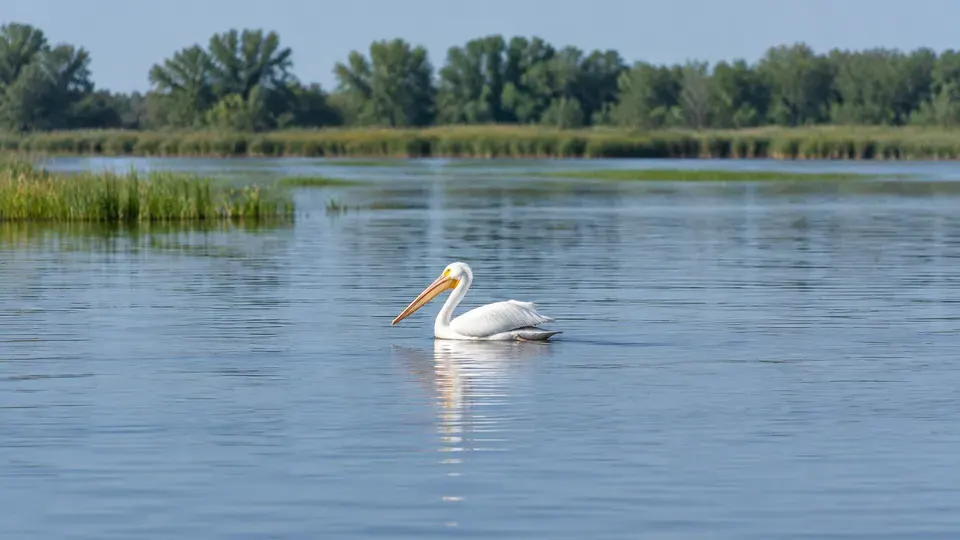
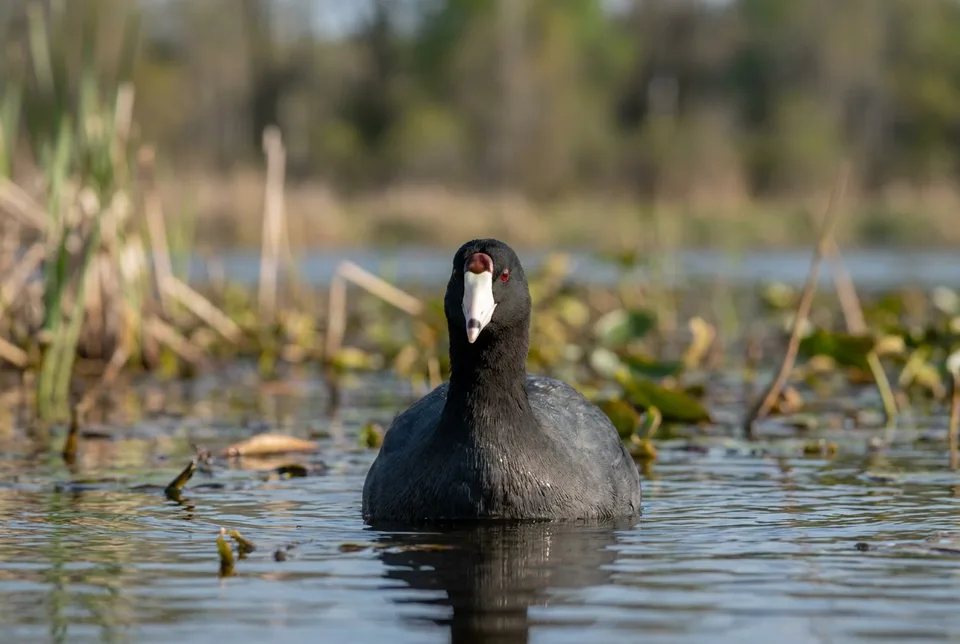
Ring-billed gull in wetland habitat — Columbia, River Cruises wildlifeRing-billed GullAmerican Coot in wetland habitat — Columbia, River Cruises wildlifeAmerican CootAmerican white pelican in wetland habitat — Columbia, Mississippi, River Cruises wildlifeAmerican White Pelican
Animal groupBirdsAnimal groupBirdsAnimal groupBirds
DestinationsColumbiaDestinationsColumbiaDestinationsColumbia, Mississippi
Scientific name
Larus delawarensis
Scientific name
Scientific name
Previous speciesRedheadNext speciesRing-necked Duck
All river wildlife
On this page
  • 01About
  • 02Behaviour & reproduction
  • 03Top wildlife locations
  • 04Fun facts
  • 05Best season
  • 06Season matrix by destination
  • 07Habitat
  • 08Diet
  • 09Species at a glance
  • 10Questions & answers
  • 11Compare

Find your river cruise

Plan your trip

Find your next river journey

Compare destinations, shore programs and dates with the animals and habitats you would love to see.

  • Daily shore excursions
  • Responsible wildlife watching
  • Boutique river ships
Explore river cruises