Bluerides – Blue Rides - Book Liveaboards worldwideOCEAN ADVENTURES
River CruisesRiversNature & WildlifeOur Promise
River CruisesRiversNature & WildlifeOur PromiseSign In

River destinations

  • River destinations
  • Amazon
  • Danube
  • Rhine
  • Mekong
  • Nile

Ships & departures

  • River Cruise Search
  • Deals

Nature & Wildlife

  • Nature & Wildlife

Travel support

  • Our Promise
  • Contact

Contact

Get in Touch

Get in touch anytime, we're happy to help you find the right trip or sort out any question.

EmailWrite us, we usually reply within a few hours.
contact@bluerides.com
WhatsAppChat with us on WhatsApp, Mon–Fri 10:00–16:00 (CET).
Start WhatsApp Chat
PhoneCall us, we're happy to help.
Free call, Mon–Fri 10 AM – 8 PM (CET).
Europe+49 800 1144 990USA+1 888 557 7735UK+44 800 707 4152Australia+61 2 8599 6113Canada+1 888 557 7735
Which river journey is yours?Answer 8 quick questions and find the river cruise that fits you.
8 questions, 1 minute·Plus Gift
Secure Payment MethodsYour payments are fully secured with AES-256 encryption.
Powered byStripeWiseAMEXPayGoogle PaySEPABank
Imprint·Terms & Conditions·Privacy Policy·About·Contact·Liability Waiver·Affiliate Program·Cruise·
Visit us here

© 2026 Blue Rides. All rights reserved.·

Bluerides – Blue Rides - Book Liveaboards worldwideOCEAN ADVENTURES
River CruisesRiversNature & WildlifeOur Promise
River CruisesRiversNature & WildlifeOur PromiseSign In
Plaintive Cuckoo in wetland habitat — Mekong, River Cruises wildlife
Home›River Cruises›River Wildlife›Plaintive Cuckoo

Plaintive CuckooCacomantis merulinusWhere and when to see them

Previous speciesPied-billed GrebeNext speciesPlumbeous Kite

Plaintive Cuckoo at a glance

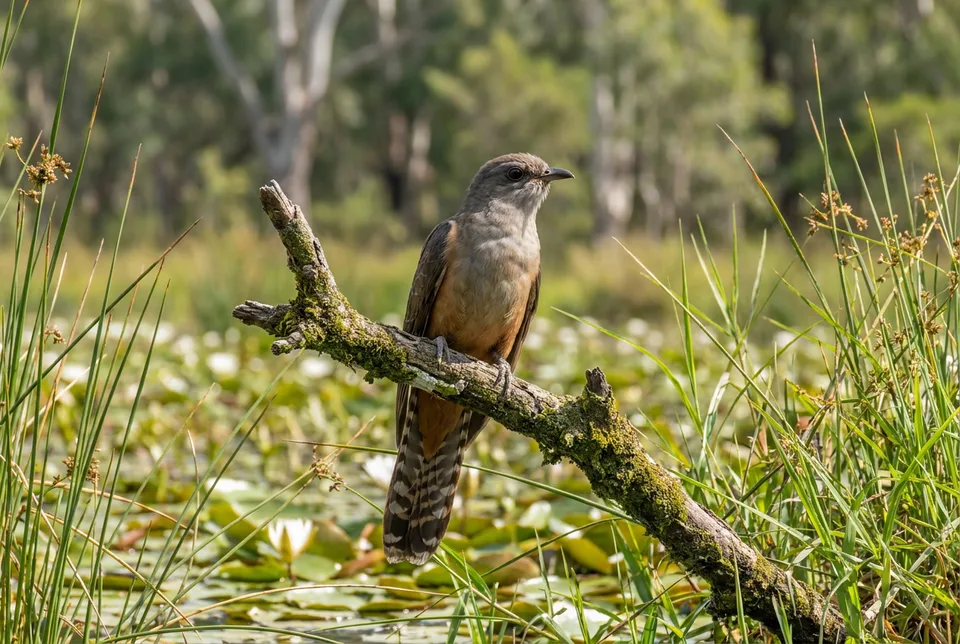
A small cuckoo with a surprisingly carrying voice, the Plaintive Cuckoo often announces itself before it can be located in vegetation. Its orange underparts and grey head give an adult male a different appearance from the barred reddish form shown by some females. In this batch, the Mekong connection means Tra Su flooded forest, reached on an optional excursion from Chau Doc. The official BirdLife/IEBR survey checklist records the species there, but gives neither a current abundance estimate nor a monthly viewing schedule. It should therefore be treated as a possible woodland-edge encounter rather than routine wildlife beside the main cruise channel. Finding the calling bird and establishing its plumage are separate tasks: a good listening position can be more useful than continually moving along the boardwalk. Species reference: https://en.wikipedia.org/wiki/Cacomantis_merulinus

Behaviour & reproduction

Size
About 21–24 cm (8.3–9.4 in) long.
Weight
Species-specific weight not verified.
Lifespan
Species-specific lifespan not verified.
Status
Least Concern in the retrieved species account; a current original global assessment was not verified.

Male Plaintive Cuckoos produce several whistled calls, including rising phrases and a descending sequence. A voice may seem close even when the singer remains hidden behind leaves. Listen for repeated phrases, then search the same area methodically instead of assuming the bird is travelling. This is a brood-parasitic cuckoo: it places eggs in other birds' nests rather than raising its young in a conventional nest of its own. That reproductive strategy is an important part of its ecology, but it does not make a brief observation of a nearby small bird evidence of a host relationship. At Tra Su, neither local host identity nor the timing of parasitic laying was verified. Do not follow birds into dense nesting vegetation to investigate an apparent interaction.

Top wildlife locations

Mekong river landscape — River Cruises wildlife habitat

Mekong

Vietnam Mekong delta: Tra Su flooded forest, optional shore excursion from Chau Doc (not main-channel deck wildlife) Official 2016 BirdLife/IEBR survey checklist, not a current abundance claim. Boat/boardwalk/tower viewing; crakes, Watercock and coucals elusive. Migrant kingfishers, pond herons and waders seasonal.
Explore river cruises

Destinations describe the species' habitat, not guaranteed cruise stops. Some animals require an optional inland excursion or are found in restricted reserves.

Fun facts about the Plaintive Cuckoo

  • Males have grey heads and warmer orange underparts.
  • Some females occur in a reddish barred form.
  • The tail feathers have white tips.
  • The male has more than one whistled call type.
  • It is a brood parasite.
  • Tra Su’s official checklist records the species.

Best time to see the Plaintive Cuckoo

The Tra Su checklist is dated 2016 and establishes that the bird was recorded, not when visitors should expect it annually. Its publication date is not a season, and the migration pattern of populations elsewhere in Asia is not a substitute for a local recurring record. No numerical month range is therefore assigned to this Mekong location. For practical planning, ask the reserve guide whether calling birds have recently been encountered along the open visitor routes. A quiet listening stop may improve the chance of locating one, but that is an observation method rather than a calendar claim. A cruise itinerary advertised for favourable regional weather does not establish cuckoo availability. Keep the excursion worthwhile for its flooded-forest habitat even if no identifiable cuckoo is found.

Plaintive Cuckoo: season matrix by destination

Highlighted months reflect the stated local evidence, not guaranteed encounters. Neutral months mean no verified monthly viewing window, not absence. Observation records and recommended viewing windows are distinct.

Mekong

The 2016 BirdLife/IEBR checklist establishes Tra Su occurrence, not recurring monthly availability. Publication date is not season evidence.

JanFebMarAprMayJunJulAugSepOctNovDec
Explore river cruises

Where the Plaintive Cuckoo lives

The species uses woodland edges, scrub and other relatively open wooded landscapes rather than depending on the exposed river surface. Tra Su provides the relevant local association through its flooded forest and surrounding vegetation. The checklist supports occurrence within that reserve, not continuous occupation of every cajeput stand, canal or observation tower. An excursion may pass through patches that differ greatly in canopy cover and visibility, so a suitable-looking bank is not proof that the cuckoo is present. Search branches and thickets along authorised routes, using calls to narrow the area. The country-wide distribution of this Asian cuckoo cannot be converted into a claim for all Mekong ports. Its usefulness to a cruise visitor lies in a specific shore stop where forest habitat can be approached without entering it.

What the Plaintive Cuckoo eats

Plaintive Cuckoos feed on invertebrates, including insects and caterpillars. This is not a fish-catching bird despite its inclusion in a river-wildlife collection. Its feeding opportunities are linked to foliage and the small animals associated with vegetation. A branch-to-branch search or a brief movement into leaves may be a feeding attempt, but the prey is often too small to identify at visitor distances. No quantitative study of the diet at Tra Su was verified, so local prey proportions and seasonal changes are not supplied here. The feeding ecology of the adult should also be kept separate from the food delivered to a parasitic chick by its host. Observing naturally occurring activity is preferable to offering insects or manipulating vegetation to obtain a closer view.

Species at a glance

Common name
Plaintive Cuckoo
Scientific name
Cacomantis merulinus
Animal group
Birds
Size
About 21–24 cm (8.3–9.4 in) long.
Weight
Species-specific weight not verified.
Lifespan
Species-specific lifespan not verified.
Status
Least Concern in the retrieved species account; a current original global assessment was not verified.
Identification
The male has a grey head, throat and upper breast above warmer orange underparts, with grey-brown upperparts and white tips to the tail feathers. Yellow feet and the contrasting bill can help when light and distance allow them to be seen. Females may resemble males, but a hepatic form is reddish-brown and barred, with a paler eyebrow and patterned tail. Juveniles can resemble that barred female form, making age and sex less straightforward than the name or a single photograph suggests. Compare several features, including the distribution of grey, rufous and barring, and seek confirmation from the voice. A distant brown bird with a long tail is insufficient evidence. Use an unhurried view or a photograph rather than forcing the bird to change its perch.

Plaintive Cuckoo: frequently asked questions

Where can I see the Plaintive Cuckoo?
Mekong. From a boat or boardwalk, stop talking when a repeated whistle is heard and let the guide determine its direction. Scan exposed twigs first, then work slowly through the surrounding foliage. A tower gives a wider perspective but may make a small bird harder to resolve, so do not assume elevation guarantees identification. Record the call if permitted and note whether the visible bird is plain grey-headed or reddish and barred. Avoid playback near other visitors or nesting birds, and do not leave the designated route to pursue a concealed singer. The registered opportunity is the Tra Su shore excursion from Chau Doc, not a deck watch along the Mekong main channel. An unidentified cuckoo heard briefly should remain unidentified rather than being assigned from the site list alone.
When is the best time to see the Plaintive Cuckoo?
The Tra Su checklist is dated 2016 and establishes that the bird was recorded, not when visitors should expect it annually. Its publication date is not a season, and the migration pattern of populations elsewhere in Asia is not a substitute for a local recurring record. No numerical month range is therefore assigned to this Mekong location. For practical planning, ask the reserve guide whether calling birds have recently been encountered along the open visitor routes. A quiet listening stop may improve the chance of locating one, but that is an observation method rather than a calendar claim. A cruise itinerary advertised for favourable regional weather does not establish cuckoo availability. Keep the excursion worthwhile for its flooded-forest habitat even if no identifiable cuckoo is found.
How big does the Plaintive Cuckoo get?
About 21–24 cm (8.3–9.4 in) long.. Adult weight: Species-specific weight not verified.. Size varies with age, sex and population.
How should I behave around the Plaintive Cuckoo?
From a boat or boardwalk, stop talking when a repeated whistle is heard and let the guide determine its direction. Scan exposed twigs first, then work slowly through the surrounding foliage. A tower gives a wider perspective but may make a small bird harder to resolve, so do not assume elevation guarantees identification. Record the call if permitted and note whether the visible bird is plain grey-headed or reddish and barred. Avoid playback near other visitors or nesting birds, and do not leave the designated route to pursue a concealed singer. The registered opportunity is the Tra Su shore excursion from Chau Doc, not a deck watch along the Mekong main channel. An unidentified cuckoo heard briefly should remain unidentified rather than being assigned from the site list alone.
What does the Plaintive Cuckoo eat?
Plaintive Cuckoos feed on invertebrates, including insects and caterpillars. This is not a fish-catching bird despite its inclusion in a river-wildlife collection. Its feeding opportunities are linked to foliage and the small animals associated with vegetation. A branch-to-branch search or a brief movement into leaves may be a feeding attempt, but the prey is often too small to identify at visitor distances. No quantitative study of the diet at Tra Su was verified, so local prey proportions and seasonal changes are not supplied here. The feeding ecology of the adult should also be kept separate from the food delivered to a parasitic chick by its host. Observing naturally occurring activity is preferable to offering insects or manipulating vegetation to obtain a closer view.
Are wildlife sightings guaranteed on a river cruise?
No. Animals move freely and routes, weather, access restrictions and local conditions influence every outing. Confirm the actual itinerary and shore program before booking.

Compare wildlife in the same destinations

Explore other birds recorded in these destinations. Similar surroundings do not mean the animals share the same habits or viewing season.

Species comparison by animal group and destination
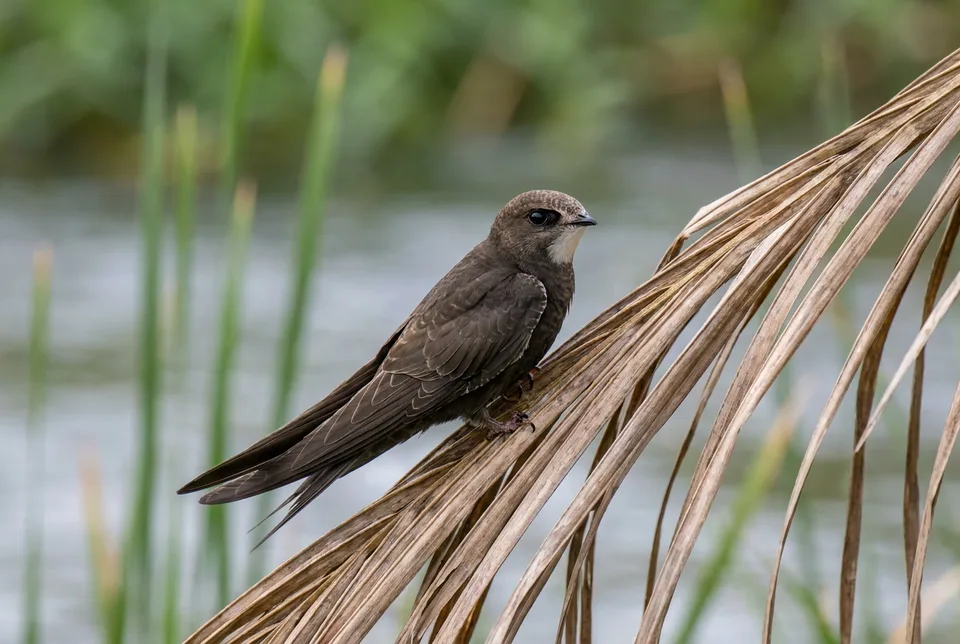
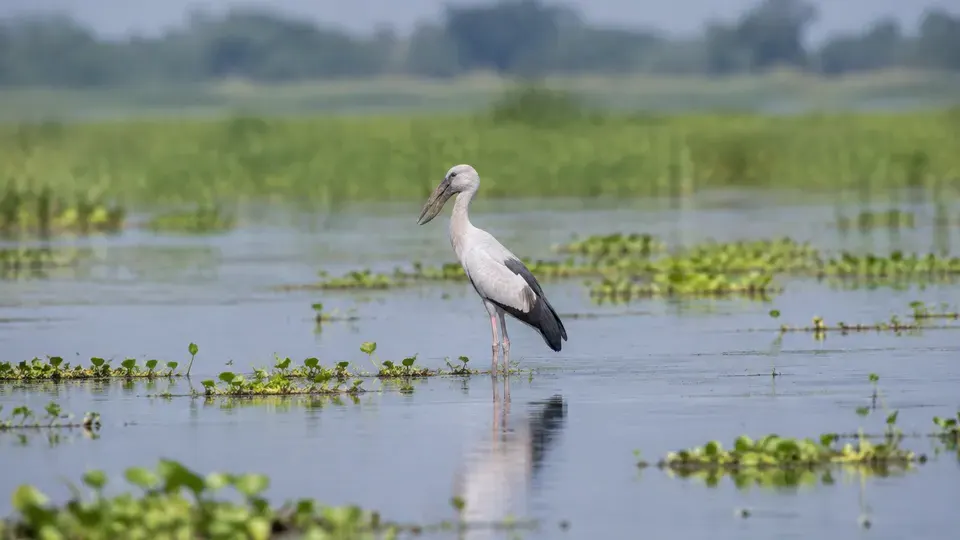
Plaintive Cuckoo in wetland habitat — Mekong, River Cruises wildlifePlaintive CuckooAsian openbill in wetland habitat — Mekong, River Cruises wildlifeAsian OpenbillAsian Palm Swift in wetland habitat — Mekong, River Cruises wildlifeAsian Palm Swift
Animal groupBirdsAnimal groupBirdsAnimal groupBirds
DestinationsMekongDestinationsMekongDestinationsMekong
Scientific name
Cacomantis merulinus
Scientific name
Scientific name
Previous speciesPied-billed GrebeNext speciesPlumbeous Kite
All river wildlife
On this page
  • 01About
  • 02Behaviour & reproduction
  • 03Top wildlife locations
  • 04Fun facts
  • 05Best season
  • 06Season matrix by destination
  • 07Habitat
  • 08Diet
  • 09Species at a glance
  • 10Questions & answers
  • 11Compare

Find your river cruise

Plan your trip

Find your next river journey

Compare destinations, shore programs and dates with the animals and habitats you would love to see.

  • Daily shore excursions
  • Responsible wildlife watching
  • Boutique river ships
Explore river cruises