Bluerides – Blue Rides - Book Liveaboards worldwideOCEAN ADVENTURES
River CruisesRiversNature & WildlifeOur Promise
River CruisesRiversNature & WildlifeOur PromiseSign In

River destinations

  • River destinations
  • Amazon
  • Danube
  • Rhine
  • Mekong
  • Nile

Ships & departures

  • River Cruise Search
  • Deals

Nature & Wildlife

  • Nature & Wildlife

Travel support

  • Our Promise
  • Contact

Contact

Get in Touch

Get in touch anytime, we're happy to help you find the right trip or sort out any question.

EmailWrite us, we usually reply within a few hours.
contact@bluerides.com
WhatsAppChat with us on WhatsApp, Mon–Fri 10:00–16:00 (CET).
Start WhatsApp Chat
PhoneCall us, we're happy to help.
Free call, Mon–Fri 10 AM – 8 PM (CET).
Europe+49 800 1144 990USA+1 888 557 7735UK+44 800 707 4152Australia+61 2 8599 6113Canada+1 888 557 7735
Which river journey is yours?Answer 8 quick questions and find the river cruise that fits you.
8 questions, 1 minute·Plus Gift
Secure Payment MethodsYour payments are fully secured with AES-256 encryption.
Powered byStripeWiseAMEXPayGoogle PaySEPABank
Imprint·Terms & Conditions·Privacy Policy·About·Contact·Liability Waiver·Affiliate Program·Cruise·Blog·
Visit us here

© 2026 Blue Rides. All rights reserved.

Bluerides – Blue Rides - Book Liveaboards worldwideOCEAN ADVENTURES
River CruisesRiversNature & WildlifeOur Promise
River CruisesRiversNature & WildlifeOur PromiseSign In
Pied-billed Grebe in wetland habitat — Columbia, River Cruises wildlifeAI-modified
Home›River Cruises›River Wildlife›Pied-billed Grebe

Pied-billed GrebePodilymbus podicepsWhere and when to see them

Previous speciesPied KingfisherNext speciesPlaintive Cuckoo

Pied-billed Grebe at a glance

The Pied-billed Grebe is a compact brown diving bird with a blocky head and a remarkably stout bill. In breeding condition, a dark vertical band crosses the bill and explains the English name. Cornell gives a length of 30–38 centimetres and a mass of 253–568 grams. The registered Columbia River association concerns Umatilla National Wildlife Refuge and the John Day pool around Boardman–Irrigon. This is a river-and-slough watching opportunity, with a refuge shore visit improving the viewing angle. The registry’s checklist context establishes occurrence but not year-round availability. Cornell identification reference: https://www.allaboutbirds.org/guide/Pied-billed_Grebe/id. Source: https://www.allaboutbirds.org/guide/Pied-billed_Grebe/lifehistory

Behaviour & reproduction

Size
30–38 cm (11.8–15.0 in) length; Cornell.
Weight
253–568 g (8.9–20.0 oz); Cornell.
Lifespan
Species-specific lifespan not verified.
Status
Formal current global assessment not verified.

Pied-billed Grebes can adjust their buoyancy and float so low that little more than the upper head remains visible. This is different from simply making a full dive and can make a nearby bird seem to disappear. Cornell describes chicks climbing onto an adult’s back during their early life. Nest building uses floating vegetation, with aquatic plants providing support and concealment. These are species-level behaviours, not confirmation of active nests at Umatilla. Watch from the bank without following a diving bird along the margin or entering the emergent plants to find where it has gone.

Top wildlife locations

Columbia river landscape — River Cruises wildlife habitatAI-modified

Columbia

Columbia — Umatilla NWR / John Day pool, Boardman–Irrigon Viewing context: River/slough scanning; refuge shore excursion improves views. Checklist confirms occurrence, not year-round presence; waterfowl mainly migration/winter, terns and swallows mainly warm season.
Explore river cruises

Destinations describe the species' habitat, not guaranteed cruise stops. Some animals require an optional inland excursion or are found in restricted reserves.

Fun facts about the Pied-billed Grebe

  • The breeding bill has a black band.
  • The bill is unusually thick for a grebe.
  • Young birds have striped faces.
  • It can regulate its buoyancy.
  • Chicks can ride on a parent’s back.
  • It has lobed feet.
  • Crayfish and small fish are important prey.

Best time to see the Pied-billed Grebe

The registry confirms occurrence in the Umatilla and John Day pool context but explicitly does not establish year-round presence. General refuge statements about waterfowl seasons cannot be applied automatically to this grebe. No verified species-specific recurring month range was retrieved for Boardman–Irrigon, so the Columbia months array remains empty. A current refuge checklist or seasonal survey could improve that evidence in future, provided it distinguishes this species and the relevant reach. For now, consult staff about recent sightings and open viewing areas. A single dated observation is useful for trip planning but not enough to define an annual calendar.

Pied-billed Grebe: season matrix by destination

Highlighted months reflect the stated local evidence, not guaranteed encounters. Neutral months mean no verified monthly viewing window, not absence. Observation records and recommended viewing windows are distinct.

Columbia

A recurring species-specific numerical month range for this exact reach was not verified. Months are left empty; occurrence, broad residency, breeding dates and single trips are not treated as a calendar.

JanFebMarAprMayJunJulAugSepOctNovDec
Explore river cruises

Where the Pied-billed Grebe lives

Cornell describes flat or sluggish fresh to slightly brackish waters, including marshes, lakes, sloughs and slow-moving rivers. Open water is used for feeding, while emergent vegetation helps anchor and conceal floating nests. Within the Columbia reach, sheltered sloughs and refuge waters are therefore more relevant than assuming the fastest or most exposed channel offers equivalent habitat. No mapped nest locations or current occupied pools were verified. The Fish and Wildlife Service describes Umatilla’s mix of wetlands, shores and uplands, and restricts entry to many islands. Use permitted viewpoints rather than trying to reach every vegetated inlet.

What the Pied-billed Grebe eats

Cornell lists crustaceans, particularly crayfish, and small fish as important food. The short, powerful bill and strong jaws help capture and crush prey. Other aquatic animals can be taken, including insects and larvae, molluscs, frogs and tadpoles, depending on availability. This broad menu is not a Columbia-specific dietary measurement. No Umatilla prey percentages were verified, and examples from distant fishless wetlands should not be imported as local expectations. Watch natural dives and brief surface handling from a fixed position. Do not bait birds or disturb submerged vegetation in an attempt to expose food.

Species at a glance

Common name
Pied-billed Grebe
Scientific name
Podilymbus podiceps
Animal group
Birds
Size
30–38 cm (11.8–15.0 in) length; Cornell.
Weight
253–568 g (8.9–20.0 oz); Cornell.
Lifespan
Species-specific lifespan not verified.
Status
Formal current global assessment not verified.
Identification
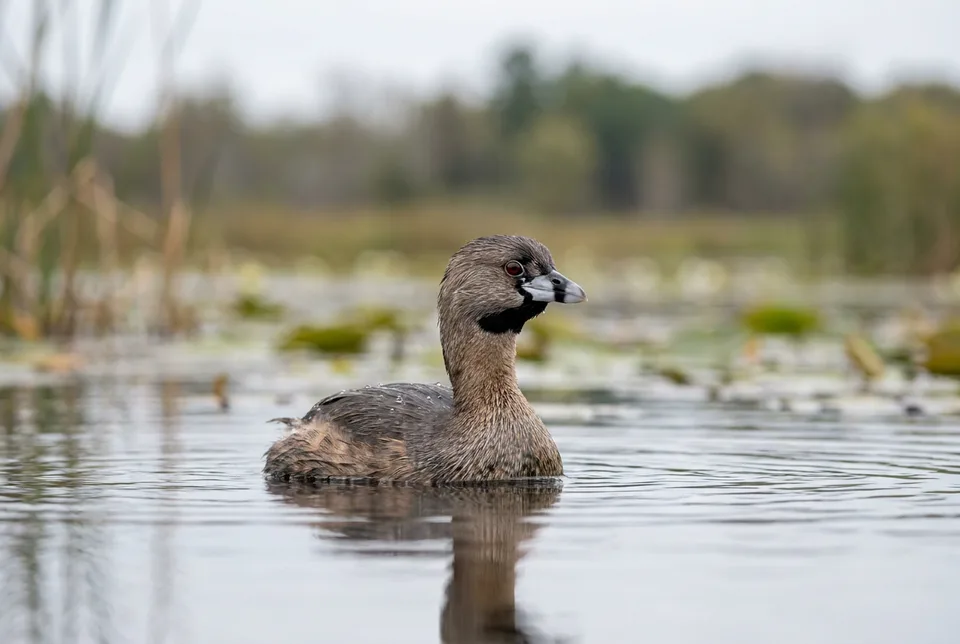
Look for a chunky body, large blocky head, short thick bill and almost no visible tail. Breeding birds show the black vertical bill band; nonbreeding birds often lack it, so its absence does not exclude the species. Juveniles have striped faces, and some birds show warmer cinnamon tones on the neck. Cornell notes lobed feet used for underwater propulsion. A small brown swimming bird should not automatically be identified as a duck or as another grebe. Assess the head and bill together, ideally in profile, and retain uncertainty when the bird remains distant or partly submerged.

Pied-billed Grebe: frequently asked questions

Where can I see the Pied-billed Grebe?
Columbia. Scan sheltered open water beside emergent plants during a permitted refuge visit. A small brown bird may dive or sink lower before its features become clear, so remain still and check nearby water. Binoculars help follow movement, while a telescope can reveal the bill band on a settled bird. Keep out of closed islands and vegetated margins, where floating nests can be difficult to detect. Do not paddle towards a bird to make it surface or carry young into clearer water. The registry treats this as shore or slough scanning, not a guaranteed sighting beside the main cruise vessel.
When is the best time to see the Pied-billed Grebe?
The registry confirms occurrence in the Umatilla and John Day pool context but explicitly does not establish year-round presence. General refuge statements about waterfowl seasons cannot be applied automatically to this grebe. No verified species-specific recurring month range was retrieved for Boardman–Irrigon, so the Columbia months array remains empty. A current refuge checklist or seasonal survey could improve that evidence in future, provided it distinguishes this species and the relevant reach. For now, consult staff about recent sightings and open viewing areas. A single dated observation is useful for trip planning but not enough to define an annual calendar.
How big does the Pied-billed Grebe get?
30–38 cm (11.8–15.0 in) length; Cornell.. Adult weight: 253–568 g (8.9–20.0 oz); Cornell.. Size varies with age, sex and population.
How should I behave around the Pied-billed Grebe?
Scan sheltered open water beside emergent plants during a permitted refuge visit. A small brown bird may dive or sink lower before its features become clear, so remain still and check nearby water. Binoculars help follow movement, while a telescope can reveal the bill band on a settled bird. Keep out of closed islands and vegetated margins, where floating nests can be difficult to detect. Do not paddle towards a bird to make it surface or carry young into clearer water. The registry treats this as shore or slough scanning, not a guaranteed sighting beside the main cruise vessel.
What does the Pied-billed Grebe eat?
Cornell lists crustaceans, particularly crayfish, and small fish as important food. The short, powerful bill and strong jaws help capture and crush prey. Other aquatic animals can be taken, including insects and larvae, molluscs, frogs and tadpoles, depending on availability. This broad menu is not a Columbia-specific dietary measurement. No Umatilla prey percentages were verified, and examples from distant fishless wetlands should not be imported as local expectations. Watch natural dives and brief surface handling from a fixed position. Do not bait birds or disturb submerged vegetation in an attempt to expose food.
Are wildlife sightings guaranteed on a river cruise?
No. Animals move freely and routes, weather, access restrictions and local conditions influence every outing. Confirm the actual itinerary and shore program before booking.

Compare wildlife in the same destinations

Explore other birds recorded in these destinations. Similar surroundings do not mean the animals share the same habits or viewing season.

Species comparison by animal group and destination
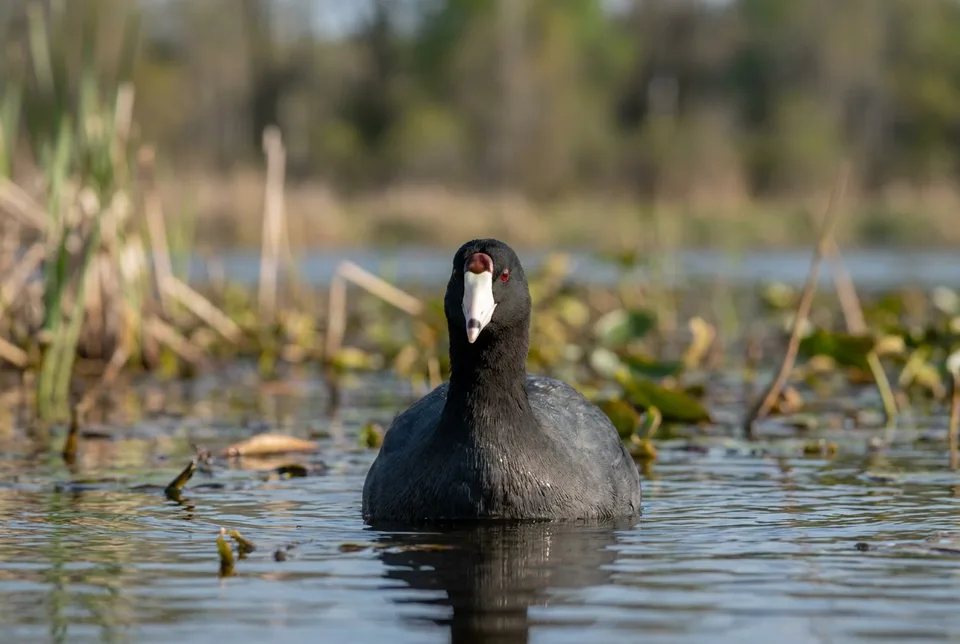
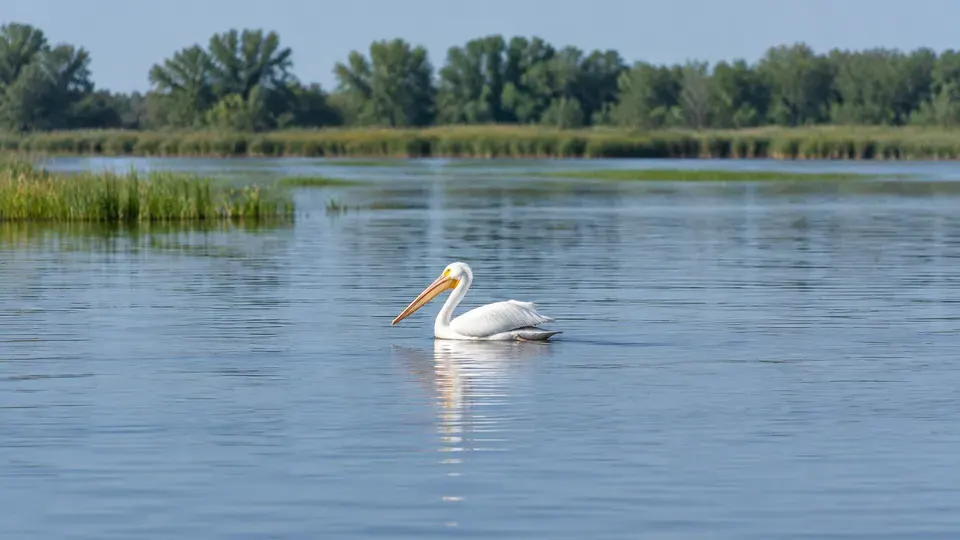
Pied-billed Grebe in wetland habitat — Columbia, River Cruises wildlifeAI-modifiedPied-billed GrebeAmerican Coot in wetland habitat — Columbia, River Cruises wildlifeAI-modifiedAmerican CootAmerican white pelican in wetland habitat — Columbia, Mississippi, River Cruises wildlifeAI-modifiedAmerican White Pelican
Animal groupBirdsAnimal groupBirdsAnimal groupBirds
DestinationsColumbiaDestinationsColumbiaDestinationsColumbia, Mississippi
Scientific name
Podilymbus podiceps
Scientific name
Scientific name
Previous speciesPied KingfisherNext speciesPlaintive Cuckoo
All river wildlife
On this page
  • 01About
  • 02Behaviour & reproduction
  • 03Top wildlife locations
  • 04Fun facts
  • 05Best season
  • 06Season matrix by destination
  • 07Habitat
  • 08Diet
  • 09Species at a glance
  • 10Questions & answers
  • 11Compare

Find your river cruise

AI-modified
Plan your trip

Find your next river journey

Compare destinations, shore programs and dates with the animals and habitats you would love to see.

  • Daily shore excursions
  • Responsible wildlife watching
  • Boutique river ships
Explore river cruises