Bluerides – Blue Rides - Book Liveaboards worldwideOCEAN ADVENTURES
River CruisesRiversNature & WildlifeOur Promise
River CruisesRiversNature & WildlifeOur PromiseSign In

River destinations

  • River destinations
  • Amazon
  • Danube
  • Rhine
  • Mekong
  • Nile

Ships & departures

  • River Cruise Search
  • Deals

Nature & Wildlife

  • Nature & Wildlife

Travel support

  • Our Promise
  • Contact

Contact

Get in Touch

Get in touch anytime, we're happy to help you find the right trip or sort out any question.

EmailWrite us, we usually reply within a few hours.
contact@bluerides.com
WhatsAppChat with us on WhatsApp, Mon–Fri 10:00–16:00 (CET).
Start WhatsApp Chat
PhoneCall us, we're happy to help.
Free call, Mon–Fri 10 AM – 8 PM (CET).
Europe+49 800 1144 990USA+1 888 557 7735UK+44 800 707 4152Australia+61 2 8599 6113Canada+1 888 557 7735
Which river journey is yours?Answer 8 quick questions and find the river cruise that fits you.
8 questions, 1 minute·Plus Gift
Secure Payment MethodsYour payments are fully secured with AES-256 encryption.
Powered byStripeWiseAMEXPayGoogle PaySEPABank
Imprint·Terms & Conditions·Privacy Policy·About·Contact·Liability Waiver·Affiliate Program·Cruise·Blog·
Visit us here

© 2026 Blue Rides. All rights reserved.

Bluerides – Blue Rides - Book Liveaboards worldwideOCEAN ADVENTURES
River CruisesRiversNature & WildlifeOur Promise
River CruisesRiversNature & WildlifeOur PromiseSign In
Pied kingfisher in wetland habitat — Nile, River Cruises wildlifeAI-modified
Home›River Cruises›River Wildlife›Pied Kingfisher

Pied KingfisherCeryle rudisWhere and when to see them

Previous speciesPied AvocetNext speciesPied-billed Grebe

Pied Kingfisher at a glance

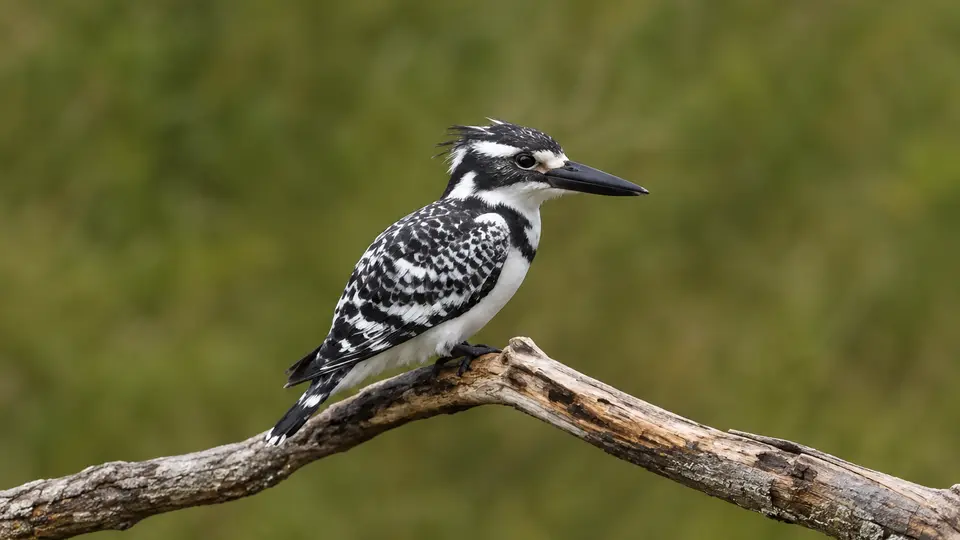
The Pied Kingfisher is a black-and-white fishing bird with a large head, compact body and straight, dagger-shaped bill. Unlike the blue kingfishers familiar in Europe, its plumage makes a sharply patterned silhouette even when colour is difficult to judge. Animal Diversity Web places the nominate form in the Nile valley as well as sub-Saharan Africa and parts of the eastern Mediterranean. A March 2007 Nile cruise report lists Ceryle rudis and describes numerous birds circling the vessel. That historical encounter belongs to the Luxor–Aswan cruise corridor, not every Egyptian waterway. The species is particularly interesting to watch because it can search while hovering rather than relying entirely on a bankside perch. Its fishing activity links open water with nearby resting and nesting places. Pairs and loose family groups can share a productive stretch of shoreline, while suitable earth banks provide opportunities for excavating nesting burrows.

Behaviour & reproduction

Size
25–29 cm (9.8–11.4 in) body length
Weight
70–100 g (2.5–3.5 oz)
Lifespan
Species-specific lifespan not verified
Status
See sourced assessment

A Pied Kingfisher can hang above the water with rapid wingbeats, shift position and then plunge almost vertically after prey. It also waits on waterside vegetation or artificial structures before diving directly from a perch. Animal Diversity Web describes regular head or tail bobbing, repeated dives when bathing and noisy calls during flight and territorial encounters. Birds may live in pairs or loosely associated families and sometimes gather at communal roosts. Courtship includes food offerings and group displays with partly spread wings. Both members of a pair excavate a tunnel in soft earth, using the bill to loosen material and the feet to push it out. Cooperative breeding is documented: additional unmated birds may help a pair rear young. These social arrangements are part of the species’ biology, not a guarantee that any particular Nile bank holds an accessible colony.

Top wildlife locations

Nile river landscape — River Cruises wildlife habitatAI-modified

Nile

Luxor–Esna–Edfu–Kom Ombo–Aswan; exact observation context in quote

Explore river cruises

Destinations describe the species' habitat, not guaranteed cruise stops. Some animals require an optional inland excursion or are found in restricted reserves.

Fun facts about the Pied Kingfisher

  • It can hunt by sustained hovering above water.
  • Its plumage is black and white rather than blue.
  • Adult males have two dark breast bands.
  • Adult females have one dark breast band.
  • Both sexes excavate nesting tunnels.
  • Unmated helpers can assist breeding pairs.
  • Fish can be swallowed in flight.
  • Adults regurgitate pellets of indigestible remains.
  • The March 2007 Nile report describes numerous birds circling the vessel.

Best time to see the Pied Kingfisher

The dated Nile report covers 19–26 March 2007 and specifically describes numerous Pied Kingfishers circling the cruise vessel. This makes March an authenticated historical observation date, not a recurring annual viewing window. A traveller interested in the species should seek recent information for the actual Luxor–Aswan sailing rather than choose a month solely from this one account. Fishing activity can be visible over open water, so watch time on deck may be useful even without a dedicated wetland stop. The species is described as non-migratory in Animal Diversity Web, but that broad biological characteristic cannot establish monthly visibility at every riverbank. Water conditions, available fish, resting places and the vessel’s position all affect what can be seen. Nest excavation and cooperative breeding are fascinating aspects of the bird’s life, but breeding dates from other parts of its range are not a Nile visitor calendar.

Pied Kingfisher: season matrix by destination

Highlighted months reflect the stated local evidence, not guaranteed encounters. Neutral months mean no verified monthly viewing window, not absence. Observation records and recommended viewing windows are distinct.

Nile

No recurring local viewing-month window established. The Nile checklist is a single 19–26 March 2007 trip, not an annual calendar; other river reaches require their own local monthly evidence.

JanFebMarAprMayJunJulAugSepOctNovDec
Explore river cruises

Where the Pied Kingfisher lives

Water supporting small fish is the central requirement for a Pied Kingfisher, but feeding, resting and nesting need not happen in the same small patch. Rivers, lakes and other open waters can provide fishing space, while bankside branches, vegetation and human-made structures offer lookout positions. Soft earth banks are important where birds excavate nesting tunnels. The ability to hover allows the species to forage beyond the immediate reach of a perch; it is therefore worth scanning the air above a channel as well as the shoreline. On the Nile, the historical cruise record makes open-water watching relevant, unlike species requiring a separate reedbed excursion. Nevertheless, moving boats, glare and distance can hide details. A steep bank containing holes should be treated as potential nesting habitat rather than a place to land or investigate. Preserve the distinction between a suitable fishing reach and a confirmed occupied nest site.

What the Pied Kingfisher eats

Fish form the main food of the Pied Kingfisher. Animal Diversity Web also records aquatic insects, crustaceans and occasional amphibians or molluscs, so the diet is not absolutely restricted to fish. Hunting includes hovering followed by a plunge, diving directly from a perch and low searching flights over water. A bird may swallow its catch in flight, which can make prey identification difficult even when the capture itself is clearly visible. Adults regurgitate pellets containing indigestible fish remains; growing chicks digest a greater proportion of bone, helping them obtain calcium. A failed plunge is normal hunting behaviour rather than evidence that a bird needs assistance. Several attempts may be needed before a catch is secured. Watch for the transition from a steady hover to the sudden downward movement, then follow the bird back into the air rather than concentrating only on the splash.

Species at a glance

Common name
Pied Kingfisher
Scientific name
Ceryle rudis
Animal group
Birds
Size
25–29 cm (9.8–11.4 in) body length
Weight
70–100 g (2.5–3.5 oz)
Lifespan
Species-specific lifespan not verified
Status
A current formal global conservation category was not independently verified in this research.
Identification
Look for strongly contrasting black-and-white plumage, a dark crown, spotted wings, a large head and a long, pointed black bill. Animal Diversity Web gives a typical body length of 25–29 cm (9.8–11.4 in) and a mass range of 70–100 g (2.5–3.5 oz). The breast pattern can help separate adults: males have two dark bands, while females have one. A distant or partly hidden bird may not show those bands clearly enough for sexing. Young resemble females but have a shorter bill and brown-tipped feathers on parts of the face, throat and breast; their breast band is greyer. Sustained hovering followed by a plunge is a useful behavioural clue, but should be combined with plumage and structure. Against bright water, the pattern may appear mainly as dark wings and a pale body. Wait for a turn or landing rather than interpreting every shadow as a diagnostic marking.

Pied Kingfisher: frequently asked questions

Where can I see the Pied Kingfisher?
Nile. From the cruise deck, scan above the river for a bird holding position in the air, then watch for a steep plunge and rapid return to flight. A Pied Kingfisher may be easier to recognise by this complete hunting sequence than by a distant patch of black and white. Check bankside branches, posts and other resting places between dives. Binoculars help resolve the long bill and breast markings; a stable viewing position is more useful than moving repeatedly along the deck. In the March 2007 account, numerous birds circled the vessel, showing that a historical encounter could include birds in flight rather than perched portraits. Do not assume that similar activity will accompany another departure. Avoid approaching banks with nest holes, and never try to inspect a tunnel. Record whether the bird hovered, plunged or carried a fish, since behaviour can strengthen a cautious identification.
When is the best time to see the Pied Kingfisher?
The dated Nile report covers 19–26 March 2007 and specifically describes numerous Pied Kingfishers circling the cruise vessel. This makes March an authenticated historical observation date, not a recurring annual viewing window. A traveller interested in the species should seek recent information for the actual Luxor–Aswan sailing rather than choose a month solely from this one account. Fishing activity can be visible over open water, so watch time on deck may be useful even without a dedicated wetland stop. The species is described as non-migratory in Animal Diversity Web, but that broad biological characteristic cannot establish monthly visibility at every riverbank. Water conditions, available fish, resting places and the vessel’s position all affect what can be seen. Nest excavation and cooperative breeding are fascinating aspects of the bird’s life, but breeding dates from other parts of its range are not a Nile visitor calendar.
How big does the Pied Kingfisher get?
25–29 cm (9.8–11.4 in) body length. Adult weight: 70–100 g (2.5–3.5 oz). Size varies with age, sex and population.
How should I behave around the Pied Kingfisher?
From the cruise deck, scan above the river for a bird holding position in the air, then watch for a steep plunge and rapid return to flight. A Pied Kingfisher may be easier to recognise by this complete hunting sequence than by a distant patch of black and white. Check bankside branches, posts and other resting places between dives. Binoculars help resolve the long bill and breast markings; a stable viewing position is more useful than moving repeatedly along the deck. In the March 2007 account, numerous birds circled the vessel, showing that a historical encounter could include birds in flight rather than perched portraits. Do not assume that similar activity will accompany another departure. Avoid approaching banks with nest holes, and never try to inspect a tunnel. Record whether the bird hovered, plunged or carried a fish, since behaviour can strengthen a cautious identification.
What does the Pied Kingfisher eat?
Fish form the main food of the Pied Kingfisher. Animal Diversity Web also records aquatic insects, crustaceans and occasional amphibians or molluscs, so the diet is not absolutely restricted to fish. Hunting includes hovering followed by a plunge, diving directly from a perch and low searching flights over water. A bird may swallow its catch in flight, which can make prey identification difficult even when the capture itself is clearly visible. Adults regurgitate pellets containing indigestible fish remains; growing chicks digest a greater proportion of bone, helping them obtain calcium. A failed plunge is normal hunting behaviour rather than evidence that a bird needs assistance. Several attempts may be needed before a catch is secured. Watch for the transition from a steady hover to the sudden downward movement, then follow the bird back into the air rather than concentrating only on the splash.
Are wildlife sightings guaranteed on a river cruise?
No. Animals move freely and routes, weather, access restrictions and local conditions influence every outing. Confirm the actual itinerary and shore program before booking.

Compare wildlife in the same destinations

Explore other birds recorded in these destinations. Similar surroundings do not mean the animals share the same habits or viewing season.

Species comparison by animal group and destination
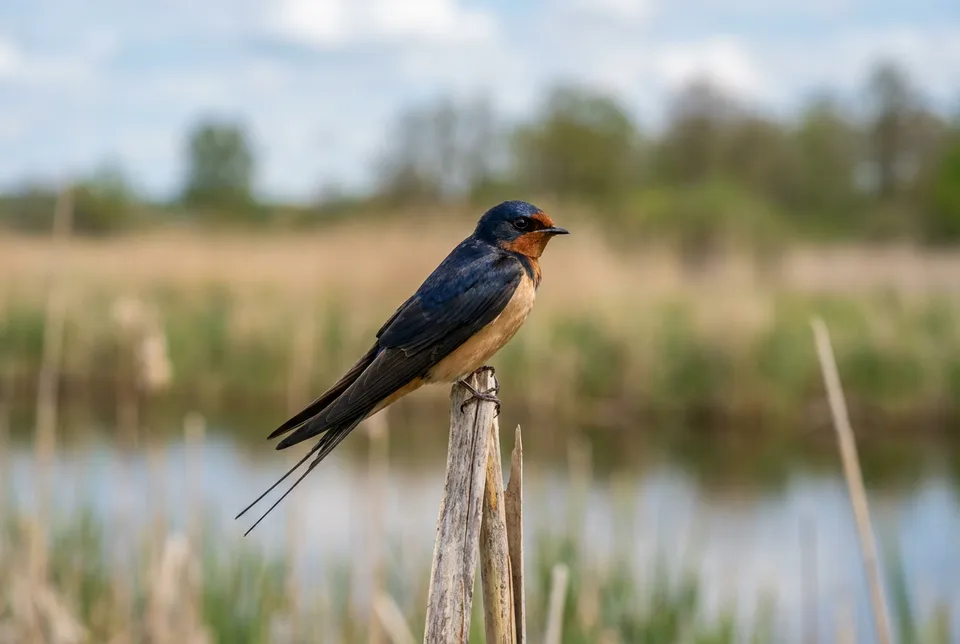
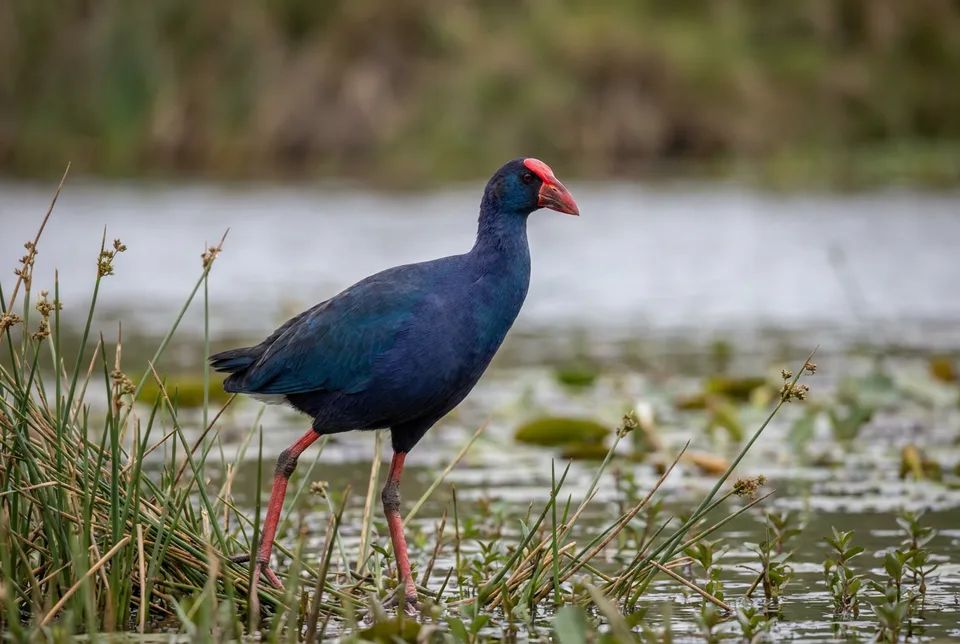
Pied kingfisher in wetland habitat — Nile, River Cruises wildlifeAI-modifiedPied KingfisherAfrican Swamphen in wetland habitat — Nile, Egypt, River Cruises wildlifeAI-modifiedAfrican SwamphenBarn Swallow in wetland habitat — Mississippi, Nile, River Cruises wildlifeAI-modifiedBarn Swallow
Animal groupBirdsAnimal groupBirdsAnimal groupBirds
DestinationsNileDestinationsNileDestinationsMississippi, Nile
Scientific name
Ceryle rudis
Scientific name
Scientific name
Previous speciesPied AvocetNext speciesPied-billed Grebe
All river wildlife
On this page
  • 01About
  • 02Behaviour & reproduction
  • 03Top wildlife locations
  • 04Fun facts
  • 05Best season
  • 06Season matrix by destination
  • 07Habitat
  • 08Diet
  • 09Species at a glance
  • 10Questions & answers
  • 11Compare

Find your river cruise

AI-modified
Plan your trip

Find your next river journey

Compare destinations, shore programs and dates with the animals and habitats you would love to see.

  • Daily shore excursions
  • Responsible wildlife watching
  • Boutique river ships
Explore river cruises