Bluerides – Blue Rides - Book Liveaboards worldwideOCEAN ADVENTURES
River CruisesRiversNature & WildlifeOur Promise
River CruisesRiversNature & WildlifeOur PromiseSign In

River destinations

  • River destinations
  • Amazon
  • Danube
  • Rhine
  • Mekong
  • Nile

Ships & departures

  • River Cruise Search
  • Deals

Nature & Wildlife

  • Nature & Wildlife

Travel support

  • Our Promise
  • Contact

Contact

Get in Touch

Get in touch anytime, we're happy to help you find the right trip or sort out any question.

EmailWrite us, we usually reply within a few hours.
contact@bluerides.com
WhatsAppChat with us on WhatsApp, Mon–Fri 10:00–16:00 (CET).
Start WhatsApp Chat
PhoneCall us, we're happy to help.
Free call, Mon–Fri 10 AM – 8 PM (CET).
Europe+49 800 1144 990USA+1 888 557 7735UK+44 800 707 4152Australia+61 2 8599 6113Canada+1 888 557 7735
Which river journey is yours?Answer 8 quick questions and find the river cruise that fits you.
8 questions, 1 minute·Plus Gift
Secure Payment MethodsYour payments are fully secured with AES-256 encryption.
Powered byStripeWiseAMEXPayGoogle PaySEPABank
Imprint·Terms & Conditions·Privacy Policy·About·Contact·Liability Waiver·Affiliate Program·Cruise·
Visit us here

© 2026 Blue Rides. All rights reserved.·

Bluerides – Blue Rides - Book Liveaboards worldwideOCEAN ADVENTURES
River CruisesRiversNature & WildlifeOur Promise
River CruisesRiversNature & WildlifeOur PromiseSign In
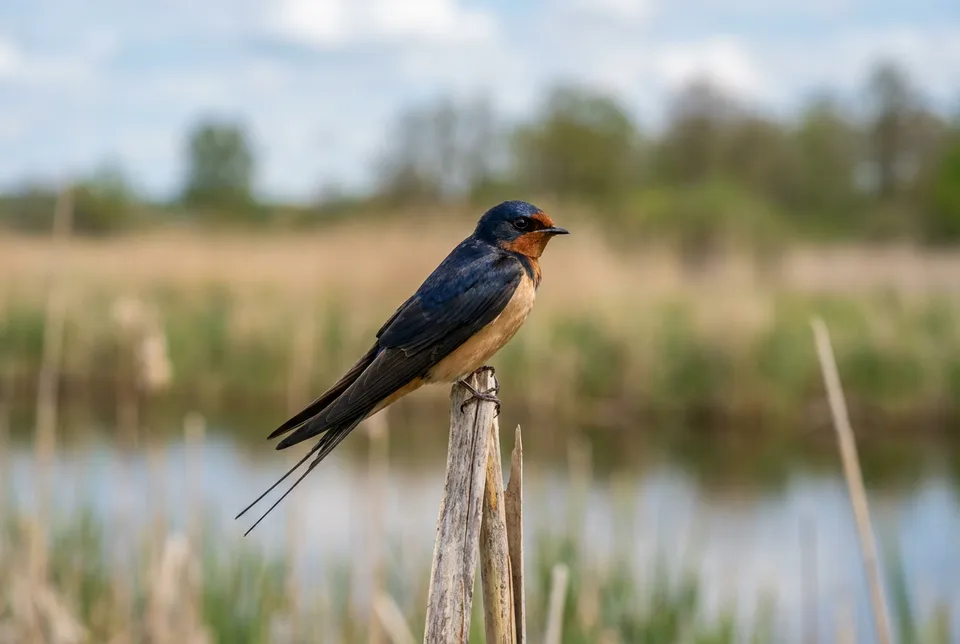
Barn Swallow in wetland habitat — Mississippi, Nile, River Cruises wildlife
Home›River Cruises›River Wildlife›Barn Swallow

Barn SwallowHirundo rusticaWhere and when to see them

Previous speciesBar-tailed godwitNext speciesBearded Reedling

Barn Swallow at a glance

The Barn Swallow is an aerial insect-eater with a deeply forked tail and a close association with buildings, bridges and open feeding landscapes. Cornell describes cobalt-blue upperparts and tawny underparts in its North American account, while plumage differences across the species' large range require care when applying that description elsewhere. The River registry contains two distinct contexts: the Upper Mississippi refuge between Wabasha and Rock Island, and the Nile cruise corridor from Luxor to Aswan. These should not be given a shared seasonal calendar. The American refuge explicitly recommends watching swallows over wetland waters. The Egyptian report identifies the local form as Hirundo rustica savignii, or Egyptian Barn Swallow, during a March 2007 journey. Together, these records show how the same species can be encountered in very different river landscapes, without establishing equal abundance, migration patterns or viewing reliability at both destinations.

Behaviour & reproduction

Size
Not verified in the sources read
Weight
Not verified in the sources read
Lifespan
Not verified in the sources read
Status
See sourced assessment

Barn Swallows capture flying insects while moving rapidly through open air, often working close to the surface of water or above fields. Their flight includes quick turns, glides and repeated passes through productive feeding patches. Cornell notes that birds may fly only inches above the ground or water. This makes their movement conspicuous from a riverbank even when plumage details remain difficult to see. Nest construction provides a contrasting, slower activity: birds collect mud and plant material and build a cup on a sheltered support. Bridges and buildings can therefore connect feeding habitat with nesting opportunities. A low-flying swallow should not automatically be identified as a Barn Swallow, because other swallows use the same waters. Watch for the tail shape and repeated views of the upperparts and underparts. Around occupied structures, keep clear of approaches to nests and avoid prolonged observation that interrupts feeding visits.

Top wildlife locations

Mississippi river landscape — River Cruises wildlife habitat

Mississippi

Upper Mississippi River NWR, Wabasha MN–Rock Island IL. Official refuge guidance recommends watching Barn Swallows over wetland waters.

Explore river cruises
Nile river landscape — River Cruises wildlife habitat

Nile

Luxor–Esna–Edfu–Kom Ombo–Aswan. The March 2007 trip report names Hirundo rustica savignii, Egyptian Barn Swallow.

Explore river cruises

Destinations describe the species' habitat, not guaranteed cruise stops. Some animals require an optional inland excursion or are found in restricted reserves.

Fun facts about the Barn Swallow

  • Barn Swallows catch insects in flight.
  • Adults have a deeply forked tail.
  • Cornell describes cobalt-blue upperparts in North American birds.
  • They often feed close above water or ground.
  • Their nests are cup-shaped and made with mud.
  • Bridges can provide nesting supports.
  • They also feed above fields and farmyards.
  • The Nile report names the Egyptian form savignii.
  • The Upper Mississippi refuge explicitly recommends watching them over wetland waters.

Best time to see the Barn Swallow

The two registered rivers require separate treatment. For the Upper Mississippi, the Fish and Wildlife Service places its recommendation to watch Barn Swallows over wetland waters within its spring birding guidance. That supports a qualitative local spring context, but the passage read does not assign exact months specifically to this species. The Nile evidence is a dated March 2007 trip report, including Egyptian Barn Swallow on the Luxor–Aswan itinerary. A single March journey is not proof of an annually recurring March viewing season, and the local subspecies should not inherit a North American migration calendar. Both locations therefore retain empty month arrays. A useful booking question is whether recent swallow activity has been reported at the actual riverbank or refuge stop included in the programme. Confirm access separately: a scheduled temple visit or main-channel sailing does not necessarily include the best feeding or nesting viewpoints.

Barn Swallow: season matrix by destination

Highlighted months reflect the stated local evidence, not guaranteed encounters. Neutral months mean no verified monthly viewing window, not absence. Observation records and recommended viewing windows are distinct.

Mississippi

The official account supplies spring context but not exact species-specific viewing months.

JanFebMarAprMayJunJulAugSepOctNovDec
Explore river cruises

Nile

A historical March observation is not an established recurring monthly viewing season.

JanFebMarAprMayJunJulAugSepOctNovDec
Explore river cruises

Where the Barn Swallow lives

Open country with flying insects and accessible nesting supports is the central habitat combination. Water can provide productive feeding space, but the species is not confined to rivers or wetlands. Cornell includes meadows, farmyards, fields and open water, and describes nests under eaves, in outbuildings and beneath bridges. On the Upper Mississippi, wetland waters and the surrounding refuge landscape offer the registered observation context. The refuge extends through a long corridor, so a general recommendation does not identify a dependable bird at every landing. On the Nile, the registry follows Luxor, Esna, Edfu, Kom Ombo and Aswan, where open river surfaces, cultivated margins and built structures form a different setting. The March report is historical evidence for that itinerary, not a survey of all present-day nesting locations. Observe from permitted public areas and avoid entering buildings or bridge infrastructure solely to locate nests.

What the Barn Swallow eats

Barn Swallows feed on insects caught in flight rather than on seeds supplied at a bird feeder. They search above fields, yards and water, adjusting their flight to the distribution of airborne prey. The long, agile body and forked tail are associated with manoeuvring through this feeding environment. From a vessel, repeated low passes can be easier to detect than the individual insects being captured. Changes in feeding height or concentration do not establish a calendar of presence, and a busy feeding patch may disperse quickly. Cornell explicitly notes that Barn Swallows do not come to seed or suet feeders. For river visitors, the appropriate response is to watch the natural insect-catching behaviour rather than offer food. Avoid spraying insects or disturbing nesting areas near viewing points. Where several swallow species feed together, diet and flight height alone are insufficient for identification; plumage and tail structure remain necessary.

Species at a glance

Common name
Barn Swallow
Scientific name
Hirundo rustica
Animal group
Birds
Size
Not verified in the sources read
Weight
Not verified in the sources read
Lifespan
Not verified in the sources read
Status
Cornell describes conservation concern as low; a formal current global assessment was not independently verified.
Identification
The most useful adult field feature is the long, deeply forked tail, seen together with a streamlined swallow shape and rapid, agile flight. Cornell's North American account describes cobalt-blue upperparts and tawny underparts. The rusty face and throat provide additional clues where visible, but subspecies variation means that underpart colour should not be treated as identical across the Mississippi and Nile populations. Egyptian birds in the registry report are explicitly named Hirundo rustica savignii. Juveniles have shorter tail streamers, so the lack of an exaggerated fork does not automatically exclude the species. Compare the whole combination with other swallows feeding nearby. Tree Swallows and Cliff Swallows are both mentioned by the Upper Mississippi refuge, making mixed-species observation a realistic possibility. A nest made of mud can support the assessment, but nest shape and placement should be checked without approaching or disturbing the occupants.

Barn Swallow: frequently asked questions

Where can I see the Barn Swallow?
Mississippi, Nile. Begin with a broad view of open water or adjacent fields and follow a single bird through several passes. Barn Swallows move too quickly for a brief silhouette to provide every useful feature. The deeply forked tail is especially helpful on adults, while a perched bird can reveal the glossy upperparts and face pattern more clearly. On the Upper Mississippi, use established refuge overlooks, landings and authorised trails; the official birding page specifically directs attention to swallows over wetland waters. On the Nile, the historical corridor supports scanning from a deck or ordinary riverbank visit, without promising proximity. Do not lean beyond vessel barriers or approach an occupied nest under a bridge. Where birds repeatedly return to one structure, allow an unobstructed flight route. Binoculars are usually more useful than pursuing a flying bird with a narrow camera view before its identity has been established.
When is the best time to see the Barn Swallow?
The two registered rivers require separate treatment. For the Upper Mississippi, the Fish and Wildlife Service places its recommendation to watch Barn Swallows over wetland waters within its spring birding guidance. That supports a qualitative local spring context, but the passage read does not assign exact months specifically to this species. The Nile evidence is a dated March 2007 trip report, including Egyptian Barn Swallow on the Luxor–Aswan itinerary. A single March journey is not proof of an annually recurring March viewing season, and the local subspecies should not inherit a North American migration calendar. Both locations therefore retain empty month arrays. A useful booking question is whether recent swallow activity has been reported at the actual riverbank or refuge stop included in the programme. Confirm access separately: a scheduled temple visit or main-channel sailing does not necessarily include the best feeding or nesting viewpoints.
How big does the Barn Swallow get?
Not verified in the sources read. Adult weight: Not verified in the sources read. Size varies with age, sex and population.
How should I behave around the Barn Swallow?
Begin with a broad view of open water or adjacent fields and follow a single bird through several passes. Barn Swallows move too quickly for a brief silhouette to provide every useful feature. The deeply forked tail is especially helpful on adults, while a perched bird can reveal the glossy upperparts and face pattern more clearly. On the Upper Mississippi, use established refuge overlooks, landings and authorised trails; the official birding page specifically directs attention to swallows over wetland waters. On the Nile, the historical corridor supports scanning from a deck or ordinary riverbank visit, without promising proximity. Do not lean beyond vessel barriers or approach an occupied nest under a bridge. Where birds repeatedly return to one structure, allow an unobstructed flight route. Binoculars are usually more useful than pursuing a flying bird with a narrow camera view before its identity has been established.
What does the Barn Swallow eat?
Barn Swallows feed on insects caught in flight rather than on seeds supplied at a bird feeder. They search above fields, yards and water, adjusting their flight to the distribution of airborne prey. The long, agile body and forked tail are associated with manoeuvring through this feeding environment. From a vessel, repeated low passes can be easier to detect than the individual insects being captured. Changes in feeding height or concentration do not establish a calendar of presence, and a busy feeding patch may disperse quickly. Cornell explicitly notes that Barn Swallows do not come to seed or suet feeders. For river visitors, the appropriate response is to watch the natural insect-catching behaviour rather than offer food. Avoid spraying insects or disturbing nesting areas near viewing points. Where several swallow species feed together, diet and flight height alone are insufficient for identification; plumage and tail structure remain necessary.
Are wildlife sightings guaranteed on a river cruise?
No. Animals move freely and routes, weather, access restrictions and local conditions influence every outing. Confirm the actual itinerary and shore program before booking.

Compare wildlife in the same destinations

Explore other birds recorded in these destinations. Similar surroundings do not mean the animals share the same habits or viewing season.

Species comparison by animal group and destination
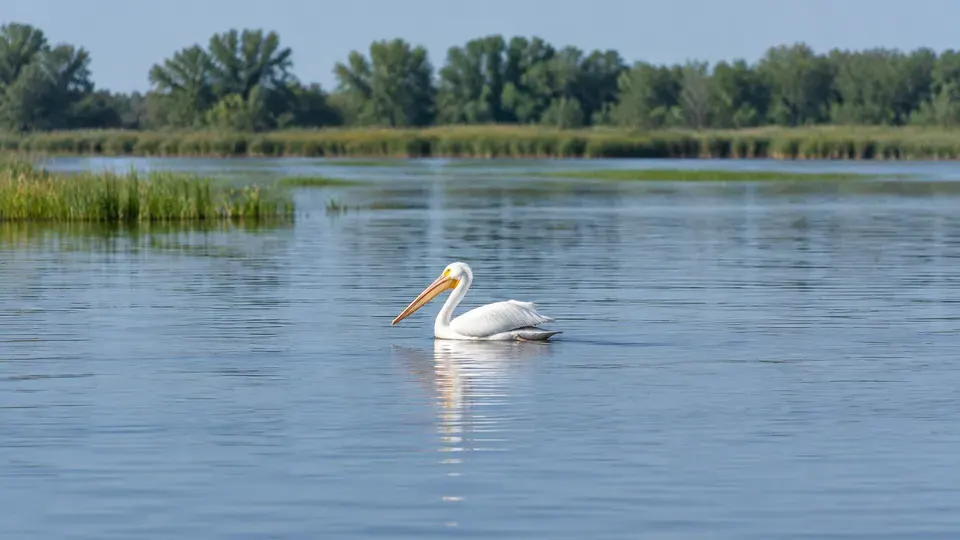
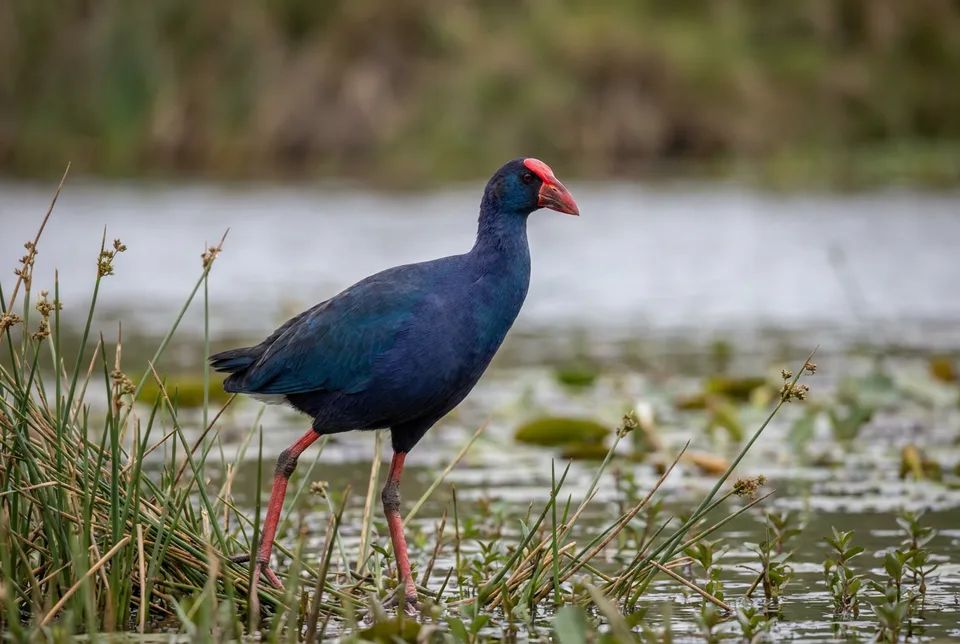
Barn Swallow in wetland habitat — Mississippi, Nile, River Cruises wildlifeBarn SwallowAfrican Swamphen in wetland habitat — Nile, Egypt, River Cruises wildlifeAfrican SwamphenAmerican white pelican in wetland habitat — Columbia, Mississippi, River Cruises wildlifeAmerican White Pelican
Animal groupBirdsAnimal groupBirdsAnimal groupBirds
DestinationsMississippi, NileDestinationsNileDestinationsColumbia, Mississippi
Scientific name
Hirundo rustica
Scientific name
Scientific name
Previous speciesBar-tailed godwitNext speciesBearded Reedling
All river wildlife
On this page
  • 01About
  • 02Behaviour & reproduction
  • 03Top wildlife locations
  • 04Fun facts
  • 05Best season
  • 06Season matrix by destination
  • 07Habitat
  • 08Diet
  • 09Species at a glance
  • 10Questions & answers
  • 11Compare

Find your river cruise

Plan your trip

Find your next river journey

Compare destinations, shore programs and dates with the animals and habitats you would love to see.

  • Daily shore excursions
  • Responsible wildlife watching
  • Boutique river ships
Explore river cruises