Bluerides – Blue Rides - Book Liveaboards worldwideOCEAN ADVENTURES
River CruisesRiversNature & WildlifeOur Promise
River CruisesRiversNature & WildlifeOur PromiseSign In

River destinations

  • River destinations
  • Amazon
  • Danube
  • Rhine
  • Mekong
  • Nile

Ships & departures

  • River Cruise Search
  • Deals

Nature & Wildlife

  • Nature & Wildlife

Travel support

  • Our Promise
  • Contact

Contact

Get in Touch

Get in touch anytime, we're happy to help you find the right trip or sort out any question.

EmailWrite us, we usually reply within a few hours.
contact@bluerides.com
WhatsAppChat with us on WhatsApp, Mon–Fri 10:00–16:00 (CET).
Start WhatsApp Chat
PhoneCall us, we're happy to help.
Free call, Mon–Fri 10 AM – 8 PM (CET).
Europe+49 800 1144 990USA+1 888 557 7735UK+44 800 707 4152Australia+61 2 8599 6113Canada+1 888 557 7735
Which river journey is yours?Answer 8 quick questions and find the river cruise that fits you.
8 questions, 1 minute·Plus Gift
Secure Payment MethodsYour payments are fully secured with AES-256 encryption.
Powered byStripeWiseAMEXPayGoogle PaySEPABank
Imprint·Terms & Conditions·Privacy Policy·About·Contact·Liability Waiver·Affiliate Program·Cruise·
Visit us here

© 2026 Blue Rides. All rights reserved.·

Bluerides – Blue Rides - Book Liveaboards worldwideOCEAN ADVENTURES
River CruisesRiversNature & WildlifeOur Promise
River CruisesRiversNature & WildlifeOur PromiseSign In
Bearded Reedling in wetland habitat — Seine, River Cruises wildlife
Home›River Cruises›River Wildlife›Bearded Reedling

Bearded ReedlingPanurus biarmicusWhere and when to see them

Previous speciesBarn SwallowNext speciesBelted Kingfisher

Bearded Reedling at a glance

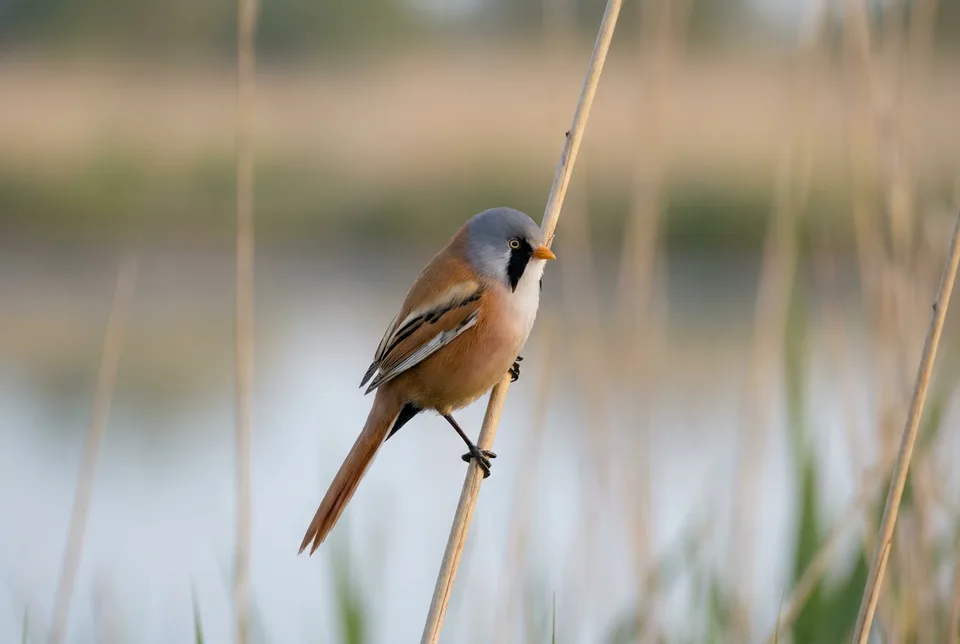
The Bearded Reedling is a small, long-tailed reedbed bird whose alternative English name, Bearded Tit, is misleading. The RSPB explains that it is not a true tit and belongs to its own family. Adult males carry conspicuous black facial markings that resemble moustaches more than a beard. Its specialised association with dense reeds makes habitat more informative than a broad river name when planning an observation. The River registry places it in the Lower Seine protected landscape, Estuaire et marais de la Basse-Seine, toward the Rouen–Honfleur sector. The supporting regional document concerns birds of reedbeds and freshwater habitats and names Panure à moustaches, Panurus biarmicus. That supports the estuarine wetland context, not a precise station along the navigation channel. A suitable shore excursion is therefore a more realistic prospect than expecting the species to be identifiable from an ordinary cruise deck.

Behaviour & reproduction

Size
Not verified in the sources read
Weight
Not verified in the sources read
Lifespan
Not verified in the sources read
Status
See sourced assessment

Bearded Reedlings are sociable birds that often reveal themselves by sound before they become visible. Their distinctive pinging contact calls help members of a party remain in touch within dense vegetation. The RSPB describes rapid flights across reedbed tops and notes that the birds can be difficult to find even where present. A group may appear briefly above the reeds and then disappear into cover, so patience is more productive than repeated movement along the edge. Their long tails and light bodies suit movement among slender stems. The RSPB also describes conspicuous group flights in autumn in Britain, while acknowledging uncertainty about their explanation. That observation should not be converted into a Lower Seine monthly forecast. On the registered reach, allow birds to emerge naturally and avoid playback, reed shaking or walking into vegetation. Such tactics can interrupt normal contact and feeding behaviour in a habitat where birds already have limited visible space.

Top wildlife locations

Seine river landscape — River Cruises wildlife habitat

Seine

Lower Seine ZPS Estuaire et marais de la Basse-Seine: reedbeds and freshwater marshes toward the estuary, Rouen–Honfleur sector. A shore excursion is required; no precise main-channel station is established.
Explore river cruises

Destinations describe the species' habitat, not guaranteed cruise stops. Some animals require an optional inland excursion or are found in restricted reserves.

Fun facts about the Bearded Reedling

  • It is also called Bearded Tit.
  • It is not a true tit.
  • The RSPB places it in a family of its own.
  • Males have black moustache-like markings.
  • Its tail is conspicuously long.
  • Groups use pinging contact calls.
  • It can switch from insects to seeds.
  • Dense reedbeds are its characteristic habitat.
  • The French name is Panure à moustaches.

Best time to see the Bearded Reedling

No exact Lower Seine viewing months are assigned. The registry points to regional monitoring material associated with 2015–2018 and the reedbed and freshwater bird group, rather than a month-by-month visitor calendar. The RSPB's account of British residency and autumn group flights cannot supply French dates. Likewise, the presence of seed resources or apparently favourable weather does not establish monthly occurrence at the actual excursion site. The most useful planning distinction is between habitat access and a demonstrated viewing season: a public viewpoint may be open when birds remain hidden, and a broad protected-area record does not guarantee a nearby group. Ask the local reserve or guide about recent observations, current access restrictions and the location of permitted viewing points. Retain flexibility for a quiet, patient visit, but do not promise that a calm day, an estuary cruise or a particular calendar month will produce a sighting.

Bearded Reedling: season matrix by destination

Highlighted months reflect the stated local evidence, not guaranteed encounters. Neutral months mean no verified monthly viewing window, not absence. Observation records and recommended viewing windows are distinct.

Seine

Regional monitoring supports occurrence, not an exact local monthly viewing calendar.

JanFebMarAprMayJunJulAugSepOctNovDec
Explore river cruises

Where the Bearded Reedling lives

Extensive reedbeds are the defining habitat, particularly where vegetation provides continuous cover and a mixture of feeding opportunities. The Lower Seine registry specifically identifies estuarine reedbeds and freshwater marshes within the protected Estuaire et marais de la Basse-Seine landscape. This is a narrower ecological description than the entire Rouen–Honfleur cruise sector. A navigation channel, quay or urban landing may be close geographically without offering the required habitat. The regional source groups the species with birds of reedbeds and freshwater environments, reinforcing the need for a wetland-focused visit. Management that retains substantial reed cover is important, while disturbance and wholesale vegetation removal can reduce usable space. Public observation points may provide views over reeds without requiring entry into sensitive areas. Before booking an excursion, establish whether the programme actually reaches a permitted reedbed viewpoint rather than simply visiting a town near the estuary. The registry does not establish a precise main-channel viewing station.

What the Bearded Reedling eats

The Bearded Reedling's diet changes with available resources, combining animal food with seeds. The RSPB describes a shift from insects to seeds that helps the species remain in reedbeds through the year in Britain. This is a useful biological explanation, not proof of year-round visibility at a particular French viewpoint. Reedbeds provide both invertebrate-rich feeding surfaces and seed-bearing vegetation, making their structure important beyond simple concealment. A bird working low among stems may be feeding even when its bill and food are hidden. Visitors should not bend reeds, scatter seed or use food to draw birds into the open. The natural distribution of food helps explain why a group may concentrate in one patch and be absent from another apparently similar area. At the Lower Seine site, watch how birds move among stems and seed heads, but avoid claiming a particular prey item unless it is genuinely visible.

Species at a glance

Common name
Bearded Reedling
Scientific name
Panurus biarmicus
Animal group
Birds
Size
Not verified in the sources read
Weight
Not verified in the sources read
Lifespan
Not verified in the sources read
Status
Global category not verified. The RSPB gives a UK Green classification, which must not be presented as a French assessment.
Identification
Look for a small warm-brown bird with a disproportionately long tail moving through reeds. Adult males have a pale grey head and strong black moustache-like facial markings; these explain both the English and French common names. Females lack the male's bold black facial pattern and can therefore appear less distinctive. The RSPB emphasises sociable behaviour, rapid reed-top flights and the characteristic pinging call as useful supporting clues. None of those features should replace a clear assessment of shape and plumage when other small birds are present. The alternative name Bearded Tit does not indicate membership of the familiar tit family. In older or translated local material, Panure à moustaches and Panurus biarmicus are the relevant names to recognise. At the Lower Seine site, a long-tailed bird disappearing into reeds is a starting point for investigation, not a complete identification. Record calls and visible features without disturbing the vegetation.

Bearded Reedling: frequently asked questions

Where can I see the Bearded Reedling?
Seine. Listen before searching visually. The metallic pinging call can indicate birds moving inside reeds when no bird is exposed. Once a group is located, scan the upper stems and any natural gaps with binoculars rather than advancing toward the sound. Brief flights can reveal long tails and warm brown bodies, while a male's pale head and black moustaches may appear only when it pauses. The Lower Seine location should be visited from authorised paths, hides or public observation points. Avoid walking into reeds or approaching an area repeatedly used by a concealed group. Playback can alter behaviour and is unnecessary for a responsible visitor encounter. A telescope may help at an open viewpoint, although a narrow field of view can make rapidly moving birds difficult to follow. Treat an incomplete glimpse honestly: a reedbed silhouette without diagnostic features may remain unidentified. The opportunity is a specialist wetland observation, not a routine main-channel deck sighting.
When is the best time to see the Bearded Reedling?
No exact Lower Seine viewing months are assigned. The registry points to regional monitoring material associated with 2015–2018 and the reedbed and freshwater bird group, rather than a month-by-month visitor calendar. The RSPB's account of British residency and autumn group flights cannot supply French dates. Likewise, the presence of seed resources or apparently favourable weather does not establish monthly occurrence at the actual excursion site. The most useful planning distinction is between habitat access and a demonstrated viewing season: a public viewpoint may be open when birds remain hidden, and a broad protected-area record does not guarantee a nearby group. Ask the local reserve or guide about recent observations, current access restrictions and the location of permitted viewing points. Retain flexibility for a quiet, patient visit, but do not promise that a calm day, an estuary cruise or a particular calendar month will produce a sighting.
How big does the Bearded Reedling get?
Not verified in the sources read. Adult weight: Not verified in the sources read. Size varies with age, sex and population.
How should I behave around the Bearded Reedling?
Listen before searching visually. The metallic pinging call can indicate birds moving inside reeds when no bird is exposed. Once a group is located, scan the upper stems and any natural gaps with binoculars rather than advancing toward the sound. Brief flights can reveal long tails and warm brown bodies, while a male's pale head and black moustaches may appear only when it pauses. The Lower Seine location should be visited from authorised paths, hides or public observation points. Avoid walking into reeds or approaching an area repeatedly used by a concealed group. Playback can alter behaviour and is unnecessary for a responsible visitor encounter. A telescope may help at an open viewpoint, although a narrow field of view can make rapidly moving birds difficult to follow. Treat an incomplete glimpse honestly: a reedbed silhouette without diagnostic features may remain unidentified. The opportunity is a specialist wetland observation, not a routine main-channel deck sighting.
What does the Bearded Reedling eat?
The Bearded Reedling's diet changes with available resources, combining animal food with seeds. The RSPB describes a shift from insects to seeds that helps the species remain in reedbeds through the year in Britain. This is a useful biological explanation, not proof of year-round visibility at a particular French viewpoint. Reedbeds provide both invertebrate-rich feeding surfaces and seed-bearing vegetation, making their structure important beyond simple concealment. A bird working low among stems may be feeding even when its bill and food are hidden. Visitors should not bend reeds, scatter seed or use food to draw birds into the open. The natural distribution of food helps explain why a group may concentrate in one patch and be absent from another apparently similar area. At the Lower Seine site, watch how birds move among stems and seed heads, but avoid claiming a particular prey item unless it is genuinely visible.
Are wildlife sightings guaranteed on a river cruise?
No. Animals move freely and routes, weather, access restrictions and local conditions influence every outing. Confirm the actual itinerary and shore program before booking.

Compare wildlife in the same destinations

Explore other birds recorded in these destinations. Similar surroundings do not mean the animals share the same habits or viewing season.

Species comparison by animal group and destination
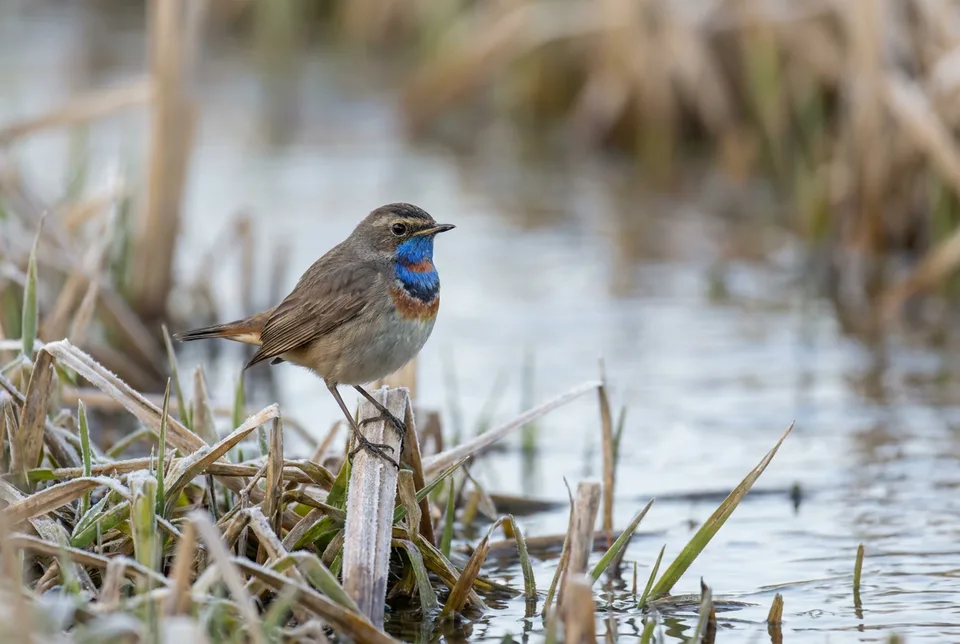
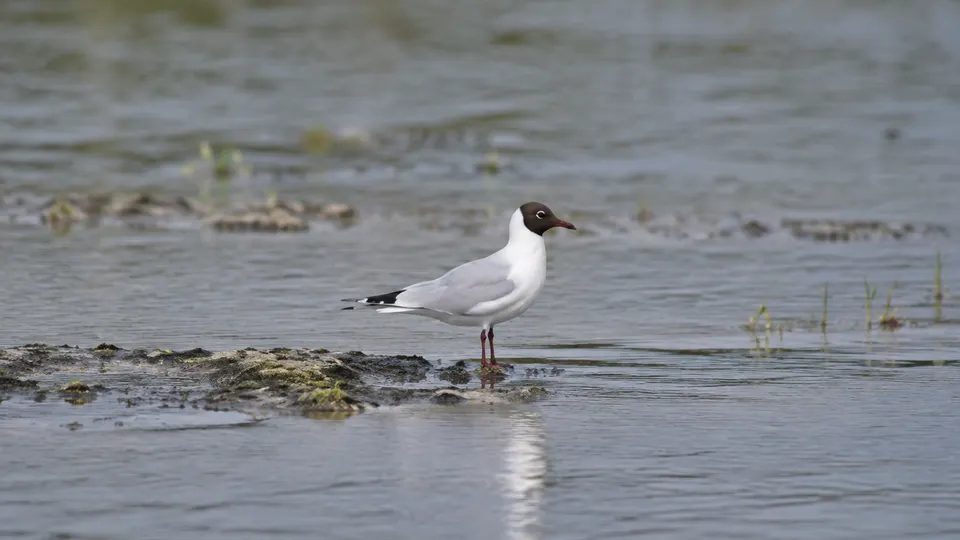
Bearded Reedling in wetland habitat — Seine, River Cruises wildlifeBearded ReedlingBlack-headed gull in wetland habitat — Saone, Seine, Nile, Douro, River Cruises wildlifeBlack-Headed GullBluethroat in wetland habitat — Seine, Douro, River Cruises wildlifeBluethroat
Animal groupBirdsAnimal groupBirdsAnimal groupBirds
DestinationsSeineDestinationsSaone, Seine, Nile, DouroDestinationsSeine, Douro
Scientific name
Panurus biarmicus
Scientific name
Scientific name
Previous speciesBarn SwallowNext speciesBelted Kingfisher
All river wildlife
On this page
  • 01About
  • 02Behaviour & reproduction
  • 03Top wildlife locations
  • 04Fun facts
  • 05Best season
  • 06Season matrix by destination
  • 07Habitat
  • 08Diet
  • 09Species at a glance
  • 10Questions & answers
  • 11Compare

Find your river cruise

Plan your trip

Find your next river journey

Compare destinations, shore programs and dates with the animals and habitats you would love to see.

  • Daily shore excursions
  • Responsible wildlife watching
  • Boutique river ships
Explore river cruises