Bluerides – Blue Rides - Book Liveaboards worldwideOCEAN ADVENTURES
River CruisesRiversNature & WildlifeOur Promise
River CruisesRiversNature & WildlifeOur PromiseSign In

River destinations

  • River destinations
  • Amazon
  • Danube
  • Rhine
  • Mekong
  • Nile

Ships & departures

  • River Cruise Search
  • Deals

Nature & Wildlife

  • Nature & Wildlife

Travel support

  • Our Promise
  • Contact

Contact

Get in Touch

Get in touch anytime, we're happy to help you find the right trip or sort out any question.

EmailWrite us, we usually reply within a few hours.
contact@bluerides.com
WhatsAppChat with us on WhatsApp, Mon–Fri 10:00–16:00 (CET).
Start WhatsApp Chat
PhoneCall us, we're happy to help.
Free call, Mon–Fri 10 AM – 8 PM (CET).
Europe+49 800 1144 990USA+1 888 557 7735UK+44 800 707 4152Australia+61 2 8599 6113Canada+1 888 557 7735
Which river journey is yours?Answer 8 quick questions and find the river cruise that fits you.
8 questions, 1 minute·Plus Gift
Secure Payment MethodsYour payments are fully secured with AES-256 encryption.
Powered byStripeWiseAMEXPayGoogle PaySEPABank
Imprint·Terms & Conditions·Privacy Policy·About·Contact·Liability Waiver·Affiliate Program·Cruise·Blog·
Visit us here

© 2026 Blue Rides. All rights reserved.

Bluerides – Blue Rides - Book Liveaboards worldwideOCEAN ADVENTURES
River CruisesRiversNature & WildlifeOur Promise
River CruisesRiversNature & WildlifeOur PromiseSign In
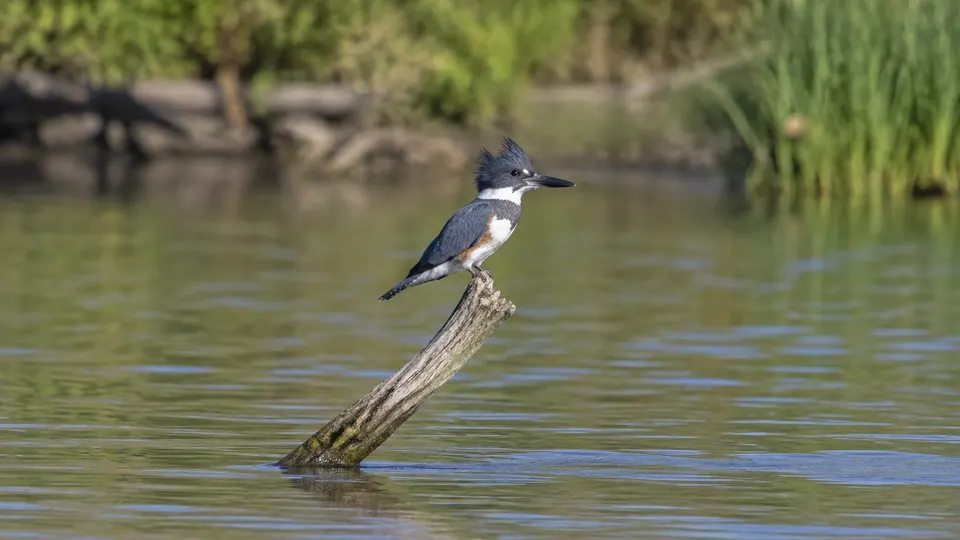
Belted kingfisher in wetland habitat — Columbia, River Cruises wildlifeAI-modified
Home›River Cruises›River Wildlife›Belted Kingfisher

Belted KingfisherMegaceryle alcyonWhere and when to see them

Previous speciesBearded ReedlingNext speciesBighorn Sheep

Belted Kingfisher at a glance

The Belted Kingfisher is a conspicuous fishing bird of North American waters, recognised by its large head, shaggy crest and strong bill. Its ecology depends on more than the presence of a river: it needs visible prey, useful hunting positions and suitable nesting banks. Cornell describes a bird that hunts from perches or hovers before diving, then returns with prey to a resting place. The River registry associates it with the Columbia at Umatilla National Wildlife Refuge and the John Day pool around Boardman and Irrigon. The linked eBird regional checklist was protected by an automated-access challenge during this research, so its species entry was not independently reread. The registered association is retained transparently rather than being represented as newly verified. Species biology supports looking along river edges and sloughs, but it does not prove current presence or year-round observation at this exact refuge.

Behaviour & reproduction

Size
Not verified in the sources read
Weight
Not verified in the sources read
Lifespan
Not verified in the sources read
Status
See sourced assessment

A Belted Kingfisher commonly watches the water from an exposed perch, then launches a direct attack on prey near the surface. Cornell describes dives with the eyes closed and a pincer-like grasp of the bill. Birds may also hover instead of searching from a fixed position. After capture, the kingfisher can return to a perch, strike the prey against it and swallow it head first. This sequence makes patient observation of a favoured branch more informative than continuously searching open water. Nesting involves excavation of a tunnel in an earthen bank rather than occupation of a tree cavity. Banks may be near water or in suitable cuttings farther away. At the Columbia reach, watch without positioning a boat or group between an active bird and its hunting area. Do not investigate apparent burrow entrances closely; disturbance can interrupt nesting even when the adults are temporarily out of view.

Top wildlife locations

Columbia river landscape — River Cruises wildlife habitatAI-modified

Columbia

Columbia — Umatilla NWR / John Day pool, Boardman–Irrigon. Registered checklist association retained; the linked eBird page presented an automated-access challenge and was not independently verified.
Explore river cruises

Destinations describe the species' habitat, not guaranteed cruise stops. Some animals require an optional inland excursion or are found in restricted reserves.

Fun facts about the Belted Kingfisher

  • Its scientific name is Megaceryle alcyon.
  • It hunts from waterside perches.
  • It can hover before diving.
  • Fish are its principal prey.
  • It also eats crayfish.
  • Prey may be swallowed head first.
  • It excavates nesting burrows in earthen banks.
  • Older young produce pellets containing hard prey remains.
  • A feeding perch and a nesting bank need not be at the same spot.

Best time to see the Belted Kingfisher

The Columbia location retains an empty month array. The registered eBird link identifies a regional checklist, but automated access prevented independent reading of its contents during this research. Even a successfully read species list without seasonal information would establish occurrence rather than exact viewing months. Cornell's broad North American distribution and descriptions of winter habitat cannot supply a Boardman–Irrigon calendar. Nor should general seasonal notes about refuge waterfowl, terns or swallows be applied to this kingfisher. Before planning a dedicated visit, seek recent, dated records for Umatilla National Wildlife Refuge or the John Day pool and check which observation areas are open. Ask whether reports concern birds feeding along accessible shorelines rather than a distant part of the refuge. That approach can guide an excursion without converting an unverified checklist entry or a continental range pattern into a reliable monthly promise.

Belted Kingfisher: season matrix by destination

Highlighted months reflect the stated local evidence, not guaranteed encounters. Neutral months mean no verified monthly viewing window, not absence. Observation records and recommended viewing windows are distinct.

Columbia

No exact local species-specific monthly evidence was read.

JanFebMarAprMayJunJulAugSepOctNovDec
Explore river cruises

Where the Belted Kingfisher lives

Cornell describes streams, rivers, ponds, lakes, estuaries and sheltered marine waters, provided that feeding conditions are suitable. Clear enough water to detect prey and nearby perches are important, while dense vegetation obstructing the hunting surface may reduce usefulness. Nesting adds a separate requirement for excavatable earthen banks, usually with limited root interference. A productive feeding site and a nesting bank need not occupy the same small patch. The registered Columbia setting is Umatilla National Wildlife Refuge and the John Day pool between Boardman and Irrigon. River margins and sloughs are therefore more relevant observation targets than the centre of the navigation channel. A refuge shore visit may improve the viewing angle and time available for scanning, subject to current access rules. The registry's regional checklist link should not be treated as evidence that every pool, bank or season supports an observable bird. Local habitat and recent records still matter.

What the Belted Kingfisher eats

Fish form the principal food of the Belted Kingfisher, but Cornell documents a much broader list of occasional prey. Crayfish and other crustaceans, molluscs, insects, amphibians and reptiles can also be taken, with additional unusual foods recorded. The main feeding method is visual hunting from a perch or hover followed by a plunge and bill capture. A bird carrying a small fish may beat it against a branch before swallowing it head first. Cornell also explains that young nestlings can digest bones and scales, whereas birds begin producing pellets containing hard remains by the time they leave the nest. These details distinguish natural feeding from a simple image of a bird diving repeatedly into deep water. At Umatilla, observe existing hunting perches from a distance. Do not throw fish, use bait or create feeding opportunities for photographs; such practices change the behaviour being observed.

Species at a glance

Common name
Belted Kingfisher
Scientific name
Megaceryle alcyon
Animal group
Birds
Size
Not verified in the sources read
Weight
Not verified in the sources read
Lifespan
Not verified in the sources read
Status
Formal current global category not verified
Identification
The Belted Kingfisher has a heavy straight bill, large head, ragged crest and blue-grey upperparts contrasting with pale underparts. A blue-grey breast band is characteristic, and females also show a rusty band across the lower breast and sides. This makes the female more colourful in that particular plumage feature than the male. The combination of crest, bill proportions and breast pattern is more useful than an impression of blue colour alone. When a bird flies rapidly along a shoreline, wait for it to perch before drawing conclusions from an incomplete glimpse. Its hunting behaviour can support identification, but diving for fish is shared with other waterbirds. The registry uses the exact key Belted kingfisher and the scientific name Megaceryle alcyon. At Boardman–Irrigon, record those diagnostic features independently of the regional checklist, especially because that linked page was not accessible for verification in this research session.

Belted Kingfisher: frequently asked questions

Where can I see the Belted Kingfisher?
Columbia. Scan exposed branches, posts and other perches above water before searching for a bird in flight. A stationary kingfisher can be surprisingly conspicuous once its large head and upright posture are recognised. Follow any natural dive through to the return perch, where bill shape and plumage may be easier to examine. At the Columbia registry reach, an authorised refuge viewpoint or shore excursion generally offers a more stable observation platform than a moving vessel. Keep clear of bank faces with possible nest entrances, and do not stand beneath a perch until the bird abandons it. A rattling call may draw attention to a moving bird, but a call alone should be assessed carefully if unfamiliar. Photographs should document naturally occurring behaviour rather than a response to bait or pursuit. Because the local checklist could not be independently reread, report any new sighting with its actual location and date rather than assuming the registry proves continuous presence.
When is the best time to see the Belted Kingfisher?
The Columbia location retains an empty month array. The registered eBird link identifies a regional checklist, but automated access prevented independent reading of its contents during this research. Even a successfully read species list without seasonal information would establish occurrence rather than exact viewing months. Cornell's broad North American distribution and descriptions of winter habitat cannot supply a Boardman–Irrigon calendar. Nor should general seasonal notes about refuge waterfowl, terns or swallows be applied to this kingfisher. Before planning a dedicated visit, seek recent, dated records for Umatilla National Wildlife Refuge or the John Day pool and check which observation areas are open. Ask whether reports concern birds feeding along accessible shorelines rather than a distant part of the refuge. That approach can guide an excursion without converting an unverified checklist entry or a continental range pattern into a reliable monthly promise.
How big does the Belted Kingfisher get?
Not verified in the sources read. Adult weight: Not verified in the sources read. Size varies with age, sex and population.
How should I behave around the Belted Kingfisher?
Scan exposed branches, posts and other perches above water before searching for a bird in flight. A stationary kingfisher can be surprisingly conspicuous once its large head and upright posture are recognised. Follow any natural dive through to the return perch, where bill shape and plumage may be easier to examine. At the Columbia registry reach, an authorised refuge viewpoint or shore excursion generally offers a more stable observation platform than a moving vessel. Keep clear of bank faces with possible nest entrances, and do not stand beneath a perch until the bird abandons it. A rattling call may draw attention to a moving bird, but a call alone should be assessed carefully if unfamiliar. Photographs should document naturally occurring behaviour rather than a response to bait or pursuit. Because the local checklist could not be independently reread, report any new sighting with its actual location and date rather than assuming the registry proves continuous presence.
What does the Belted Kingfisher eat?
Fish form the principal food of the Belted Kingfisher, but Cornell documents a much broader list of occasional prey. Crayfish and other crustaceans, molluscs, insects, amphibians and reptiles can also be taken, with additional unusual foods recorded. The main feeding method is visual hunting from a perch or hover followed by a plunge and bill capture. A bird carrying a small fish may beat it against a branch before swallowing it head first. Cornell also explains that young nestlings can digest bones and scales, whereas birds begin producing pellets containing hard remains by the time they leave the nest. These details distinguish natural feeding from a simple image of a bird diving repeatedly into deep water. At Umatilla, observe existing hunting perches from a distance. Do not throw fish, use bait or create feeding opportunities for photographs; such practices change the behaviour being observed.
Are wildlife sightings guaranteed on a river cruise?
No. Animals move freely and routes, weather, access restrictions and local conditions influence every outing. Confirm the actual itinerary and shore program before booking.

Compare wildlife in the same destinations

Explore other birds recorded in these destinations. Similar surroundings do not mean the animals share the same habits or viewing season.

Species comparison by animal group and destination
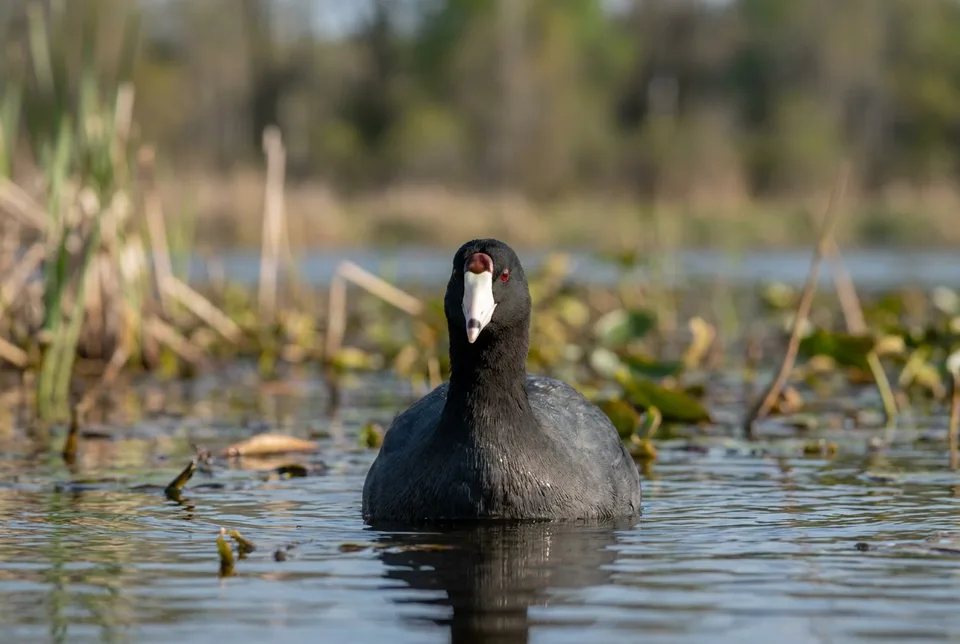
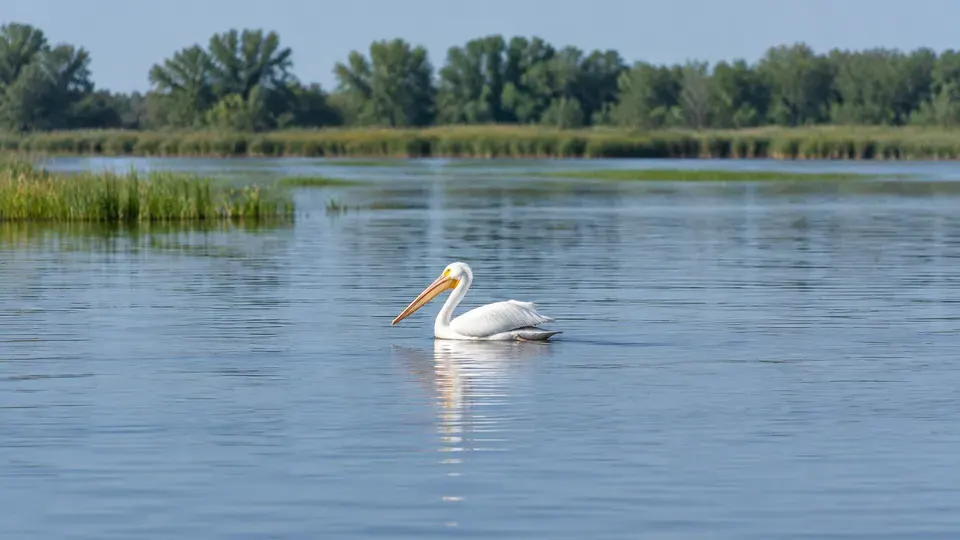
Belted kingfisher in wetland habitat — Columbia, River Cruises wildlifeAI-modifiedBelted KingfisherAmerican Coot in wetland habitat — Columbia, River Cruises wildlifeAI-modifiedAmerican CootAmerican white pelican in wetland habitat — Columbia, Mississippi, River Cruises wildlifeAI-modifiedAmerican White Pelican
Animal groupBirdsAnimal groupBirdsAnimal groupBirds
DestinationsColumbiaDestinationsColumbiaDestinationsColumbia, Mississippi
Scientific name
Megaceryle alcyon
Scientific name
Scientific name
Previous speciesBearded ReedlingNext speciesBighorn Sheep
All river wildlife
On this page
  • 01About
  • 02Behaviour & reproduction
  • 03Top wildlife locations
  • 04Fun facts
  • 05Best season
  • 06Season matrix by destination
  • 07Habitat
  • 08Diet
  • 09Species at a glance
  • 10Questions & answers
  • 11Compare

Find your river cruise

AI-modified
Plan your trip

Find your next river journey

Compare destinations, shore programs and dates with the animals and habitats you would love to see.

  • Daily shore excursions
  • Responsible wildlife watching
  • Boutique river ships
Explore river cruises