Bluerides – Blue Rides - Book Liveaboards worldwideOCEAN ADVENTURES
River CruisesRiversNature & WildlifeOur Promise
River CruisesRiversNature & WildlifeOur PromiseSign In

River destinations

  • River destinations
  • Amazon
  • Danube
  • Rhine
  • Mekong
  • Nile

Ships & departures

  • River Cruise Search
  • Deals

Nature & Wildlife

  • Nature & Wildlife

Travel support

  • Our Promise
  • Contact

Contact

Get in Touch

Get in touch anytime, we're happy to help you find the right trip or sort out any question.

EmailWrite us, we usually reply within a few hours.
contact@bluerides.com
WhatsAppChat with us on WhatsApp, Mon–Fri 10:00–16:00 (CET).
Start WhatsApp Chat
PhoneCall us, we're happy to help.
Free call, Mon–Fri 10 AM – 8 PM (CET).
Europe+49 800 1144 990USA+1 888 557 7735UK+44 800 707 4152Australia+61 2 8599 6113Canada+1 888 557 7735
Which river journey is yours?Answer 8 quick questions and find the river cruise that fits you.
8 questions, 1 minute·Plus Gift
Secure Payment MethodsYour payments are fully secured with AES-256 encryption.
Powered byStripeWiseAMEXPayGoogle PaySEPABank
Imprint·Terms & Conditions·Privacy Policy·About·Contact·Liability Waiver·Affiliate Program·Cruise·Blog·
Visit us here

© 2026 Blue Rides. All rights reserved.

Bluerides – Blue Rides - Book Liveaboards worldwideOCEAN ADVENTURES
River CruisesRiversNature & WildlifeOur Promise
River CruisesRiversNature & WildlifeOur PromiseSign In
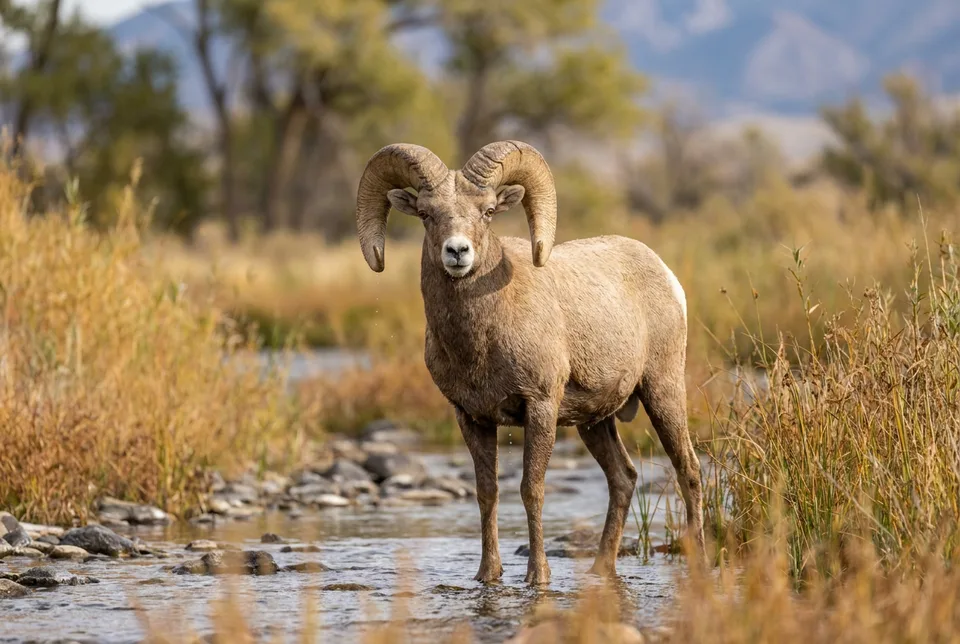
Bighorn Sheep in wetland habitat — Columbia, River Cruises wildlifeAI-modified
Home›River Cruises›River Wildlife›Bighorn Sheep

Bighorn SheepOvis canadensisWhere and when to see them

Previous speciesBelted KingfisherNext speciesBlack Kite

Bighorn Sheep at a glance

Bighorn Sheep are wild North American sheep adapted to steep terrain, with muscular bodies, specialised hooves and permanent horns. They are not animals of the river itself, but canyon slopes can bring their habitat into view from an appropriate boat excursion. The River registry attaches this profile to Columbia itineraries through a specific geographical qualification: the actual sheep reach is the Snake River in Hells Canyon, upstream of Lewiston and Clarkston. It requires an optional excursion beyond normal large-ship navigation. A local jet-boat operator explicitly mentions bighorn sightings along the river, but promotional wording is not a measured encounter rate. The National Park Service provides useful species biology from Rocky Mountain National Park, including horn growth and social organisation. Those measurements and observations should retain their source context rather than being presented as a survey of the Hells Canyon population.
Behaviour & reproduction

Size
Not verified
Weight
Not verified
Lifespan
Not verified in the sources read
Status
See sourced assessment

Bighorn Sheep live socially, but adult males and females commonly occupy different groups outside mating periods. The National Park Service describes bachelor groups of rams and groups of ewes with younger animals. Lambs can walk soon after birth, an important adaptation in steep country where remaining immobile would be hazardous. Males eventually leave their mother's group, while females may remain associated with their herd. Movement across cliffs depends on careful footing and specialised hooves rather than the appearance of effortless jumping alone. Wide-set eyes, hearing and smell help animals detect danger. On a Hells Canyon excursion, an animal that repeatedly looks toward the boat, bunches with others or changes direction may be responding to disturbance. Give it space rather than asking the operator to approach more closely. Natural social behaviour is best observed when the group continues feeding, resting or moving without reacting to visitors.

Top wildlife locations

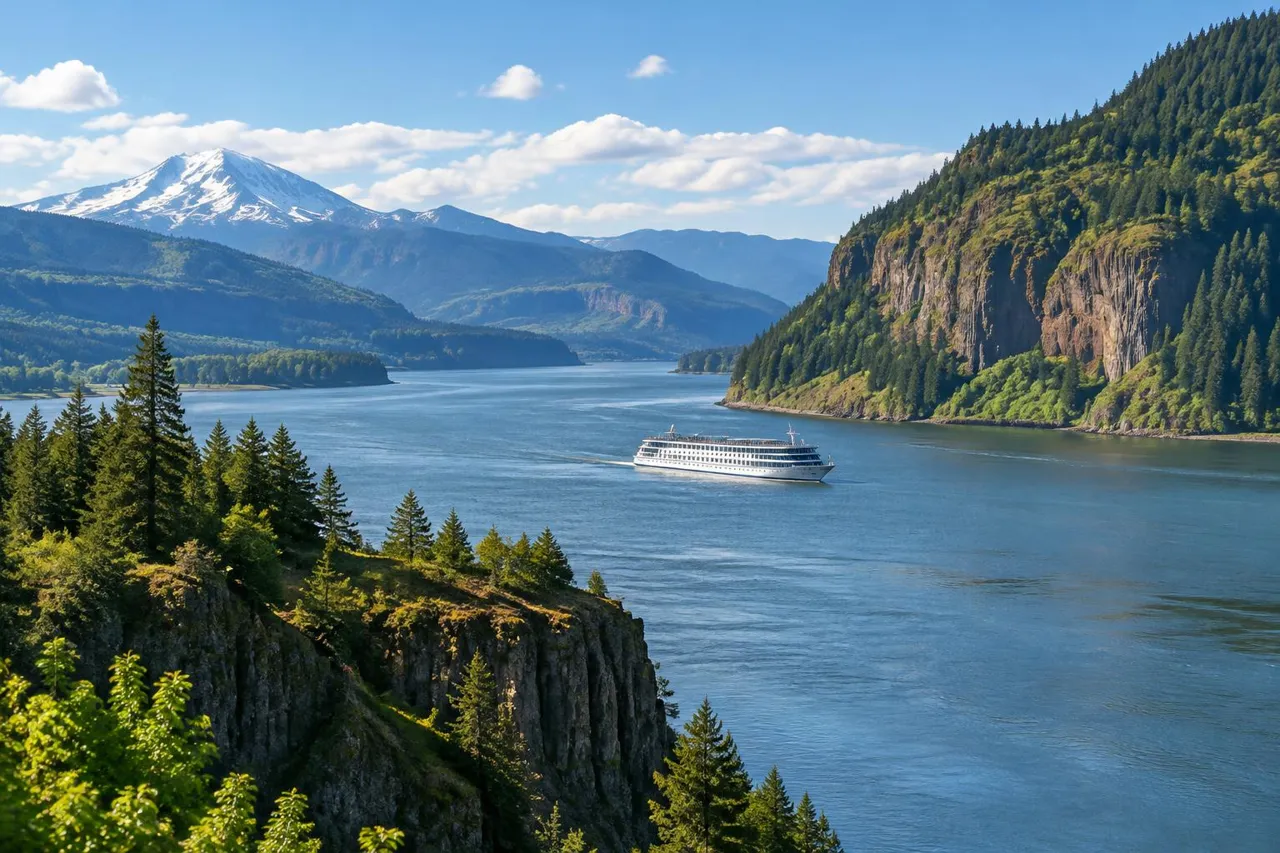
Columbia river landscape — River Cruises wildlife habitatAI-modified

Columbia

Snake — Hells Canyon, upstream of Lewiston/Clarkston. Optional jet-boat excursion beyond normal large-ship navigation; scan canyon slopes.
Explore river cruises

Destinations describe the species' habitat, not guaranteed cruise stops. Some animals require an optional inland excursion or are found in restricted reserves.

Fun facts about the Bighorn Sheep

  • Both rams and ewes have horns.
  • Their horns are retained throughout life.
  • Rams develop much larger curls than ewes.
  • Specialised hooves help them grip rocky slopes.
  • They have wide-set eyes.
  • Rams often form bachelor groups.
  • Ewes remain with younger animals.
  • Lambs can walk soon after birth.
  • The registered excursion is on the Snake River, despite the Columbia location slug.

Best time to see the Bighorn Sheep

No exact Hells Canyon viewing months are assigned. The local operator's page confirms that bighorn sightings form part of its described wildlife experience, but the passage read does not provide a species-specific monthly encounter calendar. The National Park Service account discusses seasonal coat changes, diet and lambing at Rocky Mountain National Park; none of those details supplies a Snake River viewing season. Tour operating dates are also not equivalent to animal occurrence dates. When considering an excursion, ask the operator about recent sightings along the actual route, the amount of canyon-slope scanning included and any current access restrictions. Establish whether departure is from the Lewiston–Clarkston area and whether the trip enters the registered Hells Canyon reach. This matters more than assuming that a Columbia cruise automatically includes sheep habitat. Wildlife remains free-ranging, and a suitable itinerary can still produce no sighting on a particular day.

Bighorn Sheep: season matrix by destination

Highlighted months reflect the stated local evidence, not guaranteed encounters. Neutral months mean no verified monthly viewing window, not absence. Observation records and recommended viewing windows are distinct.

Columbia

The operator confirms wildlife sightings but supplies no exact species-specific monthly viewing proof.

JanFebMarAprMayJunJulAugSepOctNovDec
Explore river cruises

Where the Bighorn Sheep lives

Steep rocky slopes and escape terrain are central to bighorn habitat. The National Park Service describes specialised hooves and rough soles that help sheep grip sharp cliff faces. Feeding areas must remain connected to terrain where animals can avoid danger, so a bare cliff and a grassy slope can serve different functions within the same landscape. The registered River location is Hells Canyon on the Snake River, not the broad Columbia navigation corridor. A small-boat excursion upstream of Lewiston or Clarkston can place visitors below canyon slopes, but visibility depends on where the animals are and whether the route passes suitable terrain. Sheep should not be expected at every landing or on every tour. Stay within the operator's permitted route and do not land to approach animals. Shore access, protected areas and private land boundaries remain relevant even where a slope looks open and unoccupied.

What the Bighorn Sheep eats

Bighorn Sheep are herbivores whose food varies with available vegetation. The National Park Service describes grazing on grasses in summer and browsing shrubs in autumn and winter at Rocky Mountain National Park. Those examples explain dietary flexibility but are not a verified Hells Canyon feeding calendar. Sheep also seek minerals at natural salt licks. Their complex four-part stomach allows processing of fibrous plant material, and feeding is interspersed with resting and rumination. From a boat, an animal standing still may therefore be engaged in digestion rather than simply waiting to move. Do not offer food, salt or mineral supplements to improve a sighting. Artificial attraction can alter movements and bring animals into conflict with people or transport routes. On the registered canyon excursion, watch feeding on natural slopes from a distance and avoid interpreting a single observed plant bite as a complete account of local diet.

Species at a glance

Common name
Bighorn Sheep
Scientific name
Ovis canadensis
Animal group
Mammals
Size
NPS reports large Rocky Mountain males standing over 3 ft at the shoulder; not a Hells Canyon population-specific measurement
Weight
NPS reports large Rocky Mountain males exceeding 300 lb; females roughly half that size
Lifespan
Not verified in the sources read
Status
Formal current global category not verified
Identification
Bighorn Sheep have brown to grey-brown coats, a pale rump and relatively compact, muscular bodies. The National Park Service also describes pale areas around the muzzle and backs of the legs. Adult rams develop large horns curling around the sides of the face, while ewes have much smaller, more lightly curved horns. Both sexes therefore possess horns, and the absence of a massive curl does not exclude the species. Unlike antlers, these horns are retained throughout life. Young animals and distant females can be harder to identify from a moving boat, so assess body shape, rump pattern, horn structure and setting together. Mountain goats have a different overall appearance and should not be inferred merely from steep terrain. The NPS size figures describe Rocky Mountain animals and should not be used to estimate the weight of a sheep seen in Hells Canyon. Record sex or age only when the visible features support it.

Bighorn Sheep: frequently asked questions

Where can I see the Bighorn Sheep?
Columbia. Search canyon slopes with binoculars, beginning with ledges, open feeding patches and the edges of broken rock. Bighorn coats can blend closely with brown or grey terrain, while the pale rump may become conspicuous when an animal turns away. Scan slowly for shapes and movement rather than expecting a ram to stand prominently against the skyline. The registered opportunity is an optional Snake River jet-boat excursion, so confirm its inclusion separately from the large-ship programme. Keep seated or otherwise follow the operator's safety instructions while using binoculars. Do not encourage close approaches, sudden engine manoeuvres or landings near a group. Ewes and young animals deserve the same space as large rams. If animals stop feeding and watch the boat persistently, increase distance where possible. Photographs should convey the actual viewing conditions rather than suggest that close contact, feeding or guaranteed encounters are part of responsible wildlife tourism.
When is the best time to see the Bighorn Sheep?
No exact Hells Canyon viewing months are assigned. The local operator's page confirms that bighorn sightings form part of its described wildlife experience, but the passage read does not provide a species-specific monthly encounter calendar. The National Park Service account discusses seasonal coat changes, diet and lambing at Rocky Mountain National Park; none of those details supplies a Snake River viewing season. Tour operating dates are also not equivalent to animal occurrence dates. When considering an excursion, ask the operator about recent sightings along the actual route, the amount of canyon-slope scanning included and any current access restrictions. Establish whether departure is from the Lewiston–Clarkston area and whether the trip enters the registered Hells Canyon reach. This matters more than assuming that a Columbia cruise automatically includes sheep habitat. Wildlife remains free-ranging, and a suitable itinerary can still produce no sighting on a particular day.
How big does the Bighorn Sheep get?
NPS reports large Rocky Mountain males standing over 3 ft at the shoulder; not a Hells Canyon population-specific measurement. Adult weight: NPS reports large Rocky Mountain males exceeding 300 lb; females roughly half that size. Size varies with age, sex and population.
How should I behave around the Bighorn Sheep?
Search canyon slopes with binoculars, beginning with ledges, open feeding patches and the edges of broken rock. Bighorn coats can blend closely with brown or grey terrain, while the pale rump may become conspicuous when an animal turns away. Scan slowly for shapes and movement rather than expecting a ram to stand prominently against the skyline. The registered opportunity is an optional Snake River jet-boat excursion, so confirm its inclusion separately from the large-ship programme. Keep seated or otherwise follow the operator's safety instructions while using binoculars. Do not encourage close approaches, sudden engine manoeuvres or landings near a group. Ewes and young animals deserve the same space as large rams. If animals stop feeding and watch the boat persistently, increase distance where possible. Photographs should convey the actual viewing conditions rather than suggest that close contact, feeding or guaranteed encounters are part of responsible wildlife tourism.
What does the Bighorn Sheep eat?
Bighorn Sheep are herbivores whose food varies with available vegetation. The National Park Service describes grazing on grasses in summer and browsing shrubs in autumn and winter at Rocky Mountain National Park. Those examples explain dietary flexibility but are not a verified Hells Canyon feeding calendar. Sheep also seek minerals at natural salt licks. Their complex four-part stomach allows processing of fibrous plant material, and feeding is interspersed with resting and rumination. From a boat, an animal standing still may therefore be engaged in digestion rather than simply waiting to move. Do not offer food, salt or mineral supplements to improve a sighting. Artificial attraction can alter movements and bring animals into conflict with people or transport routes. On the registered canyon excursion, watch feeding on natural slopes from a distance and avoid interpreting a single observed plant bite as a complete account of local diet.
Are wildlife sightings guaranteed on a river cruise?
No. Animals move freely and routes, weather, access restrictions and local conditions influence every outing. Confirm the actual itinerary and shore program before booking.

Compare wildlife in the same destinations

Explore other mammals recorded in these destinations. Similar surroundings do not mean the animals share the same habits or viewing season.

Species comparison by animal group and destination
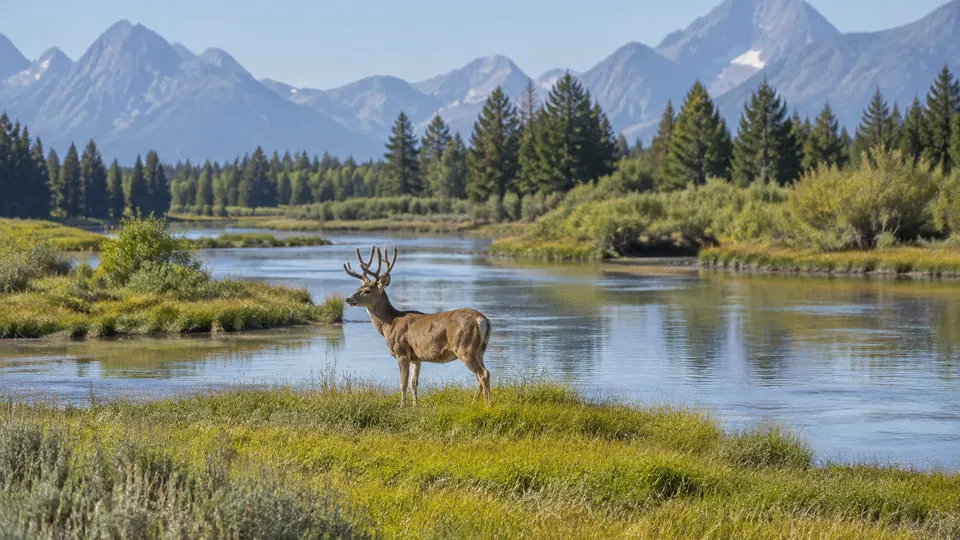
Bighorn Sheep in wetland habitat — Columbia, River Cruises wildlifeAI-modifiedBighorn SheepMule deer in wetland habitat — Columbia, River Cruises wildlifeAI-modifiedMule Deer
Animal groupMammalsAnimal groupMammals
DestinationsColumbiaDestinationsColumbia
Scientific name
Ovis canadensis
Scientific name
Previous speciesBelted KingfisherNext speciesBlack Kite
All river wildlife
On this page
  • 01About
  • 02Behaviour & reproduction
  • 03Top wildlife locations
  • 04Fun facts
  • 05Best season
  • 06Season matrix by destination
  • 07Habitat
  • 08Diet
  • 09Species at a glance
  • 10Questions & answers
  • 11Compare

Find your river cruise

AI-modified
Plan your trip

Find your next river journey

Compare destinations, shore programs and dates with the animals and habitats you would love to see.

  • Daily shore excursions
  • Responsible wildlife watching
  • Boutique river ships
Explore river cruises