Bluerides – Blue Rides - Book Liveaboards worldwideOCEAN ADVENTURES
River CruisesRiversNature & WildlifeOur Promise
River CruisesRiversNature & WildlifeOur PromiseSign In

River destinations

  • River destinations
  • Amazon
  • Danube
  • Rhine
  • Mekong
  • Nile

Ships & departures

  • River Cruise Search
  • Deals

Nature & Wildlife

  • Nature & Wildlife

Travel support

  • Our Promise
  • Contact

Contact

Get in Touch

Get in touch anytime, we're happy to help you find the right trip or sort out any question.

EmailWrite us, we usually reply within a few hours.
contact@bluerides.com
WhatsAppChat with us on WhatsApp, Mon–Fri 10:00–16:00 (CET).
Start WhatsApp Chat
PhoneCall us, we're happy to help.
Free call, Mon–Fri 10 AM – 8 PM (CET).
Europe+49 800 1144 990USA+1 888 557 7735UK+44 800 707 4152Australia+61 2 8599 6113Canada+1 888 557 7735
Which river journey is yours?Answer 8 quick questions and find the river cruise that fits you.
8 questions, 1 minute·Plus Gift
Secure Payment MethodsYour payments are fully secured with AES-256 encryption.
Powered byStripeWiseAMEXPayGoogle PaySEPABank
Imprint·Terms & Conditions·Privacy Policy·About·Contact·Liability Waiver·Affiliate Program·Cruise·
Visit us here

© 2026 Blue Rides. All rights reserved.·

Bluerides – Blue Rides - Book Liveaboards worldwideOCEAN ADVENTURES
River CruisesRiversNature & WildlifeOur Promise
River CruisesRiversNature & WildlifeOur PromiseSign In
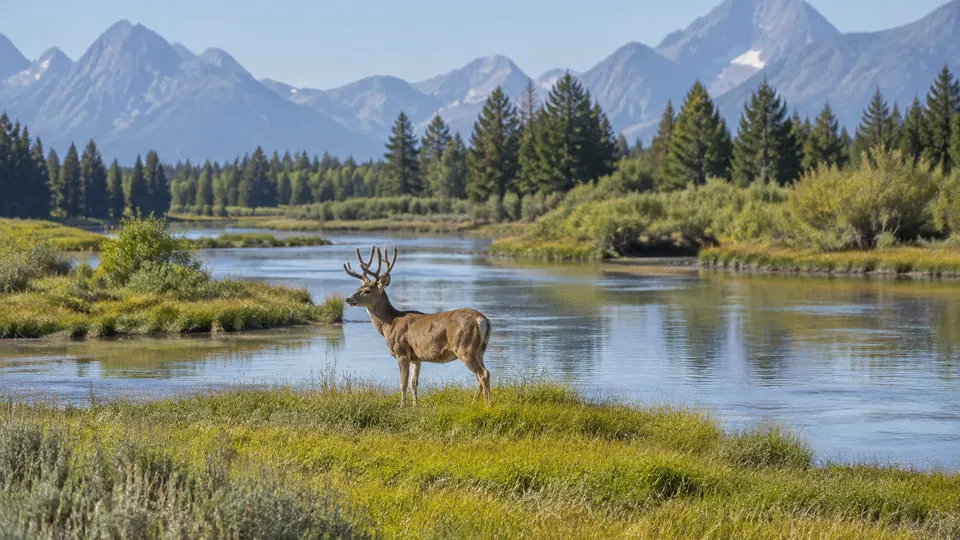
Mule deer in wetland habitat — Columbia, River Cruises wildlife
Home›River Cruises›River Wildlife›Mule Deer

Mule DeerOdocoileus hemionusWhere and when to see them

Previous speciesMedium EgretNext speciesMute Swan

Mule Deer at a glance

Mule Deer are large-eared deer of western North America, named for ears that give the head an unmistakably alert outline. The National Park Service describes a broad range of body sizes, from adult females around one hundred pounds to males approaching three hundred, and a nose-to-tail length of roughly 1.2–2.1 metres. These are species reference values, not measurements from the Columbia River refuge. The registered cruise-linked reach is Umatilla National Wildlife Refuge around Boardman–Irrigon, where the U.S. Fish and Wildlife Service explicitly names mule deer among wildlife attracting visitors. An animal may be seen on a shoreline scan, but a permitted refuge excursion offers a more relevant view of its upland habitat. Deer presence should never be marketed as a predictable close approach beside the ship. Source: https://www.nps.gov/articles/000/mule-deer.htm
Behaviour & reproduction

Size
1.2–2.1 m nose-to-tail length; NPS.
Weight
About 100–300 lb for adults across sexes; NPS.
Lifespan
Species-specific lifespan not verified.
Status
Formal global conservation status not verified.

NPS describes related females and their offspring living in family groups, while older males may be solitary or form separate groups. Social arrangements change around breeding and winter conditions, so a solitary animal is not necessarily lost or abnormal. Bucks grow forked antlers that are shed and replaced, and antler size is not a simple measure of age. The different NPS park accounts give different shedding dates, which is a reminder not to impose one park's calendar on Umatilla. Watch natural interactions from a distance and avoid placing yourself between group members. An animal that stops feeding and stares towards visitors is already responding to them. Back away slowly rather than waiting for it to run, and do not approach a motionless fawn assumed to be abandoned.

Top wildlife locations

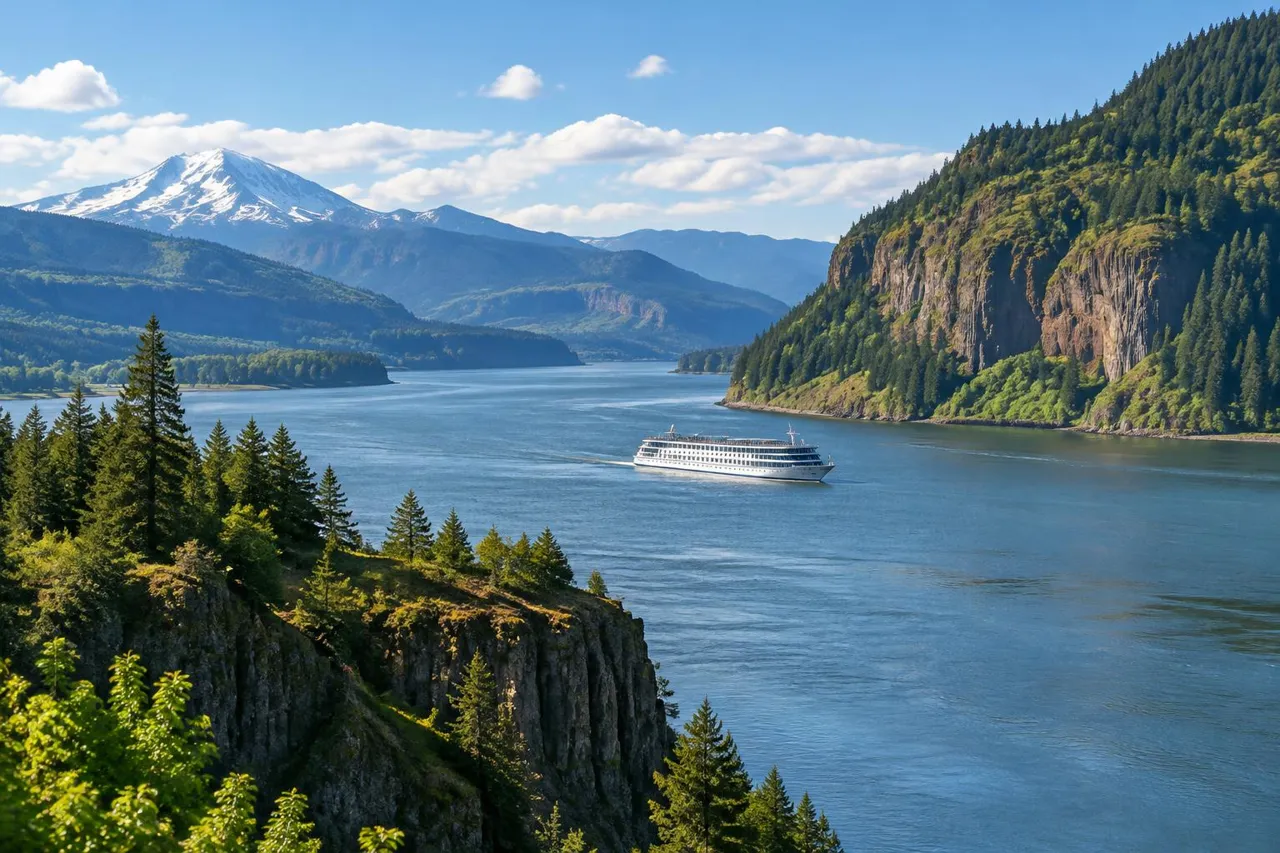
Columbia river landscape — River Cruises wildlife habitat

Columbia

Columbia — Umatilla NWR, Boardman–Irrigon Viewing context: Shoreline/upland scanning or optional refuge excursion; dawn/dusk best.
Explore river cruises

Destinations describe the species' habitat, not guaranteed cruise stops. Some animals require an optional inland excursion or are found in restricted reserves.

Fun facts about the Mule Deer

  • Its name refers to its large ears.
  • A pale rump and black-tipped tail are useful clues.
  • Bucks normally grow forked antlers.
  • Antlers are shed and replaced.
  • It is a cud-chewing ruminant.
  • Females and offspring can form family groups.
  • Umatilla refuge explicitly lists Mule Deer as a viewing attraction.

Best time to see the Mule Deer

The refuge's public information confirms Mule Deer as a wildlife-viewing attraction but does not provide a recurring local monthly observation calendar. The registry suggests dawn and dusk as useful daily periods; those are time-of-day clues, not month evidence. Seasonal movements described by NPS for other western landscapes cannot define Umatilla availability. The Columbia location months array is therefore empty. Plan an authorised refuge visit around current access rules, remembering that the refuge ordinarily opens from sunrise to sunset rather than permitting unrestricted night viewing. Ask staff about current viewing opportunities without expecting a guaranteed animal location. Rut dates, antler shedding dates and fawn birth periods are biological events, and none should be used by itself to create a numerical cruise-watching season.

Mule Deer: season matrix by destination

Highlighted months reflect the stated local evidence, not guaranteed encounters. Neutral months mean no verified monthly viewing window, not absence. Observation records and recommended viewing windows are distinct.

Columbia

A recurring species-specific numerical month range for this exact reach was not verified. Months are left empty; occurrence, broad residency, breeding dates and single trips are not treated as a calendar.

JanFebMarAprMayJunJulAugSepOctNovDec
Explore river cruises

Where the Mule Deer lives

The refuge includes Columbia River waters, islands, shores and uplands, with managed and natural wetlands alongside shrub-steppe. For Mule Deer, this means scanning beyond the immediate waterline into the terrestrial mosaic rather than concentrating only on open water. NPS describes the species as well adapted to arid, rocky western environments, but no Umatilla-specific habitat preference percentages were verified. A deer using a bank does not make it an aquatic animal; river-cruise relevance comes from access to adjacent land and refuge viewpoints. The Fish and Wildlife Service warns that most refuge islands are closed to public entry year-round to protect wildlife. Those restrictions apply even when a deer appears easy to approach. Use current refuge maps and authorised land routes rather than treating all exposed shoreline as public access.

What the Mule Deer eats

Mule Deer are selective herbivores and ruminants. NPS explains that their multi-chambered digestive system uses microbes to process food and that they chew regurgitated cud. The general account emphasises forbs, leaves and twigs of woody plants, and fruits or berries rather than portraying them as indiscriminate grass-eaters. Relative food availability varies across landscapes, so dietary percentages from a Utah park should not be applied to the Columbia refuge. No Umatilla-specific plant list or seasonal nutritional study was verified. From a viewpoint, one may see browsing or chewing without identifying the plant, which is still a valid behavioural observation. Never offer food or approach a feeding group. Artificial feeding changes natural choices, can concentrate animals and can create unsafe expectations around people and vehicles.

Species at a glance

Common name
Mule Deer
Scientific name
Odocoileus hemionus
Animal group
Mammals
Size
1.2–2.1 m nose-to-tail length; NPS.
Weight
About 100–300 lb for adults across sexes; NPS.
Lifespan
Species-specific lifespan not verified.
Status
Formal global conservation status not verified.
Identification
Large ears are the obvious first clue, but combine them with the rump and tail pattern. NPS describes a white rump patch and a narrow, black-tipped tail, usually carried down when running, in contrast to the conspicuous raised flag of White-tailed Deer. Bucks normally have antlers that fork into branching divisions, rather than the main-beam arrangement typical of White-tailed Deer. Females lack the antlers, so the head's absence of them does not exclude Mule Deer. Size and coat tone alone are insufficient where deer species overlap. Distance can hide the tail tip or exaggerate ear size, so wait for a clear view rather than deciding from a silhouette. Antler points should not be used as a reliable age count for an individual.

Mule Deer: frequently asked questions

Where can I see the Mule Deer?
Columbia. Scan slowly across the shoreline-to-upland transition around the permitted Umatilla visitor areas. Binoculars help detect large ears, pale rumps and a horizontal back among shrubs. Dawn or late-day light may fit the registered viewing advice, but access must remain within current refuge opening hours. From a vehicle, use designated stopping places and do not block roads or pursue animals along the verge. From a cruise vessel, treat any view as incidental rather than asking for a close approach to a bank or island. Keep well away from groups, bucks and fawns, and leave pets under the required control. If the animal repeatedly watches you, moves away or interrupts feeding, increase the distance instead of using its alert posture as a portrait opportunity.
When is the best time to see the Mule Deer?
The refuge's public information confirms Mule Deer as a wildlife-viewing attraction but does not provide a recurring local monthly observation calendar. The registry suggests dawn and dusk as useful daily periods; those are time-of-day clues, not month evidence. Seasonal movements described by NPS for other western landscapes cannot define Umatilla availability. The Columbia location months array is therefore empty. Plan an authorised refuge visit around current access rules, remembering that the refuge ordinarily opens from sunrise to sunset rather than permitting unrestricted night viewing. Ask staff about current viewing opportunities without expecting a guaranteed animal location. Rut dates, antler shedding dates and fawn birth periods are biological events, and none should be used by itself to create a numerical cruise-watching season.
How big does the Mule Deer get?
1.2–2.1 m nose-to-tail length; NPS.. Adult weight: About 100–300 lb for adults across sexes; NPS.. Size varies with age, sex and population.
How should I behave around the Mule Deer?
Scan slowly across the shoreline-to-upland transition around the permitted Umatilla visitor areas. Binoculars help detect large ears, pale rumps and a horizontal back among shrubs. Dawn or late-day light may fit the registered viewing advice, but access must remain within current refuge opening hours. From a vehicle, use designated stopping places and do not block roads or pursue animals along the verge. From a cruise vessel, treat any view as incidental rather than asking for a close approach to a bank or island. Keep well away from groups, bucks and fawns, and leave pets under the required control. If the animal repeatedly watches you, moves away or interrupts feeding, increase the distance instead of using its alert posture as a portrait opportunity.
What does the Mule Deer eat?
Mule Deer are selective herbivores and ruminants. NPS explains that their multi-chambered digestive system uses microbes to process food and that they chew regurgitated cud. The general account emphasises forbs, leaves and twigs of woody plants, and fruits or berries rather than portraying them as indiscriminate grass-eaters. Relative food availability varies across landscapes, so dietary percentages from a Utah park should not be applied to the Columbia refuge. No Umatilla-specific plant list or seasonal nutritional study was verified. From a viewpoint, one may see browsing or chewing without identifying the plant, which is still a valid behavioural observation. Never offer food or approach a feeding group. Artificial feeding changes natural choices, can concentrate animals and can create unsafe expectations around people and vehicles.
Are wildlife sightings guaranteed on a river cruise?
No. Animals move freely and routes, weather, access restrictions and local conditions influence every outing. Confirm the actual itinerary and shore program before booking.

Compare wildlife in the same destinations

Explore other mammals recorded in these destinations. Similar surroundings do not mean the animals share the same habits or viewing season.

Species comparison by animal group and destination
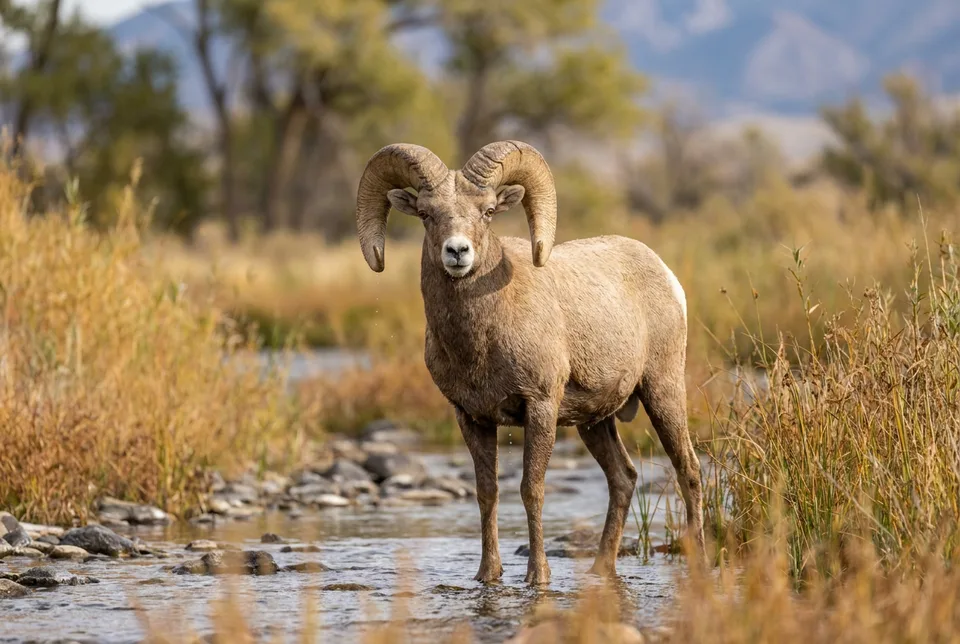
Mule deer in wetland habitat — Columbia, River Cruises wildlifeMule DeerBighorn Sheep in wetland habitat — Columbia, River Cruises wildlifeBighorn Sheep
Animal groupMammalsAnimal groupMammals
DestinationsColumbiaDestinationsColumbia
Scientific name
Odocoileus hemionus

Odocoileus hemionus

Scientific name
Size
1.2–2.1 m nose-to-tail length; NPS.
Size
Weight
About 100–300 lb for adults across sexes; NPS.
Weight
Lifespan
Species-specific lifespan not verified.
Lifespan
Status
Formal global conservation status not verified.
Status
Identification
Large ears are the obvious first clue, but combine them with the rump and tail pattern.

Large ears are the obvious first clue, but combine them with the rump and tail pattern. NPS describes a white rump patch and a narrow, black-tipped tail, usually carried down when running, in contrast to the conspicuous raised flag of White-tailed Deer. Bucks normally have antlers that fork into branching divisions, rather than the main-beam arrangement typical of White-tailed Deer. Females lack the antlers, so the head's absence of them does not exclude Mule Deer. Size and coat tone alone are insufficient where deer species overlap. Distance can hide the tail tip or exaggerate ear size, so wait for a clear view rather than deciding from a silhouette. Antler points should not be used as a reliable age count for an individual.

Identification
Habitat
The refuge includes Columbia River waters, islands, shores and uplands, with managed and natural wetlands alongside shrub-steppe.

The refuge includes Columbia River waters, islands, shores and uplands, with managed and natural wetlands alongside shrub-steppe. For Mule Deer, this means scanning beyond the immediate waterline into the terrestrial mosaic rather than concentrating only on open water. NPS describes the species as well adapted to arid, rocky western environments, but no Umatilla-specific habitat preference percentages were verified. A deer using a bank does not make it an aquatic animal; river-cruise relevance comes from access to adjacent land and refuge viewpoints. The Fish and Wildlife Service warns that most refuge islands are closed to public entry year-round to protect wildlife. Those restrictions apply even when a deer appears easy to approach. Use current refuge maps and authorised land routes rather than treating all exposed shoreline as public access.

Habitat
Diet
Mule Deer are selective herbivores and ruminants.

Mule Deer are selective herbivores and ruminants. NPS explains that their multi-chambered digestive system uses microbes to process food and that they chew regurgitated cud. The general account emphasises forbs, leaves and twigs of woody plants, and fruits or berries rather than portraying them as indiscriminate grass-eaters. Relative food availability varies across landscapes, so dietary percentages from a Utah park should not be applied to the Columbia refuge. No Umatilla-specific plant list or seasonal nutritional study was verified. From a viewpoint, one may see browsing or chewing without identifying the plant, which is still a valid behavioural observation. Never offer food or approach a feeding group. Artificial feeding changes natural choices, can concentrate animals and can create unsafe expectations around people and vehicles.

Diet
Best season
The refuge's public information confirms Mule Deer as a wildlife-viewing attraction but does not provide a recurring local monthly observation calendar.

The refuge's public information confirms Mule Deer as a wildlife-viewing attraction but does not provide a recurring local monthly observation calendar. The registry suggests dawn and dusk as useful daily periods; those are time-of-day clues, not month evidence. Seasonal movements described by NPS for other western landscapes cannot define Umatilla availability. The Columbia location months array is therefore empty. Plan an authorised refuge visit around current access rules, remembering that the refuge ordinarily opens from sunrise to sunset rather than permitting unrestricted night viewing. Ask staff about current viewing opportunities without expecting a guaranteed animal location. Rut dates, antler shedding dates and fawn birth periods are biological events, and none should be used by itself to create a numerical cruise-watching season.

Best season
Season matrix by destination
ColumbiaNo verified monthly viewing evidence

A recurring species-specific numerical month range for this exact reach was not verified. Months are left empty; occurrence, broad residency, breeding dates and single trips are not treated as a calendar.

Season matrix by destination
Previous speciesMedium EgretNext speciesMute Swan
All river wildlife
On this page
  • 01About
  • 02Behaviour & reproduction
  • 03Top wildlife locations
  • 04Fun facts
  • 05Best season
  • 06Season matrix by destination
  • 07Habitat
  • 08Diet
  • 09Species at a glance
  • 10Questions & answers
  • 11Compare

Find your river cruise

Plan your trip

Find your next river journey

Compare destinations, shore programs and dates with the animals and habitats you would love to see.

  • Daily shore excursions
  • Responsible wildlife watching
  • Boutique river ships
Explore river cruises