Bluerides – Blue Rides - Book Liveaboards worldwideOCEAN ADVENTURES
River CruisesRiversNature & WildlifeOur Promise
River CruisesRiversNature & WildlifeOur PromiseSign In

River destinations

  • River destinations
  • Amazon
  • Danube
  • Rhine
  • Mekong
  • Nile

Ships & departures

  • River Cruise Search
  • Deals

Nature & Wildlife

  • Nature & Wildlife

Travel support

  • Our Promise
  • Contact

Contact

Get in Touch

Get in touch anytime, we're happy to help you find the right trip or sort out any question.

EmailWrite us, we usually reply within a few hours.
contact@bluerides.com
WhatsAppChat with us on WhatsApp, Mon–Fri 10:00–16:00 (CET).
Start WhatsApp Chat
PhoneCall us, we're happy to help.
Free call, Mon–Fri 10 AM – 8 PM (CET).
Europe+49 800 1144 990USA+1 888 557 7735UK+44 800 707 4152Australia+61 2 8599 6113Canada+1 888 557 7735
Which river journey is yours?Answer 8 quick questions and find the river cruise that fits you.
8 questions, 1 minute·Plus Gift
Secure Payment MethodsYour payments are fully secured with AES-256 encryption.
Powered byStripeWiseAMEXPayGoogle PaySEPABank
Imprint·Terms & Conditions·Privacy Policy·About·Contact·Liability Waiver·Affiliate Program·Cruise·
Visit us here

© 2026 Blue Rides. All rights reserved.·

Bluerides – Blue Rides - Book Liveaboards worldwideOCEAN ADVENTURES
River CruisesRiversNature & WildlifeOur Promise
River CruisesRiversNature & WildlifeOur PromiseSign In
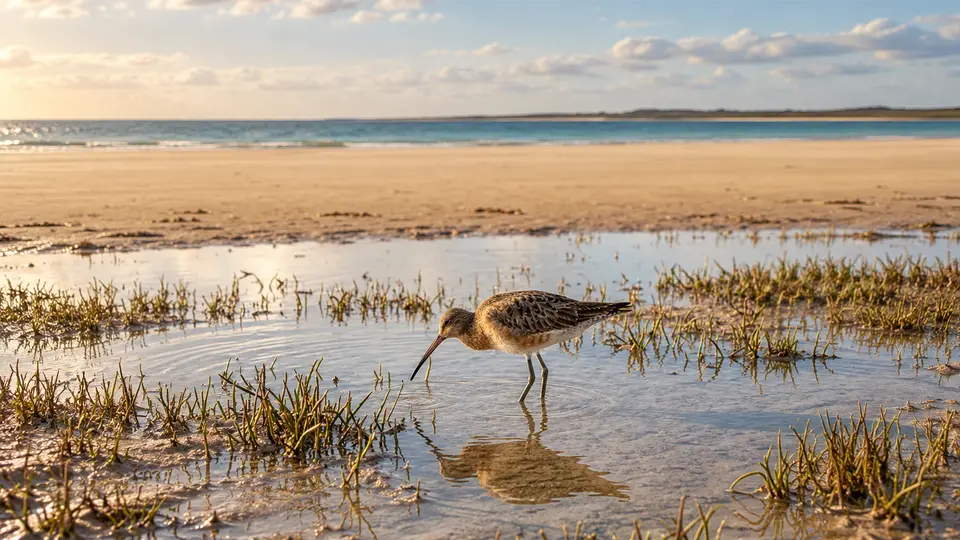
Bar-tailed godwit in wetland habitat — Douro, River Cruises wildlife
Home›River Cruises›River Wildlife›Bar-tailed godwit

Bar-tailed godwitLimosa lapponicaWhere and when to see them

Previous speciesBanded DemoiselleNext speciesBarn Swallow

Bar-tailed godwit at a glance

The Bar-tailed Godwit is a long-legged shorebird whose exceptionally long bill is adapted to finding food beneath wet sediment. Its appearance changes substantially between the grey-brown nonbreeding plumage and the rich chestnut colours acquired for breeding. The Arctic breeding distribution and use of temperate estuaries make migration central to its biology. Nevertheless, individual populations follow different routes, so a spectacular journey documented elsewhere should not be presented as the itinerary of a bird seen in Portugal. The River registry places this species at the Douro estuary around Porto and Vila Nova de Gaia, specifically Afurada, Cabedelo and São Paio. That is a coastal birdwatching opportunity, separate from the inland vineyard landscape around Régua and Pinhão. The Portuguese site account lists fuselo, the Portuguese name for this species. It establishes local occurrence but does not, by itself, establish a reliable monthly viewing calendar.
Behaviour & reproduction

Size
Not verified in the sources read
Weight
Not verified in the sources read
Lifespan
Not verified in the sources read
Status
See sourced assessment

Bar-tailed Godwits spend much of their observable time walking across exposed feeding grounds, probing sediment or resting with other shorebirds. Feeding and resting locations can change as water covers and uncovers the intertidal flats. A flock that appears inactive may be conserving energy between feeding opportunities or during migration; approaching it until the birds fly is not a harmless way to improve a photograph. Individuals sometimes stand on one leg or tuck the bill into their back feathers, making identification harder than it is on an actively feeding bird. In flight, the long bill, pointed wings and pale wedge extending up the back become useful features. At the Douro mouth, watch movements between feeding flats and undisturbed resting areas without assuming that every long-billed wader is this species. Mixed groups should be checked bird by bird, particularly where Black-tailed Godwits also occur.

Top wildlife locations

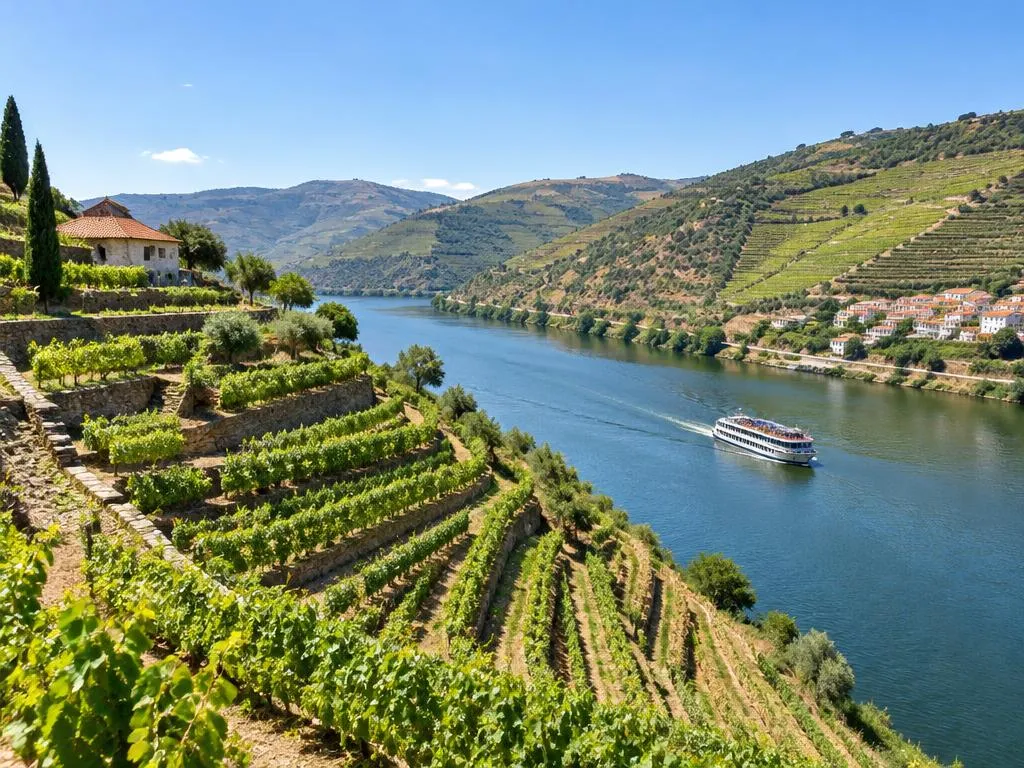
Douro river landscape — River Cruises wildlife habitat

Douro

Porto / Vila Nova de Gaia: Douro estuary reserve, Afurada–Cabedelo–São Paio. The local account lists fuselo. This does not establish occurrence along inland Régua–Pinhão.
Explore river cruises

Destinations describe the species' habitat, not guaranteed cruise stops. Some animals require an optional inland excursion or are found in restricted reserves.

Fun facts about the Bar-tailed godwit

  • Its scientific name is Limosa lapponica.
  • It is a shorebird rather than a diving waterbird.
  • The bill is long and slightly upturned.
  • Breeding plumage can be rich chestnut.
  • Nonbreeding plumage is largely grey-brown.
  • A pale wedge extends from the rump up the back.
  • Its breeding distribution includes Arctic Scandinavia and Siberia.
  • The Portuguese name fuselo appears in the Douro estuary account.
  • The registered Douro site is coastal, not the inland Régua–Pinhão reach.

Best time to see the Bar-tailed godwit

No numerical viewing months are assigned to the Douro location. The Portuguese estuary account confirms the species in the local bird assemblage, but the material read does not provide an exact, species-specific monthly calendar for Afurada, Cabedelo and São Paio. The RSPB describes winter visitors and passage birds in Britain; those British dates are not transferable to Porto. Likewise, Arctic breeding biology does not establish when an individual will use this estuary. For an actual visit, local tide information and recent observations can help identify accessible feeding and resting areas, but neither should be confused with evidence of annual monthly occurrence. Ask a local guide whether godwits have been seen recently, which identification features were recorded, and where observation can take place without disturbing a roost. An inland Douro departure month is not a meaningful substitute for information about the coastal reserve.

Bar-tailed godwit: season matrix by destination

Highlighted months reflect the stated local evidence, not guaranteed encounters. Neutral months mean no verified monthly viewing window, not absence. Observation records and recommended viewing windows are distinct.

Douro

Local occurrence is documented, but an exact species-specific monthly season was not established.

JanFebMarAprMayJunJulAugSepOctNovDec
Explore river cruises

Where the Bar-tailed godwit lives

The relevant River habitat is the tidal mouth of the Douro, rather than the freshwater navigation channel farther upstream. Exposed muddy or sandy feeding surfaces and relatively undisturbed resting places are more important than proximity to a cruise berth. The registry names the estuary reserve around Afurada, Cabedelo and São Paio, on the Porto and Vila Nova de Gaia waterfront. A visit here is best understood as a shore-based estuary excursion that may accompany a Douro holiday. It is not evidence that the species occurs along every inland sailing stage. Across its wider range, the bird connects Arctic breeding landscapes with coastal staging and wintering areas. Maintaining that network requires both productive feeding grounds and safe places to rest. At a developed river mouth, people, dogs and recreational activity can displace birds even where suitable sediment remains. Stay within public access areas and observe protected-zone boundaries.

What the Bar-tailed godwit eats

Bar-tailed Godwits obtain much of their food by probing intertidal sediment for invertebrates. The long bill allows access to prey below the surface, while repeated steps and probes let a bird search a feeding patch efficiently. Worms and other small animals associated with mud and sand are more relevant to this feeding ecology than fish pursued in open water. A bird may work with most of its bill concealed, so the action is often easier to recognise than the prey itself. Feeding opportunities change with the area and condition of exposed substrate; a broad estuary view does not necessarily reveal where prey is accessible. At the Douro mouth, watch natural feeding from the paths or designated observation points rather than walking onto the flats. Do not offer food or attempt to lure birds closer. Undisturbed feeding time is particularly valuable to birds preparing for migration.

Species at a glance

Common name
Bar-tailed godwit
Scientific name
Limosa lapponica
Animal group
Birds
Size
Not verified in the sources read
Weight
Not verified in the sources read
Lifespan
Not verified in the sources read
Status
Global category not verified. The RSPB account gives a UK Amber classification; this is not a Portuguese or global assessment.
Identification
A Bar-tailed Godwit combines a very long, slightly upturned bill with long legs and a substantial wader's body. Nonbreeding birds are predominantly grey-brown, whereas breeding plumage can be conspicuously chestnut. Plumage varies with sex, age and moult, so a red bird and a grey bird need not represent different species. The RSPB highlights the pale patch running from the rump up the back and narrowing to a point. In comparison with Black-tailed Godwit, pay particular attention to the more barred tail and the absence of that species' strongly contrasting black tail and broad white wingbar combination. A single photograph of a tucked-up bird may not show enough information. At the Douro estuary, establish the identification from several features rather than relying only on the Portuguese checklist name or an unusually long bill. Poor light and distance can conceal subtle plumage differences.

Bar-tailed godwit: frequently asked questions

Where can I see the Bar-tailed godwit?
Douro. Use binoculars first to locate long-billed waders on the estuary flats, then examine individual birds with a telescope if available. A distant group may contain several species whose outlines converge when they are resting. Look for bill shape, the pattern of the upperparts and the relationship between body size and leg length. If birds fly naturally, note the pale wedge up the back and the barred rather than cleanly contrasting tail pattern. Do not deliberately flush them to obtain those features. The Douro registry refers to an accessible coastal shore visit, not dependable observation from a vessel cruising inland. Follow the reserve's current access arrangements, keep dogs away from feeding and resting birds, and avoid standing where a flock is repeatedly trying to settle. Photographing from a fixed public viewpoint generally gives better opportunities to observe natural behaviour than advancing across exposed substrate.
When is the best time to see the Bar-tailed godwit?
No numerical viewing months are assigned to the Douro location. The Portuguese estuary account confirms the species in the local bird assemblage, but the material read does not provide an exact, species-specific monthly calendar for Afurada, Cabedelo and São Paio. The RSPB describes winter visitors and passage birds in Britain; those British dates are not transferable to Porto. Likewise, Arctic breeding biology does not establish when an individual will use this estuary. For an actual visit, local tide information and recent observations can help identify accessible feeding and resting areas, but neither should be confused with evidence of annual monthly occurrence. Ask a local guide whether godwits have been seen recently, which identification features were recorded, and where observation can take place without disturbing a roost. An inland Douro departure month is not a meaningful substitute for information about the coastal reserve.
How big does the Bar-tailed godwit get?
Not verified in the sources read. Adult weight: Not verified in the sources read. Size varies with age, sex and population.
How should I behave around the Bar-tailed godwit?
Use binoculars first to locate long-billed waders on the estuary flats, then examine individual birds with a telescope if available. A distant group may contain several species whose outlines converge when they are resting. Look for bill shape, the pattern of the upperparts and the relationship between body size and leg length. If birds fly naturally, note the pale wedge up the back and the barred rather than cleanly contrasting tail pattern. Do not deliberately flush them to obtain those features. The Douro registry refers to an accessible coastal shore visit, not dependable observation from a vessel cruising inland. Follow the reserve's current access arrangements, keep dogs away from feeding and resting birds, and avoid standing where a flock is repeatedly trying to settle. Photographing from a fixed public viewpoint generally gives better opportunities to observe natural behaviour than advancing across exposed substrate.
What does the Bar-tailed godwit eat?
Bar-tailed Godwits obtain much of their food by probing intertidal sediment for invertebrates. The long bill allows access to prey below the surface, while repeated steps and probes let a bird search a feeding patch efficiently. Worms and other small animals associated with mud and sand are more relevant to this feeding ecology than fish pursued in open water. A bird may work with most of its bill concealed, so the action is often easier to recognise than the prey itself. Feeding opportunities change with the area and condition of exposed substrate; a broad estuary view does not necessarily reveal where prey is accessible. At the Douro mouth, watch natural feeding from the paths or designated observation points rather than walking onto the flats. Do not offer food or attempt to lure birds closer. Undisturbed feeding time is particularly valuable to birds preparing for migration.
Are wildlife sightings guaranteed on a river cruise?
No. Animals move freely and routes, weather, access restrictions and local conditions influence every outing. Confirm the actual itinerary and shore program before booking.

Compare wildlife in the same destinations

Explore other birds recorded in these destinations. Similar surroundings do not mean the animals share the same habits or viewing season.

Species comparison by animal group and destination
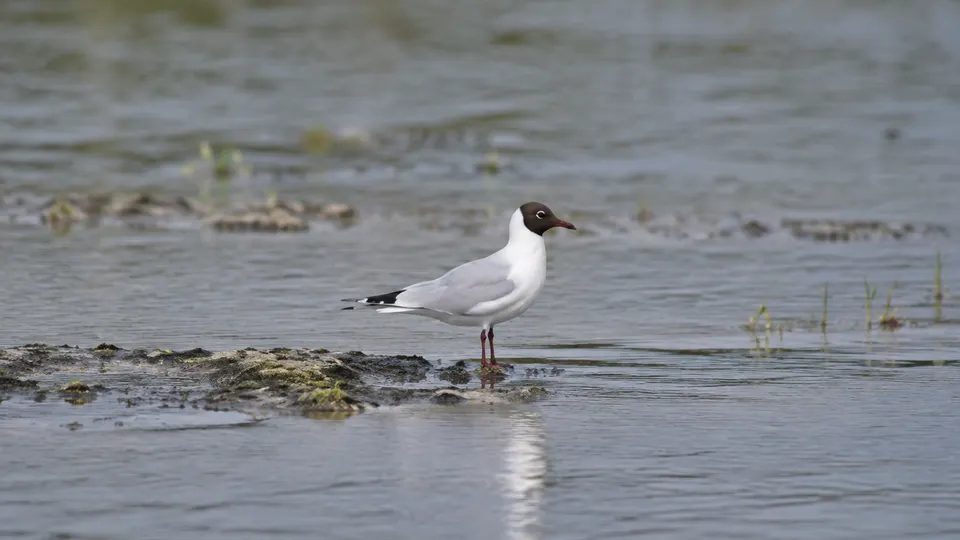
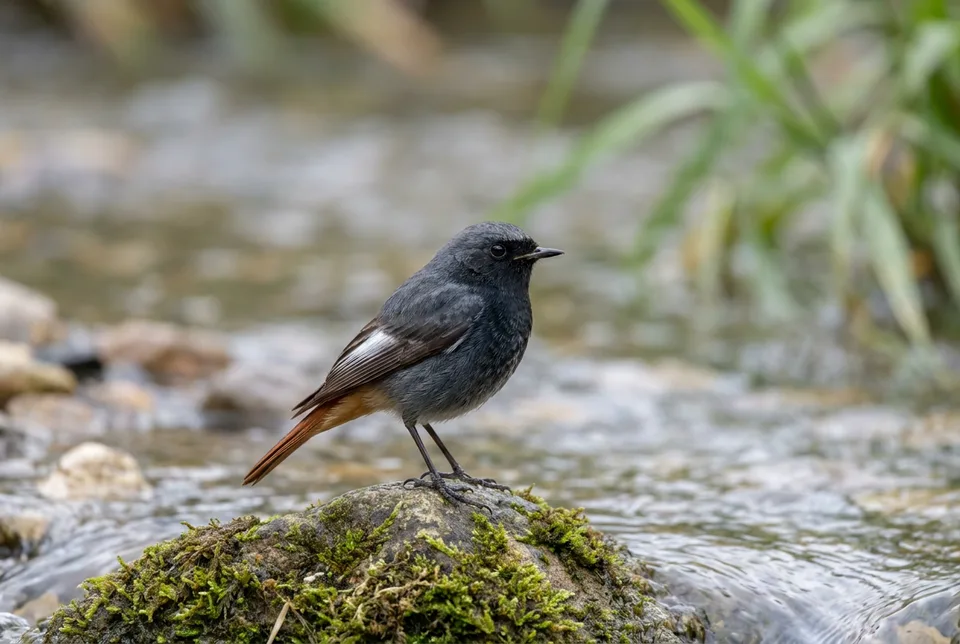
Bar-tailed godwit in wetland habitat — Douro, River Cruises wildlifeBar-tailed godwitBlack Redstart in wetland habitat — Saone, Douro, River Cruises wildlifeBlack RedstartBlack-headed gull in wetland habitat — Saone, Seine, Nile, Douro, River Cruises wildlifeBlack-Headed Gull
Animal groupBirdsAnimal groupBirdsAnimal groupBirds
DestinationsDouroDestinationsSaone, DouroDestinationsSaone, Seine, Nile, Douro
Scientific name
Limosa lapponica
Scientific name
Scientific name
Previous speciesBanded DemoiselleNext speciesBarn Swallow
All river wildlife
On this page
  • 01About
  • 02Behaviour & reproduction
  • 03Top wildlife locations
  • 04Fun facts
  • 05Best season
  • 06Season matrix by destination
  • 07Habitat
  • 08Diet
  • 09Species at a glance
  • 10Questions & answers
  • 11Compare

Find your river cruise

Plan your trip

Find your next river journey

Compare destinations, shore programs and dates with the animals and habitats you would love to see.

  • Daily shore excursions
  • Responsible wildlife watching
  • Boutique river ships
Explore river cruises