Bluerides – Blue Rides - Book Liveaboards worldwideOCEAN ADVENTURES
River CruisesRiversNature & WildlifeOur Promise
River CruisesRiversNature & WildlifeOur PromiseSign In

River destinations

  • River destinations
  • Amazon
  • Danube
  • Rhine
  • Mekong
  • Nile

Ships & departures

  • River Cruise Search
  • Deals

Nature & Wildlife

  • Nature & Wildlife

Travel support

  • Our Promise
  • Contact

Contact

Get in Touch

Get in touch anytime, we're happy to help you find the right trip or sort out any question.

EmailWrite us, we usually reply within a few hours.
contact@bluerides.com
WhatsAppChat with us on WhatsApp, Mon–Fri 10:00–16:00 (CET).
Start WhatsApp Chat
PhoneCall us, we're happy to help.
Free call, Mon–Fri 10 AM – 8 PM (CET).
Europe+49 800 1144 990USA+1 888 557 7735UK+44 800 707 4152Australia+61 2 8599 6113Canada+1 888 557 7735
Which river journey is yours?Answer 8 quick questions and find the river cruise that fits you.
8 questions, 1 minute·Plus Gift
Secure Payment MethodsYour payments are fully secured with AES-256 encryption.
Powered byStripeWiseAMEXPayGoogle PaySEPABank
Imprint·Terms & Conditions·Privacy Policy·About·Contact·Liability Waiver·Affiliate Program·Cruise·Blog·
Visit us here

© 2026 Blue Rides. All rights reserved.

Bluerides – Blue Rides - Book Liveaboards worldwideOCEAN ADVENTURES
River CruisesRiversNature & WildlifeOur Promise
River CruisesRiversNature & WildlifeOur PromiseSign In
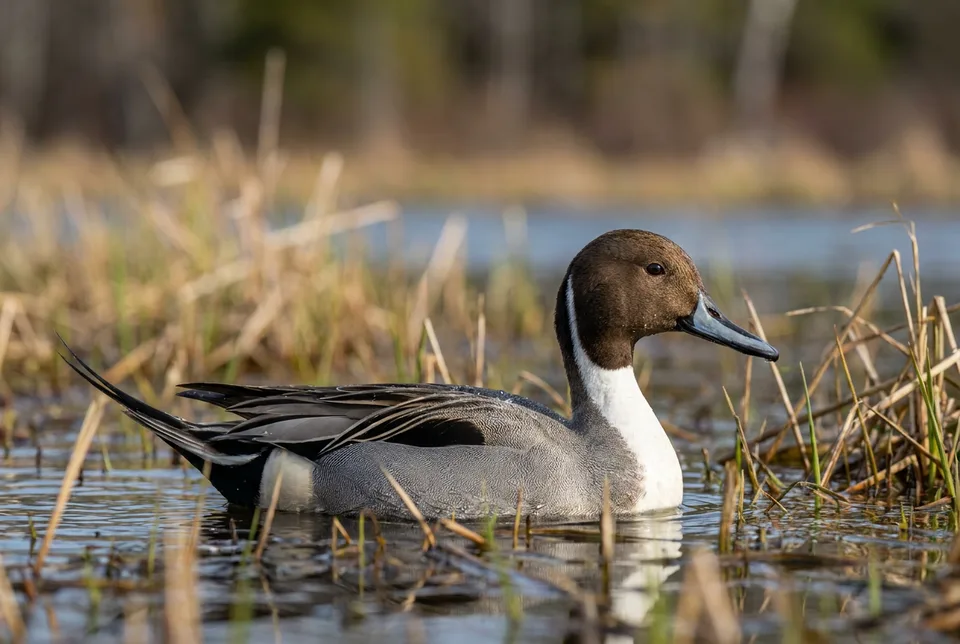
Northern Pintail in wetland habitat — Columbia, Mississippi, Seine, River Cruises wildlifeAI-modified
Home›River Cruises›River Wildlife›Northern Pintail

Northern PintailAnas acutaWhere and when to see them

Previous speciesNile Valley SunbirdNext speciesNorthern Shoveler

Northern Pintail at a glance

The Northern Pintail stands out through proportion: a slender neck, narrow body and pointed tail give it an elegance quite different from a stockier Mallard. Breeding males add a chocolate head and a white stripe climbing the neck; females retain the graceful outline in finely patterned brown. This is a dabbling duck of shallow wetlands and open landscapes, not a specialist of deep navigation channels. Cornell’s overview warns that populations are declining despite the species remaining widespread. The river records should therefore prompt careful searching of appropriate habitat, not an assumption of abundance. On a crowded backwater, look for individuals whose necks and tails project beyond the surrounding ducks before concentrating on colour.
Behaviour & reproduction

Size
Not verified
Weight
Not verified
Lifespan
Not verified
Status
Cornell: Tipping Point—Yellow Alert; not an IUCN category.

Pintails move readily between water and land, feeding in groups along shallow margins and walking through fields for grain. They can rise directly from the water into flight rather than requiring a long surface run. Nesting takes place on the ground, sometimes farther from water than in many other ducks. Females make several preliminary scrapes before settling on a site and adding grasses and down. Cornell notes use of tilled cropland, exposing an important connection between farming practices and nesting habitat. These details should not be turned into a local viewing calendar: a general breeding strategy says little about when birds will be visible from a particular river overlook.

Top wildlife locations

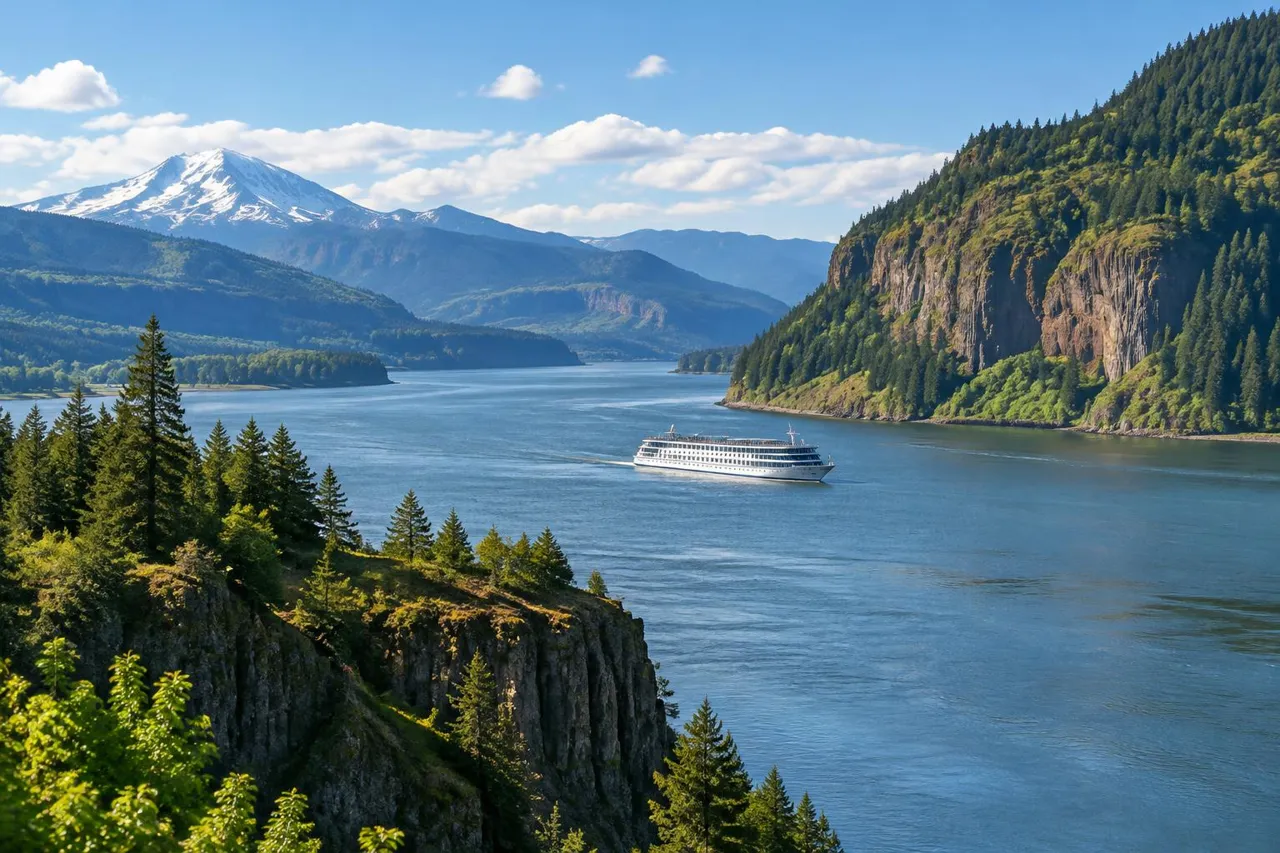
Columbia river landscape — River Cruises wildlife habitatAI-modified

Columbia

Most records cover Umatilla refuge backwaters along the Columbia near Boardman–Irrigon. Seasonal waterfowl may be best in winter rather than the sailing season. Bighorn sheep require a separate Hells Canyon excursion on the Snake River.
Explore river cruises
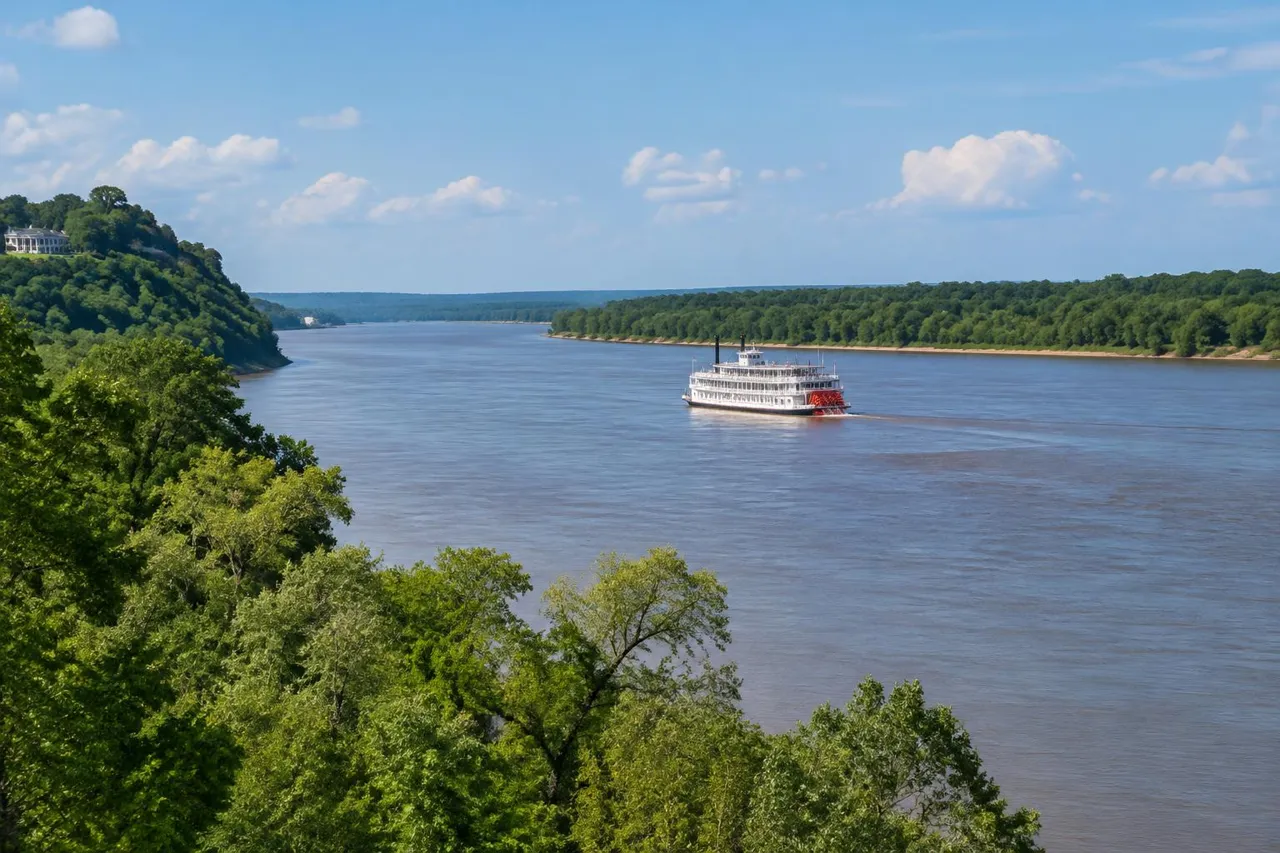
Mississippi river landscape — River Cruises wildlife habitatAI-modified

Mississippi

Upper Mississippi — Upper Mississippi River NWR, Wabasha MN–Rock Island IL

Explore river cruises
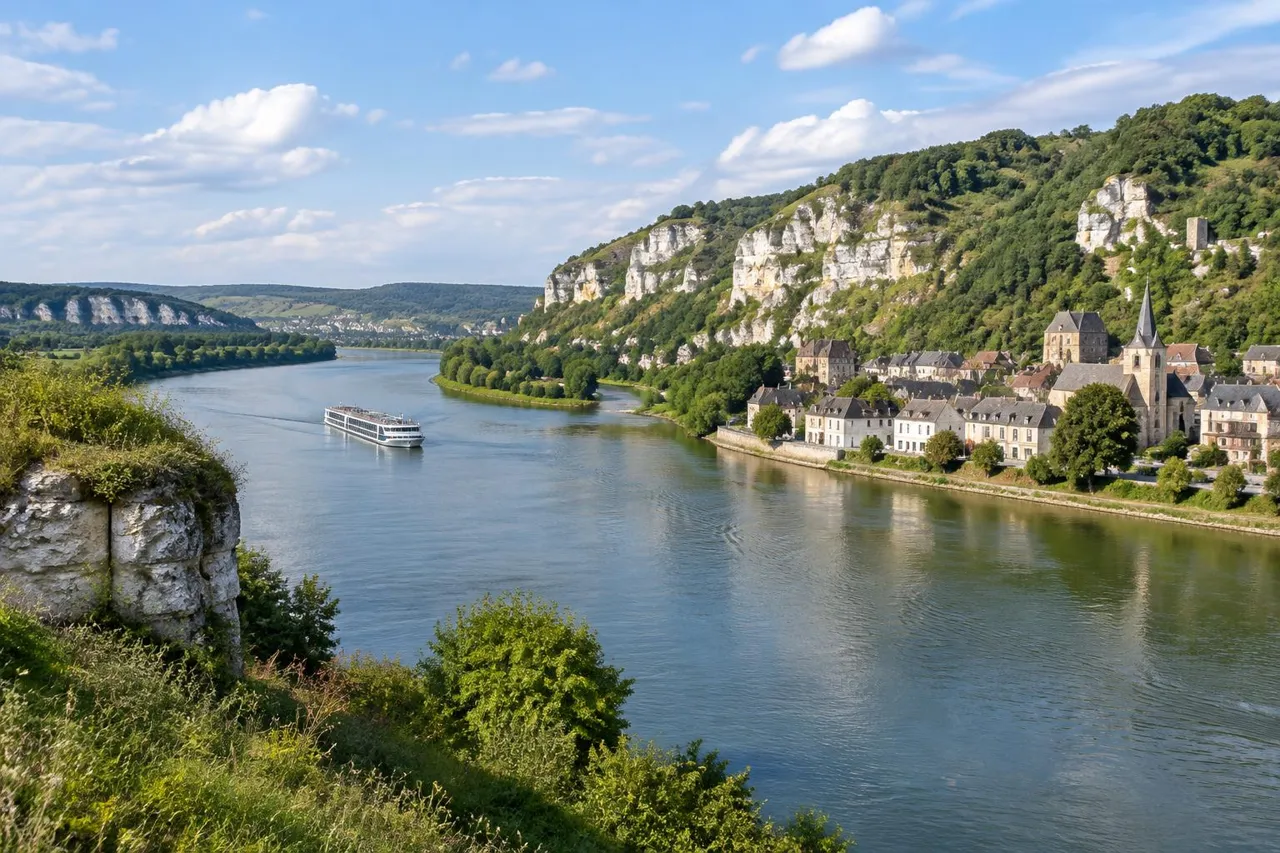
Seine river landscape — River Cruises wildlife habitatAI-modified

Seine

Bird records cover the Grande Noë floodplain reserve, lower-Seine marshes and the estuary. These are shore/wetland outings, not universal deck sightings; estuary birds require the appropriate lower-river itinerary. Winter visitors are clearly noted.

Explore river cruises

Destinations describe the species' habitat, not guaranteed cruise stops. Some animals require an optional inland excursion or are found in restricted reserves.

Fun facts about the Northern Pintail

  • Pintails have slender necks.
  • Breeding males have elongated central tail feathers.
  • Females are patterned brown.
  • They feed in water and on land.
  • Agricultural grain is part of the diet.
  • Nests are on the ground.
  • Some nests are in tilled cropland.
  • Females make preliminary nest scrapes.
  • Down-covered hatchlings can leave the nest soon after hatching.

Best time to see the Northern Pintail

For Northern pintail, the strongest local viewing guidance here is the Upper Mississippi refuge’s own recommendation for backwater overlooks. Its birding account explicitly names this species among ducks gathering from mid–late September through late October or early November. The stored months are therefore September, October and November, but the first and last are partial windows; this is not a claim of equal abundance throughout all three months. This recommendation applies only to the listed Upper Mississippi refuge backwaters; all other registered locations retain unknown months.

Northern Pintail: season matrix by destination

Highlighted months reflect the stated local evidence, not guaranteed encounters. Neutral months mean no verified monthly viewing window, not absence. Observation records and recommended viewing windows are distinct.

Columbia

No river-specific wildlife calendar is confirmed. Check the actual river reach, local conditions and excursion access with your operator.

JanFebMarAprMayJunJulAugSepOctNovDec
Explore river cruises

Mississippi

Upper Mississippi backwater overlooks: mid–late September through late October/early November; September and November are partial months, not whole-month guarantees.

JanFebMarAprMayJunJulAugSepOctNovDec
Explore river cruises

Seine

No river-specific wildlife calendar is confirmed. Check the actual river reach, local conditions and excursion access with your operator.

JanFebMarAprMayJunJulAugSepOctNovDec
Explore river cruises

Where the Northern Pintail lives

Seasonal wetlands, short grassland, wet meadows and crop fields are important breeding settings. Outside breeding, Pintails use lakes, reservoirs, flooded fields, estuaries and freshwater or brackish marshes. The species can use different feeding habitats by day and night, so an apparently empty daytime pool need not describe the wider landscape’s value. For river viewing, shallow backwater edges and adjacent open land deserve more attention than the deep channel. Remain on authorised overlooks and trails, especially where agricultural ground borders wetland habitat. A field used by feeding ducks remains private unless access is explicitly allowed, and nesting cover can be damaged by an apparently harmless off-path shortcut.

What the Northern Pintail eats

Northern Pintails take aquatic plant seeds, grains and animal foods including worms, snails, crustaceans and aquatic insects. They can pick food while walking or scoop and dabble with the bill in water. Cornell lists rice, wheat, corn and barley among agricultural foods, but the availability of those crops differs among landscapes. A flock visiting a field is therefore not abandoning wetland ecology; it is exploiting another part of its feeding environment. Observe how birds distribute themselves by water depth and vegetation rather than assuming all individuals take the same food. Small items usually disappear too quickly for confident prey identification from a distant overlook.

Species at a glance

Common name
Northern Pintail
Scientific name
Anas acuta
Animal group
Birds
Size
Not verified in the accessible source text.
Weight
Not verified in the accessible source text.
Lifespan
Wild lifespan not verified in the accessible source text.
Status
Cornell: Tipping Point—Yellow Alert; not an IUCN category.
Identification
A breeding male has a chocolate-brown head, white breast and stripe extending up the neck, grey body and elongated central tail feathers. Females are patterned brown with a relatively plain pale face and slender shape. The pointed outline is useful, but tail length varies with sex and plumage, so absence of a spectacular male tail does not exclude the species. Compare the neck and body with nearby Mallards while accounting for posture. A bird stretched alertly upward may look slimmer than it does at rest. Seek the combined pattern of head, neck, body and tail, using photographs where distant females cannot be confidently separated.

Northern Pintail: frequently asked questions

Where can I see the Northern Pintail?
Columbia, Mississippi, Seine. Use a broad scan to find narrow-necked ducks among stockier species, then examine them through a scope. Males’ white neck markings can remain visible when head colour is obscured by shade. Females require patience and side views; a longish neck alone is not enough. Upper Mississippi backwater overlooks have explicit autumn viewing guidance that includes partial September and November windows. That recommendation must not be transferred to other registered rivers. Keep the flock settled by staying at the viewpoint rather than descending towards the water. Watch a mixture of resting and feeding birds so that tail shape, body outline and movement can all contribute to identification.
When is the best time to see the Northern Pintail?
For Northern pintail, the strongest local viewing guidance here is the Upper Mississippi refuge’s own recommendation for backwater overlooks. Its birding account explicitly names this species among ducks gathering from mid–late September through late October or early November. The stored months are therefore September, October and November, but the first and last are partial windows; this is not a claim of equal abundance throughout all three months. This recommendation applies only to the listed Upper Mississippi refuge backwaters; all other registered locations retain unknown months.
How big does the Northern Pintail get?
Not verified in the accessible source text.. Adult weight: Not verified in the accessible source text.. Size varies with age, sex and population.
How should I behave around the Northern Pintail?
Use a broad scan to find narrow-necked ducks among stockier species, then examine them through a scope. Males’ white neck markings can remain visible when head colour is obscured by shade. Females require patience and side views; a longish neck alone is not enough. Upper Mississippi backwater overlooks have explicit autumn viewing guidance that includes partial September and November windows. That recommendation must not be transferred to other registered rivers. Keep the flock settled by staying at the viewpoint rather than descending towards the water. Watch a mixture of resting and feeding birds so that tail shape, body outline and movement can all contribute to identification.
What does the Northern Pintail eat?
Northern Pintails take aquatic plant seeds, grains and animal foods including worms, snails, crustaceans and aquatic insects. They can pick food while walking or scoop and dabble with the bill in water. Cornell lists rice, wheat, corn and barley among agricultural foods, but the availability of those crops differs among landscapes. A flock visiting a field is therefore not abandoning wetland ecology; it is exploiting another part of its feeding environment. Observe how birds distribute themselves by water depth and vegetation rather than assuming all individuals take the same food. Small items usually disappear too quickly for confident prey identification from a distant overlook.
Are wildlife sightings guaranteed on a river cruise?
No. Animals move freely and routes, weather, access restrictions and local conditions influence every outing. Confirm the actual itinerary and shore program before booking.

Compare wildlife in the same destinations

Explore other birds recorded in these destinations. Similar surroundings do not mean the animals share the same habits or viewing season.

Species comparison by animal group and destination
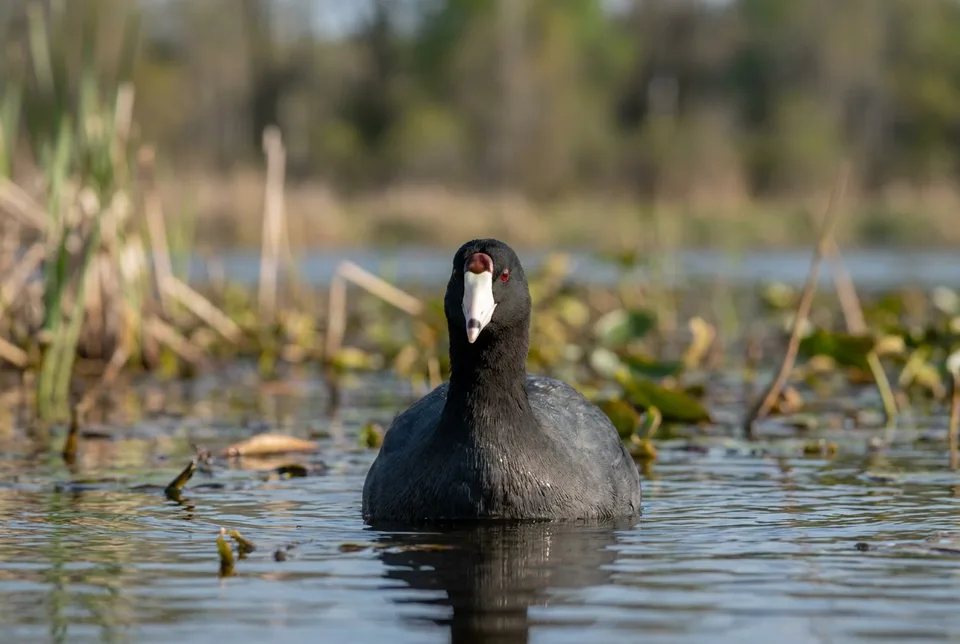
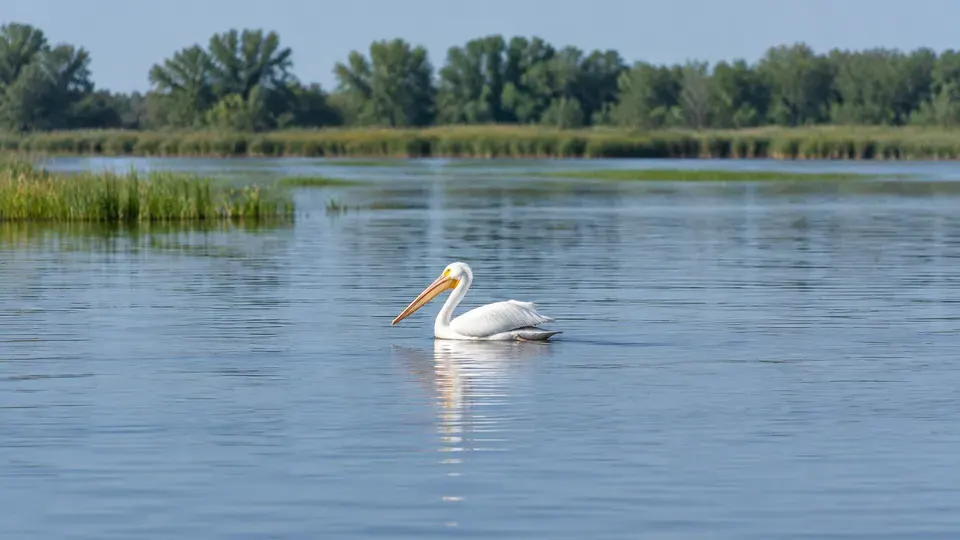
Northern Pintail in wetland habitat — Columbia, Mississippi, Seine, River Cruises wildlifeAI-modifiedNorthern PintailAmerican Coot in wetland habitat — Columbia, River Cruises wildlifeAI-modifiedAmerican CootAmerican white pelican in wetland habitat — Columbia, Mississippi, River Cruises wildlifeAI-modifiedAmerican White Pelican
Animal groupBirdsAnimal groupBirdsAnimal groupBirds
DestinationsColumbia, Mississippi, SeineDestinationsColumbiaDestinationsColumbia, Mississippi
Scientific name
Anas acuta
Scientific name
Scientific name
Previous speciesNile Valley SunbirdNext speciesNorthern Shoveler
All river wildlife
On this page
  • 01About
  • 02Behaviour & reproduction
  • 03Top wildlife locations
  • 04Fun facts
  • 05Best season
  • 06Season matrix by destination
  • 07Habitat
  • 08Diet
  • 09Species at a glance
  • 10Questions & answers
  • 11Compare

Find your river cruise

AI-modified
Plan your trip

Find your next river journey

Compare destinations, shore programs and dates with the animals and habitats you would love to see.

  • Daily shore excursions
  • Responsible wildlife watching
  • Boutique river ships
Explore river cruises