Bluerides – Blue Rides - Book Liveaboards worldwideOCEAN ADVENTURES
River CruisesRiversNature & WildlifeOur Promise
River CruisesRiversNature & WildlifeOur PromiseSign In

River destinations

  • River destinations
  • Amazon
  • Danube
  • Rhine
  • Mekong
  • Nile

Ships & departures

  • River Cruise Search
  • Deals

Nature & Wildlife

  • Nature & Wildlife

Travel support

  • Our Promise
  • Contact

Contact

Get in Touch

Get in touch anytime, we're happy to help you find the right trip or sort out any question.

EmailWrite us, we usually reply within a few hours.
contact@bluerides.com
WhatsAppChat with us on WhatsApp, Mon–Fri 10:00–16:00 (CET).
Start WhatsApp Chat
PhoneCall us, we're happy to help.
Free call, Mon–Fri 10 AM – 8 PM (CET).
Europe+49 800 1144 990USA+1 888 557 7735UK+44 800 707 4152Australia+61 2 8599 6113Canada+1 888 557 7735
Which river journey is yours?Answer 8 quick questions and find the river cruise that fits you.
8 questions, 1 minute·Plus Gift
Secure Payment MethodsYour payments are fully secured with AES-256 encryption.
Powered byStripeWiseAMEXPayGoogle PaySEPABank
Imprint·Terms & Conditions·Privacy Policy·About·Contact·Liability Waiver·Affiliate Program·Cruise·Blog·
Visit us here

© 2026 Blue Rides. All rights reserved.

Bluerides – Blue Rides - Book Liveaboards worldwideOCEAN ADVENTURES
River CruisesRiversNature & WildlifeOur Promise
River CruisesRiversNature & WildlifeOur PromiseSign In
Nile Valley Sunbird in wetland habitat — Nile, River Cruises wildlifeAI-modified
Home›River Cruises›River Wildlife›Nile Valley Sunbird

Nile Valley SunbirdHedydipna metallicaWhere and when to see them

Previous speciesNeotropic CormorantNext speciesNorthern Pintail

Nile Valley Sunbird at a glance

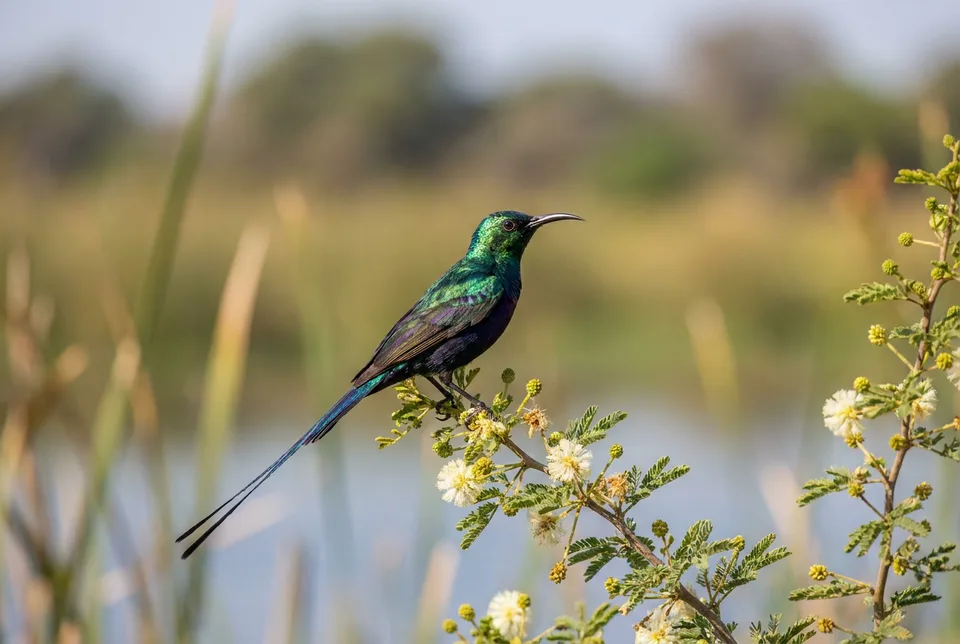
The Nile Valley Sunbird is a tiny songbird whose breeding male combines metallic green plumage, a yellow belly and exceptionally long tail feathers. The female is much less conspicuous and lacks the elongated tail. Its river-cruise connection is terrestrial: gardens, planted grounds and scrub visited along the Luxor–Aswan route, rather than open water. The registry draws on a March 2007 Nile cruise report, not a monthly monitoring programme. Cornell’s eBird account provides the identification used here. The retrieved IUCN page lists Least Concern for the 2016 assessment but explicitly warns that it is not the latest: https://www.iucnredlist.org/species/22717676/94545911. Source: https://ebird.org/species/nivsun2

Behaviour & reproduction

Size
Species-specific length not verified.
Weight
Species-specific body mass not verified.
Lifespan
Species-specific lifespan not verified.
Status
Least Concern in the retrieved 2016 IUCN assessment; the page warns that a newer assessment exists.

eBird describes calls and song with a buzzing quality, potentially useful when the small bird is hidden among plants. A male’s long tail can catch attention as it moves between perches, but females require more deliberate inspection. The retrieved sources do not establish a local courtship schedule, nest density or daily visiting routine at individual temple gardens. Watch a flowering or leafy patch quietly and distinguish repeated use from a single brief passage. Do not use playback to bring a territorial bird into view. An inconspicuous bird disappearing into planted cover should not be pursued through restricted garden beds.

Top wildlife locations

Nile river landscape — River Cruises wildlife habitatAI-modified

Nile

Luxor–Esna–Edfu–Kom Ombo–Aswan; exact observation context in quote Viewing context: Wild birds from cruise deck or normal temple/riverbank visits; dated March 2007 observations, not year-round guarantees. Waterfowl and passage birds seasonal; small reed birds require binoculars.
Explore river cruises

Destinations describe the species' habitat, not guaranteed cruise stops. Some animals require an optional inland excursion or are found in restricted reserves.

Fun facts about the Nile Valley Sunbird

  • The male has an extremely long, thin tail.
  • Females are short-tailed.
  • The male’s upperparts can shine green.
  • The belly is yellow.
  • Females have a whitish throat.
  • Gardens and oases are among its habitats.
  • Its vocalisations can have a buzzing quality.

Best time to see the Nile Valley Sunbird

The registered historical source is a Nile cruise report from 19–26 March 2007. Its dates are not evidence that March is a recurring local viewing season. Neither a country distribution map nor the appearance of a male’s breeding plumage can establish a monthly observation calendar for the Luxor–Aswan reach. The location months array is therefore empty. Ask a knowledgeable local guide about current garden or scrub observations during permitted shore visits. Recent records can guide the choice of a walk, while the profile continues to mark recurring seasonality as not verified.

Nile Valley Sunbird: season matrix by destination

Highlighted months reflect the stated local evidence, not guaranteed encounters. Neutral months mean no verified monthly viewing window, not absence. Observation records and recommended viewing windows are distinct.

Nile

A recurring species-specific numerical month range for this exact reach was not verified. Months are left empty; occurrence, broad residency, breeding dates and single trips are not treated as a calendar.

JanFebMarAprMayJunJulAugSepOctNovDec
Explore river cruises

Where the Nile Valley Sunbird lives

Gardens, plantations, oases and acacia scrub are habitats named by eBird. Those settings explain why normal shore visits may offer a better chance than prolonged scanning from a cruise deck. The registered reach extends from Luxor through Esna, Edfu and Kom Ombo to Aswan, but does not establish occurrence at every landing. No exact temple garden or currently occupied shrub was independently verified for this profile. Keep the habitat claim focused on suitable terrestrial vegetation rather than the river surface. Managed planted areas can support wildlife while still requiring visitors to remain on paths.

What the Nile Valley Sunbird eats

A species-specific feeding account was not verified in the retrieved accessible sources. Although sunbirds are commonly associated with nectar, that family-level association does not justify inventing a detailed Nile Valley Sunbird menu or local plant preference. No proportions of nectar and animal food, feeding rate or named Egyptian food plant are asserted here. A bird probing a flower can provide direct behavioural evidence, but the flower and the bird both need reliable identification before a particular relationship is recorded. Do not install sugar-water feeders, cut flowers or move vegetation to improve viewing. Natural observation is sufficient without creating an unsupported feeding claim.

Species at a glance

Common name
Nile Valley Sunbird
Scientific name
Hedydipna metallica
Animal group
Birds
Size
Species-specific length not verified.
Weight
Species-specific body mass not verified.
Lifespan
Species-specific lifespan not verified.
Status
Least Concern in the retrieved 2016 IUCN assessment; the page warns that a newer assessment exists.
Identification
eBird describes the male as glossy green on the head, throat and back, with a bright yellow belly and a very long, thin tail. The female has yellowish underparts, a whitish throat and a short tail. The bill is relatively short for a sunbird. Metallic colour changes with viewing angle, so a shaded male may not look as brilliant as photographs suggest. Use the complete pattern and proportions rather than shine alone. The buzzing quality of the voice can support a visual identification, but comparison with a regional guide is advisable for females and immature birds.

Nile Valley Sunbird: frequently asked questions

Where can I see the Nile Valley Sunbird?
Nile. During normal shore visits, inspect suitable gardens and scrub from public paths, especially small moving birds among leafy branches. Listen for buzzing notes and allow birds to come into view naturally. Binoculars are essential for distinguishing a short-tailed female from other small yellowish birds. A camera photograph can help assess the head, throat and bill later, but do not enter beds or follow a bird into private grounds. The species is not a reliable deck-viewing target. Keep any uncertain identification provisional rather than treating every sunbird in a Nile garden as this species.
When is the best time to see the Nile Valley Sunbird?
The registered historical source is a Nile cruise report from 19–26 March 2007. Its dates are not evidence that March is a recurring local viewing season. Neither a country distribution map nor the appearance of a male’s breeding plumage can establish a monthly observation calendar for the Luxor–Aswan reach. The location months array is therefore empty. Ask a knowledgeable local guide about current garden or scrub observations during permitted shore visits. Recent records can guide the choice of a walk, while the profile continues to mark recurring seasonality as not verified.
How big does the Nile Valley Sunbird get?
Species-specific length not verified.. Adult weight: Species-specific body mass not verified.. Size varies with age, sex and population.
How should I behave around the Nile Valley Sunbird?
During normal shore visits, inspect suitable gardens and scrub from public paths, especially small moving birds among leafy branches. Listen for buzzing notes and allow birds to come into view naturally. Binoculars are essential for distinguishing a short-tailed female from other small yellowish birds. A camera photograph can help assess the head, throat and bill later, but do not enter beds or follow a bird into private grounds. The species is not a reliable deck-viewing target. Keep any uncertain identification provisional rather than treating every sunbird in a Nile garden as this species.
What does the Nile Valley Sunbird eat?
A species-specific feeding account was not verified in the retrieved accessible sources. Although sunbirds are commonly associated with nectar, that family-level association does not justify inventing a detailed Nile Valley Sunbird menu or local plant preference. No proportions of nectar and animal food, feeding rate or named Egyptian food plant are asserted here. A bird probing a flower can provide direct behavioural evidence, but the flower and the bird both need reliable identification before a particular relationship is recorded. Do not install sugar-water feeders, cut flowers or move vegetation to improve viewing. Natural observation is sufficient without creating an unsupported feeding claim.
Are wildlife sightings guaranteed on a river cruise?
No. Animals move freely and routes, weather, access restrictions and local conditions influence every outing. Confirm the actual itinerary and shore program before booking.

Compare wildlife in the same destinations

Explore other birds recorded in these destinations. Similar surroundings do not mean the animals share the same habits or viewing season.

Species comparison by animal group and destination
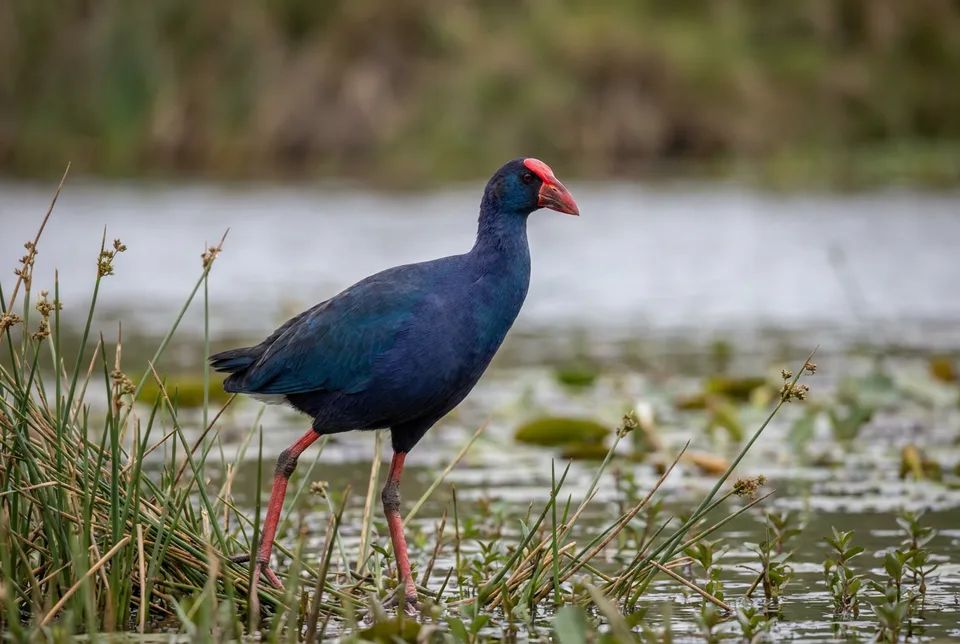
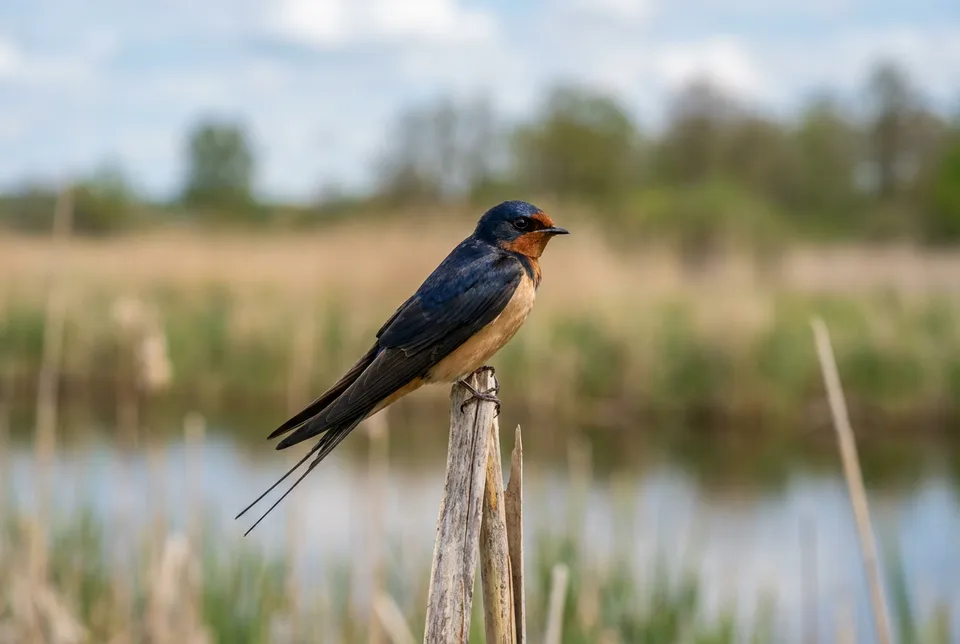
Nile Valley Sunbird in wetland habitat — Nile, River Cruises wildlifeAI-modifiedNile Valley SunbirdAfrican Swamphen in wetland habitat — Nile, Egypt, River Cruises wildlifeAI-modifiedAfrican SwamphenBarn Swallow in wetland habitat — Mississippi, Nile, River Cruises wildlifeAI-modifiedBarn Swallow
Animal groupBirdsAnimal groupBirdsAnimal groupBirds
DestinationsNileDestinationsNileDestinationsMississippi, Nile
Scientific name
Hedydipna metallica
Scientific name
Scientific name
Previous speciesNeotropic CormorantNext speciesNorthern Pintail
All river wildlife
On this page
  • 01About
  • 02Behaviour & reproduction
  • 03Top wildlife locations
  • 04Fun facts
  • 05Best season
  • 06Season matrix by destination
  • 07Habitat
  • 08Diet
  • 09Species at a glance
  • 10Questions & answers
  • 11Compare

Find your river cruise

AI-modified
Plan your trip

Find your next river journey

Compare destinations, shore programs and dates with the animals and habitats you would love to see.

  • Daily shore excursions
  • Responsible wildlife watching
  • Boutique river ships
Explore river cruises