Bluerides – Blue Rides - Book Liveaboards worldwideOCEAN ADVENTURES
River CruisesRiversNature & WildlifeOur Promise
River CruisesRiversNature & WildlifeOur PromiseSign In

River destinations

  • River destinations
  • Amazon
  • Danube
  • Rhine
  • Mekong
  • Nile

Ships & departures

  • River Cruise Search
  • Deals

Nature & Wildlife

  • Nature & Wildlife

Travel support

  • Our Promise
  • Contact

Contact

Get in Touch

Get in touch anytime, we're happy to help you find the right trip or sort out any question.

EmailWrite us, we usually reply within a few hours.
contact@bluerides.com
WhatsAppChat with us on WhatsApp, Mon–Fri 10:00–16:00 (CET).
Start WhatsApp Chat
PhoneCall us, we're happy to help.
Free call, Mon–Fri 10 AM – 8 PM (CET).
Europe+49 800 1144 990USA+1 888 557 7735UK+44 800 707 4152Australia+61 2 8599 6113Canada+1 888 557 7735
Which river journey is yours?Answer 8 quick questions and find the river cruise that fits you.
8 questions, 1 minute·Plus Gift
Secure Payment MethodsYour payments are fully secured with AES-256 encryption.
Powered byStripeWiseAMEXPayGoogle PaySEPABank
Imprint·Terms & Conditions·Privacy Policy·About·Contact·Liability Waiver·Affiliate Program·Cruise·
Visit us here

© 2026 Blue Rides. All rights reserved.·

Bluerides – Blue Rides - Book Liveaboards worldwideOCEAN ADVENTURES
River CruisesRiversNature & WildlifeOur Promise
River CruisesRiversNature & WildlifeOur PromiseSign In
Neotropic cormorant in wetland habitat — Amazon, River Cruises wildlife
Home›River Cruises›River Wildlife›Neotropic Cormorant

Neotropic CormorantNannopterum brasilianumWhere and when to see them

Previous speciesMute SwanNext speciesNile Valley Sunbird

Neotropic Cormorant at a glance

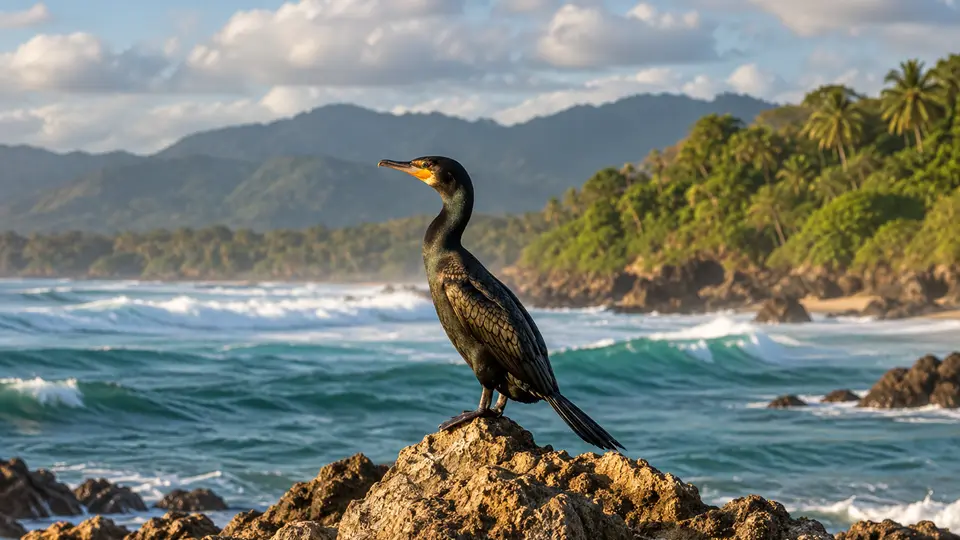
The Neotropic Cormorant is a slender, long-tailed diving bird widespread through tropical American waterways. Cornell describes a bird small for a cormorant, with a narrow bill ending in a hook. Its reference measurements are 61 centimetres long and 1,070–1,500 grams. The registered Amazon context is a 2017 cruise around Iquitos, Nauta, the Ucayali and connected tributaries in Peru. The trip list reports daily sightings, sometimes in large numbers mixed with egrets. That is strong evidence for that journey, not a year-round guarantee. Identification reference: https://www.allaboutbirds.org/guide/Neotropic_Cormorant/id. Source: https://www.allaboutbirds.org/guide/Neotropic_Cormorant/lifehistory
Behaviour & reproduction

Size
61 cm (24 in) length; Cornell identification account.
Weight
1,070–1,500 g (37.7–52.9 oz); Cornell.
Lifespan
Species-specific lifespan not verified.
Status
Formal current global assessment not verified.

Cornell describes mostly solitary or loosely grouped hunting, with occasional coordinated groups driving fish towards shallower water. Some birds also make shallow angled dives from very low flight. A resting individual can look very different from a swimming one, particularly when its long tail is concealed. Observe whether birds are actively diving or simply sharing a perch before interpreting a gathering as a feeding flock. The Amazon trip report’s daily records do not establish a daily schedule of movements. Do not disturb a communal resting place to make the birds spread their wings or take flight.

Top wildlife locations

Amazon river landscape — River Cruises wildlife habitat

Amazon

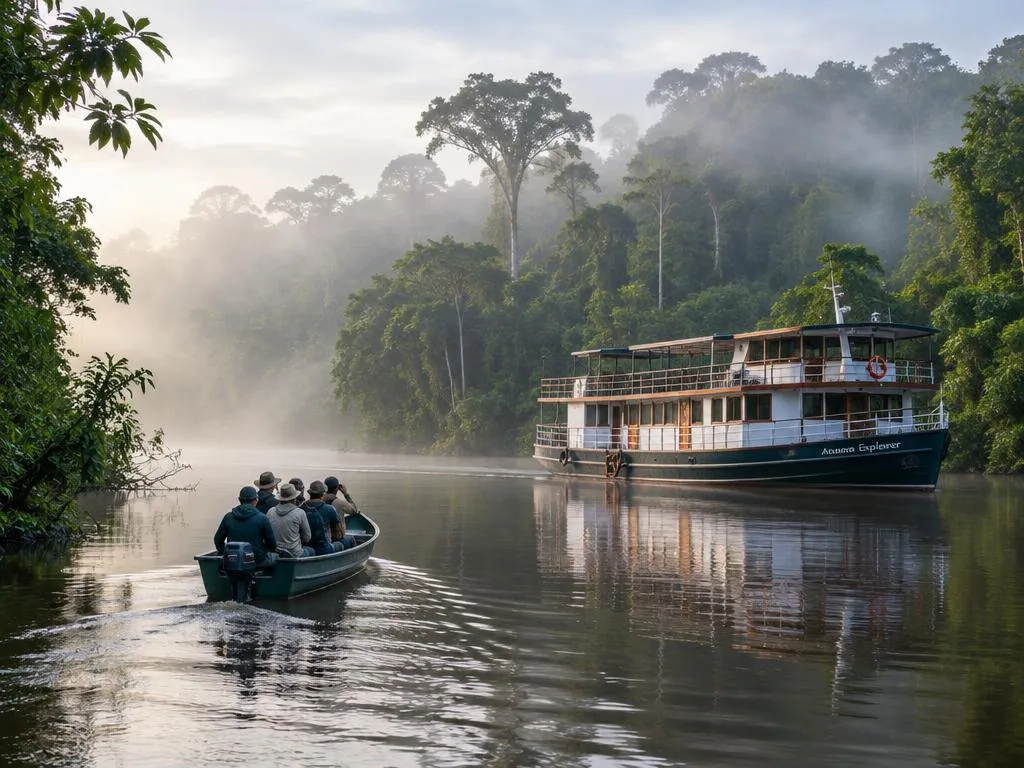
Peru — Iquitos/Nauta, Ucayali and connected tributaries (2017 cruise) Viewing context: Guided skiff/side-channel viewing; not guaranteed from main ship. Scan river-edge trees, banks and open water.
Explore river cruises

Destinations describe the species' habitat, not guaranteed cruise stops. Some animals require an optional inland excursion or are found in restricted reserves.

Fun facts about the Neotropic Cormorant

  • It has a long tail.
  • The bill ends in a hook.
  • Juveniles are browner than adults.
  • The throat patch can have a white V-shaped border.
  • It uses fresh and saline waters.
  • Fish and shrimp are important foods.
  • The 2017 Peruvian cruise recorded it daily.

Best time to see the Neotropic Cormorant

The 2017 itinerary ran in March and reported Neotropic Cormorants daily. One trip, even one with repeated sightings, does not demonstrate a recurring March season. No multi-year local monthly series or explicit recurring viewing calendar was verified, so the Amazon months array remains empty. General tropical residency is not a substitute for local evidence. Arrange a guided side-channel excursion and ask about current accessible resting and feeding areas. The profile should preserve the value of the historical record while avoiding an invented flood-season or dry-season viewing recommendation.

Neotropic Cormorant: season matrix by destination

Highlighted months reflect the stated local evidence, not guaranteed encounters. Neutral months mean no verified monthly viewing window, not absence. Observation records and recommended viewing windows are distinct.

Amazon

A recurring species-specific numerical month range for this exact reach was not verified. Months are left empty; occurrence, broad residency, breeding dates and single trips are not treated as a calendar.

JanFebMarAprMayJunJulAugSepOctNovDec
Explore river cruises

Where the Neotropic Cormorant lives

The species occupies fresh, brackish and salt water, including rivers, lakes, marshes and wooded swamps. Cornell emphasises fish availability and places to rest, such as trees, rocks or embankments. The registered Peruvian excursion concerns interior river systems and side channels, not coastal habitat. Scan sheltered water and river-edge trees during a guided skiff visit. The broad habitat range explains ecological flexibility but cannot identify which tributary bend is currently occupied. Retain the Iquitos–Nauta and connected Ucayali scope rather than claiming equivalent opportunities throughout the enormous Amazon basin.

What the Neotropic Cormorant eats

Cornell lists mainly fish and shrimp, with frogs and aquatic insect larvae also taken. Birds pursue prey underwater and may swallow small fish quickly. Larger items can be brought to the surface for handling, including removal of attached vegetation. These descriptions concern the species across its range, not a measured Peruvian diet. No prey percentages or local fish-species inventory were verified for the cruise reach. An observer may see a swallowed item without enough detail to identify it. Do not offer bait or associate every gathering with competition with local fisheries.

Species at a glance

Common name
Neotropic Cormorant
Scientific name
Nannopterum brasilianum
Animal group
Birds
Size
61 cm (24 in) length; Cornell identification account.
Weight
1,070–1,500 g (37.7–52.9 oz); Cornell.
Lifespan
Species-specific lifespan not verified.
Status
Formal current global assessment not verified.
Identification
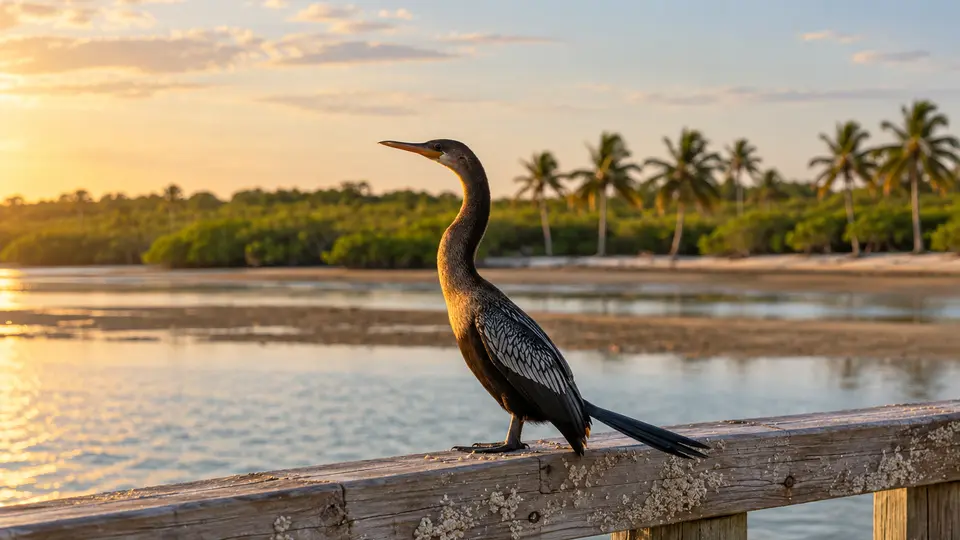
Cornell describes adults as dark birds with a small orange-yellow throat patch bordered by a fine white line, often forming a V-shaped outline. Breeding birds can show small white head plumes. Juveniles are browner on the head, neck and breast. The long tail and relatively slender body are useful structural clues. Compare the hooked bill with the straight, pointed bill of an Anhinga. Distant posture alone is insufficient, especially when the tail is hidden behind a branch. Photographs showing the head and throat are more useful than a dark silhouette against bright water.

Neotropic Cormorant: frequently asked questions

Where can I see the Neotropic Cormorant?
Amazon. From a guided skiff, scan open water and river-edge branches, then follow an individual through several dives. Keep enough distance to distinguish natural behaviour from a response to the boat. A resting bird offers a useful view of the long tail, head and throat patch; a swimming bird may reveal much less. Ask the guide to hold a respectful position rather than circling a perch. The registry does not promise views from the main vessel. When birds mix with egrets, identify each species separately instead of treating the whole group as a single flock.
When is the best time to see the Neotropic Cormorant?
The 2017 itinerary ran in March and reported Neotropic Cormorants daily. One trip, even one with repeated sightings, does not demonstrate a recurring March season. No multi-year local monthly series or explicit recurring viewing calendar was verified, so the Amazon months array remains empty. General tropical residency is not a substitute for local evidence. Arrange a guided side-channel excursion and ask about current accessible resting and feeding areas. The profile should preserve the value of the historical record while avoiding an invented flood-season or dry-season viewing recommendation.
How big does the Neotropic Cormorant get?
61 cm (24 in) length; Cornell identification account.. Adult weight: 1,070–1,500 g (37.7–52.9 oz); Cornell.. Size varies with age, sex and population.
How should I behave around the Neotropic Cormorant?
From a guided skiff, scan open water and river-edge branches, then follow an individual through several dives. Keep enough distance to distinguish natural behaviour from a response to the boat. A resting bird offers a useful view of the long tail, head and throat patch; a swimming bird may reveal much less. Ask the guide to hold a respectful position rather than circling a perch. The registry does not promise views from the main vessel. When birds mix with egrets, identify each species separately instead of treating the whole group as a single flock.
What does the Neotropic Cormorant eat?
Cornell lists mainly fish and shrimp, with frogs and aquatic insect larvae also taken. Birds pursue prey underwater and may swallow small fish quickly. Larger items can be brought to the surface for handling, including removal of attached vegetation. These descriptions concern the species across its range, not a measured Peruvian diet. No prey percentages or local fish-species inventory were verified for the cruise reach. An observer may see a swallowed item without enough detail to identify it. Do not offer bait or associate every gathering with competition with local fisheries.
Are wildlife sightings guaranteed on a river cruise?
No. Animals move freely and routes, weather, access restrictions and local conditions influence every outing. Confirm the actual itinerary and shore program before booking.

Compare wildlife in the same destinations

Explore other birds recorded in these destinations. Similar surroundings do not mean the animals share the same habits or viewing season.

Species comparison by animal group and destination
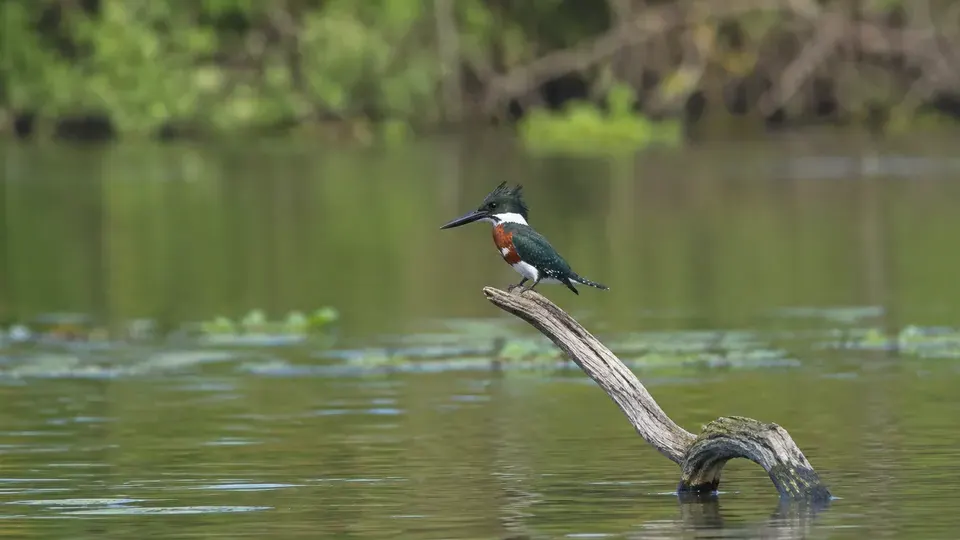
Neotropic cormorant in wetland habitat — Amazon, River Cruises wildlifeNeotropic CormorantAmazon kingfisher in wetland habitat — Amazon, River Cruises wildlifeAmazon KingfisherAnhinga in wetland habitat — Amazon, River Cruises wildlifeAnhinga
Animal groupBirdsAnimal groupBirdsAnimal groupBirds
DestinationsAmazonDestinationsAmazonDestinationsAmazon
Scientific name
Nannopterum brasilianum
Scientific name
Scientific name
Previous speciesMute SwanNext speciesNile Valley Sunbird
All river wildlife
On this page
  • 01About
  • 02Behaviour & reproduction
  • 03Top wildlife locations
  • 04Fun facts
  • 05Best season
  • 06Season matrix by destination
  • 07Habitat
  • 08Diet
  • 09Species at a glance
  • 10Questions & answers
  • 11Compare

Find your river cruise

Plan your trip

Find your next river journey

Compare destinations, shore programs and dates with the animals and habitats you would love to see.

  • Daily shore excursions
  • Responsible wildlife watching
  • Boutique river ships
Explore river cruises