Bluerides – Blue Rides - Book Liveaboards worldwideOCEAN ADVENTURES
River CruisesRiversNature & WildlifeOur Promise
River CruisesRiversNature & WildlifeOur PromiseSign In

River destinations

  • River destinations
  • Amazon
  • Danube
  • Rhine
  • Mekong
  • Nile

Ships & departures

  • River Cruise Search
  • Deals

Nature & Wildlife

  • Nature & Wildlife

Travel support

  • Our Promise
  • Contact

Contact

Get in Touch

Get in touch anytime, we're happy to help you find the right trip or sort out any question.

EmailWrite us, we usually reply within a few hours.
contact@bluerides.com
WhatsAppChat with us on WhatsApp, Mon–Fri 10:00–16:00 (CET).
Start WhatsApp Chat
PhoneCall us, we're happy to help.
Free call, Mon–Fri 10 AM – 8 PM (CET).
Europe+49 800 1144 990USA+1 888 557 7735UK+44 800 707 4152Australia+61 2 8599 6113Canada+1 888 557 7735
Which river journey is yours?Answer 8 quick questions and find the river cruise that fits you.
8 questions, 1 minute·Plus Gift
Secure Payment MethodsYour payments are fully secured with AES-256 encryption.
Powered byStripeWiseAMEXPayGoogle PaySEPABank
Imprint·Terms & Conditions·Privacy Policy·About·Contact·Liability Waiver·Affiliate Program·Cruise·Blog·
Visit us here

© 2026 Blue Rides. All rights reserved.

Bluerides – Blue Rides - Book Liveaboards worldwideOCEAN ADVENTURES
River CruisesRiversNature & WildlifeOur Promise
River CruisesRiversNature & WildlifeOur PromiseSign In
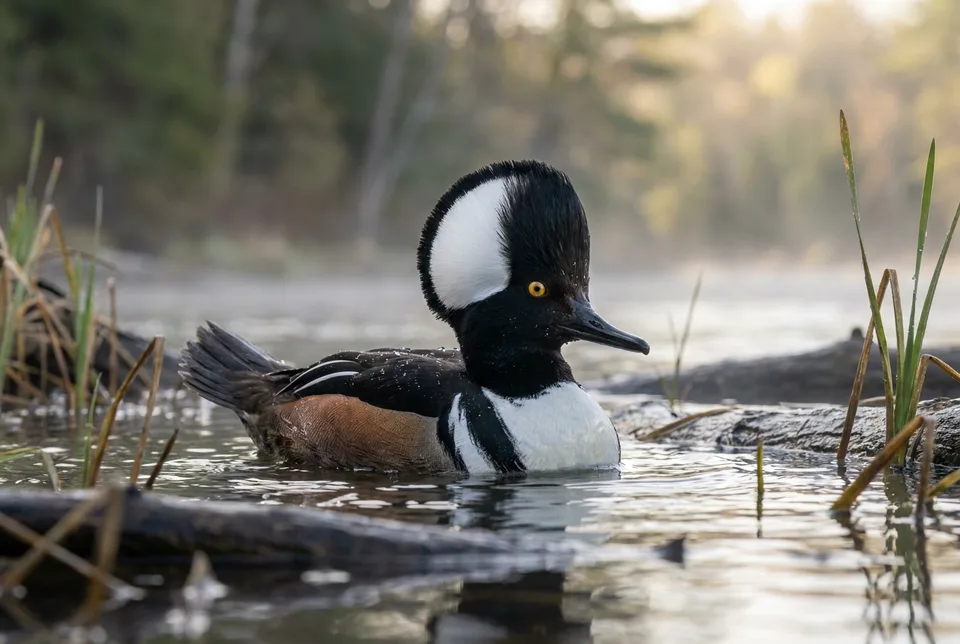
Hooded Merganser in wetland habitat — Columbia, Mississippi, River Cruises wildlifeAI-modified
Home›River Cruises›River Wildlife›Hooded Merganser

Hooded MerganserLophodytes cucullatusWhere and when to see them

Previous speciesHoatzinNext speciesHoopoe

Hooded Merganser at a glance

The Hooded Merganser is a small diving duck with an outsized silhouette: a raised crest can transform the head into an almost circular fan. Adult males display a bold white head patch framed in black above chestnut flanks, while females carry a softer cinnamon crest. This is more than ornamental plumage. A thin serrated bill and underwater hunting behaviour place the species among the fish-catching ducks, though its diet is broader than that of other mergansers. Its registered destinations are the Columbia and Upper Mississippi wetland reaches. Small ponds, sheltered wooded water and quiet river edges deserve attention there, not only the largest pools. A bird that lowers its crest may look surprisingly different moments later, so patient watching is especially valuable before assigning an unfamiliar head shape to another species.

Behaviour & reproduction

Size
Not verified
Weight
Not verified
Lifespan
Not verified
Status
Cornell: Low Concern; not an IUCN category.

Hooded Mergansers dive using their feet for propulsion and locate prey by sight. They may also swim with only the head underwater, searching before a fuller dive. Crest position changes the outline dramatically, giving a useful lesson in why a single photograph may not represent a bird’s usual shape. Females choose nesting cavities, and the species also uses suitable nest boxes. The young leave the cavity by jumping when only about a day old, then follow the female to feeding water. They can dive almost immediately, although early dives are short and shallow. Resting families may use logs, rocks or sandbars. These are behaviours to observe at a distance; nest boxes and cavities should never be opened, tapped or approached to encourage an exit for photography.

Top wildlife locations

Columbia river landscape — River Cruises wildlife habitatAI-modified

Columbia

Most records cover Umatilla refuge backwaters along the Columbia near Boardman–Irrigon. Seasonal waterfowl may be best in winter rather than the sailing season. Bighorn sheep require a separate Hells Canyon excursion on the Snake River.
Explore river cruises
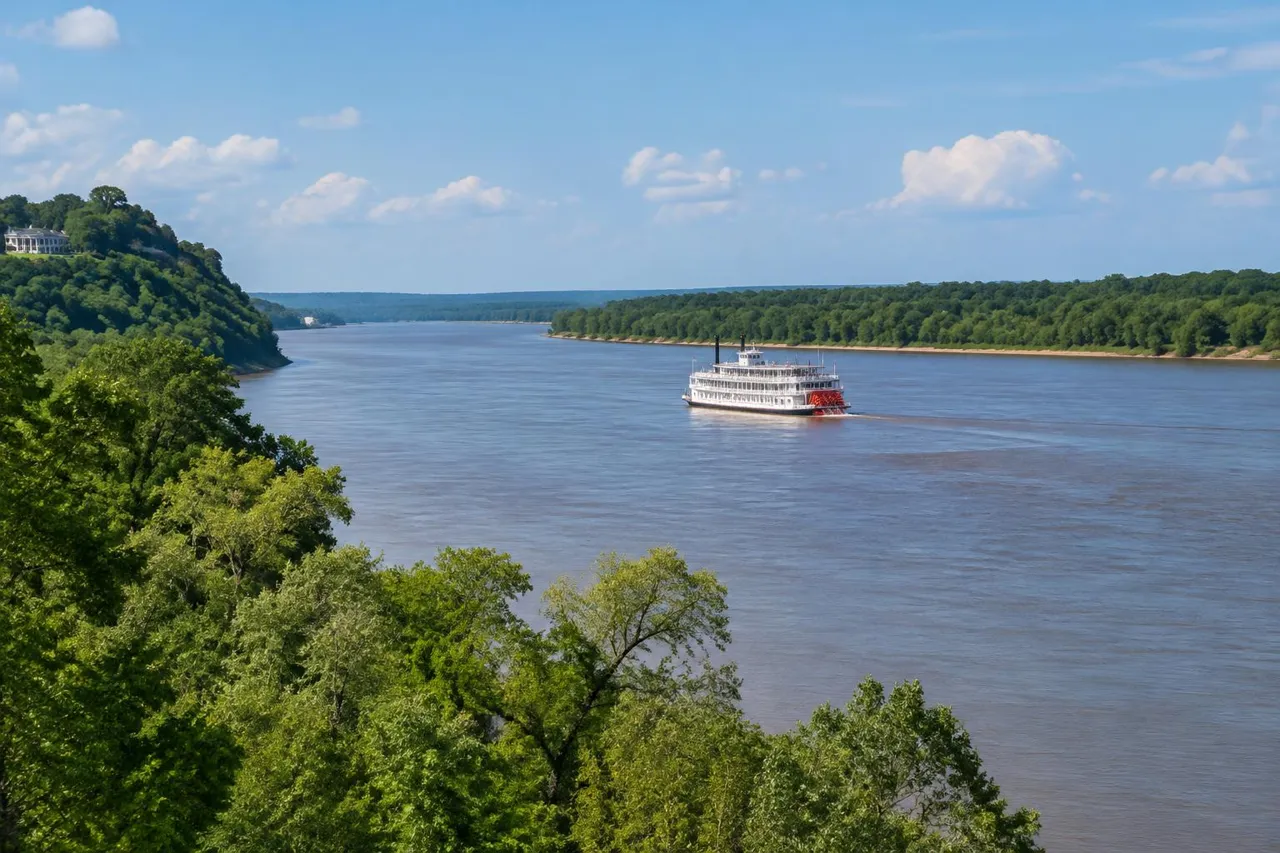
Mississippi river landscape — River Cruises wildlife habitatAI-modified

Mississippi

Upper Mississippi refuge records cover Wabasha–Rock Island; the smaller Lower Mississippi subset is limited to the Natchez area. Backwater/refuge visits and the season matter; upper-river fauna is not promised on a New Orleans sailing.

Explore river cruises

Destinations describe the species' habitat, not guaranteed cruise stops. Some animals require an optional inland excursion or are found in restricted reserves.

Fun facts about the Hooded Merganser

  • The crest can be raised or lowered.
  • Males have a large white crest patch.
  • Females have cinnamon crests.
  • The diet includes crayfish as well as fish.
  • Birds propel underwater dives with their feet.
  • They sometimes search with only the head submerged.
  • They nest in tree cavities.
  • Suitable nest boxes are also used.
  • Ducklings jump from the nest when about a day old.

Best time to see the Hooded Merganser

No numerical local viewing calendar is verified for the registered Columbia, Mississippi associations. The Upper Mississippi refuge specifically describes summer nesting in bottomland forest. This is useful breeding context, but it provides neither named monthly viewing windows nor a guarantee of visible broods. Cornell’s broader fall-to-spring search advice is not a local calendar.

Hooded Merganser: season matrix by destination

Highlighted months reflect the stated local evidence, not guaranteed encounters. Neutral months mean no verified monthly viewing window, not absence. Observation records and recommended viewing windows are distinct.

Columbia

No river-specific wildlife calendar is confirmed. Check the actual river reach, local conditions and excursion access with your operator.

JanFebMarAprMayJunJulAugSepOctNovDec
Explore river cruises

Mississippi

No river-specific wildlife calendar is confirmed. Check the actual river reach, local conditions and excursion access with your operator.

JanFebMarAprMayJunJulAugSepOctNovDec
Explore river cruises

Where the Hooded Merganser lives

Forested wetlands are characteristic breeding habitat, ranging from northwestern conifer forests to riverine woodland and southern swamp forests. Shallow marshes, beaver wetlands, small lakes and wooded rivers provide feeding places for families. Outside breeding, the birds also use sheltered bays, tidal creeks and other freshwater or brackish waters. This flexibility does not remove the value of cover and quiet feeding margins. The Upper Mississippi refuge specifically mentions nesting in bottomland forest, a habitat association more precise than simply saying the species occurs on a large river. At the Columbia’s Umatilla reach, examine accessible sloughs and smaller protected waters as well as open pools. Mature trees and connected wetlands form one habitat system; protecting the water alone does not replace lost nesting cavities, and a visible box does not prove present occupancy.

What the Hooded Merganser eats

Small fish are important, but Hooded Mergansers also take crayfish, aquatic insects, mollusks, amphibians and some vegetation. Cornell emphasises this broader diet relative to other mergansers. The slender bill has serrated edges for holding prey, and specially adapted vision supports hunting below the surface. A bird may inspect the water with its face submerged before diving, while young ducklings make their own early feeding attempts. Crayfish or larger prey may require more handling than a tiny fish, so the length of a surface pause does not necessarily measure hunting success. From a viewing bank, record the actions you can actually resolve rather than labelling every catch a fish. Do not lure birds with food or disturb the bottom to create feeding activity; undisturbed shallow water offers the more meaningful observation.

Species at a glance

Common name
Hooded Merganser
Scientific name
Lophodytes cucullatus
Animal group
Birds
Size
Not verified in the accessible source text.
Weight
Not verified in the accessible source text.
Lifespan
Wild lifespan not verified in the accessible source text.
Status
Cornell: Low Concern; not an IUCN category.
Identification
An adult male combines a large white crest patch outlined in black with a dark back, white breast markings and chestnut sides. The female’s cinnamon crest gives a more softly coloured but still characteristic profile. Both have thin bills unlike the broad bills of dabbling ducks. Crest posture matters: a flattened hood produces a slimmer head, and a raised hood can make the same individual appear disproportionately large-headed. Common Mergansers are longer and heavier-looking, with a different female head-and-neck pattern, while Buffleheads have shorter bills and different head markings. Use bill shape, crest, flank colour and body proportions together. A small dark diver with a white head patch is not identified securely from that patch alone, especially in glare or when resting with the bill tucked.

Hooded Merganser: frequently asked questions

Where can I see the Hooded Merganser?
Columbia, Mississippi. Look along wooded pond margins and sheltered river pockets, then examine small diving ducks among larger mixed flocks. A raised male crest is conspicuous, but lowered crests and brown females need closer attention. Wait for birds to turn side-on and complete several feeding cycles rather than judging from a head-on glimpse. The female’s cinnamon crest can catch low sunlight, while shade reduces the male’s white-and-black pattern to shape alone. At Upper Mississippi overlooks, bottomland forest may hold birds beyond the main shipping route, so a dedicated wetland stop is preferable to a hurried deck scan. Keep away from cavities, nest boxes and broods. If birds cease diving, bunch together or repeatedly retreat into cover in response to your presence, settle farther back and let natural activity resume.
When is the best time to see the Hooded Merganser?
No numerical local viewing calendar is verified for the registered Columbia, Mississippi associations. The Upper Mississippi refuge specifically describes summer nesting in bottomland forest. This is useful breeding context, but it provides neither named monthly viewing windows nor a guarantee of visible broods. Cornell’s broader fall-to-spring search advice is not a local calendar.
How big does the Hooded Merganser get?
Not verified in the accessible source text.. Adult weight: Not verified in the accessible source text.. Size varies with age, sex and population.
How should I behave around the Hooded Merganser?
Look along wooded pond margins and sheltered river pockets, then examine small diving ducks among larger mixed flocks. A raised male crest is conspicuous, but lowered crests and brown females need closer attention. Wait for birds to turn side-on and complete several feeding cycles rather than judging from a head-on glimpse. The female’s cinnamon crest can catch low sunlight, while shade reduces the male’s white-and-black pattern to shape alone. At Upper Mississippi overlooks, bottomland forest may hold birds beyond the main shipping route, so a dedicated wetland stop is preferable to a hurried deck scan. Keep away from cavities, nest boxes and broods. If birds cease diving, bunch together or repeatedly retreat into cover in response to your presence, settle farther back and let natural activity resume.
What does the Hooded Merganser eat?
Small fish are important, but Hooded Mergansers also take crayfish, aquatic insects, mollusks, amphibians and some vegetation. Cornell emphasises this broader diet relative to other mergansers. The slender bill has serrated edges for holding prey, and specially adapted vision supports hunting below the surface. A bird may inspect the water with its face submerged before diving, while young ducklings make their own early feeding attempts. Crayfish or larger prey may require more handling than a tiny fish, so the length of a surface pause does not necessarily measure hunting success. From a viewing bank, record the actions you can actually resolve rather than labelling every catch a fish. Do not lure birds with food or disturb the bottom to create feeding activity; undisturbed shallow water offers the more meaningful observation.
Are wildlife sightings guaranteed on a river cruise?
No. Animals move freely and routes, weather, access restrictions and local conditions influence every outing. Confirm the actual itinerary and shore program before booking.

Compare wildlife in the same destinations

Explore other birds recorded in these destinations. Similar surroundings do not mean the animals share the same habits or viewing season.

Species comparison by animal group and destination
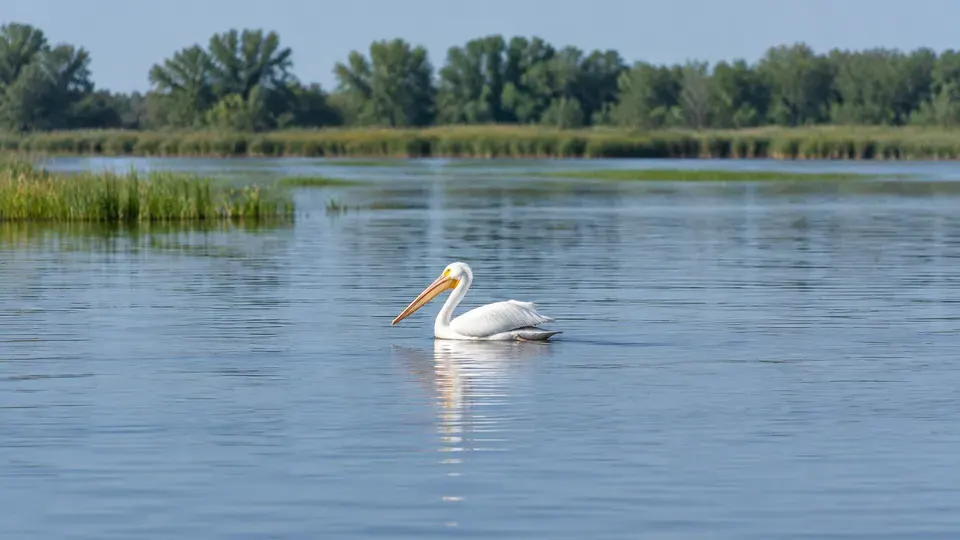
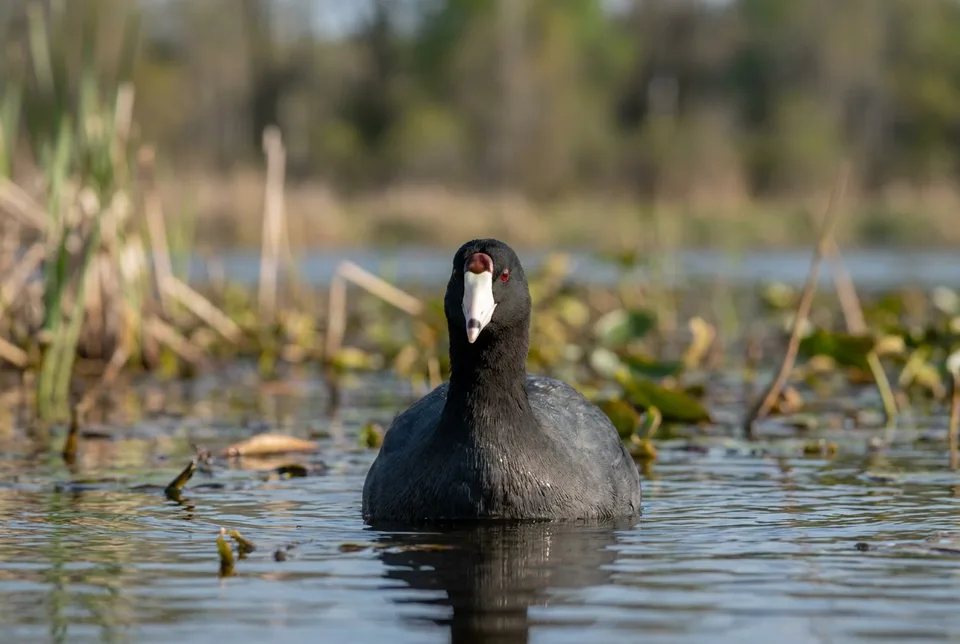
Hooded Merganser in wetland habitat — Columbia, Mississippi, River Cruises wildlifeAI-modifiedHooded MerganserAmerican Coot in wetland habitat — Columbia, River Cruises wildlifeAI-modifiedAmerican CootAmerican white pelican in wetland habitat — Columbia, Mississippi, River Cruises wildlifeAI-modifiedAmerican White Pelican
Animal groupBirdsAnimal groupBirdsAnimal groupBirds
DestinationsColumbia, MississippiDestinationsColumbiaDestinationsColumbia, Mississippi
Scientific name
Lophodytes cucullatus
Scientific name
Scientific name
Previous speciesHoatzinNext speciesHoopoe
All river wildlife
On this page
  • 01About
  • 02Behaviour & reproduction
  • 03Top wildlife locations
  • 04Fun facts
  • 05Best season
  • 06Season matrix by destination
  • 07Habitat
  • 08Diet
  • 09Species at a glance
  • 10Questions & answers
  • 11Compare

Find your river cruise

AI-modified
Plan your trip

Find your next river journey

Compare destinations, shore programs and dates with the animals and habitats you would love to see.

  • Daily shore excursions
  • Responsible wildlife watching
  • Boutique river ships
Explore river cruises