Bluerides – Blue Rides - Book Liveaboards worldwideOCEAN ADVENTURES
River CruisesRiversNature & WildlifeOur Promise
River CruisesRiversNature & WildlifeOur PromiseSign In

River destinations

  • River destinations
  • Amazon
  • Danube
  • Rhine
  • Mekong
  • Nile

Ships & departures

  • River Cruise Search
  • Deals

Nature & Wildlife

  • Nature & Wildlife

Travel support

  • Our Promise
  • Contact

Contact

Get in Touch

Get in touch anytime, we're happy to help you find the right trip or sort out any question.

EmailWrite us, we usually reply within a few hours.
contact@bluerides.com
WhatsAppChat with us on WhatsApp, Mon–Fri 10:00–16:00 (CET).
Start WhatsApp Chat
PhoneCall us, we're happy to help.
Free call, Mon–Fri 10 AM – 8 PM (CET).
Europe+49 800 1144 990USA+1 888 557 7735UK+44 800 707 4152Australia+61 2 8599 6113Canada+1 888 557 7735
Which river journey is yours?Answer 8 quick questions and find the river cruise that fits you.
8 questions, 1 minute·Plus Gift
Secure Payment MethodsYour payments are fully secured with AES-256 encryption.
Powered byStripeWiseAMEXPayGoogle PaySEPABank
Imprint·Terms & Conditions·Privacy Policy·About·Contact·Liability Waiver·Affiliate Program·Cruise·Blog·
Visit us here

© 2026 Blue Rides. All rights reserved.

Bluerides – Blue Rides - Book Liveaboards worldwideOCEAN ADVENTURES
River CruisesRiversNature & WildlifeOur Promise
River CruisesRiversNature & WildlifeOur PromiseSign In
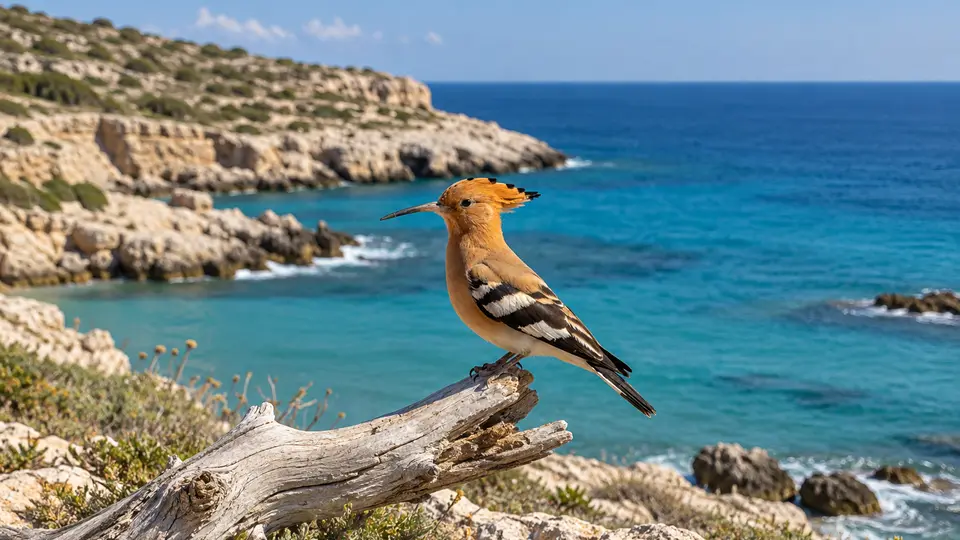
Eurasian hoopoe in wetland habitat — Nile, River Cruises wildlifeAI-modified
Home›River Cruises›River Wildlife›Hoopoe

HoopoeUpupa epopsWhere and when to see them

Previous speciesHooded MerganserNext speciesHorned Screamer

Hoopoe at a glance

A hoopoe is a ground-feeding insect hunter with the appearance of a much more flamboyant bird. Its crest and barred wings attract attention, but its daily work consists largely of walking over suitable soil and finding invertebrates with a slender bill. Across its broad range it occupies warm open landscapes where feeding ground lies close enough to a nesting cavity. It is not a waterbird, even when encountered during a Nile journey. Irrigated land, lawns and cultivated margins may provide the relevant terrestrial habitat beside the river. The registry association here comes from a historical cruise report on the Luxor–Aswan itinerary. That report supports the named excursion context, not a contemporary abundance estimate. British descriptions of rare overshooting migrants are particularly unsuitable as a guide to Egyptian status: they describe birds at a very different edge of the species' range.

Behaviour & reproduction

Size
Species-specific measurement not verified in retrieved sources
Weight
Species-specific weight not verified
Lifespan
Species-specific lifespan not verified
Status
See sourced assessment

Hoopoes typically forage by walking, stopping and inserting the bill into the soil. The crest is often folded during routine activity and may open briefly when the bird is excited or lands. The repeated soft hooping call is a better way of locating a concealed bird than waiting for the crest to appear. Breeding takes place in an existing cavity rather than an exposed cup nest. BTO gives a typical clutch of seven or eight eggs, with incubation by the female lasting about fifteen to sixteen days. The chicks hatch dependent on their parents and remain in the nest for roughly four weeks before fledging. These figures describe the species' reproductive biology, not a verified nesting schedule for the Nile cruise corridor. A bird carrying prey towards a hole is behaviour worth recording from a distance; it is not a reason to inspect the cavity.

Top wildlife locations

Nile river landscape — River Cruises wildlife habitatAI-modified

Nile

Luxor–Esna–Edfu–Kom Ombo–Aswan; exact observation context in quote

Explore river cruises

Destinations describe the species' habitat, not guaranteed cruise stops. Some animals require an optional inland excursion or are found in restricted reserves.

Fun facts about the Hoopoe

  • Hoopoes forage mainly on the ground.
  • The bill probes soil for concealed prey.
  • Grasshoppers and crickets are among favoured foods.
  • Small lizards can also be taken.
  • Nests occupy existing cavities.
  • A typical clutch contains seven or eight eggs.
  • The female incubates for about fifteen to sixteen days.
  • Nestlings take roughly four weeks to fledge.
  • British overshooting migrants do not describe Egyptian seasonality.

Best time to see the Hoopoe

The Nile evidence is a historical cruise observation, not a year-round survey. It therefore supports an itinerary-specific occurrence without establishing the best present-day season along Luxor, Esna, Edfu, Kom Ombo and Aswan. Across the wider range, northern populations migrate, whereas other populations have different movement patterns. RSPB's discussion of spring overshoots into Britain and BTO's British reporting peaks cannot be transferred to Egypt. No numerical month array is added to this entry. For an individual excursion, a quiet period on suitable open ground may offer a better chance than a brief scan of a busy landing, but this is a search strategy rather than a local seasonal claim. A current guide should distinguish resident birds from passage observations before offering a calendar. Neither the crest's appearance nor a bird's presence beside cultivation identifies its migratory origin.

Hoopoe: season matrix by destination

Highlighted months reflect the stated local evidence, not guaranteed encounters. Neutral months mean no verified monthly viewing window, not absence. Observation records and recommended viewing windows are distinct.

Nile

Exact local species-specific monthly viewing evidence has not been verified; no monthly calendar is inferred.

JanFebMarAprMayJunJulAugSepOctNovDec
Explore river cruises

Where the Hoopoe lives

The essential habitat combination is accessible ground for feeding and a cavity for nesting. Warm pasture, orchards, parkland, lightly wooded farmland and cultivated edges can provide this mosaic. Dense vegetation can obstruct ground hunting, whereas bare patches or short cover allow the bird to walk and probe. Trees matter mainly as possible nest or resting structures, so a hoopoe may use open country without behaving like a canopy-feeding woodland bird. Around Nile landings, examine terrestrial margins such as irrigated plots, gardens and open ground associated with cultivation. The main river surface, deep channels and dense beds of emergent vegetation are not the feeding habitat to prioritise. An attractive lawn alone does not prove a breeding site: the availability of cavities and prey must also be considered. The historical itinerary evidence does not identify every apparently suitable patch as an occupied territory.

What the Hoopoe eats

Hoopoes seek invertebrates on and beneath the ground, using the long bill to investigate soil and pick up exposed prey. BTO identifies grasshoppers and crickets among favoured foods in the core breeding range and also mentions small lizards. Larval insects and other soil-dwelling prey help explain why probing is such a prominent part of the feeding repertoire. The method differs from that of a seed-eating finch: a hoopoe is searching for individual animal items rather than stripping seedheads or cracking grain. Watch for a sequence of walking, probing, extracting and swallowing, sometimes with a pause to handle a larger item. On a Nile excursion, the condition of the soil and openness of the vegetation are more useful clues than proximity to water by itself. The retrieved itinerary establishes occurrence but contains no local prey study, so specific Egyptian food proportions remain unknown.

Species at a glance

Common name
Hoopoe
Scientific name
Upupa epops
Animal group
Birds
Size
Species-specific measurement not verified in retrieved sources
Weight
Species-specific weight not verified
Lifespan
Species-specific lifespan not verified
Status
Current global category not independently verified; regional conservation statements must not be presented as a global assessment.
Identification
The long, fine, downcurved bill and fan-shaped crest distinguish a hoopoe even before its full plumage is visible. The body is pinkish or cinnamon brown; the rounded wings carry bold black-and-white barring, and the dark tail has a broad white band. In flight the contrast can be much more conspicuous than the muted body colour seen on the ground. Both sexes share the basic pattern, so assigning sex from an ordinary field view is less secure than identifying the species. A folded crest is normal and does not rule it out. Juveniles share the overall design rather than having an entirely different plumage; fine ageing details are not established by the retained RSPB extract and should not be improvised. From a distance, confirm the characteristic bill, ground-walking posture and barred wings together instead of depending on a momentary glimpse of raised head feathers.

Hoopoe: frequently asked questions

Where can I see the Hoopoe?
Nile. Search the ground around cultivated edges and gardens during the relevant Nile shore excursion rather than scanning only palms or the river. A hoopoe can be inconspicuous while its crest is folded, so look for a warm-brown bird walking with repeated forward movements of the bill. Pause when it probes: following one bird through a feeding sequence often reveals its identity more clearly than chasing a brief flight. If it flies, use the black-and-white wing pattern to relocate it and then allow it to settle. The soft repeated call may carry from a hidden position, but do not use playback to draw a bird from a cavity or territory. Record the actual landing or shore locality within the historical Luxor–Aswan corridor. A fleeting view from the vessel should not be converted into a claim that hoopoes are common at every temple stop.
When is the best time to see the Hoopoe?
The Nile evidence is a historical cruise observation, not a year-round survey. It therefore supports an itinerary-specific occurrence without establishing the best present-day season along Luxor, Esna, Edfu, Kom Ombo and Aswan. Across the wider range, northern populations migrate, whereas other populations have different movement patterns. RSPB's discussion of spring overshoots into Britain and BTO's British reporting peaks cannot be transferred to Egypt. No numerical month array is added to this entry. For an individual excursion, a quiet period on suitable open ground may offer a better chance than a brief scan of a busy landing, but this is a search strategy rather than a local seasonal claim. A current guide should distinguish resident birds from passage observations before offering a calendar. Neither the crest's appearance nor a bird's presence beside cultivation identifies its migratory origin.
How big does the Hoopoe get?
Species-specific measurement not verified in retrieved sources. Adult weight: Species-specific weight not verified. Size varies with age, sex and population.
How should I behave around the Hoopoe?
Search the ground around cultivated edges and gardens during the relevant Nile shore excursion rather than scanning only palms or the river. A hoopoe can be inconspicuous while its crest is folded, so look for a warm-brown bird walking with repeated forward movements of the bill. Pause when it probes: following one bird through a feeding sequence often reveals its identity more clearly than chasing a brief flight. If it flies, use the black-and-white wing pattern to relocate it and then allow it to settle. The soft repeated call may carry from a hidden position, but do not use playback to draw a bird from a cavity or territory. Record the actual landing or shore locality within the historical Luxor–Aswan corridor. A fleeting view from the vessel should not be converted into a claim that hoopoes are common at every temple stop.
What does the Hoopoe eat?
Hoopoes seek invertebrates on and beneath the ground, using the long bill to investigate soil and pick up exposed prey. BTO identifies grasshoppers and crickets among favoured foods in the core breeding range and also mentions small lizards. Larval insects and other soil-dwelling prey help explain why probing is such a prominent part of the feeding repertoire. The method differs from that of a seed-eating finch: a hoopoe is searching for individual animal items rather than stripping seedheads or cracking grain. Watch for a sequence of walking, probing, extracting and swallowing, sometimes with a pause to handle a larger item. On a Nile excursion, the condition of the soil and openness of the vegetation are more useful clues than proximity to water by itself. The retrieved itinerary establishes occurrence but contains no local prey study, so specific Egyptian food proportions remain unknown.
Are wildlife sightings guaranteed on a river cruise?
No. Animals move freely and routes, weather, access restrictions and local conditions influence every outing. Confirm the actual itinerary and shore program before booking.

Compare wildlife in the same destinations

Explore other birds recorded in these destinations. Similar surroundings do not mean the animals share the same habits or viewing season.

Species comparison by animal group and destination
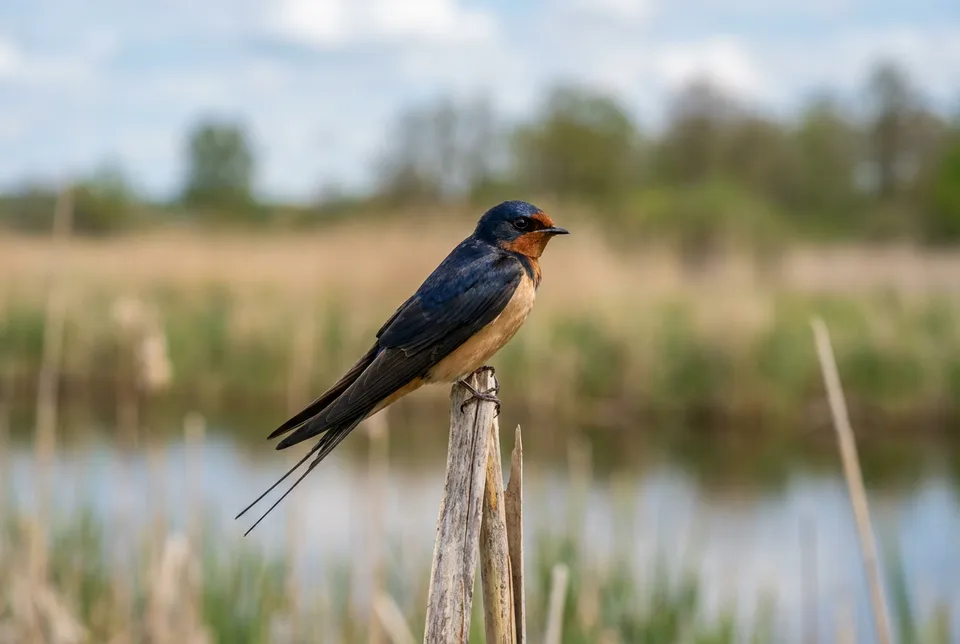
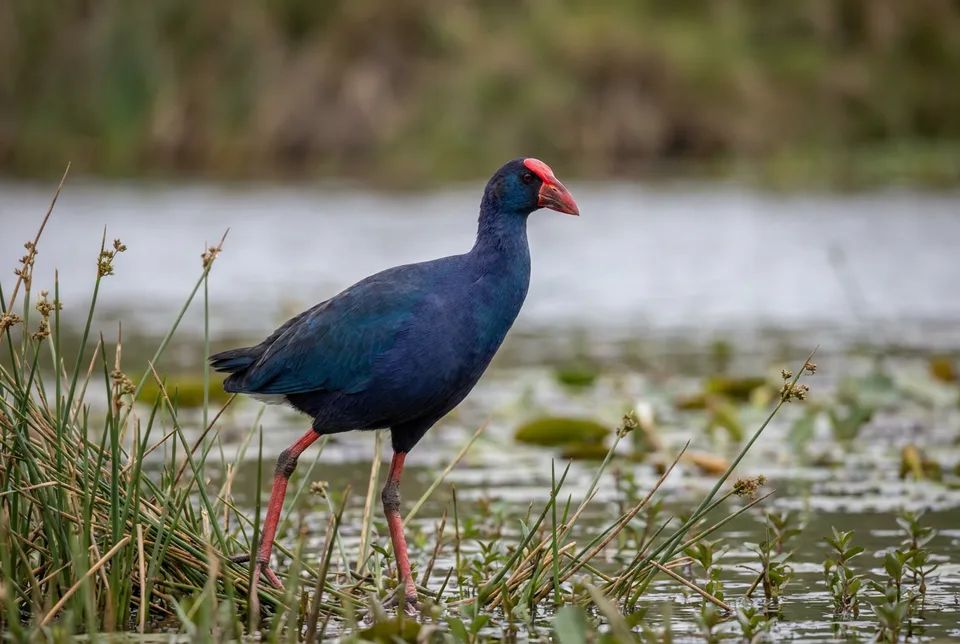
Eurasian hoopoe in wetland habitat — Nile, River Cruises wildlifeAI-modifiedHoopoeAfrican Swamphen in wetland habitat — Nile, Egypt, River Cruises wildlifeAI-modifiedAfrican SwamphenBarn Swallow in wetland habitat — Mississippi, Nile, River Cruises wildlifeAI-modifiedBarn Swallow
Animal groupBirdsAnimal groupBirdsAnimal groupBirds
DestinationsNileDestinationsNileDestinationsMississippi, Nile
Scientific name
Upupa epops
Scientific name
Scientific name
Previous speciesHooded MerganserNext speciesHorned Screamer
All river wildlife
On this page
  • 01About
  • 02Behaviour & reproduction
  • 03Top wildlife locations
  • 04Fun facts
  • 05Best season
  • 06Season matrix by destination
  • 07Habitat
  • 08Diet
  • 09Species at a glance
  • 10Questions & answers
  • 11Compare

Find your river cruise

AI-modified
Plan your trip

Find your next river journey

Compare destinations, shore programs and dates with the animals and habitats you would love to see.

  • Daily shore excursions
  • Responsible wildlife watching
  • Boutique river ships
Explore river cruises