Bluerides – Blue Rides - Book Liveaboards worldwideOCEAN ADVENTURES
River CruisesRiversNature & WildlifeOur Promise
River CruisesRiversNature & WildlifeOur PromiseSign In

River destinations

  • River destinations
  • Amazon
  • Danube
  • Rhine
  • Mekong
  • Nile

Ships & departures

  • River Cruise Search
  • Deals

Nature & Wildlife

  • Nature & Wildlife

Travel support

  • Our Promise
  • Contact

Contact

Get in Touch

Get in touch anytime, we're happy to help you find the right trip or sort out any question.

EmailWrite us, we usually reply within a few hours.
contact@bluerides.com
WhatsAppChat with us on WhatsApp, Mon–Fri 10:00–16:00 (CET).
Start WhatsApp Chat
PhoneCall us, we're happy to help.
Free call, Mon–Fri 10 AM – 8 PM (CET).
Europe+49 800 1144 990USA+1 888 557 7735UK+44 800 707 4152Australia+61 2 8599 6113Canada+1 888 557 7735
Which river journey is yours?Answer 8 quick questions and find the river cruise that fits you.
8 questions, 1 minute·Plus Gift
Secure Payment MethodsYour payments are fully secured with AES-256 encryption.
Powered byStripeWiseAMEXPayGoogle PaySEPABank
Imprint·Terms & Conditions·Privacy Policy·About·Contact·Liability Waiver·Affiliate Program·Cruise·
Visit us here

© 2026 Blue Rides. All rights reserved.·

Bluerides – Blue Rides - Book Liveaboards worldwideOCEAN ADVENTURES
River CruisesRiversNature & WildlifeOur Promise
River CruisesRiversNature & WildlifeOur PromiseSign In
Hoatzin in wetland habitat — Amazon, River Cruises wildlife
Home›River Cruises›River Wildlife›Hoatzin

HoatzinOpisthocomus hoazinWhere and when to see them

Previous speciesGreylag GooseNext speciesHooded Merganser

Hoatzin at a glance

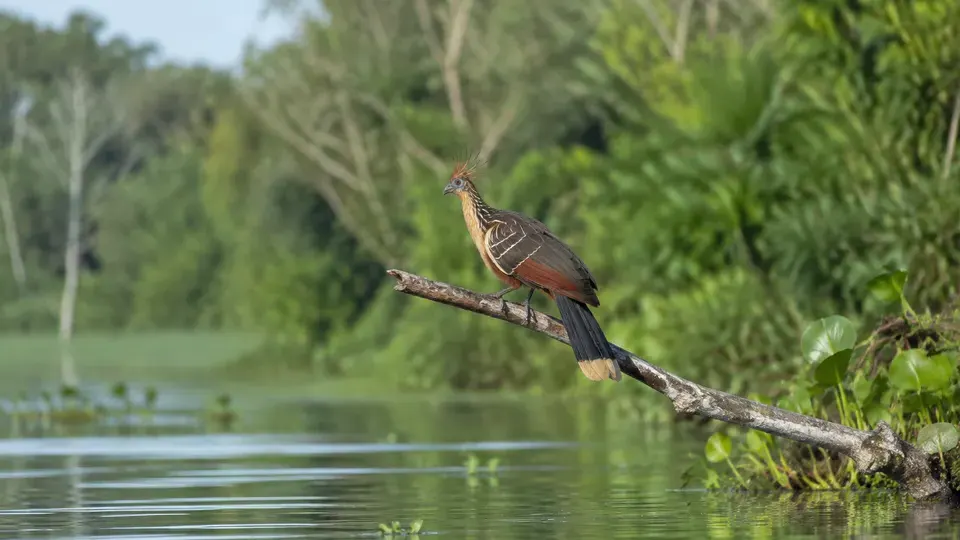
The hoatzin is a distinctive South American river-edge bird with a spiky crest, bare blue facial skin, red eyes and a long tail. Its most remarkable biology is internal: microbes in an enlarged foregut help it digest leafy food. A primary study published in Science documented active foregut fermentation, an exceptional digestive system among birds. For the registered Amazon destination, a March 2017 naturalist cruise provides a particularly useful local record: five hoatzins were seen well in a side channel near the Yarapa River, with additional observations on two other days. This is more precise than a generic claim that hoatzins occur throughout Amazonia. It identifies a Peruvian side-channel context associated with the Iquitos–Nauta itinerary, not a guaranteed main-channel or ship-deck sighting. The additional days were not allocated to named waterways in the species entry. Nothing in that record establishes observations on Brazil's separate Rio Negro–Anavilhanas reach.
Behaviour & reproduction

Size
Approximately 61–66 cm (24–26 in) body length, converted from the university account's 61–66 cm (24–26 in).
Weight
Species-specific weight not verified in the sources read for this draft.
Lifespan
Not verified
Status
See sourced assessment

Hoatzins often remain in riverside vegetation, climbing and moving among branches rather than behaving like fast, sustained aerial hunters. Their social activity can make a small gathering conspicuous through movement and calls, although vegetation may still conceal much of each bird. The university account describes cooperative breeding, with helpers assisting a breeding pair, and nests positioned over water. Young birds have functional wing claws that help them negotiate branches; those juvenile structures should not be treated as proof that the species is a surviving primitive bird. The behaviour is specialised biology, not a reason to seek out chicks. Where a nest is present, an approaching boat can disturb adults or young even if visitors remain on the water. On a Yarapa-area outing, watch naturally visible birds from an existing channel and avoid pushing into their vegetation. General breeding descriptions do not establish a locally verified month when nesting groups should be sought.

Top wildlife locations

Amazon river landscape — River Cruises wildlife habitat

Amazon

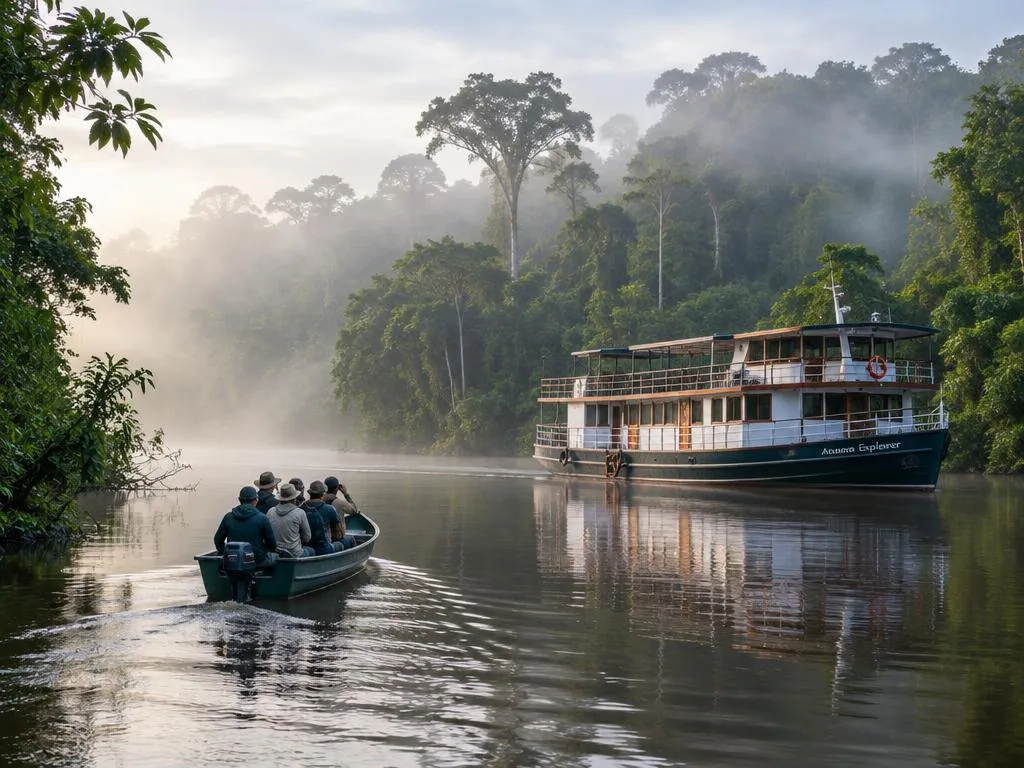
Peru: a side channel near Yarapa River on the registered Iquitos/Nauta and Ucayali-connected cruise itinerary. Five birds were seen well in March 2017; additional observations on two other days were not assigned to named waterways. No Rio Negro–Anavilhanas occurrence is inferred.
Explore river cruises

Destinations describe the species' habitat, not guaranteed cruise stops. Some animals require an optional inland excursion or are found in restricted reserves.

Fun facts about the Hoatzin

  • It has bare blue facial skin and red eyes.
  • A spiky reddish-brown crest gives its head a distinctive outline.
  • Leaves are central to its diet.
  • A primary experimental study documented active foregut fermentation.
  • Microorganisms help break down plant material before it reaches the main stomach.
  • Flowers and fruits are also reported foods.
  • Adults pass digestive microorganisms to young through regurgitated food in the university account.
  • Young birds have functional claws on their wings for climbing.
  • Helpers can assist a breeding pair in the cooperative breeding system described by the university account.

Best time to see the Hoatzin

A dated local observation exists for March 2017: the cruise species list reports five birds seen well in a side channel near Yarapa River and additional sightings on two other days. This supports March occurrence on that voyage, not a recurring March peak or a comparison with other months. No validated local viewing calendar was established for Yarapa, other Iquitos-area tributaries or the separate Rio Negro–Anavilhanas reach, so months remains empty. The university account links breeding generally with rainy conditions in the birds' territory, but that statement cannot be converted into an Iquitos nesting calendar without local evidence. BirdLife's non-migrant classification likewise does not prove constant visitor visibility at a particular channel. Ask a local naturalist about recent sightings, accessible vegetated margins and whether the planned outing avoids active nests. River navigability and comfortable travel weather are separate planning considerations, not substitutes for hoatzin-specific evidence about seasonal viewing.

Hoatzin: season matrix by destination

Highlighted months reflect the stated local evidence, not guaranteed encounters. Neutral months mean no verified monthly viewing window, not absence. Observation records and recommended viewing windows are distinct.

Amazon

March 2017 is a validated historical observation month, not a validated recurring local viewing season.

JanFebMarAprMayJunJulAugSepOctNovDec
Explore river cruises

Where the Hoatzin lives

Hoatzins are associated with swamps, freshwater marshes, gallery forest and vegetated banks of rivers, lakes and streams. Leaf-bearing shrubs and low branches beside water provide both food and places to rest, making the structure of the margin more important than the width of the river. The locally specific registry passage places five birds in a side channel near the Yarapa River during the March 2017 Peruvian cruise. It does not name the side channel or establish the entire Yarapa as an equally reliable site. Additional sightings on two days show that the observation was not the voyage's only encounter, but their locations remain unspecified. The wider itinerary includes other Ucayali-connected waterways; these should not all be relabelled as confirmed hoatzin sites. Likewise, the separate Rio Negro–Anavilhanas destination reach cannot inherit this evidence. Suitable habitat may be present elsewhere, but habitat plausibility and an actual documented occurrence are different claims.

What the Hoatzin eats

Leaves form the core of the hoatzin's diet, with flowers and fruits also reported in the university account. Digesting foliage is difficult because plant cell walls resist ordinary digestive enzymes. The hoatzin addresses that problem through microbial fermentation in an enlarged foregut, a mechanism documented experimentally in the 1989 Science study. This is not the same as a cow's complete digestive anatomy, so comparisons with ruminants should remain explanatory rather than literal. The university account also describes adults passing microorganisms to young through regurgitated food. These feeding adaptations explain why riverside leaf-bearing vegetation is important, but they do not identify the exact plant species eaten by birds near Yarapa on the recorded trip. Do not offer leaves or fruit, cut branches for a closer feeding view or encourage a guide to bait a group. Observing birds selecting foliage naturally provides a more meaningful encounter than attempting to recreate a digestive demonstration in the wild.

Species at a glance

Common name
Hoatzin
Scientific name
Opisthocomus hoazin
Animal group
Birds
Size
Approximately 61–66 cm (24–26 in) body length, converted from the university account's 61–66 cm (24–26 in).
Weight
Species-specific weight not verified in the sources read for this draft.
Lifespan
Species-specific wild or captive lifespan not verified in the sources read for this draft.
Status
Least Concern in BirdLife International's 2024 assessment, with a decreasing population trend. A broad global range does not mean that every local riverside population is secure.
Identification
An adult hoatzin shows a narrow, spiky reddish-brown crest, bare blue skin around red eyes and a long tail accompanying a predominantly brown body. Pale edging and contrasting tones on the wings and underparts help when the bird is partly concealed, but the combination of crest, face and overall shape is more useful than any single feather colour. The university account describes a bronze-green tail ending in a pale band. Do not rely on smell as a field-identification requirement or approach a bird to investigate it. The famous wing claws concern young birds and are not a normal adult identification feature visible from a cruise boat. A distant silhouette may resemble another large branch-perching bird, so wait for a facial or body-pattern view before confirming the record. The March 2017 source explicitly reports five seen well near Yarapa; that historical confidence should not be copied onto a present-day uncertain glimpse.

Hoatzin: frequently asked questions

Where can I see the Hoatzin?
Amazon. Scan low riverside branches and dense bank vegetation for a long-tailed bird with an untidy crest and a bright bare face. Several birds may occupy the same patch, so pause quietly before deciding that a partially hidden movement belongs to only one individual. The recorded Yarapa encounter was in a side channel, supporting a guided small-boat context rather than an expectation of distant main-river views. Use binoculars or a long lens and remain within the existing navigable channel. Do not push branches aside with the boat, use playback, offer food or approach a nest to look for clawed chicks. An animal's unusual biology is not a justification for intrusive viewing. If birds stop normal feeding or retreat deeper into cover as the boat advances, back away rather than attempting another angle. A partial but undisturbed view is preferable to flushing the group, and observations should retain the actual place and date rather than being generalised to the whole Amazon.
When is the best time to see the Hoatzin?
A dated local observation exists for March 2017: the cruise species list reports five birds seen well in a side channel near Yarapa River and additional sightings on two other days. This supports March occurrence on that voyage, not a recurring March peak or a comparison with other months. No validated local viewing calendar was established for Yarapa, other Iquitos-area tributaries or the separate Rio Negro–Anavilhanas reach, so months remains empty. The university account links breeding generally with rainy conditions in the birds' territory, but that statement cannot be converted into an Iquitos nesting calendar without local evidence. BirdLife's non-migrant classification likewise does not prove constant visitor visibility at a particular channel. Ask a local naturalist about recent sightings, accessible vegetated margins and whether the planned outing avoids active nests. River navigability and comfortable travel weather are separate planning considerations, not substitutes for hoatzin-specific evidence about seasonal viewing.
How big does the Hoatzin get?
Approximately 61–66 cm (24–26 in) body length, converted from the university account's 61–66 cm (24–26 in).. Adult weight: Species-specific weight not verified in the sources read for this draft.. Size varies with age, sex and population.
How should I behave around the Hoatzin?
Scan low riverside branches and dense bank vegetation for a long-tailed bird with an untidy crest and a bright bare face. Several birds may occupy the same patch, so pause quietly before deciding that a partially hidden movement belongs to only one individual. The recorded Yarapa encounter was in a side channel, supporting a guided small-boat context rather than an expectation of distant main-river views. Use binoculars or a long lens and remain within the existing navigable channel. Do not push branches aside with the boat, use playback, offer food or approach a nest to look for clawed chicks. An animal's unusual biology is not a justification for intrusive viewing. If birds stop normal feeding or retreat deeper into cover as the boat advances, back away rather than attempting another angle. A partial but undisturbed view is preferable to flushing the group, and observations should retain the actual place and date rather than being generalised to the whole Amazon.
What does the Hoatzin eat?
Leaves form the core of the hoatzin's diet, with flowers and fruits also reported in the university account. Digesting foliage is difficult because plant cell walls resist ordinary digestive enzymes. The hoatzin addresses that problem through microbial fermentation in an enlarged foregut, a mechanism documented experimentally in the 1989 Science study. This is not the same as a cow's complete digestive anatomy, so comparisons with ruminants should remain explanatory rather than literal. The university account also describes adults passing microorganisms to young through regurgitated food. These feeding adaptations explain why riverside leaf-bearing vegetation is important, but they do not identify the exact plant species eaten by birds near Yarapa on the recorded trip. Do not offer leaves or fruit, cut branches for a closer feeding view or encourage a guide to bait a group. Observing birds selecting foliage naturally provides a more meaningful encounter than attempting to recreate a digestive demonstration in the wild.
Are wildlife sightings guaranteed on a river cruise?
No. Animals move freely and routes, weather, access restrictions and local conditions influence every outing. Confirm the actual itinerary and shore program before booking.

Compare wildlife in the same destinations

Explore other birds recorded in these destinations. Similar surroundings do not mean the animals share the same habits or viewing season.

Species comparison by animal group and destination
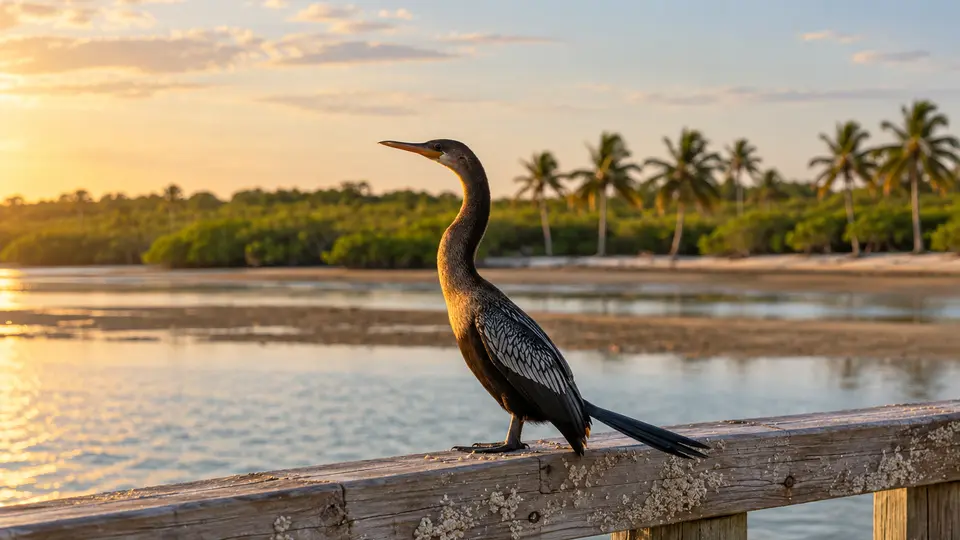
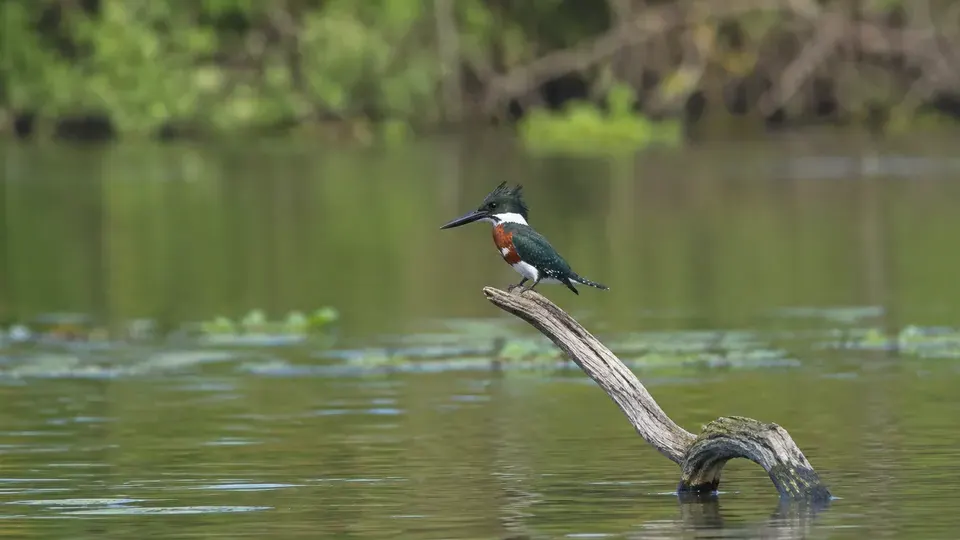
Hoatzin in wetland habitat — Amazon, River Cruises wildlifeHoatzinAmazon kingfisher in wetland habitat — Amazon, River Cruises wildlifeAmazon KingfisherAnhinga in wetland habitat — Amazon, River Cruises wildlifeAnhinga
Animal groupBirdsAnimal groupBirdsAnimal groupBirds
DestinationsAmazonDestinationsAmazonDestinationsAmazon
Scientific name
Opisthocomus hoazin
Scientific name
Scientific name
Previous speciesGreylag GooseNext speciesHooded Merganser
All river wildlife
On this page
  • 01About
  • 02Behaviour & reproduction
  • 03Top wildlife locations
  • 04Fun facts
  • 05Best season
  • 06Season matrix by destination
  • 07Habitat
  • 08Diet
  • 09Species at a glance
  • 10Questions & answers
  • 11Compare

Find your river cruise

Plan your trip

Find your next river journey

Compare destinations, shore programs and dates with the animals and habitats you would love to see.

  • Daily shore excursions
  • Responsible wildlife watching
  • Boutique river ships
Explore river cruises