Bluerides – Blue Rides - Book Liveaboards worldwideOCEAN ADVENTURES
River CruisesRiversNature & WildlifeOur Promise
River CruisesRiversNature & WildlifeOur PromiseSign In

River destinations

  • River destinations
  • Amazon
  • Danube
  • Rhine
  • Mekong
  • Nile

Ships & departures

  • River Cruise Search
  • Deals

Nature & Wildlife

  • Nature & Wildlife

Travel support

  • Our Promise
  • Contact

Contact

Get in Touch

Get in touch anytime, we're happy to help you find the right trip or sort out any question.

EmailWrite us, we usually reply within a few hours.
contact@bluerides.com
WhatsAppChat with us on WhatsApp, Mon–Fri 10:00–16:00 (CET).
Start WhatsApp Chat
PhoneCall us, we're happy to help.
Free call, Mon–Fri 10 AM – 8 PM (CET).
Europe+49 800 1144 990USA+1 888 557 7735UK+44 800 707 4152Australia+61 2 8599 6113Canada+1 888 557 7735
Which river journey is yours?Answer 8 quick questions and find the river cruise that fits you.
8 questions, 1 minute·Plus Gift
Secure Payment MethodsYour payments are fully secured with AES-256 encryption.
Powered byStripeWiseAMEXPayGoogle PaySEPABank
Imprint·Terms & Conditions·Privacy Policy·About·Contact·Liability Waiver·Affiliate Program·Cruise·Blog·
Visit us here

© 2026 Blue Rides. All rights reserved.

Bluerides – Blue Rides - Book Liveaboards worldwideOCEAN ADVENTURES
River CruisesRiversNature & WildlifeOur Promise
River CruisesRiversNature & WildlifeOur PromiseSign In
Greylag goose in wetland habitat — Rhine, Seine, River Cruises wildlifeAI-modified
Home›River Cruises›River Wildlife›Greylag Goose

Greylag GooseAnser anserWhere and when to see them

Previous speciesGrey WagtailNext speciesHoatzin

Greylag Goose at a glance

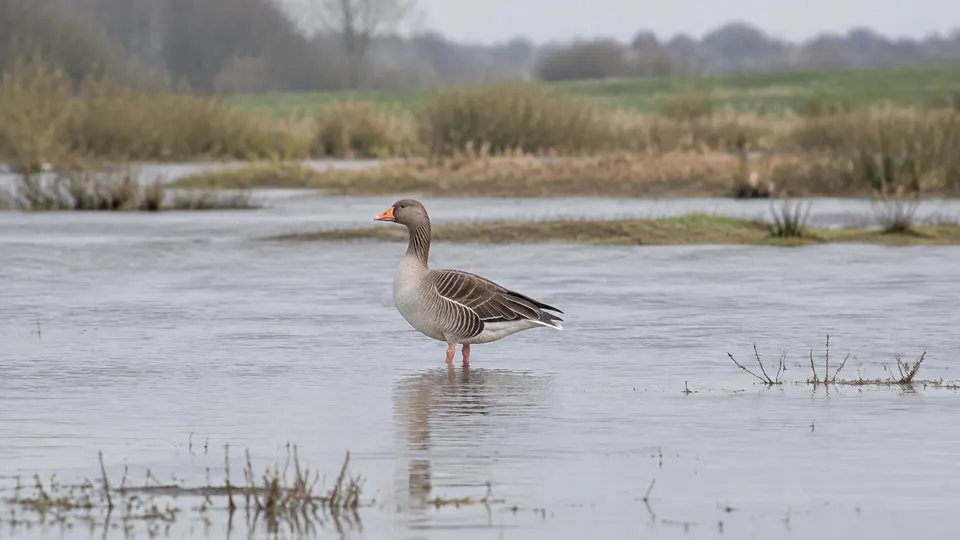
The Greylag Goose is a large, heavy-bodied goose with a conspicuous pale orange bill and a close historical connection to domestic geese. RSPB identifies it as the ancestor of most domestic geese, an important reason why familiar park birds and genuinely wild populations can be difficult to separate by general appearance. Its two registered cruise settings are not equivalent: Bislicher Insel on the Lower Rhine is an optional oxbow-wetland excursion near Xanten and Wesel, whereas the Lower Seine entry concerns estuarine reedbeds, freshwater marshes and wet meadows in the Rouen–Honfleur sector. The species' ability to use modified landscapes does not establish that every flock has the same origin or migration pattern. Observe the birds as wildlife without assuming a flock's history from how readily it tolerates people. Species account: https://www.bto.org/learn/about-birds/birdfacts/greylag-goose
Behaviour & reproduction

Size
not verified
Weight
About 3.3 kg (7.3 lb); BTO species account.
Lifespan
not verified
Status
Least Concern globally, as reported by BTO.

Greylags feed and rest in groups, but the meaning of a flock depends on its context. Birds on open water may be resting, while those on adjacent grassy ground can be actively grazing. Family relationships and pair associations can be visible within a larger gathering, although a short visitor observation rarely establishes a group's full history. BTO describes resident and wintering populations in Britain and Ireland and warns that native and naturalised birds may now be impossible to separate there. That is a useful caution, not evidence that the same population structure applies at Bislicher Insel or the Seine estuary. Avoid approaching until heads rise throughout the group: coordinated vigilance is a sign that the visitor is influencing behaviour. Give feeding flocks enough space to continue moving normally.

Top wildlife locations

Rhine river landscape — River Cruises wildlife habitatAI-modified

Rhine

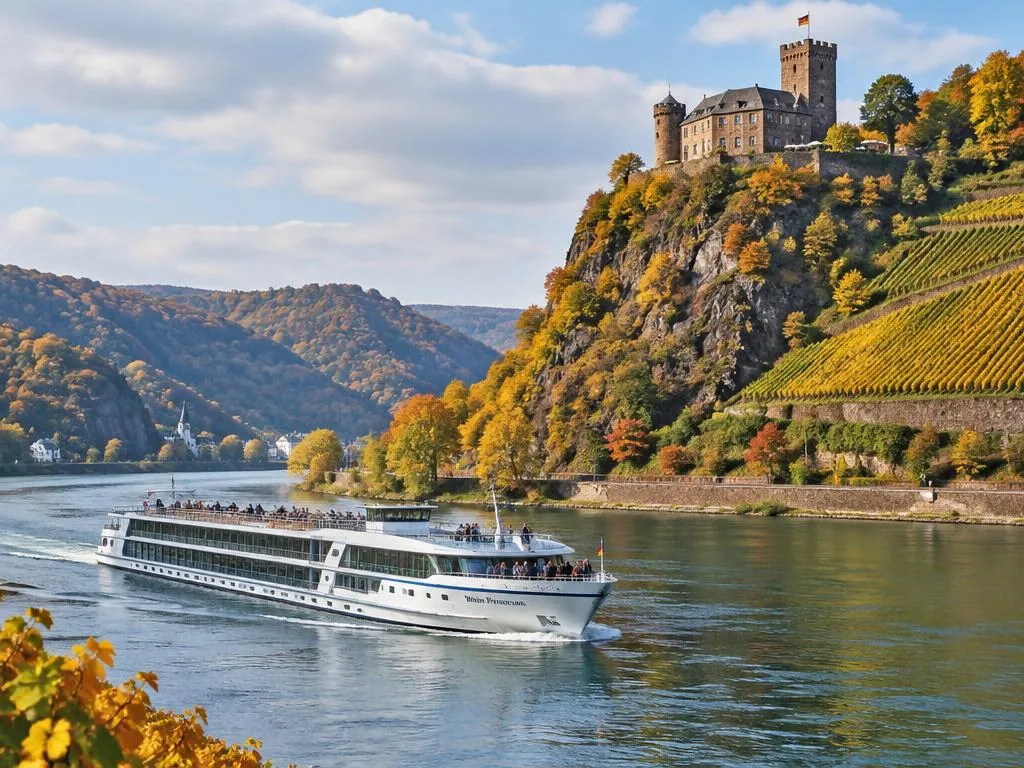
Lower Rhine: Bislicher Insel at Xanten/Wesel downstream of Cologne; optional oxbow wetland excursion. Year-round; shore paths and hides.

Explore river cruises
Seine river landscape — River Cruises wildlife habitatAI-modified

Seine

Lower Seine ZPS Estuaire et marais de la Basse-Seine; reedbeds and freshwater marshes toward the estuary, Rouen–Honfleur sector. Shore excursion; no precise main-channel station established. Winter; wet meadows/open water. Public viewpoints only; monitoring evidence 2015–2018.

Explore river cruises

Destinations describe the species' habitat, not guaranteed cruise stops. Some animals require an optional inland excursion or are found in restricted reserves.

Fun facts about the Greylag Goose

  • It is the ancestor of most domestic geese.
  • BTO reports a typical weight near 3.3 kg (7.3 lb).
  • Wild and naturalised populations can be hard to distinguish.
  • Water provides resting habitat as well as feeding edges.
  • Bislicher Insel is an oxbow excursion site.
  • The Seine registry describes winter use.
  • A flock’s tameness does not establish its origin.

Best time to see the Greylag Goose

The Rhine registry describes year-round possibilities at Bislicher Insel; the Seine entry describes winter use supported by monitoring from 2015–2018. Neither statement, by itself, provides an original recurring local source with an explicit numbered month range retrieved for this profile. Both month arrays therefore remain empty. British wintering movements in BTO's account cannot be transferred to these continental sites, and domestic ancestry does not establish residency for an individual flock. For a visit, ask the wetland manager about current flock locations, public-hide access and any disturbance closures. Keep the distinction between a qualitative winter recommendation for the Seine and a validated monthly matrix. The profile can preserve that useful seasonal lead without manufacturing start and end months from the ordinary meaning of winter.

Greylag Goose: season matrix by destination

Highlighted months reflect the stated local evidence, not guaranteed encounters. Neutral months mean no verified monthly viewing window, not absence. Observation records and recommended viewing windows are distinct.

Rhine

A recurring local source with an explicit monthly observation calendar was not verified. Registry guidance: Year-round; shore paths and hides.

JanFebMarAprMayJunJulAugSepOctNovDec
Explore river cruises

Seine

A recurring local source with an explicit monthly observation calendar was not verified. Registry guidance: Winter; wet meadows/open water. Public viewpoints only; monitoring evidence 2015–2018.

JanFebMarAprMayJunJulAugSepOctNovDec
Explore river cruises

Where the Greylag Goose lives

Water and nearby feeding ground form the relevant habitat combination, with oxbows, lakes, marshes and wet grassland all potentially useful. At Bislicher Insel, the registry points specifically to an oxbow wetland downstream of Cologne. Visitors should use shore paths and hides rather than interpreting the Rhine shipping channel as the principal viewing habitat. The Seine association is broader geographically but still restricted to the Lower Seine protected marsh and estuary landscape. It does not identify a precise main-channel station, and a dedicated shore excursion may be necessary. Seasonal flooding, vegetation management and the distribution of undisturbed resting water can affect which parts of a wetland are used. No local habitat-use percentages were verified, so the profile does not rank individual fields or islands by presumed abundance.

What the Greylag Goose eats

Greylag Geese are principally plant feeders, grazing vegetation and taking other plant material according to availability. Watching the repeated cropping action on short grass provides a clearer picture of their feeding than watching a resting group on water. A detailed food study for the registered Rhine or Lower Seine reaches was not retrieved, and no proportions of grass, crop material or aquatic plants are claimed here. Their association with human-managed landscapes should not be used as a reason to offer bread or other visitor food. Artificial feeding can gather birds unnaturally and makes it harder to interpret normal movements between feeding and resting areas. Keep enough distance to let the flock choose its own route, especially when birds are walking between a grassy margin and a refuge on the water.

Species at a glance

Common name
Greylag Goose
Scientific name
Anser anser
Animal group
Birds
Size
not verified
Weight
About 3.3 kg (7.3 lb); BTO species account.
Lifespan
not verified
Status
Least Concern globally, as reported by BTO.
Identification
The Greylag is a bulky grey-brown goose with a heavy pale orange bill, pale underparts and conspicuously pale areas in the wings during flight. Its broad proportions separate it from many smaller dark geese, but mixed flocks still require careful comparison of head and bill patterns. Domestic descendants can vary widely and may complicate an apparently simple identification. A clean side view of the head and a broader view of the body are more useful than judging size without nearby reference birds. Young birds and poor light can reduce the apparent clarity of markings. The BTO weight of about 3.3 kg (7.3 lb) is a species summary, not something measurable from a distant image. If ancestry or hybridisation is uncertain, avoid adding a confident population label to an otherwise reasonable species identification.

Greylag Goose: frequently asked questions

Where can I see the Greylag Goose?
Rhine, Seine. Scan open water for resting groups, then inspect nearby grassland from a public path or hide. A telescope can help separate a Greylag from other geese without forcing the flock to move. Note bill colour, head shape and the overall grey-brown pattern, but also consider whether unusually white or heavy birds show domestic influence. Do not approach goslings or position yourself between birds and their route to water. At Bislicher Insel, follow the excursion's authorised paths; at the Lower Seine, obtain current guidance about accessible wetland viewpoints rather than assuming the entire marsh is open. A bird allowing a close approach is not proof of domestic origin, just as a wary flock is not proof of a particular migratory population. Record what can actually be observed.
When is the best time to see the Greylag Goose?
The Rhine registry describes year-round possibilities at Bislicher Insel; the Seine entry describes winter use supported by monitoring from 2015–2018. Neither statement, by itself, provides an original recurring local source with an explicit numbered month range retrieved for this profile. Both month arrays therefore remain empty. British wintering movements in BTO's account cannot be transferred to these continental sites, and domestic ancestry does not establish residency for an individual flock. For a visit, ask the wetland manager about current flock locations, public-hide access and any disturbance closures. Keep the distinction between a qualitative winter recommendation for the Seine and a validated monthly matrix. The profile can preserve that useful seasonal lead without manufacturing start and end months from the ordinary meaning of winter.
How big does the Greylag Goose get?
not verified. Adult weight: About 3.3 kg (7.3 lb); BTO species account.. Size varies with age, sex and population.
How should I behave around the Greylag Goose?
Scan open water for resting groups, then inspect nearby grassland from a public path or hide. A telescope can help separate a Greylag from other geese without forcing the flock to move. Note bill colour, head shape and the overall grey-brown pattern, but also consider whether unusually white or heavy birds show domestic influence. Do not approach goslings or position yourself between birds and their route to water. At Bislicher Insel, follow the excursion's authorised paths; at the Lower Seine, obtain current guidance about accessible wetland viewpoints rather than assuming the entire marsh is open. A bird allowing a close approach is not proof of domestic origin, just as a wary flock is not proof of a particular migratory population. Record what can actually be observed.
What does the Greylag Goose eat?
Greylag Geese are principally plant feeders, grazing vegetation and taking other plant material according to availability. Watching the repeated cropping action on short grass provides a clearer picture of their feeding than watching a resting group on water. A detailed food study for the registered Rhine or Lower Seine reaches was not retrieved, and no proportions of grass, crop material or aquatic plants are claimed here. Their association with human-managed landscapes should not be used as a reason to offer bread or other visitor food. Artificial feeding can gather birds unnaturally and makes it harder to interpret normal movements between feeding and resting areas. Keep enough distance to let the flock choose its own route, especially when birds are walking between a grassy margin and a refuge on the water.
Are wildlife sightings guaranteed on a river cruise?
No. Animals move freely and routes, weather, access restrictions and local conditions influence every outing. Confirm the actual itinerary and shore program before booking.

Compare wildlife in the same destinations

Explore other birds recorded in these destinations. Similar surroundings do not mean the animals share the same habits or viewing season.

Species comparison by animal group and destination
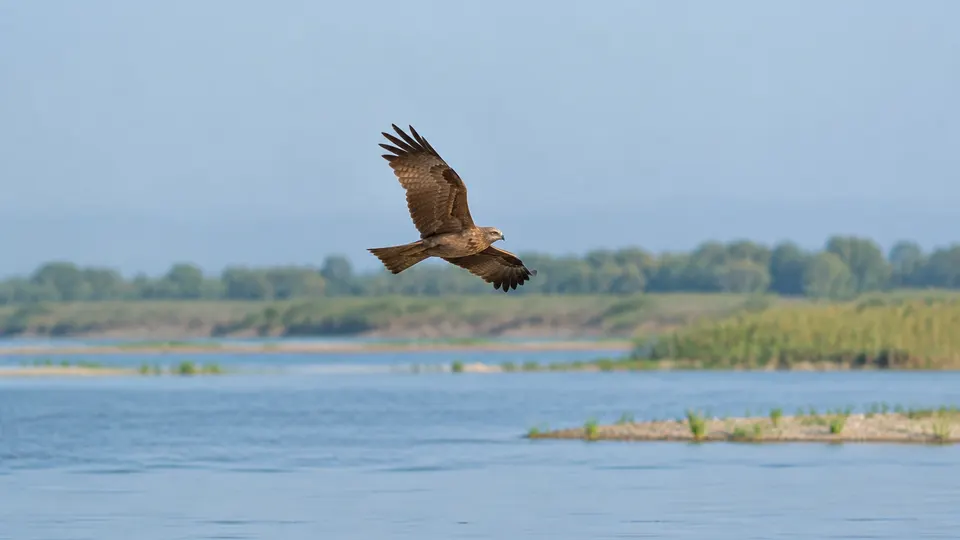
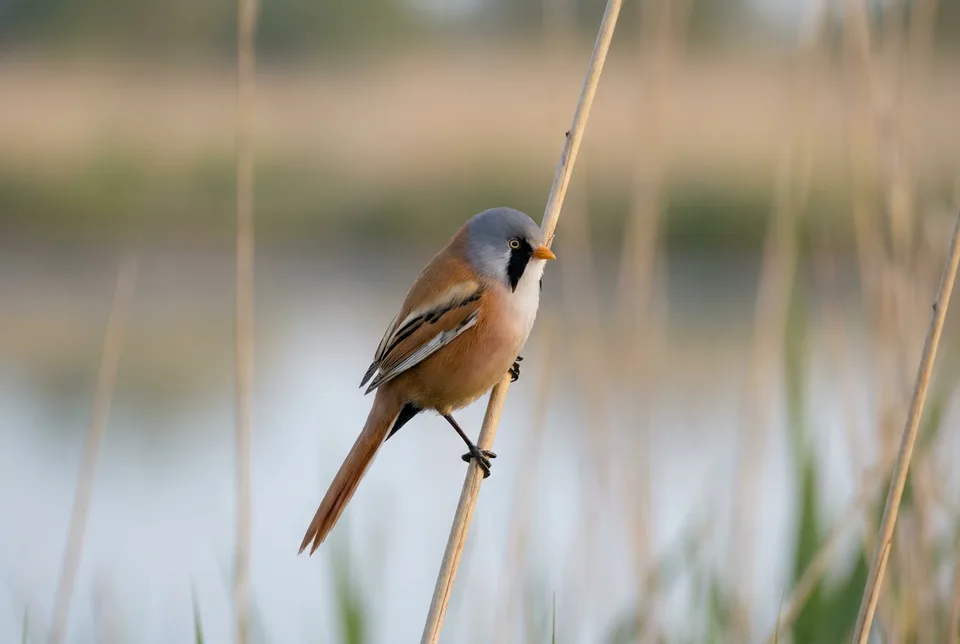
Greylag goose in wetland habitat — Rhine, Seine, River Cruises wildlifeAI-modifiedGreylag GooseBearded Reedling in wetland habitat — Seine, River Cruises wildlifeAI-modifiedBearded ReedlingBlack kite in wetland habitat — Danube, Rhine, River Cruises wildlifeAI-modifiedBlack Kite
Animal groupBirdsAnimal groupBirdsAnimal groupBirds
DestinationsRhine, SeineDestinationsSeineDestinationsDanube, Rhine
Scientific name
Anser anser
Scientific name
Scientific name
Previous speciesGrey WagtailNext speciesHoatzin
All river wildlife
On this page
  • 01About
  • 02Behaviour & reproduction
  • 03Top wildlife locations
  • 04Fun facts
  • 05Best season
  • 06Season matrix by destination
  • 07Habitat
  • 08Diet
  • 09Species at a glance
  • 10Questions & answers
  • 11Compare

Find your river cruise

AI-modified
Plan your trip

Find your next river journey

Compare destinations, shore programs and dates with the animals and habitats you would love to see.

  • Daily shore excursions
  • Responsible wildlife watching
  • Boutique river ships
Explore river cruises