Bluerides – Blue Rides - Book Liveaboards worldwideOCEAN ADVENTURES
River CruisesRiversNature & WildlifeOur Promise
River CruisesRiversNature & WildlifeOur PromiseSign In

River destinations

  • River destinations
  • Amazon
  • Danube
  • Rhine
  • Mekong
  • Nile

Ships & departures

  • River Cruise Search
  • Deals

Nature & Wildlife

  • Nature & Wildlife

Travel support

  • Our Promise
  • Contact

Contact

Get in Touch

Get in touch anytime, we're happy to help you find the right trip or sort out any question.

EmailWrite us, we usually reply within a few hours.
contact@bluerides.com
WhatsAppChat with us on WhatsApp, Mon–Fri 10:00–16:00 (CET).
Start WhatsApp Chat
PhoneCall us, we're happy to help.
Free call, Mon–Fri 10 AM – 8 PM (CET).
Europe+49 800 1144 990USA+1 888 557 7735UK+44 800 707 4152Australia+61 2 8599 6113Canada+1 888 557 7735
Which river journey is yours?Answer 8 quick questions and find the river cruise that fits you.
8 questions, 1 minute·Plus Gift
Secure Payment MethodsYour payments are fully secured with AES-256 encryption.
Powered byStripeWiseAMEXPayGoogle PaySEPABank
Imprint·Terms & Conditions·Privacy Policy·About·Contact·Liability Waiver·Affiliate Program·Cruise·Blog·
Visit us here

© 2026 Blue Rides. All rights reserved.

Bluerides – Blue Rides - Book Liveaboards worldwideOCEAN ADVENTURES
River CruisesRiversNature & WildlifeOur Promise
River CruisesRiversNature & WildlifeOur PromiseSign In
Black-winged Kite in wetland habitat — Mekong, River Cruises wildlifeAI-modified
Home›River Cruises›River Wildlife›Black-winged Kite

Black-winged KiteElanus caeruleusWhere and when to see them

Previous speciesBlack-tailed GodwitNext speciesBlack-winged Stilt

Black-winged Kite at a glance

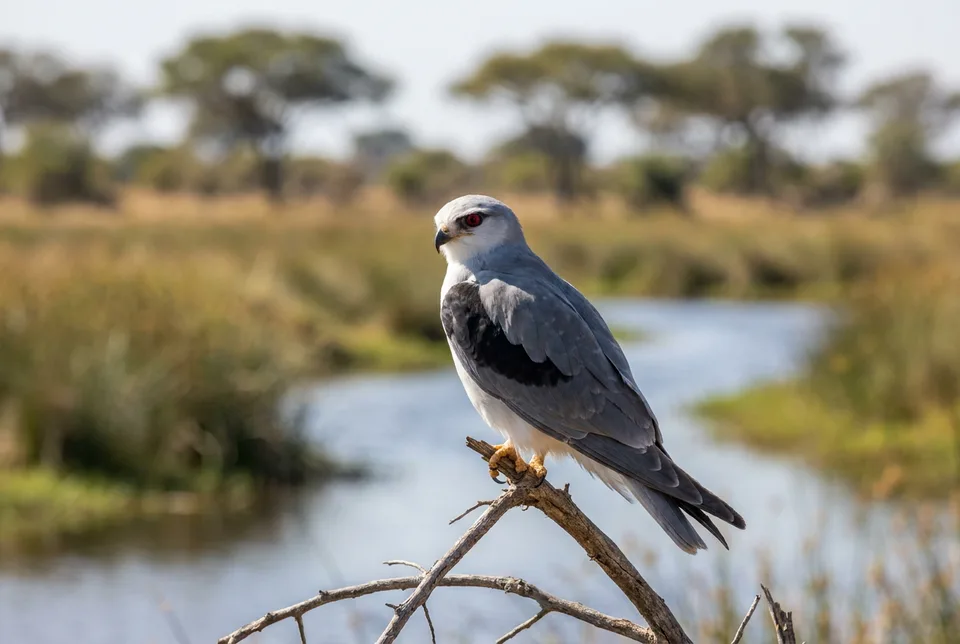
The Black-winged Kite is a small, pale raptor with blue-grey upperparts and conspicuous black shoulder patches. Its combination of hovering and buoyant flight can suggest a kestrel or harrier, but the colour pattern and compact form are distinctive when seen well. The registered Mekong association is Tra Su flooded forest near Chau Doc in Vietnam, not the entire main river or every delta sailing. An official An Giang forestry checklist published in 2016 lists Diều trắng under the English name Black-shouldered Kite. In this geographical context the registry identifies that entry as Elanus caeruleus. The older common name requires care because Australian Black-shouldered Kite is a different species, Elanus axillaris. The profile therefore uses species-matched identification evidence and does not borrow Australian measurements, mouse-plague ecology or seasonal advice. Current presence at Tra Su still requires local confirmation.

Behaviour & reproduction

Size
Not independently verified for this draft
Weight
Not independently verified for this draft
Lifespan
Not independently verified for this draft
Status
See sourced assessment

Cornell’s eBird account describes varied flight: hovering reminiscent of a kestrel and gliding reminiscent of a harrier, with raised wings and deep wingbeats. These comparisons are useful field cues, but neither behaviour alone proves identification because other raptors can hover or glide. Exposed perches are also important; a stationary pale bird overlooking open ground may be easier to study than one moving overhead. Hunting activity belongs primarily to the open parts of the landscape rather than dense interior foliage. At Tra Su, the available checklist does not describe individual territories, nesting locations, communal roosts or daily activity schedules. Those details should not be supplied from another country. Observe changes between perching, searching flight and hovering without trying to provoke take-off. The fact that a kite is listed at a flooded-forest station does not mean visitors should expect it deep inside the forest or beside every boat route.

Top wildlife locations

Mekong river landscape — River Cruises wildlife habitatAI-modified

Mekong

Tra Su flooded-forest landscape near Chau Doc; optional shore excursion, not main-channel deck wildlife.
Explore river cruises

Destinations describe the species' habitat, not guaranteed cruise stops. Some animals require an optional inland excursion or are found in restricted reserves.

Fun facts about the Black-winged Kite

  • Its black shoulder patches contrast with otherwise pale plumage.
  • Adults have blue-grey upperparts.
  • It can hover while searching for prey.
  • It also glides with raised wings.
  • Exposed perches are useful places to search.
  • Juveniles can have a scaly back and brownish breast wash.
  • The Tra Su source uses the older English name Black-shouldered Kite.
  • Australian Elanus axillaris is a different species.
  • The checklist publication date does not establish an April viewing season.

Best time to see the Black-winged Kite

The official Tra Su bird list is dated 28 April 2016 and attributes its records to a BirdLife/IEBR survey team. It does not provide the observation dates or a month-by-month pattern for the kite. April is therefore a publication month, not a verified viewing month. BirdLife’s species factsheet describes the species as not a migrant, but this broad classification does not demonstrate continuous occupancy or equal visibility at Tra Su. Local movements, prey availability and the exact habitat used remain unresolved by the checklist. The location months array stays empty. General tourism descriptions of the Mekong flooding season, rice harvests or attractive forest conditions are not substituted for species-specific evidence. Before visiting, ask a Tra Su guide whether the kite has been seen recently and which authorised open viewpoint offers the best chance. Treat the answer as current local advice rather than a permanent calendar for future departures.

Black-winged Kite: season matrix by destination

Highlighted months reflect the stated local evidence, not guaranteed encounters. Neutral months mean no verified monthly viewing window, not absence. Observation records and recommended viewing windows are distinct.

Mekong

Official checklist published 28 April 2016; survey observation months and recurring local season unspecified.

JanFebMarAprMayJunJulAugSepOctNovDec
Explore river cruises

Where the Black-winged Kite lives

The Black-winged Kite uses open landscapes with scattered woody vegetation, including agricultural land, savannah and other lightly wooded settings. This broad description, supported by eBird, helps interpret the Tra Su record: a flooded-forest destination can contain or adjoin open habitats suitable for a hunting raptor. The bird need not be a specialist of the closed melaleuca interior. The registered reach is the Tra Su excursion area near Chau Doc, and the source is a station checklist rather than a mapped observation point. It therefore cannot establish whether the listed bird was over surrounding fields, on an exposed perch or above a particular visitor channel. Scan legal open viewpoints and landscape edges as well as the forest skyline. Do not extend the association to every Mekong rice field or main-channel deck view. Current land use, vegetation and access should be checked with the local guide before planning a targeted observation.

What the Black-winged Kite eats

Black-winged Kites are predators of small animals, with small mammals important in their general ecology. Their hunting equipment and behaviour suit watching open ground from a perch or searching above it before descending on prey. A hovering bird may be inspecting a potential target rather than preparing an immediate strike, so patient observation can reveal a sequence of searching, repositioning and landing. No Tra Su-specific prey study was verified in this research. The profile consequently does not quantify rodent consumption, name a local dominant prey species or claim a predictable response to rice harvests. In particular, the Australian Museum account for Elanus axillaris must not be used to assign Australian House Mouse specialisation to Elanus caeruleus in Vietnam. Never place rodents, meat or other bait to attract the kite. A natural hunting attempt, even at a distance, is more informative than behaviour manufactured for a close photograph.

Species at a glance

Common name
Black-winged Kite
Scientific name
Elanus caeruleus
Animal group
Birds
Size
Not independently verified for this draft
Weight
Not independently verified for this draft
Lifespan
Not independently verified for this draft
Status
Least Concern in the BirdLife factsheet reviewed, which identifies a 2019 assessment and stable population trend.
Identification
Adults are pale below and blue-grey above, with strong black shoulder patches formed by the wing coverts. Cornell’s eBird description calls the bird small and falconlike and notes its combination of hovering, raised-wing gliding and deep wingbeats. Juveniles have a scaly-looking back and a brownish wash across the breast, so they may not match a clean adult illustration. Flight style should support, not replace, the plumage assessment. White or pale raptors seen at distance can be difficult to judge against glare, and a momentary hovering silhouette is insufficient by itself. The common-name issue is especially important: the Tra Su list uses Black-shouldered Kite, whereas modern species-matched material identifies the regional bird as Black-winged Kite, Elanus caeruleus. Australian Elanus axillaris is separate. Keep scientific names attached to research notes so that measurements, photographs and ecology from the Australian species are not inadvertently imported into this profile.

Black-winged Kite: frequently asked questions

Where can I see the Black-winged Kite?
Mekong. Scan exposed perches and the skyline above open ground during the authorised Tra Su excursion. A pale raptor can disappear against bright sky, so good light direction and a stable binocular view matter more than approaching quickly. If the bird hovers, use the pause to examine the black shoulder patches and pale body rather than identifying it from the hovering behaviour alone. Juveniles may look less cleanly patterned than adults, making multiple features necessary. Ask the guide where the station checklist’s habitat context is best represented today, but do not expect a permanent stakeout from a source published years earlier. Stay on approved routes and avoid entering cultivated land or nesting areas. Do not imitate prey, supply bait or pursue a perched bird until it flies. The registered evidence supports a Tra Su landscape opportunity, not a promise that the kite will appear during the forest boat ride or beside the main cruise vessel.
When is the best time to see the Black-winged Kite?
The official Tra Su bird list is dated 28 April 2016 and attributes its records to a BirdLife/IEBR survey team. It does not provide the observation dates or a month-by-month pattern for the kite. April is therefore a publication month, not a verified viewing month. BirdLife’s species factsheet describes the species as not a migrant, but this broad classification does not demonstrate continuous occupancy or equal visibility at Tra Su. Local movements, prey availability and the exact habitat used remain unresolved by the checklist. The location months array stays empty. General tourism descriptions of the Mekong flooding season, rice harvests or attractive forest conditions are not substituted for species-specific evidence. Before visiting, ask a Tra Su guide whether the kite has been seen recently and which authorised open viewpoint offers the best chance. Treat the answer as current local advice rather than a permanent calendar for future departures.
How big does the Black-winged Kite get?
Not independently verified for this draft. Adult weight: Not independently verified for this draft. Size varies with age, sex and population.
How should I behave around the Black-winged Kite?
Scan exposed perches and the skyline above open ground during the authorised Tra Su excursion. A pale raptor can disappear against bright sky, so good light direction and a stable binocular view matter more than approaching quickly. If the bird hovers, use the pause to examine the black shoulder patches and pale body rather than identifying it from the hovering behaviour alone. Juveniles may look less cleanly patterned than adults, making multiple features necessary. Ask the guide where the station checklist’s habitat context is best represented today, but do not expect a permanent stakeout from a source published years earlier. Stay on approved routes and avoid entering cultivated land or nesting areas. Do not imitate prey, supply bait or pursue a perched bird until it flies. The registered evidence supports a Tra Su landscape opportunity, not a promise that the kite will appear during the forest boat ride or beside the main cruise vessel.
What does the Black-winged Kite eat?
Black-winged Kites are predators of small animals, with small mammals important in their general ecology. Their hunting equipment and behaviour suit watching open ground from a perch or searching above it before descending on prey. A hovering bird may be inspecting a potential target rather than preparing an immediate strike, so patient observation can reveal a sequence of searching, repositioning and landing. No Tra Su-specific prey study was verified in this research. The profile consequently does not quantify rodent consumption, name a local dominant prey species or claim a predictable response to rice harvests. In particular, the Australian Museum account for Elanus axillaris must not be used to assign Australian House Mouse specialisation to Elanus caeruleus in Vietnam. Never place rodents, meat or other bait to attract the kite. A natural hunting attempt, even at a distance, is more informative than behaviour manufactured for a close photograph.
Are wildlife sightings guaranteed on a river cruise?
No. Animals move freely and routes, weather, access restrictions and local conditions influence every outing. Confirm the actual itinerary and shore program before booking.

Compare wildlife in the same destinations

Explore other birds recorded in these destinations. Similar surroundings do not mean the animals share the same habits or viewing season.

Species comparison by animal group and destination
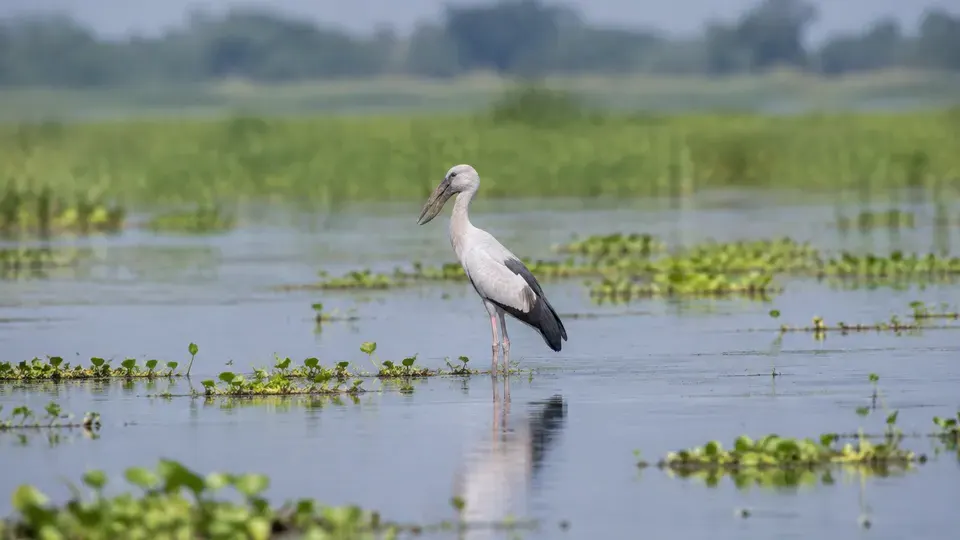
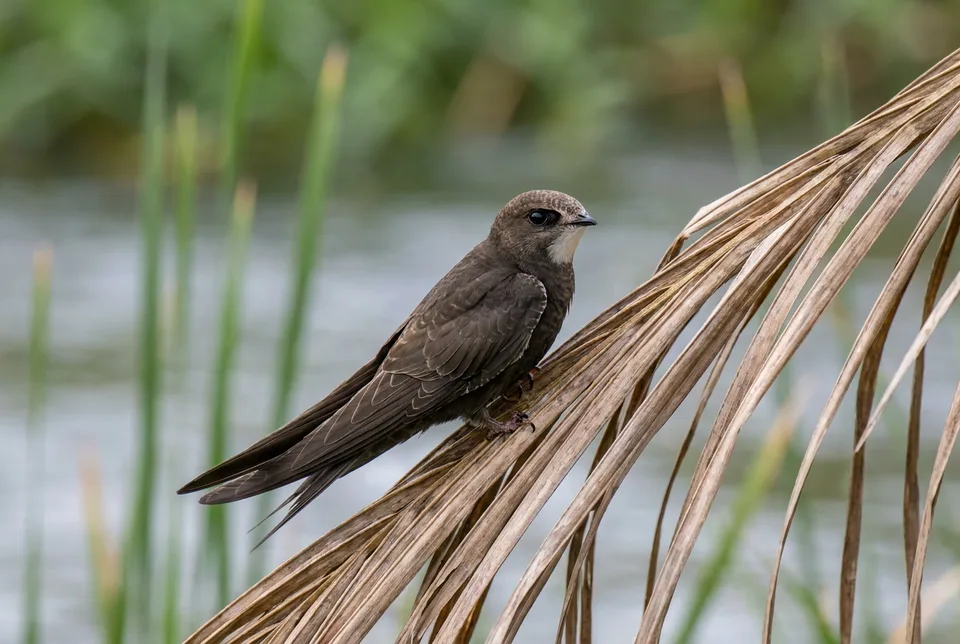
Black-winged Kite in wetland habitat — Mekong, River Cruises wildlifeAI-modifiedBlack-winged KiteAsian openbill in wetland habitat — Mekong, River Cruises wildlifeAI-modifiedAsian OpenbillAsian Palm Swift in wetland habitat — Mekong, River Cruises wildlifeAI-modifiedAsian Palm Swift
Animal groupBirdsAnimal groupBirdsAnimal groupBirds
DestinationsMekongDestinationsMekongDestinationsMekong
Scientific name
Elanus caeruleus
Scientific name
Scientific name
Previous speciesBlack-tailed GodwitNext speciesBlack-winged Stilt
All river wildlife
On this page
  • 01About
  • 02Behaviour & reproduction
  • 03Top wildlife locations
  • 04Fun facts
  • 05Best season
  • 06Season matrix by destination
  • 07Habitat
  • 08Diet
  • 09Species at a glance
  • 10Questions & answers
  • 11Compare

Find your river cruise

AI-modified
Plan your trip

Find your next river journey

Compare destinations, shore programs and dates with the animals and habitats you would love to see.

  • Daily shore excursions
  • Responsible wildlife watching
  • Boutique river ships
Explore river cruises