Bluerides – Blue Rides - Book Liveaboards worldwideOCEAN ADVENTURES
River CruisesRiversNature & WildlifeOur Promise
River CruisesRiversNature & WildlifeOur PromiseSign In

River destinations

  • River destinations
  • Amazon
  • Danube
  • Rhine
  • Mekong
  • Nile

Ships & departures

  • River Cruise Search
  • Deals

Nature & Wildlife

  • Nature & Wildlife

Travel support

  • Our Promise
  • Contact

Contact

Get in Touch

Get in touch anytime, we're happy to help you find the right trip or sort out any question.

EmailWrite us, we usually reply within a few hours.
contact@bluerides.com
WhatsAppChat with us on WhatsApp, Mon–Fri 10:00–16:00 (CET).
Start WhatsApp Chat
PhoneCall us, we're happy to help.
Free call, Mon–Fri 10 AM – 8 PM (CET).
Europe+49 800 1144 990USA+1 888 557 7735UK+44 800 707 4152Australia+61 2 8599 6113Canada+1 888 557 7735
Which river journey is yours?Answer 8 quick questions and find the river cruise that fits you.
8 questions, 1 minute·Plus Gift
Secure Payment MethodsYour payments are fully secured with AES-256 encryption.
Powered byStripeWiseAMEXPayGoogle PaySEPABank
Imprint·Terms & Conditions·Privacy Policy·About·Contact·Liability Waiver·Affiliate Program·Cruise·Blog·
Visit us here

© 2026 Blue Rides. All rights reserved.

Bluerides – Blue Rides - Book Liveaboards worldwideOCEAN ADVENTURES
River CruisesRiversNature & WildlifeOur Promise
River CruisesRiversNature & WildlifeOur PromiseSign In
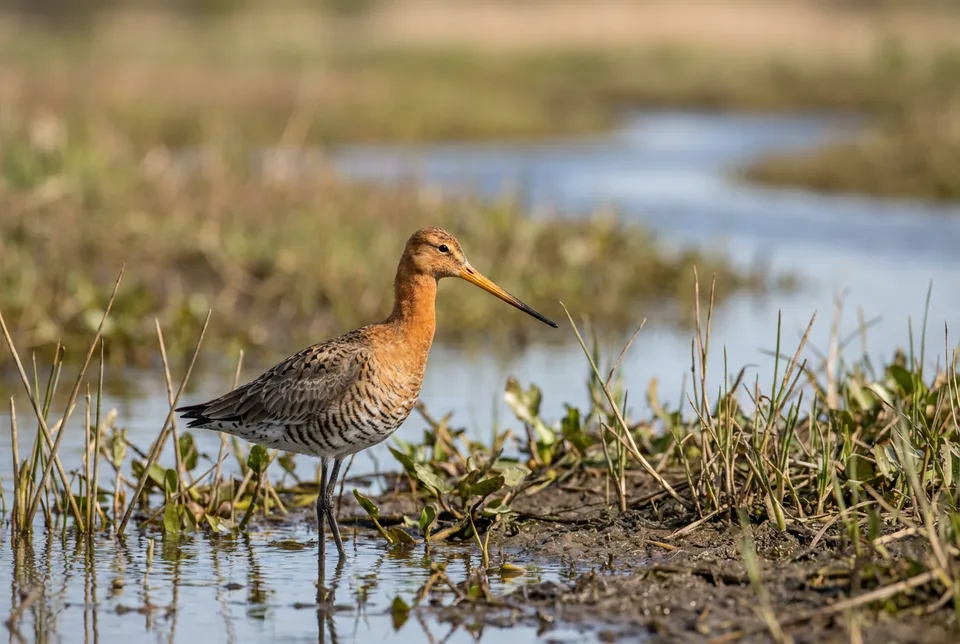
Black-tailed Godwit in wetland habitat — Douro, River Cruises wildlifeAI-modified
Home›River Cruises›River Wildlife›Black-tailed Godwit

Black-tailed GodwitLimosa limosaWhere and when to see them

Previous speciesBlack-Headed GullNext speciesBlack-winged Kite

Black-tailed Godwit at a glance

The Black-tailed Godwit is a long-legged wader with an exceptionally long bill and a plumage that changes markedly between breeding and nonbreeding appearances. Rich orange-brown breeding colours can give way to a much greyer bird, so identity should rest on structure and diagnostic flight markings as well as colour. Females are generally larger and longer-billed than males. The registered river association is narrowly defined: the Douro estuary reserve at Porto and Vila Nova de Gaia, including Afurada, Cabedelo and São Paio. Aves de Portugal lists the species there under its Portuguese name, maçarico-de-bico-direito. This does not establish equivalent occurrence in the inland Régua–Pinhão cruise landscape. For visitors, it is an estuary shore-excursion species whose presence, feeding position and visibility must be checked locally. The site list establishes occurrence but does not provide a verified annual monthly calendar.
Behaviour & reproduction

Size
Not independently verified for this draft
Weight
Not independently verified for this draft
Lifespan
Not independently verified for this draft
Status
See sourced assessment

Godwits often feed with other waders, moving across soft substrates and repeatedly inserting their bills into the mud. Their long legs allow them to work in shallow water where shorter-legged birds may be less comfortable. Feeding groups can gradually change position as water covers or reveals suitable ground, while resting birds may gather more tightly. These movements should be watched from a fixed public viewpoint rather than followed onto exposed feeding areas. The RSPB notes that females’ longer bills help reduce direct competition with males for food, illustrating how body differences can affect feeding opportunities. That species-level explanation does not identify which sex or population occurs in a particular Douro flock. No local tracking study or detailed daily movement schedule was verified here. A bird flying past the estuary may be commuting, arriving or departing; one brief observation cannot distinguish these possibilities or establish a migration peak.

Top wildlife locations

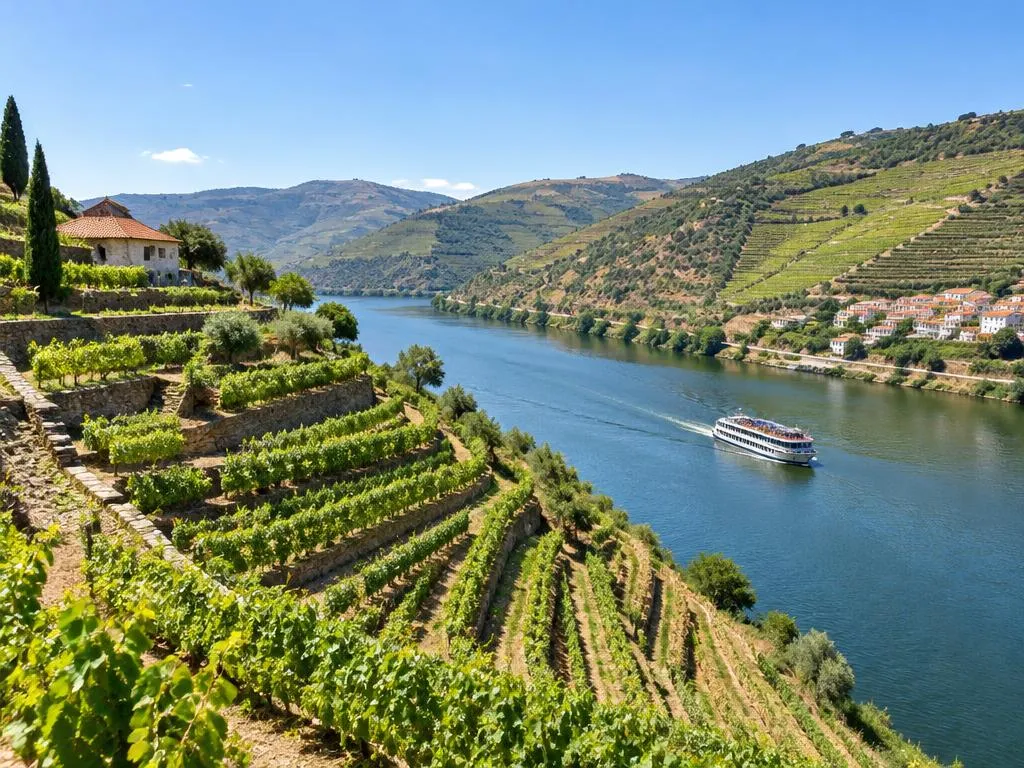
Douro river landscape — River Cruises wildlife habitatAI-modified

Douro

Porto/Vila Nova de Gaia: Douro estuary reserve, Afurada–Cabedelo–São Paio; no inland Régua–Pinhão claim.
Explore river cruises

Destinations describe the species' habitat, not guaranteed cruise stops. Some animals require an optional inland excursion or are found in restricted reserves.

Fun facts about the Black-tailed Godwit

  • Females generally have longer bills than males.
  • The sexes’ bill differences can reduce feeding competition.
  • Breeding plumage is much warmer than nonbreeding plumage.
  • A white wingbar is an important flight feature.
  • The tail pattern helps distinguish it from Bar-tailed Godwit.
  • It commonly obtains food by probing.
  • Both godwit species appear on the Douro estuary site list.
  • The Portuguese name used locally is maçarico-de-bico-direito.
  • The registered reach does not include inland Régua–Pinhão.

Best time to see the Black-tailed Godwit

Aves de Portugal’s Douro estuary page establishes local occurrence by including maçarico-de-bico-direito in the aquatic-bird list. The reviewed passage does not assign the species a month range, distinguish passage from winter residence or quantify how regularly it appears. Consequently, the profile retains an empty months array rather than borrowing a Portuguese national migration calendar, another estuary’s peak or a general European season. The RSPB’s British distribution and conservation information is valuable for biology and identification but cannot resolve timing at Porto. Nor does the general importance of the Douro estuary for migratory waders establish a godwit-specific peak. Travellers should seek recent observations from the actual Afurada–Cabedelo–São Paio reserve area and confirm whether their itinerary includes an estuary visit. Local water conditions can affect visibility within a day, but that practical consideration is distinct from an evidence-based annual season recommendation.

Black-tailed Godwit: season matrix by destination

Highlighted months reflect the stated local evidence, not guaranteed encounters. Neutral months mean no verified monthly viewing window, not absence. Observation records and recommended viewing windows are distinct.

Douro

Local occurrence verified from the site species list; annual viewing months remain unknown.

JanFebMarAprMayJunJulAugSepOctNovDec
Explore river cruises

Where the Black-tailed Godwit lives

The Douro association concerns the estuary where intertidal margins, sheltered water and saltmarsh create opportunities for waders. Aves de Portugal describes the local reserve between Porto and Vila Nova de Gaia, including São Paio Bay and Cabedelo. These features are ecologically different from the steep-sided inland river landscape most closely associated with Douro wine cruises. The profile therefore does not extend the godwit record upstream simply because the river name is shared. Within the estuary, the useful viewing area depends on where feeding substrate and undisturbed resting space are available on the day. Public observatories and paths provide an appropriate starting point, but a site list is not a map of an occupied flock. Habitat management, disturbance and changing water coverage can alter accessibility. Ask reserve staff which public viewpoint currently overlooks suitable ground without requiring visitors to approach the birds or enter sensitive marsh.

What the Black-tailed Godwit eats

Black-tailed Godwits obtain much of their food by probing soft ground and shallow wetland substrates for invertebrates. The long bill is a working tool, allowing prey to be reached beneath the surface rather than only picked from exposed mud. A feeding bird may insert the bill repeatedly while walking, and several birds can forage side by side without every prey item becoming visible. Diet varies across the species’ range and between habitats; the fact that a godwit is feeding at an estuary does not identify its prey to species. No Douro-specific prey analysis or seasonal diet proportions were verified for this draft. The account therefore avoids naming a local dominant worm, shellfish or crustacean. Observe the probing technique through binoculars and allow birds uninterrupted access to their feeding ground. Food should never be supplied, and walking toward a flock to inspect prey remains is not an appropriate visitor activity.

Species at a glance

Common name
Black-tailed Godwit
Scientific name
Limosa limosa
Animal group
Birds
Size
Not independently verified for this draft
Weight
Not independently verified for this draft
Lifespan
Not independently verified for this draft
Status
The RSPB reports UK Red-list status. A current global category was not independently verified; UK status is not presented as global status.
Identification
The long, relatively straight bill and long legs are useful starting points, but flight markings provide particularly strong evidence. The RSPB highlights the black-and-white wing pattern and the contrasting tail, features important in separation from Bar-tailed Godwit. Black-tailed Godwits show a conspicuous white wingbar in flight; Bar-tailed Godwits do not share that same pattern. Breeding birds can have orange-brown chests and bellies, whereas nonbreeding birds are much greyer. Females tend to be bigger, heavier and longer-billed, so variation within a flock does not automatically indicate multiple species. At the Douro, both godwits occur on the site list, making careful comparison locally necessary. Avoid identifying a resting bird solely from an apparently straight bill seen at an awkward angle. Wait for a change of posture or a voluntary flight, and combine plumage, structure and pattern before reaching a conclusion.

Black-tailed Godwit: frequently asked questions

Where can I see the Black-tailed Godwit?
Douro. Use the estuary’s public paths and observatories to scan suitable mud and shallow water before attempting a closer view. A telescope is especially helpful because godwits may feed well away from the accessible bank. Watch the whole bird: bill shape, leg length, posture and any naturally occurring flight provide stronger evidence than a distant orange or grey body alone. If a flock begins raising heads repeatedly, bunching tightly or moving away in response to visitors, increase distance. Do not step onto feeding flats or flush birds to reveal the wing pattern. For cruise planning, verify that the shore programme reaches the Porto/Vila Nova de Gaia estuary reserve; an inland Régua or Pinhão stop is not supported by the registered evidence. Ask a local observer about recent records rather than treating a historical species list as a same-day guarantee. Record uncertainty honestly when distance or light prevents confident separation from other godwits.
When is the best time to see the Black-tailed Godwit?
Aves de Portugal’s Douro estuary page establishes local occurrence by including maçarico-de-bico-direito in the aquatic-bird list. The reviewed passage does not assign the species a month range, distinguish passage from winter residence or quantify how regularly it appears. Consequently, the profile retains an empty months array rather than borrowing a Portuguese national migration calendar, another estuary’s peak or a general European season. The RSPB’s British distribution and conservation information is valuable for biology and identification but cannot resolve timing at Porto. Nor does the general importance of the Douro estuary for migratory waders establish a godwit-specific peak. Travellers should seek recent observations from the actual Afurada–Cabedelo–São Paio reserve area and confirm whether their itinerary includes an estuary visit. Local water conditions can affect visibility within a day, but that practical consideration is distinct from an evidence-based annual season recommendation.
How big does the Black-tailed Godwit get?
Not independently verified for this draft. Adult weight: Not independently verified for this draft. Size varies with age, sex and population.
How should I behave around the Black-tailed Godwit?
Use the estuary’s public paths and observatories to scan suitable mud and shallow water before attempting a closer view. A telescope is especially helpful because godwits may feed well away from the accessible bank. Watch the whole bird: bill shape, leg length, posture and any naturally occurring flight provide stronger evidence than a distant orange or grey body alone. If a flock begins raising heads repeatedly, bunching tightly or moving away in response to visitors, increase distance. Do not step onto feeding flats or flush birds to reveal the wing pattern. For cruise planning, verify that the shore programme reaches the Porto/Vila Nova de Gaia estuary reserve; an inland Régua or Pinhão stop is not supported by the registered evidence. Ask a local observer about recent records rather than treating a historical species list as a same-day guarantee. Record uncertainty honestly when distance or light prevents confident separation from other godwits.
What does the Black-tailed Godwit eat?
Black-tailed Godwits obtain much of their food by probing soft ground and shallow wetland substrates for invertebrates. The long bill is a working tool, allowing prey to be reached beneath the surface rather than only picked from exposed mud. A feeding bird may insert the bill repeatedly while walking, and several birds can forage side by side without every prey item becoming visible. Diet varies across the species’ range and between habitats; the fact that a godwit is feeding at an estuary does not identify its prey to species. No Douro-specific prey analysis or seasonal diet proportions were verified for this draft. The account therefore avoids naming a local dominant worm, shellfish or crustacean. Observe the probing technique through binoculars and allow birds uninterrupted access to their feeding ground. Food should never be supplied, and walking toward a flock to inspect prey remains is not an appropriate visitor activity.
Are wildlife sightings guaranteed on a river cruise?
No. Animals move freely and routes, weather, access restrictions and local conditions influence every outing. Confirm the actual itinerary and shore program before booking.

Compare wildlife in the same destinations

Explore other birds recorded in these destinations. Similar surroundings do not mean the animals share the same habits or viewing season.

Species comparison by animal group and destination
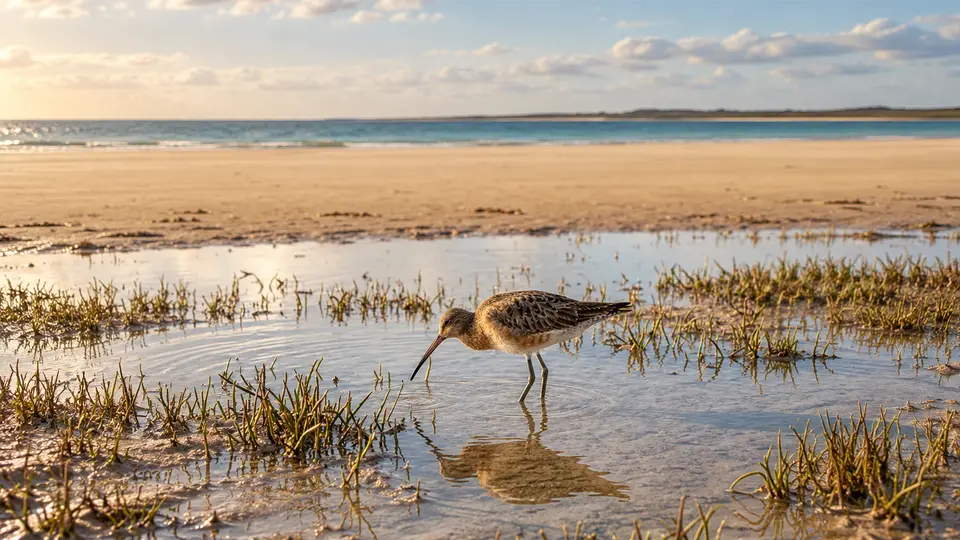
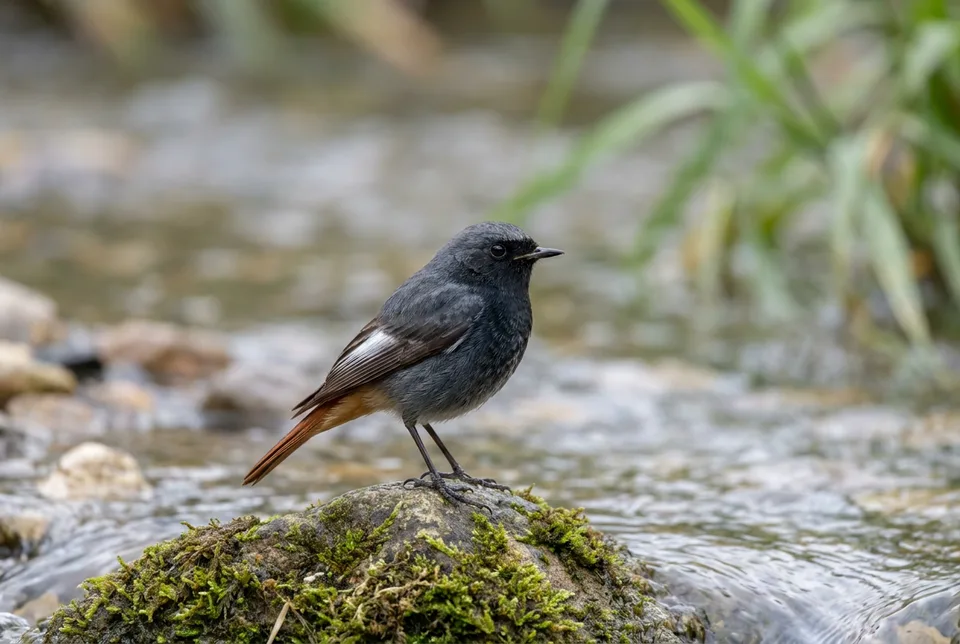
Black-tailed Godwit in wetland habitat — Douro, River Cruises wildlifeAI-modifiedBlack-tailed GodwitBar-tailed godwit in wetland habitat — Douro, River Cruises wildlifeAI-modifiedBar-tailed godwitBlack Redstart in wetland habitat — Saone, Douro, River Cruises wildlifeAI-modifiedBlack Redstart
Animal groupBirdsAnimal groupBirdsAnimal groupBirds
DestinationsDouroDestinationsDouroDestinationsSaone, Douro
Scientific name
Limosa limosa
Scientific name
Scientific name
Previous speciesBlack-Headed GullNext speciesBlack-winged Kite
All river wildlife
On this page
  • 01About
  • 02Behaviour & reproduction
  • 03Top wildlife locations
  • 04Fun facts
  • 05Best season
  • 06Season matrix by destination
  • 07Habitat
  • 08Diet
  • 09Species at a glance
  • 10Questions & answers
  • 11Compare

Find your river cruise

AI-modified
Plan your trip

Find your next river journey

Compare destinations, shore programs and dates with the animals and habitats you would love to see.

  • Daily shore excursions
  • Responsible wildlife watching
  • Boutique river ships
Explore river cruises