Bluerides – Blue Rides - Book Liveaboards worldwideOCEAN ADVENTURES
River CruisesRiversNature & WildlifeOur Promise
River CruisesRiversNature & WildlifeOur PromiseSign In

River destinations

  • River destinations
  • Amazon
  • Danube
  • Rhine
  • Mekong
  • Nile

Ships & departures

  • River Cruise Search
  • Deals

Nature & Wildlife

  • Nature & Wildlife

Travel support

  • Our Promise
  • Contact

Contact

Get in Touch

Get in touch anytime, we're happy to help you find the right trip or sort out any question.

EmailWrite us, we usually reply within a few hours.
contact@bluerides.com
WhatsAppChat with us on WhatsApp, Mon–Fri 10:00–16:00 (CET).
Start WhatsApp Chat
PhoneCall us, we're happy to help.
Free call, Mon–Fri 10 AM – 8 PM (CET).
Europe+49 800 1144 990USA+1 888 557 7735UK+44 800 707 4152Australia+61 2 8599 6113Canada+1 888 557 7735
Which river journey is yours?Answer 8 quick questions and find the river cruise that fits you.
8 questions, 1 minute·Plus Gift
Secure Payment MethodsYour payments are fully secured with AES-256 encryption.
Powered byStripeWiseAMEXPayGoogle PaySEPABank
Imprint·Terms & Conditions·Privacy Policy·About·Contact·Liability Waiver·Affiliate Program·Cruise·Blog·
Visit us here

© 2026 Blue Rides. All rights reserved.

Bluerides – Blue Rides - Book Liveaboards worldwideOCEAN ADVENTURES
River CruisesRiversNature & WildlifeOur Promise
River CruisesRiversNature & WildlifeOur PromiseSign In
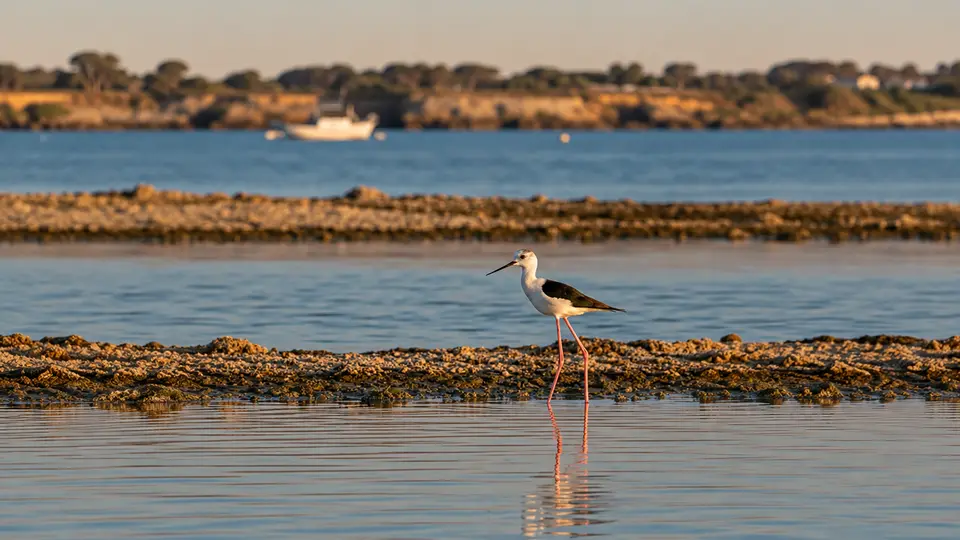
Black-winged stilt in wetland habitat — Nile, River Cruises wildlifeAI-modified
Home›River Cruises›River Wildlife›Black-winged Stilt

Black-winged StiltHimantopus himantopusWhere and when to see them

Previous speciesBlack-winged KiteNext speciesBlue-cheeked Bee-eater

Black-winged Stilt at a glance

The Black-winged Stilt is a striking shallow-water wader with extremely long pinkish legs, a fine dark bill and contrasting black-and-white plumage. Its proportions are often more immediately memorable than its head markings, which can vary. The registered river association is the Nile cruise corridor from Luxor through Esna, Edfu and Kom Ombo to Aswan. A March 2007 cruise report lists the species among birds seen along that route. This is a useful historical occurrence record, but it does not identify every suitable bank, establish current abundance or support a year-round guarantee. Ecologically, the species belongs with shallow margins, wet ground and open wetland substrates rather than deep navigation-channel water. For travellers, the best opportunity may therefore arise where an itinerary passes or visits suitable shallows. A ship moving through open water alone is not sufficient habitat evidence.

Behaviour & reproduction

Size
Not independently verified for this draft
Weight
Not independently verified for this draft
Lifespan
Not independently verified for this draft
Status
See sourced assessment

Stilts move through shallow water on their exceptionally long legs, taking food with a fine bill while maintaining a remarkably upright outline. They can feed alone, in small groups or among other wetland birds, and social grouping changes with context. The Japanese biodiversity portal’s BirdLife-derived account describes both migratory populations and more sedentary or locally dispersive populations, as well as solitary or loose-colony nesting. These are species-wide patterns, not a verified description of the Nile birds in the registry. A bird standing alert near another individual should not automatically be interpreted as nesting. Likewise, calls or flights may have several causes and should not be provoked for photography. Watch from a fixed position and allow birds to retain access to shallow feeding areas. The available Nile report supports occurrence during one trip, not a detailed local account of territorial behaviour, breeding timing or flock movements through the year.

Top wildlife locations

Nile river landscape — River Cruises wildlife habitatAI-modified

Nile

Luxor–Esna–Edfu–Kom Ombo–Aswan historical cruise corridor; suitable shallow margins required.
Explore river cruises

Destinations describe the species' habitat, not guaranteed cruise stops. Some animals require an optional inland excursion or are found in restricted reserves.

Fun facts about the Black-winged Stilt

  • Its very long legs are a defining field feature.
  • The bill is fine, dark and relatively straight.
  • Black wings contrast with white underparts.
  • Head markings can vary.
  • It feeds in shallow wetland habitats.
  • Both fresh and brackish water can be used.
  • Some populations migrate while others disperse locally.
  • Species-wide movement timing is not a Nile calendar.
  • The registered Nile occurrence was documented during a March 2007 cruise.

Best time to see the Black-winged Stilt

The local record reviewed comes from a Nile cruise dated 19–26 March 2007. Black-winged Stilt appears in the report’s table of birds seen along the Luxor-to-Aswan corridor. This supports a historical March occurrence within the registered reach. It does not demonstrate that March is optimal, that the species remains throughout every March or that all months are suitable. The species-wide account describes different movement strategies in different populations, which is precisely why broad migration timing should not be imposed on this Nile record. Northern-population departure and return months are not a local viewing calendar. The location months array therefore remains empty. Ask an operator or bird guide about recent observations and whether the planned shore visits overlook shallow margins. A dated report can justify looking, but contemporary water levels, access and habitat condition are needed to turn that possibility into a sensible outing.

Black-winged Stilt: season matrix by destination

Highlighted months reflect the stated local evidence, not guaranteed encounters. Neutral months mean no verified monthly viewing window, not absence. Observation records and recommended viewing windows are distinct.

Nile

Recorded during 19–26 March 2007. No recurring local annual viewing months verified.

JanFebMarAprMayJunJulAugSepOctNovDec
Explore river cruises

Where the Black-winged Stilt lives

The species uses shallow freshwater and brackish wetlands with open margins and soft or sandy substrates. The BirdLife-derived account lists marshes, shallow lake edges, riverbeds, flooded fields, irrigated areas and artificial ponds among suitable settings, while coastal and saline habitats are also used in parts of the range. The relevant feature for a river visitor is shallow accessible feeding water, not simply proximity to a large river. On the Nile, suitable marginal habitat can be discontinuous along an otherwise navigable corridor. The historical Luxor–Aswan report does not map current feeding sites or show that every temple landing overlooks stilt habitat. Avoid extending the record into other Egyptian wetlands without separate registration and evidence. Water coverage, exposed margins and disturbance can all influence where birds stand on a given day. Local guides should identify legal viewpoints rather than encouraging visitors to walk through feeding shallows.

What the Black-winged Stilt eats

Black-winged Stilts feed on small animals available in shallow wetland habitats, especially aquatic invertebrates. The fine bill is suited to picking and probing rather than tearing large prey. Birds may collect items from the water surface, submerged margins or exposed soft ground, with the exact technique influenced by water depth and prey position. Their long legs permit feeding in water that would be relatively deep for many smaller waders, although they still depend on accessible shallow habitat. No Nile-specific prey analysis was verified for this draft, so the account does not name a dominant local insect, assign percentages or claim a seasonal switch associated with cruise months. Watching the bill and the point at which it contacts water or mud can be more informative than trying to see every tiny prey item. Never scatter food or disturb substrate to stimulate feeding; allow the birds to choose their own foraging patch.

Species at a glance

Common name
Black-winged Stilt
Scientific name
Himantopus himantopus
Animal group
Birds
Size
Not independently verified for this draft
Weight
Not independently verified for this draft
Lifespan
Not independently verified for this draft
Status
A current formal global assessment was not independently verified for this draft.
Identification
The combination of very long pinkish legs, a slim straight dark bill, white underparts and black wings is the main identification foundation. Head and neck markings can vary, so a particular amount of black on the head should not be treated as an absolute requirement. The body rides unusually high above the water compared with many other waders, creating a distinctive silhouette even before colour is clear. Nevertheless, distance can distort proportions, especially when legs are partly submerged. Confirm both structure and plumage on the same individual rather than relying on a bright white shape over pink-looking reflections. In flight the long legs project conspicuously behind the body, but birds should not be disturbed merely to obtain that view. The registry identifies Himantopus himantopus; illustrations or accounts of differently treated stilt populations elsewhere should be checked for taxonomic compatibility before their details are incorporated into the profile.

Black-winged Stilt: frequently asked questions

Where can I see the Black-winged Stilt?
Nile. Search open shallow margins with binoculars, paying attention to narrow strips of suitable water rather than only broad river views. The stilt’s long legs and high body position can make it conspicuous when unobscured, but distance and a moving vessel can hide the bill and plumage details needed for confirmation. A stationary legal viewpoint is preferable when available. Watch natural walking and feeding without approaching so closely that the bird stops searching or moves repeatedly away. Do not enter shallows, pursue birds along a bank or flush a group to create flight photographs. If a local guide reports nesting activity, increase caution and follow site restrictions rather than using breeding behaviour as a reason to approach. The historical Nile report does not identify a permanent photographic site. Treat any current observation as specific to its bank, date and conditions, and record uncertainty when glare or distance prevents a confident identification.
When is the best time to see the Black-winged Stilt?
The local record reviewed comes from a Nile cruise dated 19–26 March 2007. Black-winged Stilt appears in the report’s table of birds seen along the Luxor-to-Aswan corridor. This supports a historical March occurrence within the registered reach. It does not demonstrate that March is optimal, that the species remains throughout every March or that all months are suitable. The species-wide account describes different movement strategies in different populations, which is precisely why broad migration timing should not be imposed on this Nile record. Northern-population departure and return months are not a local viewing calendar. The location months array therefore remains empty. Ask an operator or bird guide about recent observations and whether the planned shore visits overlook shallow margins. A dated report can justify looking, but contemporary water levels, access and habitat condition are needed to turn that possibility into a sensible outing.
How big does the Black-winged Stilt get?
Not independently verified for this draft. Adult weight: Not independently verified for this draft. Size varies with age, sex and population.
How should I behave around the Black-winged Stilt?
Search open shallow margins with binoculars, paying attention to narrow strips of suitable water rather than only broad river views. The stilt’s long legs and high body position can make it conspicuous when unobscured, but distance and a moving vessel can hide the bill and plumage details needed for confirmation. A stationary legal viewpoint is preferable when available. Watch natural walking and feeding without approaching so closely that the bird stops searching or moves repeatedly away. Do not enter shallows, pursue birds along a bank or flush a group to create flight photographs. If a local guide reports nesting activity, increase caution and follow site restrictions rather than using breeding behaviour as a reason to approach. The historical Nile report does not identify a permanent photographic site. Treat any current observation as specific to its bank, date and conditions, and record uncertainty when glare or distance prevents a confident identification.
What does the Black-winged Stilt eat?
Black-winged Stilts feed on small animals available in shallow wetland habitats, especially aquatic invertebrates. The fine bill is suited to picking and probing rather than tearing large prey. Birds may collect items from the water surface, submerged margins or exposed soft ground, with the exact technique influenced by water depth and prey position. Their long legs permit feeding in water that would be relatively deep for many smaller waders, although they still depend on accessible shallow habitat. No Nile-specific prey analysis was verified for this draft, so the account does not name a dominant local insect, assign percentages or claim a seasonal switch associated with cruise months. Watching the bill and the point at which it contacts water or mud can be more informative than trying to see every tiny prey item. Never scatter food or disturb substrate to stimulate feeding; allow the birds to choose their own foraging patch.
Are wildlife sightings guaranteed on a river cruise?
No. Animals move freely and routes, weather, access restrictions and local conditions influence every outing. Confirm the actual itinerary and shore program before booking.

Compare wildlife in the same destinations

Explore other birds recorded in these destinations. Similar surroundings do not mean the animals share the same habits or viewing season.

Species comparison by animal group and destination
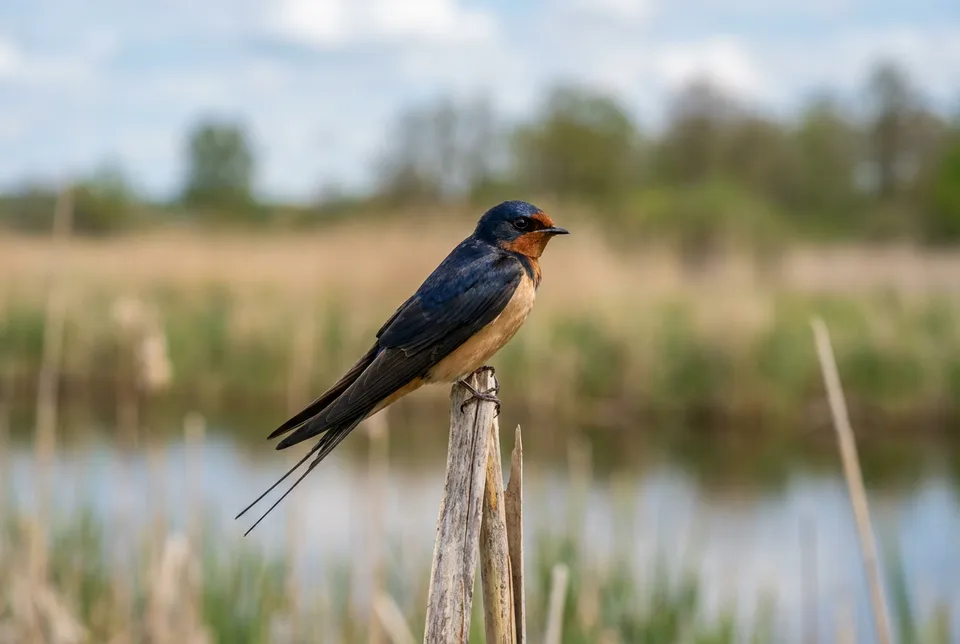
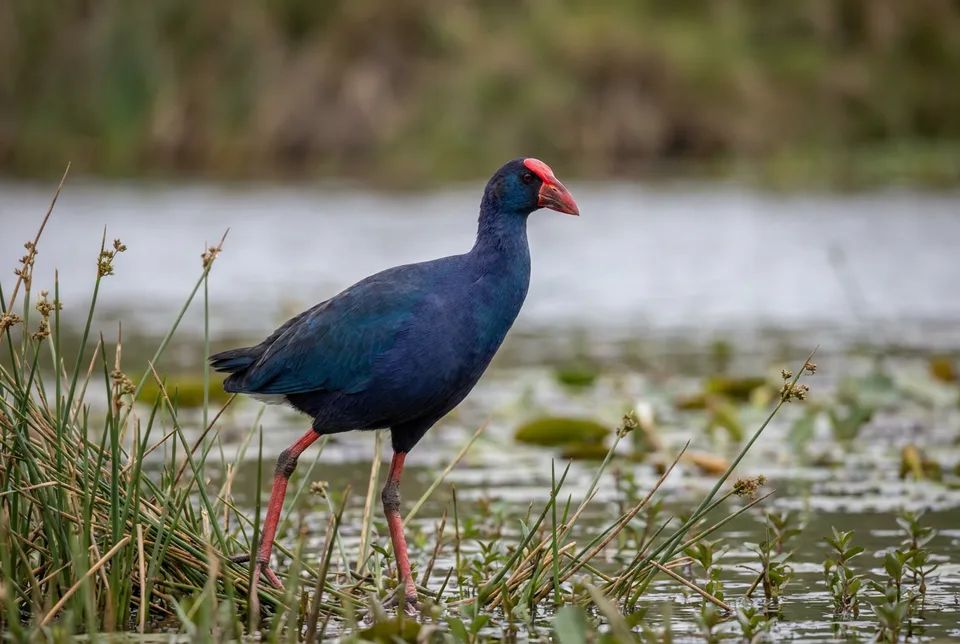
Black-winged stilt in wetland habitat — Nile, River Cruises wildlifeAI-modifiedBlack-winged StiltAfrican Swamphen in wetland habitat — Nile, Egypt, River Cruises wildlifeAI-modifiedAfrican SwamphenBarn Swallow in wetland habitat — Mississippi, Nile, River Cruises wildlifeAI-modifiedBarn Swallow
Animal groupBirdsAnimal groupBirdsAnimal groupBirds
DestinationsNileDestinationsNileDestinationsMississippi, Nile
Scientific name
Himantopus himantopus
Scientific name
Scientific name
Previous speciesBlack-winged KiteNext speciesBlue-cheeked Bee-eater
All river wildlife
On this page
  • 01About
  • 02Behaviour & reproduction
  • 03Top wildlife locations
  • 04Fun facts
  • 05Best season
  • 06Season matrix by destination
  • 07Habitat
  • 08Diet
  • 09Species at a glance
  • 10Questions & answers
  • 11Compare

Find your river cruise

AI-modified
Plan your trip

Find your next river journey

Compare destinations, shore programs and dates with the animals and habitats you would love to see.

  • Daily shore excursions
  • Responsible wildlife watching
  • Boutique river ships
Explore river cruises