Bluerides – Blue Rides - Book Liveaboards worldwideOCEAN ADVENTURES
River CruisesRiversNature & WildlifeOur Promise
River CruisesRiversNature & WildlifeOur PromiseSign In

River destinations

  • River destinations
  • Amazon
  • Danube
  • Rhine
  • Mekong
  • Nile

Ships & departures

  • River Cruise Search
  • Deals

Nature & Wildlife

  • Nature & Wildlife

Travel support

  • Our Promise
  • Contact

Contact

Get in Touch

Get in touch anytime, we're happy to help you find the right trip or sort out any question.

EmailWrite us, we usually reply within a few hours.
contact@bluerides.com
WhatsAppChat with us on WhatsApp, Mon–Fri 10:00–16:00 (CET).
Start WhatsApp Chat
PhoneCall us, we're happy to help.
Free call, Mon–Fri 10 AM – 8 PM (CET).
Europe+49 800 1144 990USA+1 888 557 7735UK+44 800 707 4152Australia+61 2 8599 6113Canada+1 888 557 7735
Which river journey is yours?Answer 8 quick questions and find the river cruise that fits you.
8 questions, 1 minute·Plus Gift
Secure Payment MethodsYour payments are fully secured with AES-256 encryption.
Powered byStripeWiseAMEXPayGoogle PaySEPABank
Imprint·Terms & Conditions·Privacy Policy·About·Contact·Liability Waiver·Affiliate Program·Cruise·Blog·
Visit us here

© 2026 Blue Rides. All rights reserved.

Bluerides – Blue Rides - Book Liveaboards worldwideOCEAN ADVENTURES
River CruisesRiversNature & WildlifeOur Promise
River CruisesRiversNature & WildlifeOur PromiseSign In
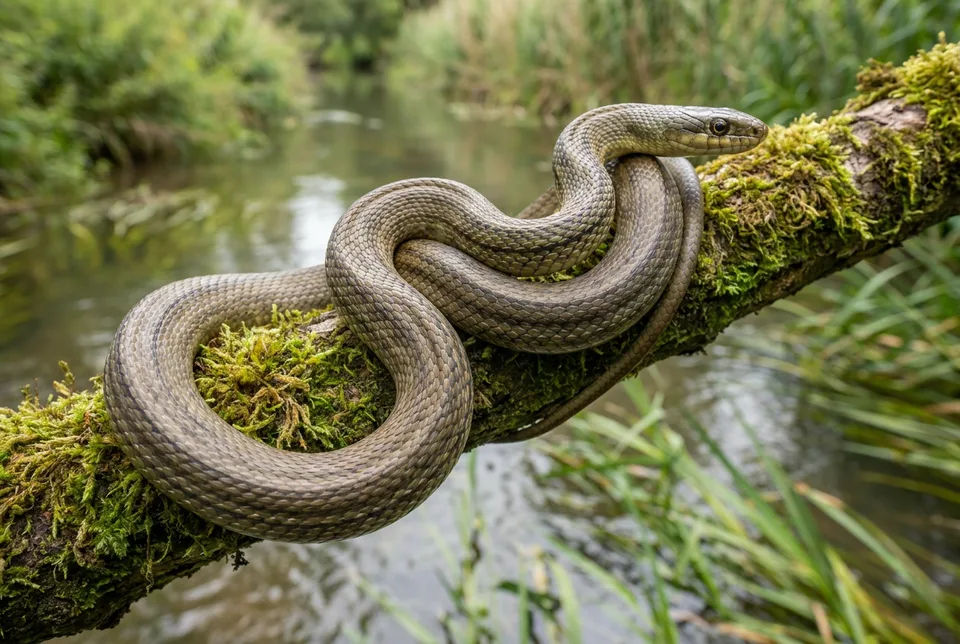
Aesculapian Snake in wetland habitat — Danube, River Cruises wildlifeAI-modified
Home›River Cruises›River Wildlife›Aesculapian Snake

Aesculapian SnakeZamenis longissimusWhere and when to see them

Previous speciesYellow-legged GullNext speciesAfrican Swamphen

Aesculapian Snake at a glance

The Aesculapian Snake is a large, slender woodland snake whose glossy brown or olive colouring makes it surprisingly inconspicuous among branches and leaf litter. It is a terrestrial reptile rather than an animal dependent on the river itself. Its River registry association is the Austrian Donau-Auen floodplain east of Vienna towards Hainburg, on the Vienna–Bratislava reach of the Danube. The national park specifically associates it with paths beside the southern slope forests. This makes an appropriate shore walk much more relevant than scanning the navigation channel. Adults can be impressively long without being heavily built, and their ability to climb allows them to use vegetation above ground as well as the forest floor. The familiar serpent-entwined staff of medicine is associated with Aesculapius, giving the species its English name. Understanding its role as a predator of small animals is more useful than treating its size as a measure of danger.

Behaviour & reproduction

Size
Usually 140–160 cm (55–63 in) total length
Weight
350–890 g (12–31 oz)
Lifespan
15–20 years in the wild (up to 30 years in captivity)
Status
Least Concern

Donau-Auen describes Aesculapian Snakes as active by day and around twilight, with extended basking an important part of their routine. Like other reptiles, they obtain heat from their surroundings rather than maintaining a constant body temperature through internal heat production. A sunny path edge beside protective vegetation can therefore offer both warmth and a rapid escape route. Although much activity occurs on the ground or in low undergrowth, the snake is an accomplished climber. Slight keels along the sides of the belly scales help it gain purchase against surfaces. Its movements can be quick and quiet, so a long animal may disappear before a walker has obtained a clear view. Prey is subdued by constriction before swallowing, rather than being chewed into pieces. These behaviours favour patient observation from an existing path: chasing a retreating snake removes precisely the quiet conditions that made the encounter possible.

Top wildlife locations

Danube river landscape — River Cruises wildlife habitatAI-modified

Danube

Austria: Donau-Auen floodplains east of Vienna towards Hainburg, on the Vienna–Bratislava reach; optional shore excursion, not evidence for Passau or Budapest.
Explore river cruises

Destinations describe the species' habitat, not guaranteed cruise stops. Some animals require an optional inland excursion or are found in restricted reserves.

Fun facts about the Aesculapian Snake

  • Its English name refers to Aesculapius and the serpent-entwined medical staff.
  • It is the largest snake described in the Donau-Auen species account.
  • Adults are commonly glossy brown or olive rather than boldly patterned.
  • Juveniles can have a yellow patch behind the head.
  • Young animals can be more strongly patterned than adults.
  • Slight keels along the belly-scale edges assist climbing.
  • Activity includes daylight and twilight.
  • Its prey includes small mammals, birds and lizards.
  • The registered Danube habitat is terrestrial woodland edge, not the navigation channel.

Best time to see the Aesculapian Snake

The strongest local source is the Donau-Auen species account, which identifies a warmth-loving animal that basks and is active by day and at twilight. This supports planning around suitable weather and accessible woodland-edge habitat rather than selecting a numerical monthly viewing calendar. The registry describes warm-season observation, but the retrieved local material does not establish a species-specific sequence of visitor sighting months. Consequently, the location calendar remains empty. On a mild day, sunlit edges may be worth scanning before entering deeper shade; during unsuitable weather, an apparently promising path can be unproductive. Basking opportunities also change within a single day as shade moves across the ground. Ask a park guide about current conditions and permitted paths on the actual excursion. A Danube sailing date alone says little about snake visibility, because the decisive factors operate at the scale of a particular bank, woodland margin and weather window.

Aesculapian Snake: season matrix by destination

Highlighted months reflect the stated local evidence, not guaranteed encounters. Neutral months mean no verified monthly viewing window, not absence. Observation records and recommended viewing windows are distinct.

Danube

Donau-Auen describes warmth-loving, basking, daytime and twilight activity. No local visitor-occurrence month series was verified; use suitable warm-weather woodland walks rather than a numerical calendar.

JanFebMarAprMayJunJulAugSepOctNovDec
Explore river cruises

Where the Aesculapian Snake lives

The relevant Danube habitat is a mosaic of warm woodland margins, low vegetation and sheltered ground, not simply any place beside water. In Donau-Auen, the national park highlights the southern slope forests and adjoining path edges. Such sites combine cover with opportunities to bask, and the climbing ability of the species broadens the usable habitat into bushes and trees. The park describes a warmth-loving snake that avoids the highest mountain environments, although it occurs widely within Austria. Its floodplain association should therefore be understood through the adjacent terrestrial landscape rather than as evidence that it lives in open river water. On a cruise itinerary, a guided visit east of Vienna may provide access to this habitat, whereas a stop elsewhere on the Danube does not reproduce the same conditions automatically. Retaining tangled vegetation, woodland connections and undisturbed refuges is important for an animal that must move between shelter, feeding sites and suitable temperatures.

What the Aesculapian Snake eats

The national park lists mice, moles, lizards and birds among the principal foods of the Aesculapian Snake, with eggs also consumed. This is a predatory diet, and the species participates in woodland food webs rather than feeding on river vegetation or sediment. Its combination of ground movement and climbing helps explain access to different prey: small mammals may be encountered near the forest floor, while climbing opens additional opportunities above it. Donau-Auen describes prey being subdued by the pressure of the body coiled around it before swallowing. The flexible jaws of a snake allow whole prey to be ingested; this should not be confused with dislocating the jaw. No local dietary percentages or seasonal prey proportions were verified for this profile. Watching a snake search through cover can nevertheless reveal its ecological role without seeing a capture. Never offer live prey or food to prolong an encounter or create a photograph.

Species at a glance

Common name
Aesculapian Snake
Scientific name
Zamenis longissimus
Animal group
Reptiles
Size
Usually 140–160 cm (55–63 in) total length
Weight
350–890 g (12–31 oz)
Lifespan
15–20 years in the wild (up to 30 years in captivity)
Status
Least Concern
Identification
Adult Aesculapian Snakes have glossy light-brown to olive upperparts, with the head and sides generally paler than the back and darker colouring towards the tail. Donau-Auen describes pale longitudinal marks on many dorsal scales and slightly keeled margins to the belly plates. The overall impression is a long, slender snake with relatively restrained adult patterning. Juveniles differ: they can show a yellow patch behind the head and several rows of dark dorsal markings. This makes a simple identification based on a yellow neck mark unreliable. The park specifically notes that the juvenile patch lacks the dark bordering associated with a Grass Snake's collar. Record overall pattern, proportions and habitat rather than pursuing the animal for a close inspection of scales. A photograph taken from the path may help a knowledgeable local guide distinguish an immature Aesculapian Snake from another species without handling either animal.

Aesculapian Snake: frequently asked questions

Where can I see the Aesculapian Snake?
Danube. Look ahead along a woodland path rather than directly at your feet, scanning places where sunlight reaches the edge of dense cover. A stationary snake may first appear as a smooth curved line that differs subtly from the texture of roots and fallen twigs. Stop at a comfortable distance and allow time to distinguish the head, body and direction of movement. Binoculars can be useful even for a comparatively large reptile, particularly when they avoid the need to approach. Never pick the animal up, block its retreat or reach into a refuge to obtain a better view. Remain on permitted routes and follow the national park guide's instructions. This registered encounter belongs to a Donau-Auen shore excursion east of Vienna, not to guaranteed deck viewing or to every Danube port. A brief, undisturbed passage across the path is a successful observation even when it produces no photograph.
When is the best time to see the Aesculapian Snake?
The strongest local source is the Donau-Auen species account, which identifies a warmth-loving animal that basks and is active by day and at twilight. This supports planning around suitable weather and accessible woodland-edge habitat rather than selecting a numerical monthly viewing calendar. The registry describes warm-season observation, but the retrieved local material does not establish a species-specific sequence of visitor sighting months. Consequently, the location calendar remains empty. On a mild day, sunlit edges may be worth scanning before entering deeper shade; during unsuitable weather, an apparently promising path can be unproductive. Basking opportunities also change within a single day as shade moves across the ground. Ask a park guide about current conditions and permitted paths on the actual excursion. A Danube sailing date alone says little about snake visibility, because the decisive factors operate at the scale of a particular bank, woodland margin and weather window.
How big does the Aesculapian Snake get?
Usually 140–160 cm (55–63 in) total length. Adult weight: 350–890 g (12–31 oz). Size varies with age, sex and population.
How should I behave around the Aesculapian Snake?
Look ahead along a woodland path rather than directly at your feet, scanning places where sunlight reaches the edge of dense cover. A stationary snake may first appear as a smooth curved line that differs subtly from the texture of roots and fallen twigs. Stop at a comfortable distance and allow time to distinguish the head, body and direction of movement. Binoculars can be useful even for a comparatively large reptile, particularly when they avoid the need to approach. Never pick the animal up, block its retreat or reach into a refuge to obtain a better view. Remain on permitted routes and follow the national park guide's instructions. This registered encounter belongs to a Donau-Auen shore excursion east of Vienna, not to guaranteed deck viewing or to every Danube port. A brief, undisturbed passage across the path is a successful observation even when it produces no photograph.
What does the Aesculapian Snake eat?
The national park lists mice, moles, lizards and birds among the principal foods of the Aesculapian Snake, with eggs also consumed. This is a predatory diet, and the species participates in woodland food webs rather than feeding on river vegetation or sediment. Its combination of ground movement and climbing helps explain access to different prey: small mammals may be encountered near the forest floor, while climbing opens additional opportunities above it. Donau-Auen describes prey being subdued by the pressure of the body coiled around it before swallowing. The flexible jaws of a snake allow whole prey to be ingested; this should not be confused with dislocating the jaw. No local dietary percentages or seasonal prey proportions were verified for this profile. Watching a snake search through cover can nevertheless reveal its ecological role without seeing a capture. Never offer live prey or food to prolong an encounter or create a photograph.
Are wildlife sightings guaranteed on a river cruise?
No. Animals move freely and routes, weather, access restrictions and local conditions influence every outing. Confirm the actual itinerary and shore program before booking.

Compare wildlife in the same destinations

Explore other reptiles recorded in these destinations. Similar surroundings do not mean the animals share the same habits or viewing season.

Species comparison by animal group and destination
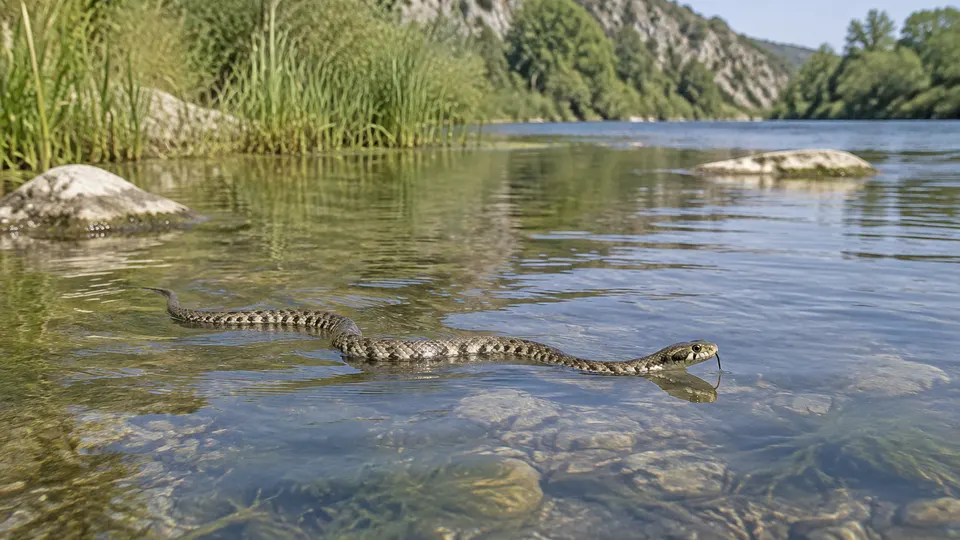
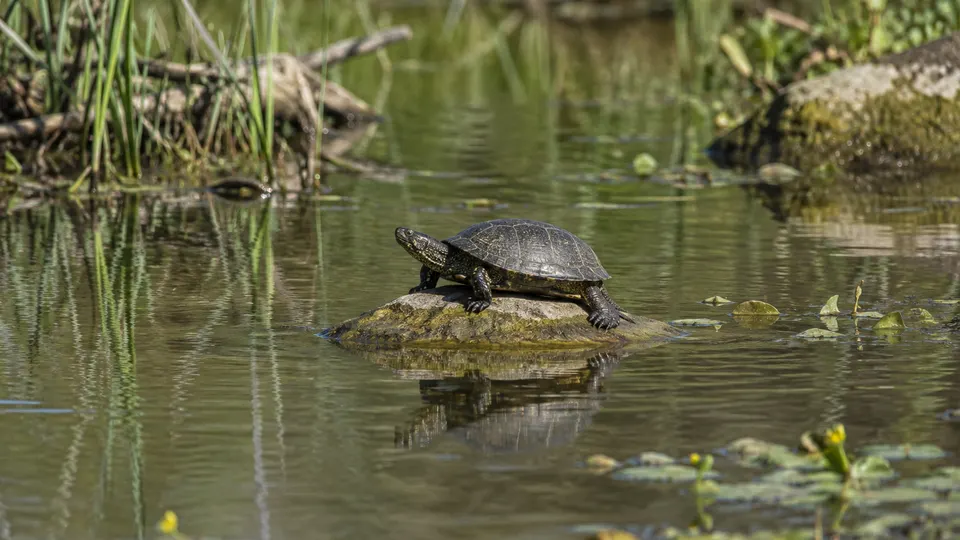
Aesculapian Snake in wetland habitat — Danube, River Cruises wildlifeAI-modifiedAesculapian SnakeDice snake in wetland habitat — Danube, River Cruises wildlifeAI-modifiedDice SnakeEuropean pond turtle in wetland habitat — Danube, River Cruises wildlifeAI-modifiedEuropean Pond Turtle
Animal groupReptilesAnimal groupReptilesAnimal groupReptiles
DestinationsDanubeDestinationsDanubeDestinationsDanube
Scientific name
Zamenis longissimus
Scientific name
Scientific name
Previous speciesYellow-legged GullNext speciesAfrican Swamphen
All river wildlife
On this page
  • 01About
  • 02Behaviour & reproduction
  • 03Top wildlife locations
  • 04Fun facts
  • 05Best season
  • 06Season matrix by destination
  • 07Habitat
  • 08Diet
  • 09Species at a glance
  • 10Questions & answers
  • 11Compare

Find your river cruise

AI-modified
Plan your trip

Find your next river journey

Compare destinations, shore programs and dates with the animals and habitats you would love to see.

  • Daily shore excursions
  • Responsible wildlife watching
  • Boutique river ships
Explore river cruises