Bluerides – Blue Rides - Book Liveaboards worldwideOCEAN ADVENTURES
River CruisesRiversNature & WildlifeOur Promise
River CruisesRiversNature & WildlifeOur PromiseSign In

River destinations

  • River destinations
  • Amazon
  • Danube
  • Rhine
  • Mekong
  • Nile

Ships & departures

  • River Cruise Search
  • Deals

Nature & Wildlife

  • Nature & Wildlife

Travel support

  • Our Promise
  • Contact

Contact

Get in Touch

Get in touch anytime, we're happy to help you find the right trip or sort out any question.

EmailWrite us, we usually reply within a few hours.
contact@bluerides.com
WhatsAppChat with us on WhatsApp, Mon–Fri 10:00–16:00 (CET).
Start WhatsApp Chat
PhoneCall us, we're happy to help.
Free call, Mon–Fri 10 AM – 8 PM (CET).
Europe+49 800 1144 990USA+1 888 557 7735UK+44 800 707 4152Australia+61 2 8599 6113Canada+1 888 557 7735
Which river journey is yours?Answer 8 quick questions and find the river cruise that fits you.
8 questions, 1 minute·Plus Gift
Secure Payment MethodsYour payments are fully secured with AES-256 encryption.
Powered byStripeWiseAMEXPayGoogle PaySEPABank
Imprint·Terms & Conditions·Privacy Policy·About·Contact·Liability Waiver·Affiliate Program·Cruise·Blog·
Visit us here

© 2026 Blue Rides. All rights reserved.

Bluerides – Blue Rides - Book Liveaboards worldwideOCEAN ADVENTURES
River CruisesRiversNature & WildlifeOur Promise
River CruisesRiversNature & WildlifeOur PromiseSign In
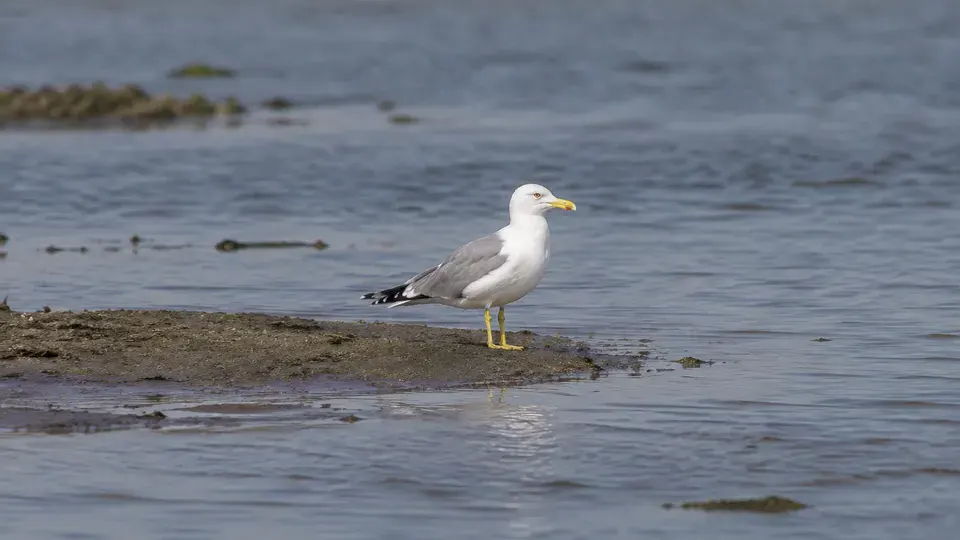
Yellow-legged gull in wetland habitat — Rhine, Douro, River Cruises wildlifeAI-modified
Home›River Cruises›River Wildlife›Yellow-legged Gull

Yellow-legged GullLarus michahellisWhere and when to see them

Previous speciesYellow-Legged ClubtailNext speciesAesculapian Snake

Yellow-legged Gull at a glance

The Yellow-legged Gull is a large white-headed gull whose name conceals a complicated identification history. Formerly grouped with related large gulls, it is now treated as Larus michahellis. Adults typically combine a white head and body, grey mantle, dark outer wings and yellow legs, but no single colour is sufficient for every age or lighting condition. Cornell describes a substantial expansion from traditional Mediterranean and Black Sea breeding areas into inland and northern Europe. That broader change explains why freshwater rivers can be relevant habitat, but it does not certify every river port as an observation site. The registry has two distinct associations: the Rhine between Grafenwerth and Königswinter, and the Douro estuary around Porto and Vila Nova de Gaia. The latter is specifically the Afurada–Cabedelo–São Paio reserve, not the inland vineyard corridor near Régua and Pinhão. Keeping those localities separate is essential because a coastal estuary and an inland Rhine bank offer different gull-watching contexts.
Behaviour & reproduction

Size
Not verified
Weight
About 1.2 kg (2.6 lb) (BTO summary)
Lifespan
Not verified
Status
See sourced assessment

Yellow-legged Gulls rest and feed in groups, often mixing with other gull species at open-water or shoreline gathering places. A resting flock may seem inactive, yet careful observation can reveal changes of position, social interactions and birds arriving from feeding areas. Cornell attributes part of the species' recent expansion to its ability to use inland habitats and human-made nesting structures, including urban roofs. Many age classes disperse northwards after breeding from traditional Mediterranean colonies, reaching the North and Baltic Seas. This large-scale movement is not a month-by-month prediction for the registered Rhine or Douro reach. Individuals within a flock may be different ages and may have arrived from different places. Never assume that a juvenile standing next to an adult is its offspring. Avoid walking towards a resting flock until it flies; the resulting flight costs energy and often makes identification harder. Watching undisturbed birds provides better comparisons of posture, mantle colour, bill proportions and leg colour.

Top wildlife locations

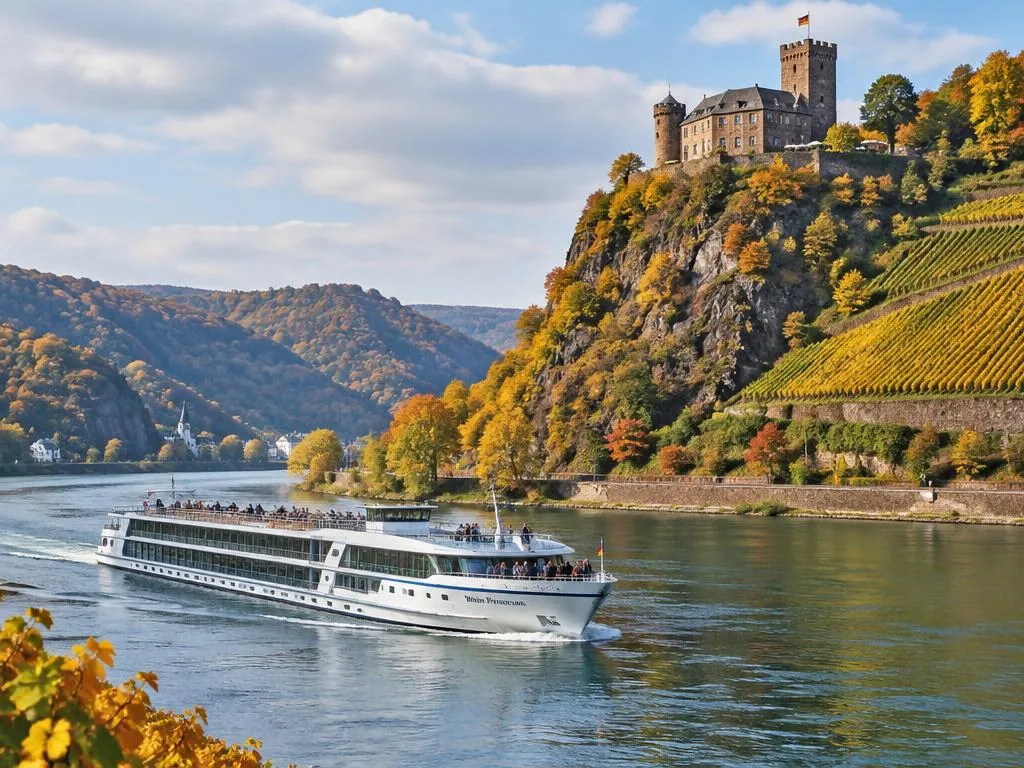
Rhine river landscape — River Cruises wildlife habitatAI-modified

Rhine

Rhine: Grafenwerth–Königswinter, south of Bonn/Cologne.

Explore river cruises
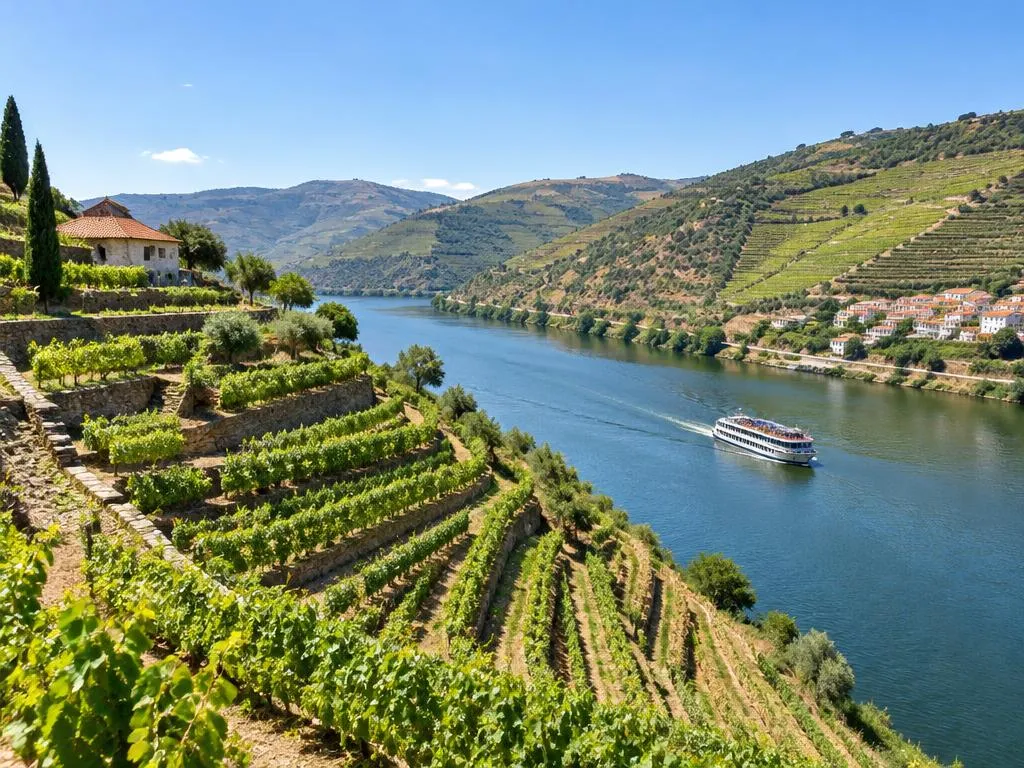
Douro river landscape — River Cruises wildlife habitatAI-modified

Douro

Porto / Vila Nova de Gaia: Douro estuary reserve, Afurada–Cabedelo–São Paio; NOT a claim for inland Régua–Pinhão

Explore river cruises

Destinations describe the species' habitat, not guaranteed cruise stops. Some animals require an optional inland excursion or are found in restricted reserves.

Fun facts about the Yellow-legged Gull

  • Its scientific name is Larus michahellis.
  • It belongs to the large white-headed gull complex.
  • It was formerly treated together with related gulls.
  • Traditional breeding areas include the Mediterranean basin.
  • Its European breeding distribution has expanded inland.
  • Some populations nest on human-made structures.
  • Post-breeding movements can carry birds northwards.
  • BTO gives a summary body mass of about 1.2 kg (2.6 lb).
  • Global Least Concern and UK Amber are different assessment scales.

Best time to see the Yellow-legged Gull

For the Rhine association there is explicit species-specific local viewing guidance: the Grafenwerth–Königswinter site account says that Yellow-legged Gulls can be watched throughout the year. All twelve months are therefore retained as recommended viewing months for that exact reach, not as an abundance forecast or a guarantee of daily presence. The same wording must not be borrowed for the Douro. The Douro estuary account lists gaivota-argêntea among its aquatic birds but does not provide a species-specific monthly calendar in the evidence checked here. Its general discussion of migrants or useful visiting conditions cannot establish months for this particular gull. The Douro array remains empty pending exact local evidence. Likewise, northward post-breeding dispersal described for the species as a whole is not a replacement for estuary-specific dates. For either location, recent reports and the actual shore programme should guide expectations, especially if the visit allows only a brief stop rather than a dedicated gull watch.

Yellow-legged Gull: season matrix by destination

Highlighted months reflect the stated local evidence, not guaranteed encounters. Neutral months mean no verified monthly viewing window, not absence. Observation records and recommended viewing windows are distinct.

Rhine

Local site author explicitly recommends this species throughout the year on this reach; no daily sighting guarantee.

JanFebMarAprMayJunJulAugSepOctNovDec
Explore river cruises

Douro

Exact species-specific local viewing months are unverified; no months inferred from broader range, climate or general site seasons.

JanFebMarAprMayJunJulAugSepOctNovDec
Explore river cruises

Where the Yellow-legged Gull lives

The species uses coastal and inland settings rather than being restricted to the sea. Traditional breeding areas include Mediterranean and Black Sea coasts and islands, while more recent populations also occupy freshwater habitats and urban structures farther north. On the Rhine, the local site account concerns a walkable bank between Grafenwerth island and Königswinter, with gravel banks and mixed gull gatherings. On the Douro, the registered site is the estuarine reserve between Porto and Vila Nova de Gaia, including the São Paio bay and Cabedelo saltmarsh area. Those habitat descriptions should not be extended upstream merely because a cruise continues inland. A tidal estuary can provide resting and feeding opportunities absent from a steep-sided vineyard reach. Respect reserve boundaries, viewing hides and current access information. Habitat use by an adaptable gull does not imply that disturbance is harmless: resting banks and protected shoreline patches remain important places for birds to avoid repeated approaches by people and dogs.

What the Yellow-legged Gull eats

Yellow-legged Gulls are flexible feeders rather than specialists on one fish or one shoreline resource. Published western Mediterranean research compares conventional dietary analysis with stable isotopes because different methods reveal different parts of what gulls consume. The species' use of both natural and human-influenced environments makes simple claims such as an exclusively marine diet misleading. Nevertheless, those Mediterranean study populations are not direct measurements of the registered Rhine or Douro birds. No local dietary percentages or named staple prey are claimed here. At a viewing site, distinguish a bird actually swallowing food from one merely investigating floating material or standing near fishing activity. Feeding location alone does not establish what has been eaten. Do not supply bread, fish scraps or other bait to draw a gull closer, and keep fishing hooks, line and food waste out of the water. A natural feeding observation is most useful when accompanied by a clear description rather than an assumed menu based on the species' reputation.

Species at a glance

Common name
Yellow-legged Gull
Scientific name
Larus michahellis
Animal group
Birds
Size
Species-specific length and wingspan not verified in the accessible authoritative sources
Weight
About 1.2 kg (2.6 lb) (BTO summary)
Lifespan
Species-specific wild longevity not verified
Status
Least Concern globally according to BTO; UK Amber listing is a separate regional designation
Identification
Adults are usually the most approachable identification problem: look for yellow legs, a strong yellow bill with a red marking, a grey mantle and black outerwing pattern in combination. Leg colour alone is unsafe because related gulls can overlap in colour and because immatures do not show the clean adult appearance. Cornell explicitly places the species in the taxonomically difficult large white-headed gull complex, with European Herring Gull among its close relatives. Juvenile and intermediate plumages require age-specific assessment of head and bill shape, wing pattern, tail and body markings. Lighting, wear and posture can alter apparent proportions and grey tone. A pale-headed large gull is therefore not automatically a Yellow-legged Gull, particularly where Herring, Lesser Black-backed or Caspian Gulls occur. The Rhine site account names several of these potential comparisons. Collect a sequence of photographs of one individual, not isolated details from a flock, and leave uncertain birds unidentified when essential characters cannot be resolved.

Yellow-legged Gull: frequently asked questions

Where can I see the Yellow-legged Gull?
Rhine, Douro. Choose a fixed bank viewpoint and scan gulls at rest before following birds in flight. A telescope is useful on the Rhine, where the relevant flock may be on a gravel bank across the river. At the Douro estuary use authorised paths and observation facilities rather than crossing resting areas to improve a photograph. Note relative mantle shade only when birds stand in comparable light; a shaded bird can look falsely dark. Obtain side views showing the bill and legs, and flight views of the upperwing if the birds take off naturally. Mixed gull groups provide valuable comparisons but also make it easy to combine features from two individuals. Keep following the same bird while recording characters. Ask an experienced local observer to review difficult immature birds. A deck view may establish that large gulls are present without supporting a confident species identification. Do not flush a group or use food to create a close approach merely to turn a doubtful observation into a photograph.
When is the best time to see the Yellow-legged Gull?
For the Rhine association there is explicit species-specific local viewing guidance: the Grafenwerth–Königswinter site account says that Yellow-legged Gulls can be watched throughout the year. All twelve months are therefore retained as recommended viewing months for that exact reach, not as an abundance forecast or a guarantee of daily presence. The same wording must not be borrowed for the Douro. The Douro estuary account lists gaivota-argêntea among its aquatic birds but does not provide a species-specific monthly calendar in the evidence checked here. Its general discussion of migrants or useful visiting conditions cannot establish months for this particular gull. The Douro array remains empty pending exact local evidence. Likewise, northward post-breeding dispersal described for the species as a whole is not a replacement for estuary-specific dates. For either location, recent reports and the actual shore programme should guide expectations, especially if the visit allows only a brief stop rather than a dedicated gull watch.
How big does the Yellow-legged Gull get?
Species-specific length and wingspan not verified in the accessible authoritative sources. Adult weight: About 1.2 kg (2.6 lb) (BTO summary). Size varies with age, sex and population.
How should I behave around the Yellow-legged Gull?
Choose a fixed bank viewpoint and scan gulls at rest before following birds in flight. A telescope is useful on the Rhine, where the relevant flock may be on a gravel bank across the river. At the Douro estuary use authorised paths and observation facilities rather than crossing resting areas to improve a photograph. Note relative mantle shade only when birds stand in comparable light; a shaded bird can look falsely dark. Obtain side views showing the bill and legs, and flight views of the upperwing if the birds take off naturally. Mixed gull groups provide valuable comparisons but also make it easy to combine features from two individuals. Keep following the same bird while recording characters. Ask an experienced local observer to review difficult immature birds. A deck view may establish that large gulls are present without supporting a confident species identification. Do not flush a group or use food to create a close approach merely to turn a doubtful observation into a photograph.
What does the Yellow-legged Gull eat?
Yellow-legged Gulls are flexible feeders rather than specialists on one fish or one shoreline resource. Published western Mediterranean research compares conventional dietary analysis with stable isotopes because different methods reveal different parts of what gulls consume. The species' use of both natural and human-influenced environments makes simple claims such as an exclusively marine diet misleading. Nevertheless, those Mediterranean study populations are not direct measurements of the registered Rhine or Douro birds. No local dietary percentages or named staple prey are claimed here. At a viewing site, distinguish a bird actually swallowing food from one merely investigating floating material or standing near fishing activity. Feeding location alone does not establish what has been eaten. Do not supply bread, fish scraps or other bait to draw a gull closer, and keep fishing hooks, line and food waste out of the water. A natural feeding observation is most useful when accompanied by a clear description rather than an assumed menu based on the species' reputation.
Are wildlife sightings guaranteed on a river cruise?
No. Animals move freely and routes, weather, access restrictions and local conditions influence every outing. Confirm the actual itinerary and shore program before booking.

Compare wildlife in the same destinations

Explore other birds recorded in these destinations. Similar surroundings do not mean the animals share the same habits or viewing season.

Species comparison by animal group and destination
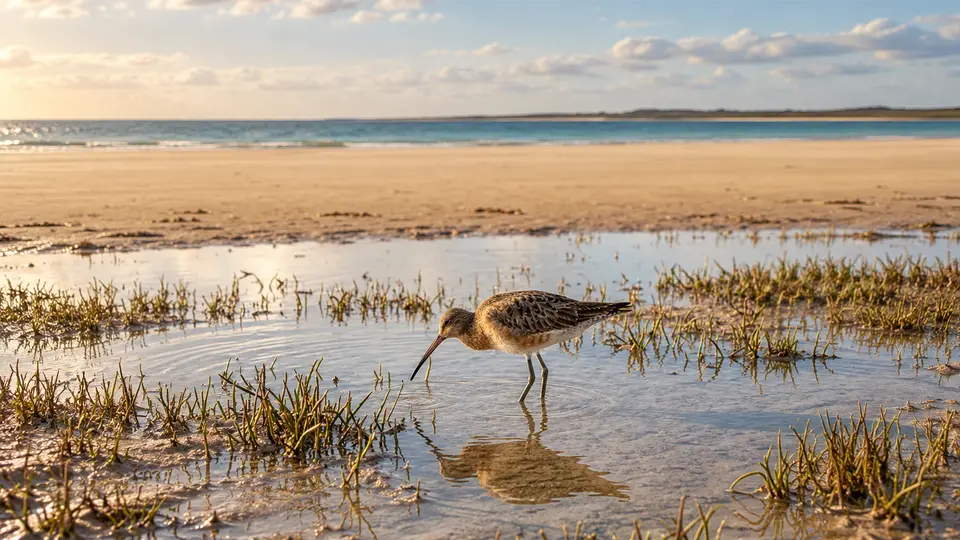
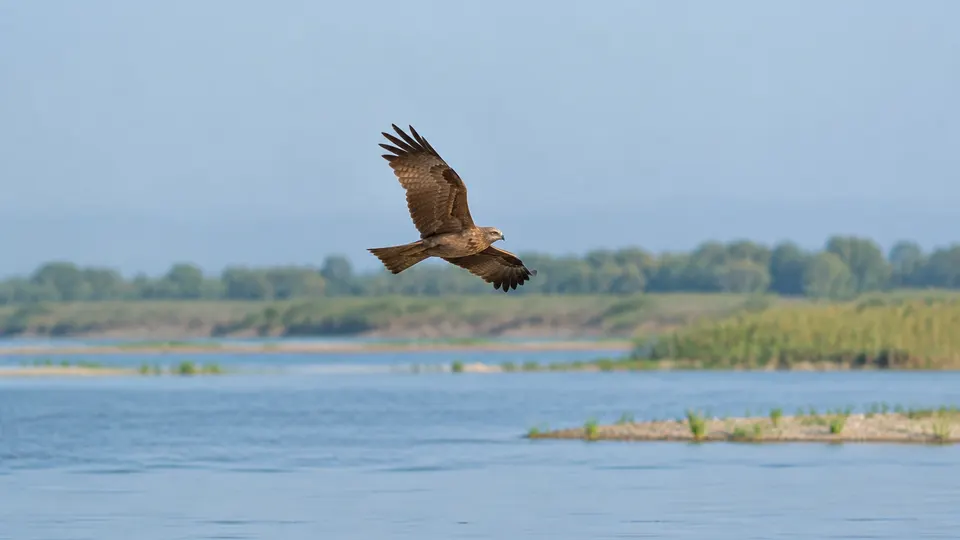
Yellow-legged gull in wetland habitat — Rhine, Douro, River Cruises wildlifeAI-modifiedYellow-legged GullBar-tailed godwit in wetland habitat — Douro, River Cruises wildlifeAI-modifiedBar-tailed godwitBlack kite in wetland habitat — Danube, Rhine, River Cruises wildlifeAI-modifiedBlack Kite
Animal groupBirdsAnimal groupBirdsAnimal groupBirds
DestinationsRhine, DouroDestinationsDouroDestinationsDanube, Rhine
Scientific name
Larus michahellis
Scientific name
Scientific name
Previous speciesYellow-Legged ClubtailNext speciesAesculapian Snake
All river wildlife
On this page
  • 01About
  • 02Behaviour & reproduction
  • 03Top wildlife locations
  • 04Fun facts
  • 05Best season
  • 06Season matrix by destination
  • 07Habitat
  • 08Diet
  • 09Species at a glance
  • 10Questions & answers
  • 11Compare

Find your river cruise

AI-modified
Plan your trip

Find your next river journey

Compare destinations, shore programs and dates with the animals and habitats you would love to see.

  • Daily shore excursions
  • Responsible wildlife watching
  • Boutique river ships
Explore river cruises