Bluerides – Blue Rides - Book Liveaboards worldwideOCEAN ADVENTURES
River CruisesRiversNature & WildlifeOur Promise
River CruisesRiversNature & WildlifeOur PromiseSign In

River destinations

  • River destinations
  • Amazon
  • Danube
  • Rhine
  • Mekong
  • Nile

Ships & departures

  • River Cruise Search
  • Deals

Nature & Wildlife

  • Nature & Wildlife

Travel support

  • Our Promise
  • Contact

Contact

Get in Touch

Get in touch anytime, we're happy to help you find the right trip or sort out any question.

EmailWrite us, we usually reply within a few hours.
contact@bluerides.com
WhatsAppChat with us on WhatsApp, Mon–Fri 10:00–16:00 (CET).
Start WhatsApp Chat
PhoneCall us, we're happy to help.
Free call, Mon–Fri 10 AM – 8 PM (CET).
Europe+49 800 1144 990USA+1 888 557 7735UK+44 800 707 4152Australia+61 2 8599 6113Canada+1 888 557 7735
Which river journey is yours?Answer 8 quick questions and find the river cruise that fits you.
8 questions, 1 minute·Plus Gift
Secure Payment MethodsYour payments are fully secured with AES-256 encryption.
Powered byStripeWiseAMEXPayGoogle PaySEPABank
Imprint·Terms & Conditions·Privacy Policy·About·Contact·Liability Waiver·Affiliate Program·Cruise·Blog·
Visit us here

© 2026 Blue Rides. All rights reserved.

Bluerides – Blue Rides - Book Liveaboards worldwideOCEAN ADVENTURES
River CruisesRiversNature & WildlifeOur Promise
River CruisesRiversNature & WildlifeOur PromiseSign In
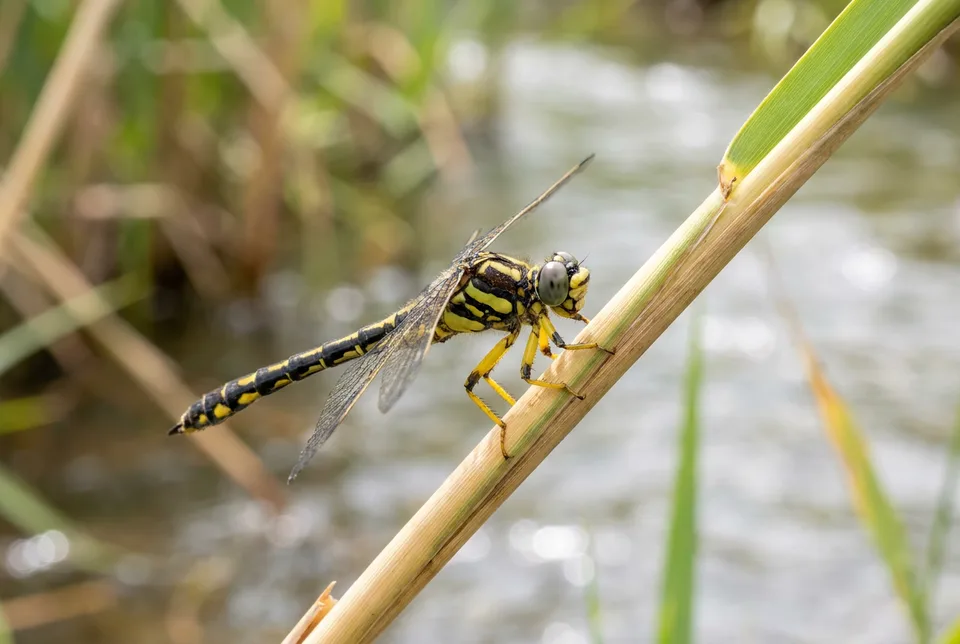
Yellow-Legged Clubtail in wetland habitat — Saone, River Cruises wildlifeAI-modified
Home›River Cruises›River Wildlife›Yellow-Legged Clubtail

Yellow-Legged ClubtailStylurus flavipesWhere and when to see them

Previous speciesYellow-billed TernNext speciesYellow-legged Gull

Yellow-Legged Clubtail at a glance

The Yellow-Legged Clubtail is a river dragonfly, not a damselfly or a bird. Its scientific name is Stylurus flavipes, with Gomphus flavipes appearing in older literature. The French name gomphe à pattes jaunes identifies it in the Grand Lyon biodiversity guide used for the registered lower Saône reach. Like other dragonflies, it has an aquatic immature stage and an aerial adult stage, so a riverside sighting reflects only one part of its life. Adults can be difficult to locate even where larvae develop successfully. Dutch specialists therefore monitor the species by searching for the skins left after emergence, rather than assuming that adult sightings alone measure abundance. This monitoring experience is useful biological context but does not supply a calendar for Lyon. The registry concerns the Rives de Saône promenade from Rochetaillée-sur-Saône through Fontaines-sur-Saône towards Lyon, upstream of the Rhône confluence. It is not a claim for every French river or the whole Saône catchment.
Behaviour & reproduction

Size
Not verified
Weight
Species-specific weight not verified
Lifespan
Not verified
Status
See sourced assessment

Most of the life cycle takes place out of sight in the river, where larvae live shallowly buried in fine sediment. The specialist ecology report describes slowly flowing sections, sandbanks, side channels and sheltered places near fallen trees as relevant settings. At emergence a mature larva crawls out of the water and the adult leaves the larval skin behind. The fresh adult then needs time to expand and harden its wings and body before sustained flight. Dutch monitoring guidance notes that finding an emerging individual is possible but that observers more often find only the empty skin. Adult absence during a brief walk therefore says little about whether the species uses the water nearby. Conversely, an adult resting inland does not prove that the nearest patch of bank is a breeding site. Keep these different evidence types separate. Do not move emerging insects, pull them from their skins or interrupt drying for a photograph; this is a vulnerable transition rather than a display.

Top wildlife locations

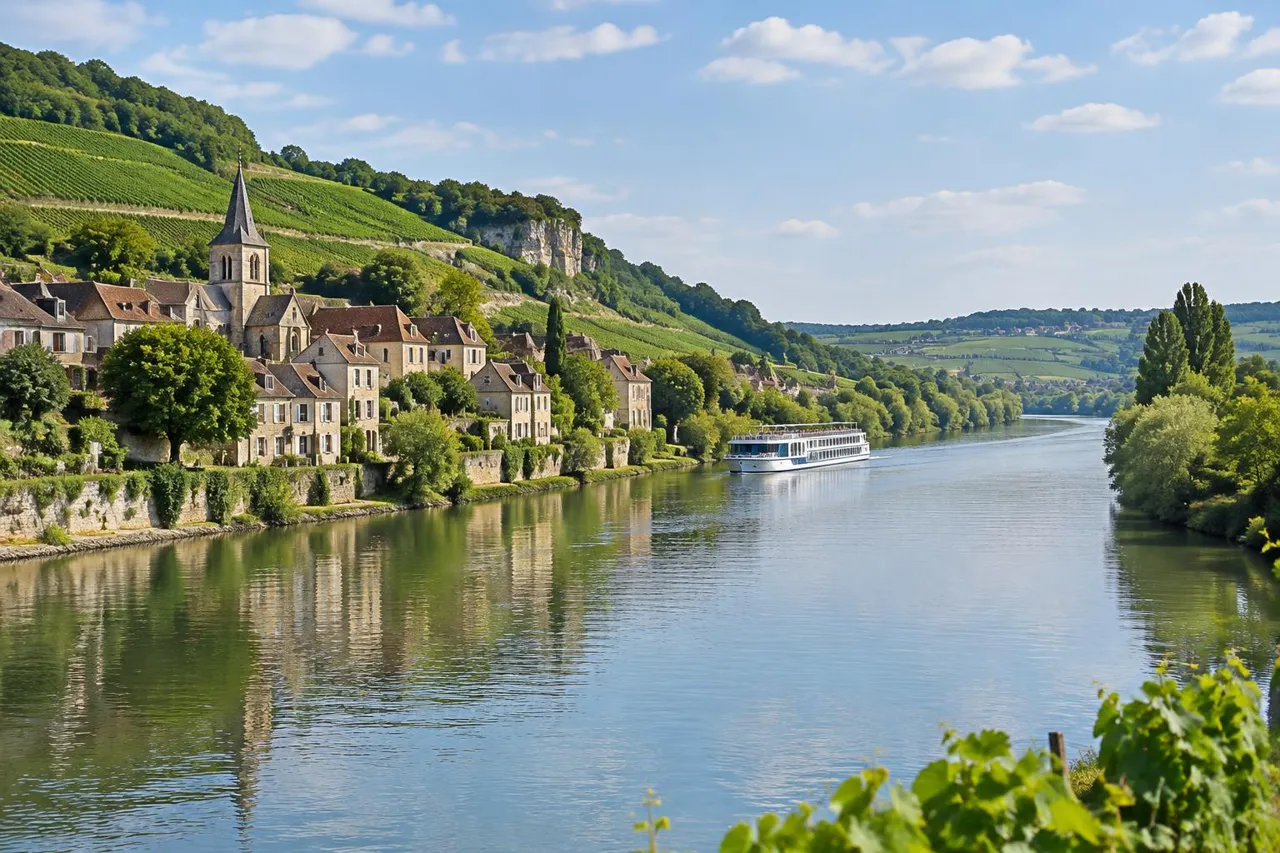
Saone river landscape — River Cruises wildlife habitatAI-modified

Saone

Lower Saône: Grand Lyon Rives de Saône promenade, Rochetaillée-sur-Saône–Fontaines-sur-Saône–Lyon, upstream of the Rhône confluence.

Explore river cruises

Destinations describe the species' habitat, not guaranteed cruise stops. Some animals require an optional inland excursion or are found in restricted reserves.

Fun facts about the Yellow-Legged Clubtail

  • Older literature uses the name Gomphus flavipes.
  • The French name is gomphe à pattes jaunes.
  • Larvae live in river sediments.
  • Larvae can bury shallowly in fine substrate.
  • The adult leaves an empty skin at emergence.
  • Dutch monitoring often searches for skins instead of adults.
  • Adults can be hard to find at occupied rivers.
  • Freshly emerged adults need undisturbed drying time.
  • The local registry concerns the Saône upstream of the Rhône confluence.

Best time to see the Yellow-Legged Clubtail

No exact local adult viewing months have been verified for the registered Rives de Saône reach. The Grand Lyon biodiversity guide names the species, but the occurrence list is not a monthly flight calendar. Dutch monitoring publications describe emergence and searches on Dutch river beaches in June and July, including very specific dates. Those are useful examples of how the species is studied, but they concern a different locality and cannot be transferred to Lyon. A general European flight period would likewise be an unsuitable substitute for direct lower Saône evidence. The location therefore retains an empty month array and an explicit unknown-season explanation. A current local odonate survey or a dated record from the actual promenade could improve this later. Before visiting, ask a local naturalist organisation about recent observations and safe public access. Even on a favourable day adults can be elusive, so a quiet habitat walk may produce no sighting without contradicting the published local association.

Yellow-Legged Clubtail: season matrix by destination

Highlighted months reflect the stated local evidence, not guaranteed encounters. Neutral months mean no verified monthly viewing window, not absence. Observation records and recommended viewing windows are distinct.

Saone

Exact species-specific local viewing months are unverified; no months inferred from broader range, climate or general site seasons.

JanFebMarAprMayJunJulAugSepOctNovDec
Explore river cruises

Where the Yellow-Legged Clubtail lives

The species is closely associated with large lowland rivers and suitable fine bottom sediments. The Dutch EIS and Butterfly Conservation report emphasises slow-flowing sections with sandy substrate and relatively organic-rich fine material in which larvae bury themselves shallowly. Sheltered water near sandbanks, side channels, bends and fallen trees can form part of that habitat mosaic. The report also warns that records occur in apparently less typical situations, so a simple visual habitat judgement cannot establish absence. On the lower Saône, the Grand Lyon guide supplies the local species association, not a sediment map or a guarantee that every promenade section contains larvae. Bank engineering, dredging and disturbance of emergence places can affect different life stages in different ways. Watching from an established path is preferable to walking across soft river margins in search of an adult. A good adult resting perch and a suitable larval riverbed are connected ecological needs, but they are not interchangeable descriptions of the same microhabitat.

What the Yellow-Legged Clubtail eats

Clubtails are predatory insects through their active feeding stages. Aquatic larvae take small animal prey within the river environment, while adults capture other insects in flight. This change links the submerged food web with the aerial insect community along the bank. The species-specific specialist report consulted here focuses on habitat, emergence and the effects of works rather than providing a measured diet for the lower Saône. Consequently no percentage composition, named local prey list or daily consumption figure is assigned to this population. Burrowing in sediment is a habitat and hunting adaptation, not evidence that larvae eat sand or decaying plant material. Similarly, an adult sitting motionless may be resting or watching for prey rather than feeding on its perch. Observe at sufficient distance to let natural hunting continue. Avoid sweeping vegetation with a net, collecting larvae or placing other insects near an adult to induce a feeding photograph; a responsible river visit does not require manipulating either stage.

Species at a glance

Common name
Yellow-Legged Clubtail
Scientific name
Stylurus flavipes
Animal group
Insects
Size
Adult length not independently verified; shed larval skins approximately 3 cm (1.2 in) in Dutch monitoring guidance
Weight
Species-specific weight not verified
Lifespan
Aquatic development lasts several years; exact local duration and adult longevity not verified
Status
European IUCN assessment located (2024); category not verified from the accessible extract; global status unknown here
Identification
Begin with the dragonfly's overall structure and the clubtail family characters rather than the English name alone. Clubtails have widely separated eyes, and the adult abdomen can broaden towards the tip, particularly in males. Yellow and black markings and pale areas on the legs help direct attention to Stylurus flavipes, but several river dragonflies can look similar at a glance. A species-level determination requires checking the thoracic pattern, abdomen and appendages against a reliable regional identification guide. Worn individuals, females and newly emerged adults may not match a single familiar photograph. The older name Gomphus flavipes in a publication refers to the same species concept used here, not an additional local species. Dutch monitoring guidance describes its shed skins as sand-coloured and around three centimetres long, but size and colour alone are not sufficient for an unfamiliar observer to identify a Saône specimen. Photograph rather than collect, and retain an uncertain label when diagnostic details are missing.

Yellow-Legged Clubtail: frequently asked questions

Where can I see the Yellow-Legged Clubtail?
Saone. Use the public riverside promenade and inspect nearby vegetation visually without leaving the permitted route. A close-focusing binocular or a camera with a long lens can reveal a perched dragonfly without handling it. Freshly emerged adults must be left entirely undisturbed while their wings and bodies harden. Shed larval skins can document emergence, but identifying them requires suitable expertise; do not treat any empty dragonfly skin as this species. Dutch monitoring methods use standardised searches of river beaches, yet that is not permission to enter restricted or unstable Saône banks. Current river conditions, access rules and local conservation guidance take priority. A cruise deck is generally a poor place to resolve diagnostic features on a small insect near vegetation. A planned shore walk is the relevant observation setting. Record photographs from several angles and the exact location if possible, and submit an uncertain identification for expert review rather than converting an indistinct yellow-and-black dragonfly into a confirmed record.
When is the best time to see the Yellow-Legged Clubtail?
No exact local adult viewing months have been verified for the registered Rives de Saône reach. The Grand Lyon biodiversity guide names the species, but the occurrence list is not a monthly flight calendar. Dutch monitoring publications describe emergence and searches on Dutch river beaches in June and July, including very specific dates. Those are useful examples of how the species is studied, but they concern a different locality and cannot be transferred to Lyon. A general European flight period would likewise be an unsuitable substitute for direct lower Saône evidence. The location therefore retains an empty month array and an explicit unknown-season explanation. A current local odonate survey or a dated record from the actual promenade could improve this later. Before visiting, ask a local naturalist organisation about recent observations and safe public access. Even on a favourable day adults can be elusive, so a quiet habitat walk may produce no sighting without contradicting the published local association.
How big does the Yellow-Legged Clubtail get?
Adult length not independently verified; shed larval skins approximately 3 cm (1.2 in) in Dutch monitoring guidance. Adult weight: Species-specific weight not verified. Size varies with age, sex and population.
How should I behave around the Yellow-Legged Clubtail?
Use the public riverside promenade and inspect nearby vegetation visually without leaving the permitted route. A close-focusing binocular or a camera with a long lens can reveal a perched dragonfly without handling it. Freshly emerged adults must be left entirely undisturbed while their wings and bodies harden. Shed larval skins can document emergence, but identifying them requires suitable expertise; do not treat any empty dragonfly skin as this species. Dutch monitoring methods use standardised searches of river beaches, yet that is not permission to enter restricted or unstable Saône banks. Current river conditions, access rules and local conservation guidance take priority. A cruise deck is generally a poor place to resolve diagnostic features on a small insect near vegetation. A planned shore walk is the relevant observation setting. Record photographs from several angles and the exact location if possible, and submit an uncertain identification for expert review rather than converting an indistinct yellow-and-black dragonfly into a confirmed record.
What does the Yellow-Legged Clubtail eat?
Clubtails are predatory insects through their active feeding stages. Aquatic larvae take small animal prey within the river environment, while adults capture other insects in flight. This change links the submerged food web with the aerial insect community along the bank. The species-specific specialist report consulted here focuses on habitat, emergence and the effects of works rather than providing a measured diet for the lower Saône. Consequently no percentage composition, named local prey list or daily consumption figure is assigned to this population. Burrowing in sediment is a habitat and hunting adaptation, not evidence that larvae eat sand or decaying plant material. Similarly, an adult sitting motionless may be resting or watching for prey rather than feeding on its perch. Observe at sufficient distance to let natural hunting continue. Avoid sweeping vegetation with a net, collecting larvae or placing other insects near an adult to induce a feeding photograph; a responsible river visit does not require manipulating either stage.
Are wildlife sightings guaranteed on a river cruise?
No. Animals move freely and routes, weather, access restrictions and local conditions influence every outing. Confirm the actual itinerary and shore program before booking.

Compare wildlife in the same destinations

Explore other insects recorded in these destinations. Similar surroundings do not mean the animals share the same habits or viewing season.

Species comparison by animal group and destination
Yellow-Legged Clubtail in wetland habitat — Saone, River Cruises wildlifeAI-modifiedYellow-Legged Clubtail
Animal groupInsects
DestinationsSaone
Scientific name
Stylurus flavipes
Previous speciesYellow-billed TernNext speciesYellow-legged Gull
All river wildlife
On this page
  • 01About
  • 02Behaviour & reproduction
  • 03Top wildlife locations
  • 04Fun facts
  • 05Best season
  • 06Season matrix by destination
  • 07Habitat
  • 08Diet
  • 09Species at a glance
  • 10Questions & answers
  • 11Compare

Find your river cruise

AI-modified
Plan your trip

Find your next river journey

Compare destinations, shore programs and dates with the animals and habitats you would love to see.

  • Daily shore excursions
  • Responsible wildlife watching
  • Boutique river ships
Explore river cruises