Bluerides – Blue Rides - Book Liveaboards worldwideOCEAN ADVENTURES
River CruisesRiversNature & WildlifeOur Promise
River CruisesRiversNature & WildlifeOur PromiseSign In

River destinations

  • River destinations
  • Amazon
  • Danube
  • Rhine
  • Mekong
  • Nile

Ships & departures

  • River Cruise Search
  • Deals

Nature & Wildlife

  • Nature & Wildlife

Travel support

  • Our Promise
  • Contact

Contact

Get in Touch

Get in touch anytime, we're happy to help you find the right trip or sort out any question.

EmailWrite us, we usually reply within a few hours.
contact@bluerides.com
WhatsAppChat with us on WhatsApp, Mon–Fri 10:00–16:00 (CET).
Start WhatsApp Chat
PhoneCall us, we're happy to help.
Free call, Mon–Fri 10 AM – 8 PM (CET).
Europe+49 800 1144 990USA+1 888 557 7735UK+44 800 707 4152Australia+61 2 8599 6113Canada+1 888 557 7735
Which river journey is yours?Answer 8 quick questions and find the river cruise that fits you.
8 questions, 1 minute·Plus Gift
Secure Payment MethodsYour payments are fully secured with AES-256 encryption.
Powered byStripeWiseAMEXPayGoogle PaySEPABank
Imprint·Terms & Conditions·Privacy Policy·About·Contact·Liability Waiver·Affiliate Program·Cruise·Blog·
Visit us here

© 2026 Blue Rides. All rights reserved.

Bluerides – Blue Rides - Book Liveaboards worldwideOCEAN ADVENTURES
River CruisesRiversNature & WildlifeOur Promise
River CruisesRiversNature & WildlifeOur PromiseSign In
Yellow-billed Tern in wetland habitat — Amazon, River Cruises wildlifeAI-modified
Home›River Cruises›River Wildlife›Yellow-billed Tern

Yellow-billed TernSternula superciliarisWhere and when to see them

Previous speciesWood SandpiperNext speciesYellow-Legged Clubtail

Yellow-billed Tern at a glance

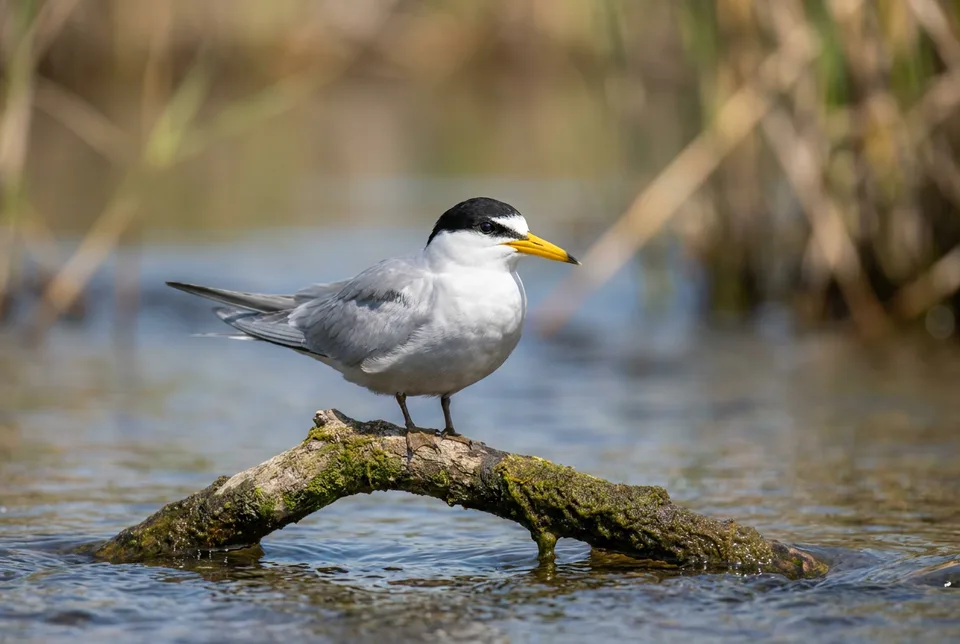
The Yellow-billed Tern is a small South American tern associated especially with the major freshwater river systems east of the Andes. Its silvery-grey upperparts, white underparts and yellow bill can be seen when it passes close to a boat, but identification improves greatly with a view of the head and upperwing. Cornell's Birds of the World describes a broad range from Colombia and Venezuela through much of Brazil to Argentina, including lowland rivers and lakes. This distribution is biological context rather than proof for every Amazon itinerary. The registry's specific association comes from a Naturalist Journeys cruise in Peru during March 2017, covering Iquitos and the Ucayali with connected waterways. The species list explicitly records birds flying near the boats and compares their smaller size with Large-billed Terns. That direct trip evidence supports a historical local occurrence. It does not establish a recurring annual peak or an equal likelihood of encountering the species along every tributary.


Behaviour & reproduction

Size
Species-specific measurement not independently verified in an authoritative accessible account
Weight
Species-specific weight not independently verified
Lifespan
Species-specific wild lifespan not verified
Status
See sourced assessment

Yellow-billed Terns have light, rapid flight and frequently hover before dropping towards a fish. This ability to pause over water helps separate their feeding sequence from the sustained low skimming of a Black Skimmer. Cornell describes birds singly or in pairs along river sandbanks, sometimes in the company of Black Skimmers and Large-billed Terns. A mixed gathering is useful for comparison, but each bird still needs an individual identification. Birds using exposed banks can be hard to see when resting because their pale upperparts blend with the background. A boat may reveal flying birds more readily than a shore observer sees stationary ones. The 2017 Peruvian trip specifically noted flight near boats, which is a description of that encounter rather than evidence that terns habitually approach vessels for food. Do not throw food or manoeuvre to make a resting group fly. A natural hovering sequence offers better behavioural information than a forced flight around a landing place.

Top wildlife locations

Amazon river landscape — River Cruises wildlife habitatAI-modified

Amazon

Peru — Iquitos/Nauta, Ucayali and connected tributaries (2017 cruise)

Explore river cruises

Destinations describe the species' habitat, not guaranteed cruise stops. Some animals require an optional inland excursion or are found in restricted reserves.

Fun facts about the Yellow-billed Tern

  • Its genus is Sternula, not the larger-tern genus Sterna.
  • Cornell treats the species as monotypic.
  • It frequently hovers before diving for fish.
  • Breeding adults have a contrasting white forehead.
  • Juveniles lack a solid black cap.
  • The bill lacks the black tip of a typical Least Tern.
  • The upperwing dark wedge includes several outer primaries.
  • Birds may associate with Black Skimmers.
  • Non-breeding habitat can include rice fields.

Best time to see the Yellow-billed Tern

The strongest exact local timing evidence is the Amazon Star species list headed March 18–March 26, 2017. Its itinerary begins at Iquitos and includes the Ucayali River, Yarapa and other connected waterways; the Yellow-billed Tern entry states that birds were seen in flight near boats. March is therefore retained as a month of recorded occurrence on that dated cruise, not labelled an annual best season. The report does not assign this species to one named day or guarantee its presence at every listed tributary, so the evidence scope remains the trip corridor. No additional months have been inferred from general Amazon water levels, national residence status or the breeding calendar elsewhere in South America. For a future departure, recent observations from the actual route would be more useful than extrapolating from one historic report. A March visit can still fail to encounter the bird, and a visit in another month is not ruled out by the limited evidence assembled here.

Yellow-billed Tern: season matrix by destination

Highlighted months reflect the stated local evidence, not guaranteed encounters. Neutral months mean no verified monthly viewing window, not absence. Observation records and recommended viewing windows are distinct.

Amazon

Recorded on the March 18–26, 2017 cruise; historical occurrence only, not an annual March recommendation.

JanFebMarAprMayJunJulAugSepOctNovDec
Explore river cruises

Where the Yellow-billed Tern lives

Large rivers and lakes east of the Andes are the central setting described by Cornell. Sandbanks provide resting and breeding habitat, while adjoining open water provides opportunities to locate fish. During the non-breeding season the species can also use river mouths, coastal lagoons and rice fields, so it should not be treated as exclusively marine or exclusively confined to the main Amazon channel. The registered Peruvian reach is more restricted than this broad habitat range: it concerns the Iquitos and Nauta cruise region, the Ucayali and connected tributaries visited in 2017. Records from elsewhere in South America do not validate a particular cruise stop. Exposed sand and shallow feeding water can change position with river conditions; the bank shown in a historic photograph may no longer be exposed. An operator's current route and a local guide's knowledge of accessible habitat therefore matter. Avoid landing on occupied sandbanks merely because they appear bare, since inconspicuous birds may already be using them.

What the Yellow-billed Tern eats

Small fish are central to the feeding behaviour described in the accessible Cornell account. Yellow-billed Terns hover frequently and then dive, using flight to locate prey close to the surface rather than pursuing it by swimming underwater over long distances. The combination of open water, visibility and suitable prey can make a patch attractive even when few birds are resting nearby. Watch an individual through several passes: a brief hover followed by a downward plunge is more informative than an isolated splash. The source consulted here does not establish prey proportions for the registered Peruvian cruise reach, so no local fish species or dietary percentages are claimed. Likewise, seeing a tern near a vessel does not show that it depends on discarded food. The March 2017 list records proximity to boats without identifying a feeding cause. Keep the encounter natural by withholding food, avoiding fishing-line waste and letting a guide maintain distance from resting or feeding birds.

Species at a glance

Common name
Yellow-billed Tern
Scientific name
Sternula superciliaris
Animal group
Birds
Size
Species-specific measurement not independently verified in an authoritative accessible account
Weight
Species-specific weight not independently verified
Lifespan
Species-specific wild lifespan not verified
Status
Least Concern; BirdLife 2024 assessment; population trend stable
Identification
A breeding adult has a black crown, nape and eyeline around a contrasting white forehead, with silvery-grey upperparts and white below. The yellow bill is heavier than that of a Least Tern and lacks its black tip, according to Cornell's comparison. The tail is shorter and less deeply forked, and the outer upperwing shows a broader dark wedge formed by four or five dark primaries rather than the two emphasised for Least Tern. These are comparative features, not all equally visible in a single photograph. Non-breeding adults have much whiter crowns and lores, retaining dark marks around the nape and ear area. Juveniles are scalloped brown and white above and lack a solid black cap. A yellow bill alone is insufficient because bill colours and apparent size can mislead at distance. Use the full combination of head, upperwing, tail and proportions, particularly when several small terns occur together.

Yellow-billed Tern: frequently asked questions

Where can I see the Yellow-billed Tern?
Amazon. From a stable deck or a guided skiff, scan open water close to exposed banks and follow small pale terns rather than watching only the largest birds. The historic trip report notes flight near boats, so binoculars should be ready before a close pass rather than raised only after the bird has gone. Compare bill proportions, wing pattern and overall size with nearby Large-billed Terns when both species are present. Photographs of an upperwing and side profile can resolve details missed in rapid flight. Let the guide choose a position that does not intercept repeated feeding runs or push resting birds off a bank. Never land among a gathering to obtain a low-angle photograph. The exact registered reach includes connected waterways, and a suitable excursion may offer closer habitat coverage than the main ship. Nevertheless, neither skiff access nor a historic cruise list promises a sighting. Record the waterway and date if an identification is made.
When is the best time to see the Yellow-billed Tern?
The strongest exact local timing evidence is the Amazon Star species list headed March 18–March 26, 2017. Its itinerary begins at Iquitos and includes the Ucayali River, Yarapa and other connected waterways; the Yellow-billed Tern entry states that birds were seen in flight near boats. March is therefore retained as a month of recorded occurrence on that dated cruise, not labelled an annual best season. The report does not assign this species to one named day or guarantee its presence at every listed tributary, so the evidence scope remains the trip corridor. No additional months have been inferred from general Amazon water levels, national residence status or the breeding calendar elsewhere in South America. For a future departure, recent observations from the actual route would be more useful than extrapolating from one historic report. A March visit can still fail to encounter the bird, and a visit in another month is not ruled out by the limited evidence assembled here.
How big does the Yellow-billed Tern get?
Species-specific measurement not independently verified in an authoritative accessible account. Adult weight: Species-specific weight not independently verified. Size varies with age, sex and population.
How should I behave around the Yellow-billed Tern?
From a stable deck or a guided skiff, scan open water close to exposed banks and follow small pale terns rather than watching only the largest birds. The historic trip report notes flight near boats, so binoculars should be ready before a close pass rather than raised only after the bird has gone. Compare bill proportions, wing pattern and overall size with nearby Large-billed Terns when both species are present. Photographs of an upperwing and side profile can resolve details missed in rapid flight. Let the guide choose a position that does not intercept repeated feeding runs or push resting birds off a bank. Never land among a gathering to obtain a low-angle photograph. The exact registered reach includes connected waterways, and a suitable excursion may offer closer habitat coverage than the main ship. Nevertheless, neither skiff access nor a historic cruise list promises a sighting. Record the waterway and date if an identification is made.
What does the Yellow-billed Tern eat?
Small fish are central to the feeding behaviour described in the accessible Cornell account. Yellow-billed Terns hover frequently and then dive, using flight to locate prey close to the surface rather than pursuing it by swimming underwater over long distances. The combination of open water, visibility and suitable prey can make a patch attractive even when few birds are resting nearby. Watch an individual through several passes: a brief hover followed by a downward plunge is more informative than an isolated splash. The source consulted here does not establish prey proportions for the registered Peruvian cruise reach, so no local fish species or dietary percentages are claimed. Likewise, seeing a tern near a vessel does not show that it depends on discarded food. The March 2017 list records proximity to boats without identifying a feeding cause. Keep the encounter natural by withholding food, avoiding fishing-line waste and letting a guide maintain distance from resting or feeding birds.
Are wildlife sightings guaranteed on a river cruise?
No. Animals move freely and routes, weather, access restrictions and local conditions influence every outing. Confirm the actual itinerary and shore program before booking.

Compare wildlife in the same destinations

Explore other birds recorded in these destinations. Similar surroundings do not mean the animals share the same habits or viewing season.

Species comparison by animal group and destination
Yellow-billed Tern in wetland habitat — Amazon, River Cruises wildlifeAI-modifiedYellow-billed TernAmazon kingfisher in wetland habitat — Amazon, River Cruises wildlifeAI-modifiedAmazon KingfisherAnhinga in wetland habitat — Amazon, River Cruises wildlifeAI-modifiedAnhinga
Animal groupBirdsAnimal groupBirdsAnimal groupBirds
DestinationsAmazonDestinationsAmazonDestinationsAmazon
Scientific name
Sternula superciliaris
Scientific name
Scientific name
Previous speciesWood SandpiperNext speciesYellow-Legged Clubtail
All river wildlife
On this page
  • 01About
  • 02Behaviour & reproduction
  • 03Top wildlife locations
  • 04Fun facts
  • 05Best season
  • 06Season matrix by destination
  • 07Habitat
  • 08Diet
  • 09Species at a glance
  • 10Questions & answers
  • 11Compare

Find your river cruise

AI-modified
Plan your trip

Find your next river journey

Compare destinations, shore programs and dates with the animals and habitats you would love to see.

  • Daily shore excursions
  • Responsible wildlife watching
  • Boutique river ships
Explore river cruises