Bluerides – Blue Rides - Book Liveaboards worldwideOCEAN ADVENTURES
River CruisesRiversNature & WildlifeOur Promise
River CruisesRiversNature & WildlifeOur PromiseSign In

River destinations

  • River destinations
  • Amazon
  • Danube
  • Rhine
  • Mekong
  • Nile

Ships & departures

  • River Cruise Search
  • Deals

Nature & Wildlife

  • Nature & Wildlife

Travel support

  • Our Promise
  • Contact

Contact

Get in Touch

Get in touch anytime, we're happy to help you find the right trip or sort out any question.

EmailWrite us, we usually reply within a few hours.
contact@bluerides.com
WhatsAppChat with us on WhatsApp, Mon–Fri 10:00–16:00 (CET).
Start WhatsApp Chat
PhoneCall us, we're happy to help.
Free call, Mon–Fri 10 AM – 8 PM (CET).
Europe+49 800 1144 990USA+1 888 557 7735UK+44 800 707 4152Australia+61 2 8599 6113Canada+1 888 557 7735
Which river journey is yours?Answer 8 quick questions and find the river cruise that fits you.
8 questions, 1 minute·Plus Gift
Secure Payment MethodsYour payments are fully secured with AES-256 encryption.
Powered byStripeWiseAMEXPayGoogle PaySEPABank
Imprint·Terms & Conditions·Privacy Policy·About·Contact·Liability Waiver·Affiliate Program·Cruise·
Visit us here

© 2026 Blue Rides. All rights reserved.·

Bluerides – Blue Rides - Book Liveaboards worldwideOCEAN ADVENTURES
River CruisesRiversNature & WildlifeOur Promise
River CruisesRiversNature & WildlifeOur PromiseSign In
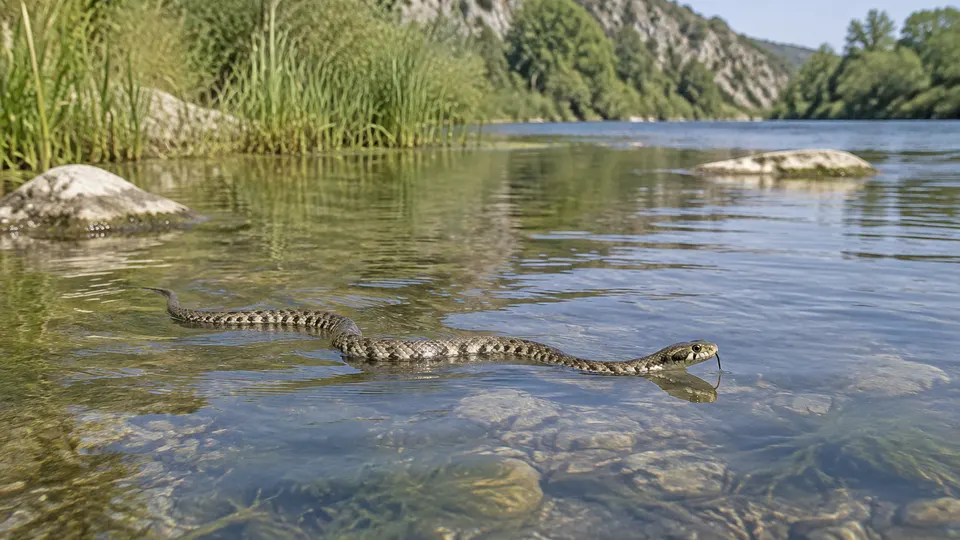
Dice snake in wetland habitat — Danube, River Cruises wildlife
Home›River Cruises›River Wildlife›Dice Snake

Dice SnakeNatrix tessellataWhere and when to see them

Previous speciesDalmatian PelicanNext speciesDouble-crested Cormorant

Dice Snake at a glance

The Dice Snake is a strongly aquatic snake associated with natural waterside habitats. Donau-Auen describes it as a skilled swimmer and diver whose hunting takes place in water. Its patterned back supplies the English name: dark markings form a roughly chequered arrangement on a grey or olive background. The relevant cruise association is the Austrian floodplain east of Vienna towards Hainburg, not the entire Danube route. The park's more recent snake overview calls it very rare and difficult to see. Visitors should therefore treat a sighting as a possibility on a specialist backwater walk rather than a routine expectation from a ship. Species background source: https://www.donauauen.at/wissen/natur-wissenschaft/fauna/wuerfelnatter-natrix-tessellata-tessellata

Behaviour & reproduction

Size
Usually 60–90 cm (24–35 in); exceptionally 150 cm (59 in) in the Donau-Auen species account.
Weight
not verified
Lifespan
not verified
Status
Donau-Auen describes it among the most threatened reptiles in Lower Austria; the park states that its snakes are strictly protected. Global assessment not verified.

The national park describes two hunting methods: searching the bottom beneath stones and branches, and anchoring with the tail before striking at passing prey. When threatened, a Dice Snake can slip quietly into the water and dive away. Defensive scent secretion is also described, but provoking this response is inappropriate and unnecessary for identification. Like other reptiles, it uses external heat rather than maintaining a mammal-like body temperature. A waterside animal resting in the open may thus be thermoregulating, not waiting for human attention. The park states that the local snakes are non-venomous; this is no reason to handle them or obstruct their escape.

Top wildlife locations

Danube river landscape — River Cruises wildlife habitat

Danube

Austria: Donau-Auen floodplains east of Vienna towards Hainburg, on Vienna–Bratislava reach; optional shore/backwater excursion, not Passau or Budapest. Viewing: Warm months; watch natural banks for basking or swimming snakes.
Explore river cruises

Destinations describe the species' habitat, not guaranteed cruise stops. Some animals require an optional inland excursion or are found in restricted reserves.

Fun facts about the Dice Snake

  • It hunts in water.
  • Small fish are important prey.
  • The park also lists frogs and newts as food.
  • Its dorsal spots form offset rows.
  • The scales are strongly keeled.
  • It can anchor with its tail while hunting.
  • Natural-bank destruction threatens its habitat.
  • Donau-Auen describes the species as very rare.

Best time to see the Dice Snake

The registry suggests warm-month bank watching, and the park's snake overview links renewed activity to the onset of the warm season. Neither statement establishes a recurring numerical observation calendar for this particular floodplain reach. Egg-laying dates in the species account concern reproduction and must not be repurposed as months when visitors can reliably see snakes. Location months are therefore empty. Sunshine and accessible natural banks may affect whether an individual is visible, but weather alone does not justify a calendar. Ask a park guide about current permitted routes and recent conditions, while remembering that the park describes this species as exceptionally elusive.

Dice Snake: season matrix by destination

Highlighted months reflect the stated local evidence, not guaranteed encounters. Neutral months mean no verified monthly viewing window, not absence. Observation records and recommended viewing windows are distinct.

Danube

Local ecology is supported; recurring numerical viewing months not verified. Egg-laying dates are not observation-calendar evidence.

JanFebMarAprMayJunJulAugSepOctNovDec
Explore river cruises

Where the Dice Snake lives

Natural banks and connected aquatic habitat are central to this snake's ecology. Donau-Auen explicitly links its decline to the destruction of natural water margins. Backwaters with submerged branches, stones and small fish are more relevant to its hunting than exposed cruise infrastructure. In Lower Austria the park describes a localised distribution, so suitable-looking habitat elsewhere along the Danube is not proof of occupancy. The registered excursion area is the floodplain between Vienna and Hainburg. Its water-edge structure must be considered together with adjacent terrestrial shelter and places used for reproduction. Maintaining an apparently tidy, hardened bank can remove precisely the irregular features that make a natural shoreline useful.

What the Dice Snake eats

Small fish dominate the diet described by Donau-Auen, which also lists frogs and newts. The snake searches underwater rather than hunting terrestrial rodents. Its ability to investigate shelter beneath stones or wood allows it to exploit prey that would be difficult to detect from above the surface. The park also describes rapid strikes at prey swimming past an anchored animal. These are species-level behavioural observations, not a measured diet study for every Danube backwater. Local prey percentages and changes through the year were not verified. Never release bait fish or disturb amphibians to obtain a hunting photograph; watch the natural interaction from the path.

Species at a glance

Common name
Dice Snake
Scientific name
Natrix tessellata
Animal group
Reptiles
Size
Usually 60–90 cm (24–35 in); exceptionally 150 cm (59 in) in the Donau-Auen species account.
Weight
not verified
Lifespan
not verified
Status
Donau-Auen describes it among the most threatened reptiles in Lower Austria; the park states that its snakes are strictly protected. Global assessment not verified.
Identification
The park describes slate-grey to olive upperparts with two offset rows of dark dorsal spots, sometimes merging along the back, plus another row of flank markings. Strongly keeled scales give the surface a textured appearance in a clear photograph. Identification should use the pattern and head together rather than assuming every swimming snake is a Dice Snake. Grass Snakes also enter water, and the two can share wetland settings. Avoid catching an animal to inspect scales or head shields. A lateral and dorsal photograph taken from a safe distance is preferable; if the relevant features remain hidden, retain an uncertain identification.

Dice Snake: frequently asked questions

Where can I see the Dice Snake?
Danube. Walk slowly on authorised routes beside backwaters and scan ahead before approaching a sunny bank. A motionless snake may be more easily overlooked than a swimming one. Remain far enough away that the animal can continue resting or retreat without passing you. Binoculars help examine the back pattern without stepping onto fragile banks. Do not move stones, search nesting material or enter the water. Handling can harm a protected animal and provoke defensive behaviour. For a cruise visitor, the useful setting is a guided floodplain excursion east of Vienna; neither a brief main-channel view nor a snake-shaped ripple is sufficient to establish the species.
When is the best time to see the Dice Snake?
The registry suggests warm-month bank watching, and the park's snake overview links renewed activity to the onset of the warm season. Neither statement establishes a recurring numerical observation calendar for this particular floodplain reach. Egg-laying dates in the species account concern reproduction and must not be repurposed as months when visitors can reliably see snakes. Location months are therefore empty. Sunshine and accessible natural banks may affect whether an individual is visible, but weather alone does not justify a calendar. Ask a park guide about current permitted routes and recent conditions, while remembering that the park describes this species as exceptionally elusive.
How big does the Dice Snake get?
Usually 60–90 cm (24–35 in); exceptionally 150 cm (59 in) in the Donau-Auen species account.. Adult weight: not verified. Size varies with age, sex and population.
How should I behave around the Dice Snake?
Walk slowly on authorised routes beside backwaters and scan ahead before approaching a sunny bank. A motionless snake may be more easily overlooked than a swimming one. Remain far enough away that the animal can continue resting or retreat without passing you. Binoculars help examine the back pattern without stepping onto fragile banks. Do not move stones, search nesting material or enter the water. Handling can harm a protected animal and provoke defensive behaviour. For a cruise visitor, the useful setting is a guided floodplain excursion east of Vienna; neither a brief main-channel view nor a snake-shaped ripple is sufficient to establish the species.
What does the Dice Snake eat?
Small fish dominate the diet described by Donau-Auen, which also lists frogs and newts. The snake searches underwater rather than hunting terrestrial rodents. Its ability to investigate shelter beneath stones or wood allows it to exploit prey that would be difficult to detect from above the surface. The park also describes rapid strikes at prey swimming past an anchored animal. These are species-level behavioural observations, not a measured diet study for every Danube backwater. Local prey percentages and changes through the year were not verified. Never release bait fish or disturb amphibians to obtain a hunting photograph; watch the natural interaction from the path.
Are wildlife sightings guaranteed on a river cruise?
No. Animals move freely and routes, weather, access restrictions and local conditions influence every outing. Confirm the actual itinerary and shore program before booking.

Compare wildlife in the same destinations

Explore other reptiles recorded in these destinations. Similar surroundings do not mean the animals share the same habits or viewing season.

Species comparison by animal group and destination
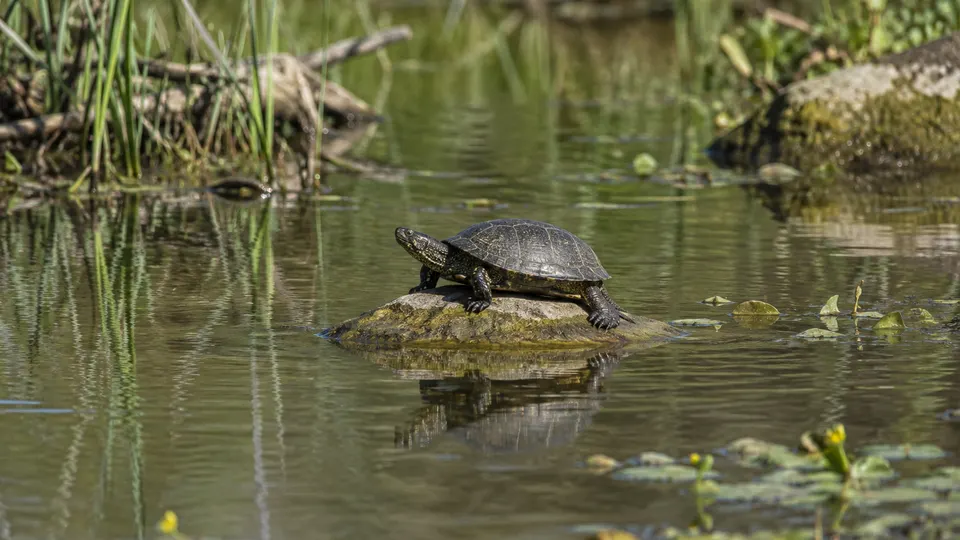
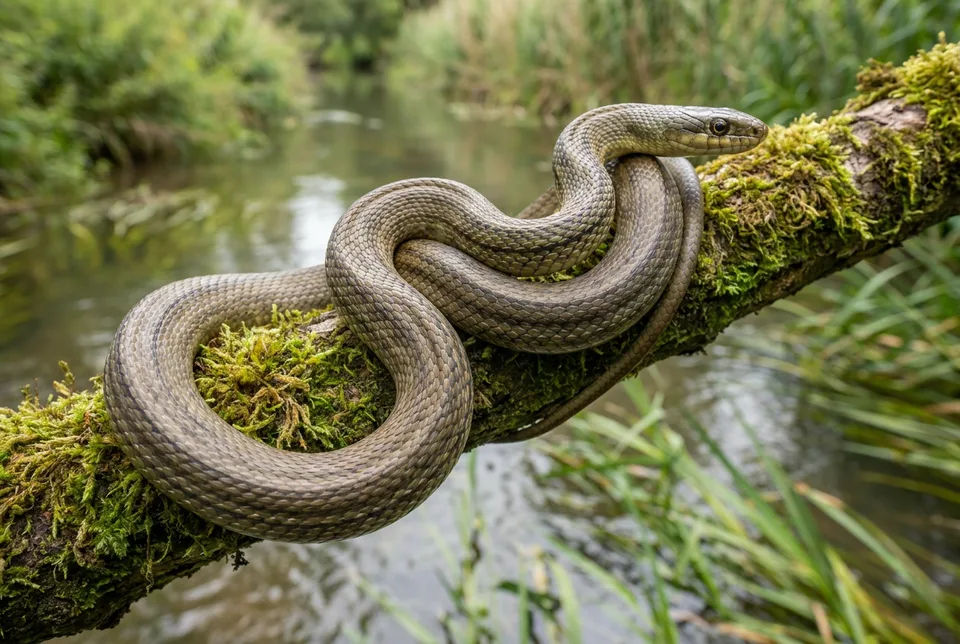
Dice snake in wetland habitat — Danube, River Cruises wildlifeDice SnakeAesculapian Snake in wetland habitat — Danube, River Cruises wildlifeAesculapian SnakeEuropean pond turtle in wetland habitat — Danube, River Cruises wildlifeEuropean Pond Turtle
Animal groupReptilesAnimal groupReptilesAnimal groupReptiles
DestinationsDanubeDestinationsDanubeDestinationsDanube
Scientific name
Natrix tessellata
Scientific name
Scientific name
Previous speciesDalmatian PelicanNext speciesDouble-crested Cormorant
All river wildlife
On this page
  • 01About
  • 02Behaviour & reproduction
  • 03Top wildlife locations
  • 04Fun facts
  • 05Best season
  • 06Season matrix by destination
  • 07Habitat
  • 08Diet
  • 09Species at a glance
  • 10Questions & answers
  • 11Compare

Find your river cruise

Plan your trip

Find your next river journey

Compare destinations, shore programs and dates with the animals and habitats you would love to see.

  • Daily shore excursions
  • Responsible wildlife watching
  • Boutique river ships
Explore river cruises