Bluerides – Blue Rides - Book Liveaboards worldwideOCEAN ADVENTURES
River CruisesRiversNature & WildlifeOur Promise
River CruisesRiversNature & WildlifeOur PromiseSign In

River destinations

  • River destinations
  • Amazon
  • Danube
  • Rhine
  • Mekong
  • Nile

Ships & departures

  • River Cruise Search
  • Deals

Nature & Wildlife

  • Nature & Wildlife

Travel support

  • Our Promise
  • Contact

Contact

Get in Touch

Get in touch anytime, we're happy to help you find the right trip or sort out any question.

EmailWrite us, we usually reply within a few hours.
contact@bluerides.com
WhatsAppChat with us on WhatsApp, Mon–Fri 10:00–16:00 (CET).
Start WhatsApp Chat
PhoneCall us, we're happy to help.
Free call, Mon–Fri 10 AM – 8 PM (CET).
Europe+49 800 1144 990USA+1 888 557 7735UK+44 800 707 4152Australia+61 2 8599 6113Canada+1 888 557 7735
Which river journey is yours?Answer 8 quick questions and find the river cruise that fits you.
8 questions, 1 minute·Plus Gift
Secure Payment MethodsYour payments are fully secured with AES-256 encryption.
Powered byStripeWiseAMEXPayGoogle PaySEPABank
Imprint·Terms & Conditions·Privacy Policy·About·Contact·Liability Waiver·Affiliate Program·Cruise·
Visit us here

© 2026 Blue Rides. All rights reserved.·

Bluerides – Blue Rides - Book Liveaboards worldwideOCEAN ADVENTURES
River CruisesRiversNature & WildlifeOur Promise
River CruisesRiversNature & WildlifeOur PromiseSign In
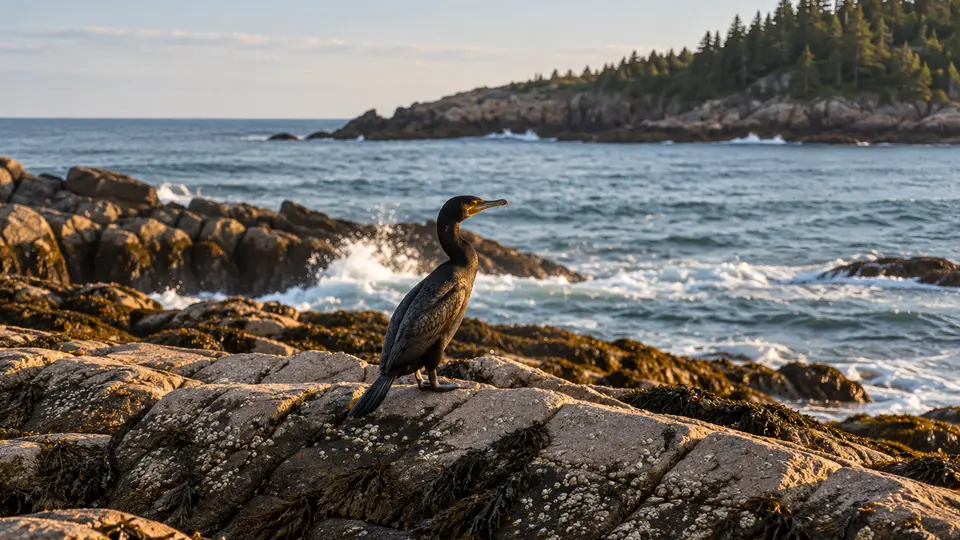
Double-crested cormorant in wetland habitat — Columbia, Mississippi, River Cruises wildlife
Home›River Cruises›River Wildlife›Double-crested Cormorant

Double-crested CormorantNannopterum auritumWhere and when to see them

Previous speciesDice SnakeNext speciesDunlin

Double-crested Cormorant at a glance

The Double-crested Cormorant is a dark, long-necked fishing bird whose shape becomes familiar once watched both on and off the water. It sits low when swimming, then may stand upright on a perch with wings extended after a feeding bout. Yellow-orange facial skin gives colour to an otherwise subdued adult. Cornell identifies it as a foot-propelled underwater hunter and notes use of both fresh and salt water. The Columbia and Upper Mississippi records direct attention to feeding pools and resting structures at particular refuge reaches. A line of perched birds can be easier to locate than a submerged feeding flock, so scan exposed timber and markers as carefully as open water.
Behaviour & reproduction

Size
Not verified
Weight
Not verified
Lifespan
Not verified
Status
Cornell: Low Concern; not an IUCN category.

Cormorants chase fish below the surface using their webbed feet, then rest and digest on exposed perches. Wing-spreading after fishing is a characteristic observation, though it should be described as natural behaviour rather than induced by disturbance. Birds breed colonially and may nest in trees, on rocks or on the ground. Cornell notes that accumulated guano can kill colony trees, after which nesting may shift as supports deteriorate. Feeding and resting locations need not be immediately adjacent, so a commuting line does not necessarily mark a nearby colony. Watch from established viewpoints, avoiding landing on occupied islands or approaching a perch closely enough to send birds back into the water.

Top wildlife locations

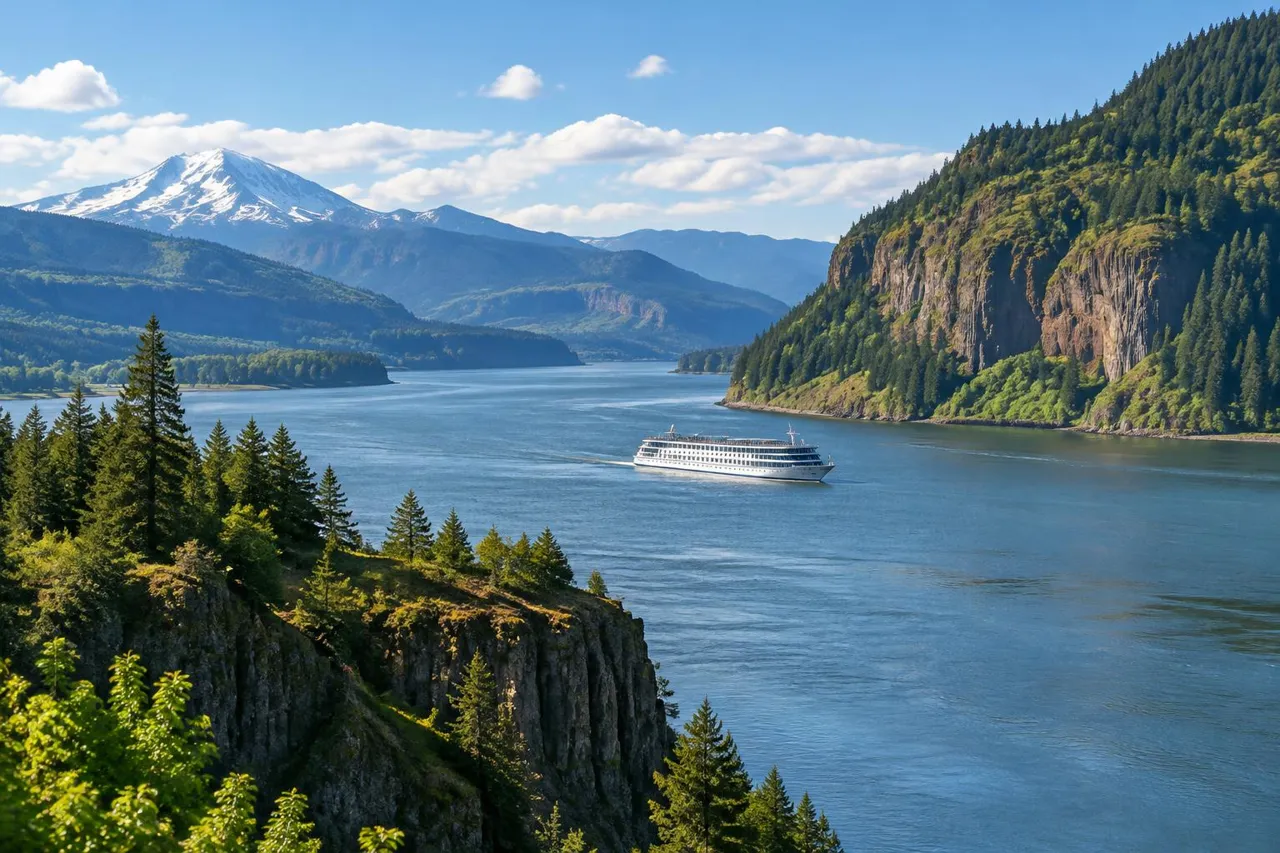
Columbia river landscape — River Cruises wildlife habitat

Columbia

Most records cover Umatilla refuge backwaters along the Columbia near Boardman–Irrigon. Seasonal waterfowl may be best in winter rather than the sailing season. Bighorn sheep require a separate Hells Canyon excursion on the Snake River.
Explore river cruises
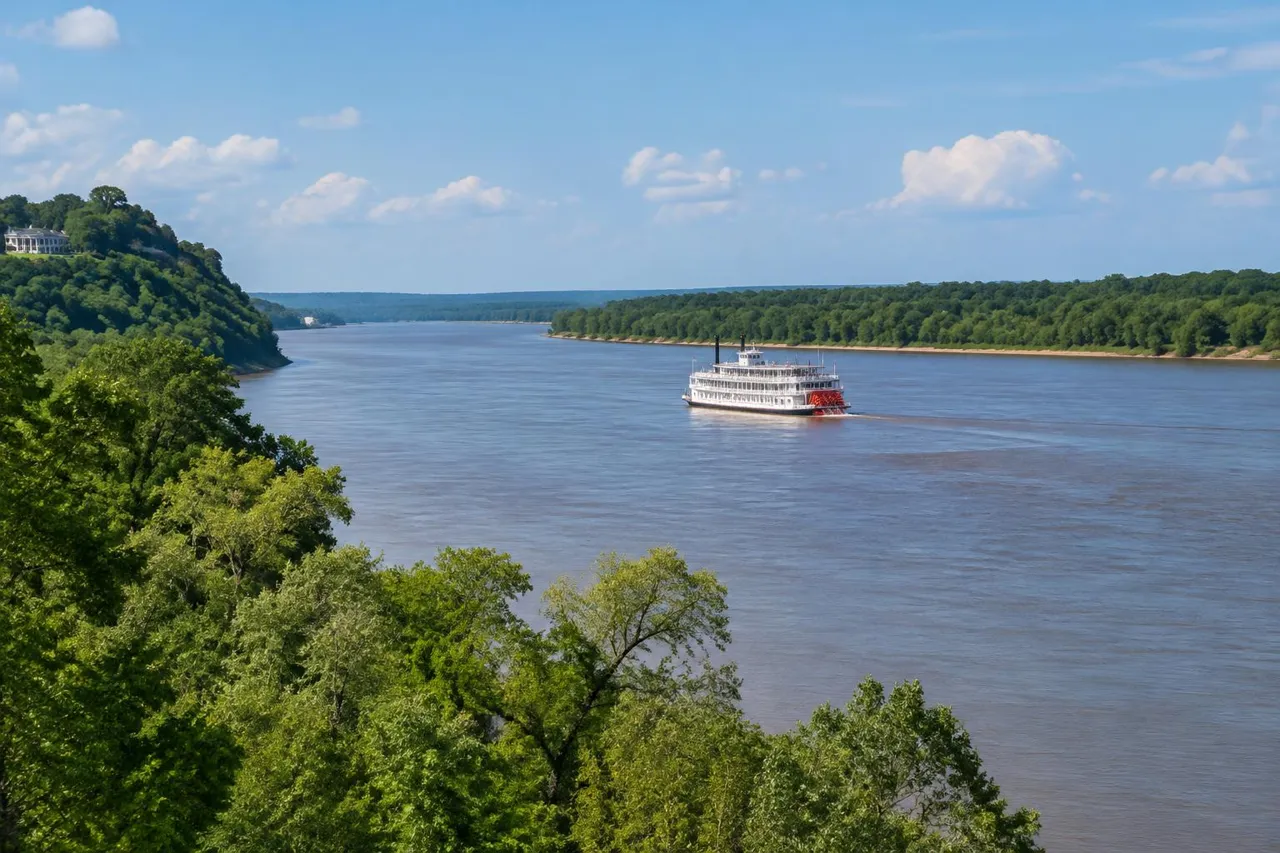
Mississippi river landscape — River Cruises wildlife habitat

Mississippi

Upper Mississippi refuge records cover Wabasha–Rock Island; the smaller Lower Mississippi subset is limited to the Natchez area. Backwater/refuge visits and the season matter; upper-river fauna is not promised on a New Orleans sailing.

Explore river cruises

Destinations describe the species' habitat, not guaranteed cruise stops. Some animals require an optional inland excursion or are found in restricted reserves.

Fun facts about the Double-crested Cormorant

  • The feet propel underwater pursuit.
  • The bill has a hooked tip.
  • Most food is fish.
  • Birds rest on exposed perches.
  • Wing-spreading is characteristic after fishing.
  • Young birds are paler than adults.
  • Facial skin is yellow-orange.
  • Nesting colonies can occupy trees or the ground.
  • Accumulated guano can kill colony trees.

Best time to see the Double-crested Cormorant

No numerical local viewing calendar is verified for the registered Columbia, Mississippi associations. Feeding flocks and resting groups may use different sites, sometimes well separated. The presence of a colony or a favourite perch does not establish a monthly visitor calendar for the adjacent navigation route.

Double-crested Cormorant: season matrix by destination

Highlighted months reflect the stated local evidence, not guaranteed encounters. Neutral months mean no verified monthly viewing window, not absence. Observation records and recommended viewing windows are distinct.

Columbia

No river-specific wildlife calendar is confirmed. Check the actual river reach, local conditions and excursion access with your operator.

JanFebMarAprMayJunJulAugSepOctNovDec
Explore river cruises

Mississippi

No river-specific wildlife calendar is confirmed. Check the actual river reach, local conditions and excursion access with your operator.

JanFebMarAprMayJunJulAugSepOctNovDec
Explore river cruises

Where the Double-crested Cormorant lives

Large enough waters to support fish are central, but colonies or roosts can occupy smaller ponds and lagoons some distance from feeding areas. Exposed rocks, dead trees, docks and other airy structures provide resting places. This combination makes the whole waterside landscape relevant: the feeding pool and the perch are different resources. At Umatilla and Upper Mississippi sites, use authorised shore views to inspect both water and visible resting structures. Do not approach navigation markers or assume that an occupied tree is publicly accessible. A colony’s ecological effects, including guano beneath nests, are part of its habitat use, not a reason for visitors to interfere with the birds or their supports.

What the Double-crested Cormorant eats

Fish account for almost all of the Double-crested Cormorant’s diet, though small amounts of crustaceans, insects and amphibians are recorded by Cornell. The hooked bill tip helps seize prey during underwater pursuit. Captured crustaceans may be manipulated before swallowing, while fish can be difficult to identify after a quick surface handling action. The species takes many kinds of fish rather than depending universally on one prey species. A visible group diving in sequence may be using a rich patch, but an observer cannot reliably assess fish stocks or competition from a brief sighting. Describe the feeding action and any clearly visible prey without extrapolating to the health of the whole river.

Species at a glance

Common name
Double-crested Cormorant
Scientific name
Nannopterum auritum
Animal group
Birds
Size
Not verified in the accessible source text.
Weight
Not verified in the accessible source text.
Lifespan
Wild lifespan not verified in the accessible source text.
Status
Cornell: Low Concern; not an IUCN category.
Identification
Adults are dark with long necks, hooked bills and yellow-orange facial skin. On water they sit low, often with the bill tilted slightly upward; perched birds may show an S-shaped neck curve. Young birds are paler than adults and should not be rejected because the breast is not uniformly dark. The namesake crests are not a dependable year-round field mark. In flight, use the long neck, heavy body and laboured wingbeats alongside flock shape. Other cormorants can resemble this species, so facial pattern, size and proportions matter where ranges overlap. A distant black waterbird is not securely identified by wing-spreading alone.

Double-crested Cormorant: frequently asked questions

Where can I see the Double-crested Cormorant?
Columbia, Mississippi. Start with likely perches, then scan nearby water for low-floating birds with long necks. Follow several dive cycles before counting, because much of a feeding group may be underwater at once. A scope helps resolve facial colour and bill shape; binoculars are useful for tracking a loose commuting line. Cornell describes irregular lines and untidy V-shaped flight formations, unlike the impression of a perfectly coordinated goose skein. Stay far enough away that perched birds continue resting or preening. At the registered rivers, remain on legal paths and do not manoeuvre a vessel towards a roost. Flushing a resting group sacrifices precisely the behaviour most worth observing.
When is the best time to see the Double-crested Cormorant?
No numerical local viewing calendar is verified for the registered Columbia, Mississippi associations. Feeding flocks and resting groups may use different sites, sometimes well separated. The presence of a colony or a favourite perch does not establish a monthly visitor calendar for the adjacent navigation route.
How big does the Double-crested Cormorant get?
Not verified in the accessible source text.. Adult weight: Not verified in the accessible source text.. Size varies with age, sex and population.
How should I behave around the Double-crested Cormorant?
Start with likely perches, then scan nearby water for low-floating birds with long necks. Follow several dive cycles before counting, because much of a feeding group may be underwater at once. A scope helps resolve facial colour and bill shape; binoculars are useful for tracking a loose commuting line. Cornell describes irregular lines and untidy V-shaped flight formations, unlike the impression of a perfectly coordinated goose skein. Stay far enough away that perched birds continue resting or preening. At the registered rivers, remain on legal paths and do not manoeuvre a vessel towards a roost. Flushing a resting group sacrifices precisely the behaviour most worth observing.
What does the Double-crested Cormorant eat?
Fish account for almost all of the Double-crested Cormorant’s diet, though small amounts of crustaceans, insects and amphibians are recorded by Cornell. The hooked bill tip helps seize prey during underwater pursuit. Captured crustaceans may be manipulated before swallowing, while fish can be difficult to identify after a quick surface handling action. The species takes many kinds of fish rather than depending universally on one prey species. A visible group diving in sequence may be using a rich patch, but an observer cannot reliably assess fish stocks or competition from a brief sighting. Describe the feeding action and any clearly visible prey without extrapolating to the health of the whole river.
Are wildlife sightings guaranteed on a river cruise?
No. Animals move freely and routes, weather, access restrictions and local conditions influence every outing. Confirm the actual itinerary and shore program before booking.

Compare wildlife in the same destinations

Explore other birds recorded in these destinations. Similar surroundings do not mean the animals share the same habits or viewing season.

Species comparison by animal group and destination
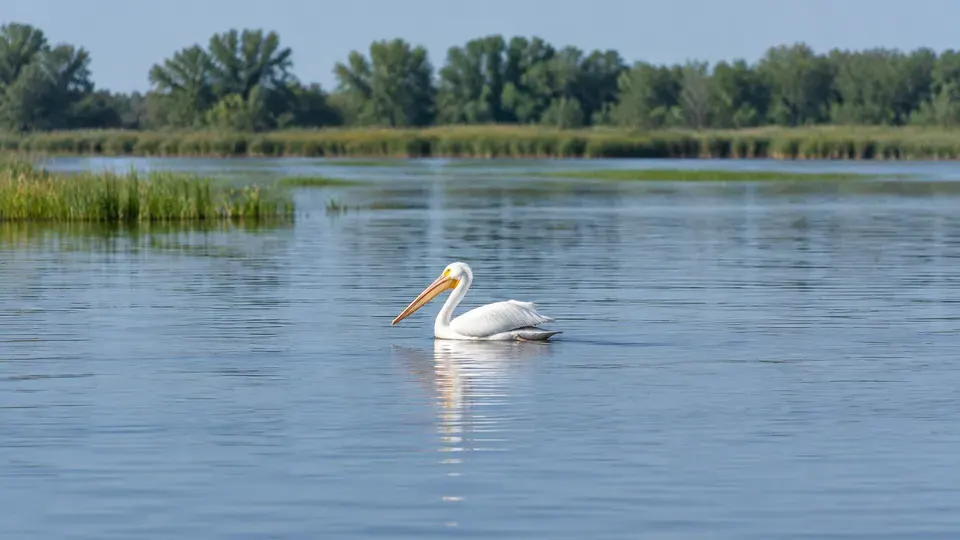
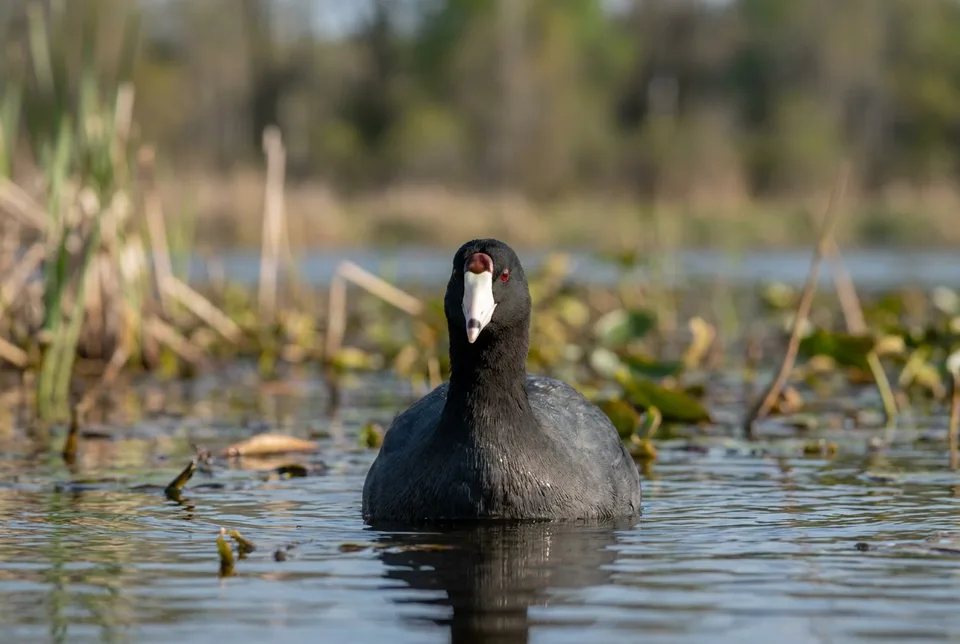
Double-crested cormorant in wetland habitat — Columbia, Mississippi, River Cruises wildlifeDouble-crested CormorantAmerican Coot in wetland habitat — Columbia, River Cruises wildlifeAmerican CootAmerican white pelican in wetland habitat — Columbia, Mississippi, River Cruises wildlifeAmerican White Pelican
Animal groupBirdsAnimal groupBirdsAnimal groupBirds
DestinationsColumbia, MississippiDestinationsColumbiaDestinationsColumbia, Mississippi
Scientific name
Nannopterum auritum
Scientific name
Scientific name
Previous speciesDice SnakeNext speciesDunlin
All river wildlife
On this page
  • 01About
  • 02Behaviour & reproduction
  • 03Top wildlife locations
  • 04Fun facts
  • 05Best season
  • 06Season matrix by destination
  • 07Habitat
  • 08Diet
  • 09Species at a glance
  • 10Questions & answers
  • 11Compare

Find your river cruise

Plan your trip

Find your next river journey

Compare destinations, shore programs and dates with the animals and habitats you would love to see.

  • Daily shore excursions
  • Responsible wildlife watching
  • Boutique river ships
Explore river cruises