Bluerides – Blue Rides - Book Liveaboards worldwideOCEAN ADVENTURES
River CruisesRiversNature & WildlifeOur Promise
River CruisesRiversNature & WildlifeOur PromiseSign In

River destinations

  • River destinations
  • Amazon
  • Danube
  • Rhine
  • Mekong
  • Nile

Ships & departures

  • River Cruise Search
  • Deals

Nature & Wildlife

  • Nature & Wildlife

Travel support

  • Our Promise
  • Contact

Contact

Get in Touch

Get in touch anytime, we're happy to help you find the right trip or sort out any question.

EmailWrite us, we usually reply within a few hours.
contact@bluerides.com
WhatsAppChat with us on WhatsApp, Mon–Fri 10:00–16:00 (CET).
Start WhatsApp Chat
PhoneCall us, we're happy to help.
Free call, Mon–Fri 10 AM – 8 PM (CET).
Europe+49 800 1144 990USA+1 888 557 7735UK+44 800 707 4152Australia+61 2 8599 6113Canada+1 888 557 7735
Which river journey is yours?Answer 8 quick questions and find the river cruise that fits you.
8 questions, 1 minute·Plus Gift
Secure Payment MethodsYour payments are fully secured with AES-256 encryption.
Powered byStripeWiseAMEXPayGoogle PaySEPABank
Imprint·Terms & Conditions·Privacy Policy·About·Contact·Liability Waiver·Affiliate Program·Cruise·Blog·
Visit us here

© 2026 Blue Rides. All rights reserved.

Bluerides – Blue Rides - Book Liveaboards worldwideOCEAN ADVENTURES
River CruisesRiversNature & WildlifeOur Promise
River CruisesRiversNature & WildlifeOur PromiseSign In
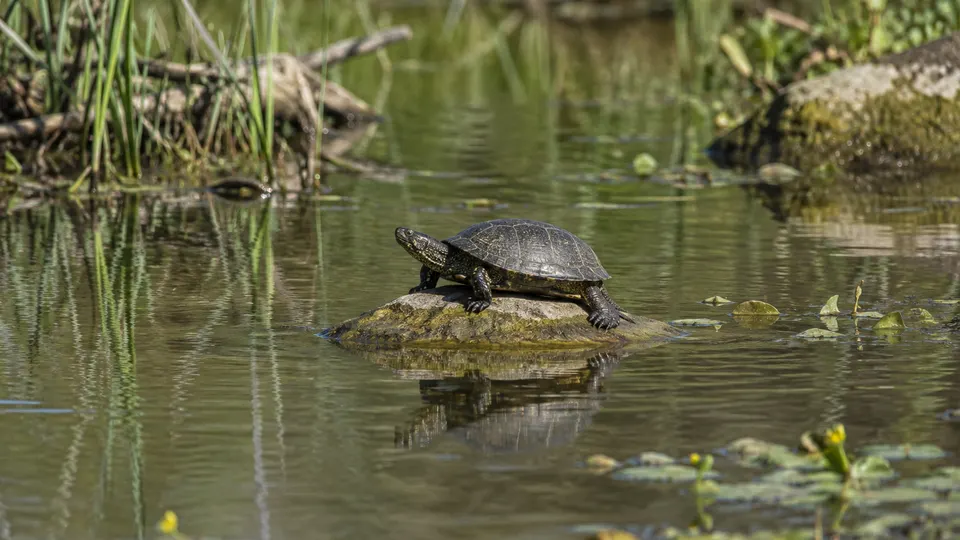
European pond turtle in wetland habitat — Danube, River Cruises wildlifeAI-modified
Home›River Cruises›River Wildlife›European Pond Turtle

European Pond TurtleEmys orbicularisWhere and when to see them

Previous speciesEuropean Herring GullNext speciesEuropean Robin

European Pond Turtle at a glance

The European Pond Turtle is a freshwater reptile associated with sheltered waters and adjoining land, rather than the open navigation channel of a large river. Donau-Auen National Park identifies it as Austria’s only naturally occurring turtle species and records it throughout the park. For a Danube itinerary, the registered context is the Austrian floodplain east of Vienna towards Hainburg, on the Vienna–Bratislava reach. This is an optional wetland or backwater excursion, not a claim about Passau, Budapest or every riverside stop. The park’s account also warns that released exotic pets can cause mistaken identifications, particularly around the Lobau near Vienna. A turtle seen in the region therefore still needs careful identification. Wild occurrence must also be kept separate from animals displayed at a visitor attraction: captive Schlossinsel turtles are not evidence of a wild cruise-route encounter.
Behaviour & reproduction

Size
Species-specific size not verified in the original sources read
Weight
Species-specific weight not verified
Lifespan
Species-specific lifespan not verified
Status
See sourced assessment

European Pond Turtles spend much of the day in water searching for food, but basking is an important visible part of their behaviour. Donau-Auen’s account specifically describes prolonged sunning on partly submerged logs or the bank when water is cool, including early spring. Mating usually takes place in water. One to two months later, females move onto land to find suitable dry ground for egg laying. Using the hind legs, a female excavates a nest at night and can soften the soil with water retained in her bladder. The park describes approximately ten eggs, with young emerging after several months in autumn or sometimes remaining until the following spring. These are reproductive observations, not a visitor timetable. A female crossing land may be undertaking an essential nesting journey; surrounding her, lifting her or blocking the route can interrupt that process.

Top wildlife locations

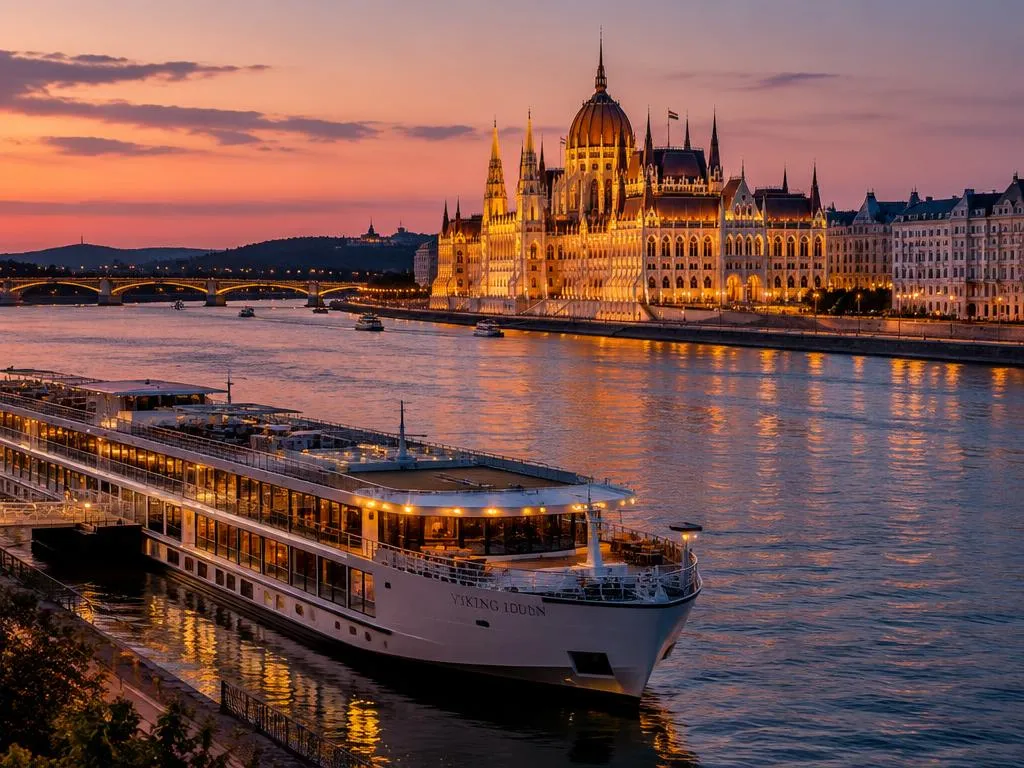
Danube river landscape — River Cruises wildlife habitatAI-modified

Danube

Austria: Donau-Auen floodplains east of Vienna towards Hainburg, on the Vienna–Bratislava reach. This requires an appropriate optional shore or backwater excursion; it is not a Passau or Budapest record. The park confirms wild occurrence throughout Donau-Auen. Quiet waters, basking timber and adjoining nesting ground are the relevant habitat. Captive Schlossinsel animals must not be counted as wild observations.
Explore river cruises

Destinations describe the species' habitat, not guaranteed cruise stops. Some animals require an optional inland excursion or are found in restricted reserves.

Fun facts about the European Pond Turtle

  • It is Austria’s only naturally occurring turtle species, according to Donau-Auen National Park.
  • The park records it throughout Donau-Auen, without promising a sighting at any particular pool.
  • Cool water can lead to prolonged basking on partly submerged logs or banks.
  • Its prey includes aquatic insects, worms, snails, fish and amphibians.
  • Aquatic plants may also be eaten when live prey is scarce.
  • Females use their hind legs to excavate nests on land.
  • Stored bladder water can help a female soften the soil before digging.
  • Some young remain in the nest until the spring after the eggs were laid.
  • Released exotic pets can create identification problems and threaten native turtles.

Best time to see the European Pond Turtle

Donau-Auen’s species account supplies a useful local behavioural clue but not a month-by-month viewing forecast: turtles may bask for prolonged periods when the water is cool, including early spring. The registry’s broader warm-month wording is therefore retained only as general context, not converted into highlighted calendar months. The account also discusses autumn hatching and occasional emergence the following spring; these are reproductive timings, not recommended dates for approaching nests or searching for hatchlings. No exact recurring local viewing-month range was established in the material read. Ask the park or an authorised guide about current observations, permitted viewpoints and conditions on the particular backwater included in the excursion. A sunny spell, accessible habitat and a suitable viewing angle may matter more than a calendar label. No arrival month is assigned, and no sighting is promised for any departure.

European Pond Turtle: season matrix by destination

Highlighted months reflect the stated local evidence, not guaranteed encounters. Neutral months mean no verified monthly viewing window, not absence. Observation records and recommended viewing windows are distinct.

Danube

The park describes basking in cool water, including early spring, but supplies no recurring local month-by-month viewing window. Registry warm-month wording is not converted into exact months. Autumn hatching and possible spring emergence are breeding information, not viewing recommendations.

JanFebMarAprMayJunJulAugSepOctNovDec
Explore river cruises

Where the European Pond Turtle lives

Still and slowly moving freshwater, together with suitable terrestrial nesting ground, forms the habitat combination described by Donau-Auen National Park. Water alone is not sufficient: turtles also need places to bask and areas on land where eggs can be buried. Partly submerged timber and accessible banks can provide basking positions, while dry, relatively open soil is relevant to nesting females. On the registered Danube reach, this points towards floodplain backwaters rather than an assumption that turtles will be visible beside the main shipping lane. The park reports the species across its territory but does not identify every accessible pool as a dependable observation site. Habitat destruction can remove either the aquatic or terrestrial part of this life cycle. Keep the connection between water and nesting ground intact by respecting access restrictions and avoiding trampling banks or approaching turtles moving over land.

What the European Pond Turtle eats

The park account describes a broad range of aquatic animal prey, including insects, worms, snails, fish, amphibians and amphibian larvae. It also reports that aquatic plants may be nibbled when live prey is scarce. This is a more accurate summary than presenting the turtle as exclusively vegetarian or assigning it a single favourite prey species. Much of its searching takes place in water, so a basking animal does not necessarily reveal what it has been eating. The source does not provide a measured diet breakdown for individual Donau-Auen backwaters, and no such percentages should be inferred for a cruise excursion. Feeding a turtle is not a useful identification test and should not be attempted. Watch natural activity from a permitted position instead. Do not put food into pools, use bait for photographs or assume that a turtle approaching people is behaving naturally.

Species at a glance

Common name
European Pond Turtle
Scientific name
Emys orbicularis
Animal group
Reptiles
Size
Species-specific size not verified in the original sources read
Weight
Species-specific weight not verified
Lifespan
Species-specific lifespan not verified
Status
Donau-Auen National Park describes the species as Near Threatened and notes that very few Central European populations reproduce actively. This is an attributed park-account statement, not a newly verified global assessment. Habitat destruction and releases of non-native pet turtles are identified as threats.
Identification
Begin with the scientific name, Emys orbicularis, because the familiar name pond turtle is not sufficient to identify every turtle encountered near Vienna. Donau-Auen describes this as Austria’s only naturally occurring turtle species, but immediately qualifies that useful fact by warning about released exotic pets. The park particularly highlights the Lobau as an area where imported turtles have been released. Geography can therefore support an identification but cannot complete it. Obtain distant photographs of the head and shell when possible, and ask a knowledgeable local guide to check uncertain animals. A partly submerged turtle, a juvenile or an animal seen only briefly may not show enough detail for confidence. No unverified shell-length, weight or age estimate is supplied here. Identification should never require lifting the animal, turning it over or interrupting a journey between water and nesting ground.

European Pond Turtle: frequently asked questions

Where can I see the European Pond Turtle?
Danube. From a permitted path or established viewing point, scan partly submerged logs and quiet banks before moving closer. A stationary turtle may be easier to notice as a low shape against wood than as an animal swimming in open water. Use binoculars and allow enough time to distinguish an actual turtle from a branch or other debris. Because exotic pet turtles have been released locally, record visible head, shell and body features rather than identifying every basking turtle by location alone. Do not leave paths to obtain a better photograph or disturb a basking animal into the water. Donau-Auen specifically advises avoiding picking turtles up: a nesting female may release the bladder water needed to prepare her nest. If an animal appears endangered on a road, seek park or local wildlife guidance rather than treating this profile as a handling protocol. Never release aquarium animals.
When is the best time to see the European Pond Turtle?
Donau-Auen’s species account supplies a useful local behavioural clue but not a month-by-month viewing forecast: turtles may bask for prolonged periods when the water is cool, including early spring. The registry’s broader warm-month wording is therefore retained only as general context, not converted into highlighted calendar months. The account also discusses autumn hatching and occasional emergence the following spring; these are reproductive timings, not recommended dates for approaching nests or searching for hatchlings. No exact recurring local viewing-month range was established in the material read. Ask the park or an authorised guide about current observations, permitted viewpoints and conditions on the particular backwater included in the excursion. A sunny spell, accessible habitat and a suitable viewing angle may matter more than a calendar label. No arrival month is assigned, and no sighting is promised for any departure.
How big does the European Pond Turtle get?
Species-specific size not verified in the original sources read. Adult weight: Species-specific weight not verified. Size varies with age, sex and population.
How should I behave around the European Pond Turtle?
From a permitted path or established viewing point, scan partly submerged logs and quiet banks before moving closer. A stationary turtle may be easier to notice as a low shape against wood than as an animal swimming in open water. Use binoculars and allow enough time to distinguish an actual turtle from a branch or other debris. Because exotic pet turtles have been released locally, record visible head, shell and body features rather than identifying every basking turtle by location alone. Do not leave paths to obtain a better photograph or disturb a basking animal into the water. Donau-Auen specifically advises avoiding picking turtles up: a nesting female may release the bladder water needed to prepare her nest. If an animal appears endangered on a road, seek park or local wildlife guidance rather than treating this profile as a handling protocol. Never release aquarium animals.
What does the European Pond Turtle eat?
The park account describes a broad range of aquatic animal prey, including insects, worms, snails, fish, amphibians and amphibian larvae. It also reports that aquatic plants may be nibbled when live prey is scarce. This is a more accurate summary than presenting the turtle as exclusively vegetarian or assigning it a single favourite prey species. Much of its searching takes place in water, so a basking animal does not necessarily reveal what it has been eating. The source does not provide a measured diet breakdown for individual Donau-Auen backwaters, and no such percentages should be inferred for a cruise excursion. Feeding a turtle is not a useful identification test and should not be attempted. Watch natural activity from a permitted position instead. Do not put food into pools, use bait for photographs or assume that a turtle approaching people is behaving naturally.
Are wildlife sightings guaranteed on a river cruise?
No. Animals move freely and routes, weather, access restrictions and local conditions influence every outing. Confirm the actual itinerary and shore program before booking.

Compare wildlife in the same destinations

Explore other reptiles recorded in these destinations. Similar surroundings do not mean the animals share the same habits or viewing season.

Species comparison by animal group and destination
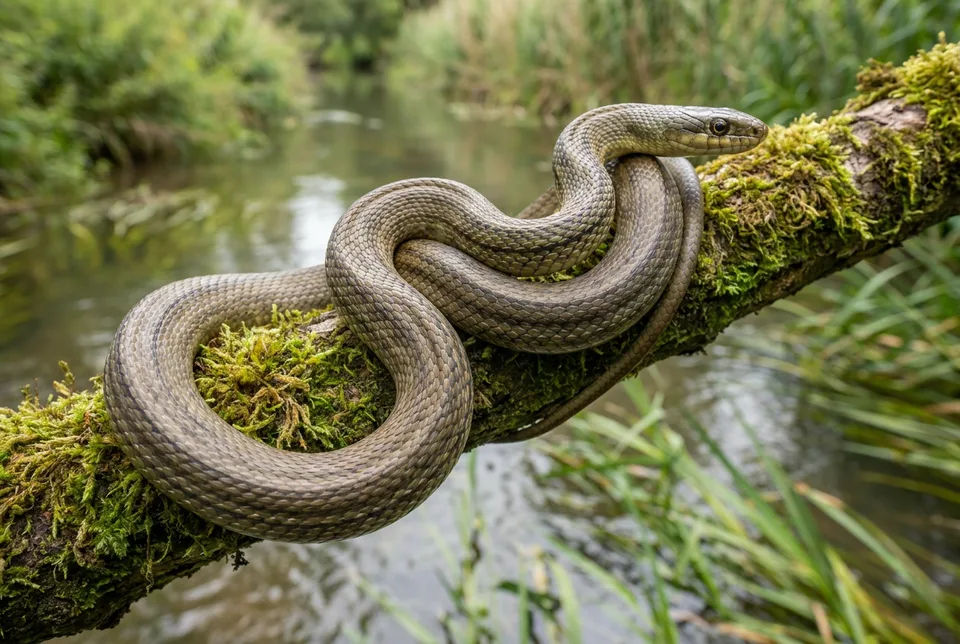
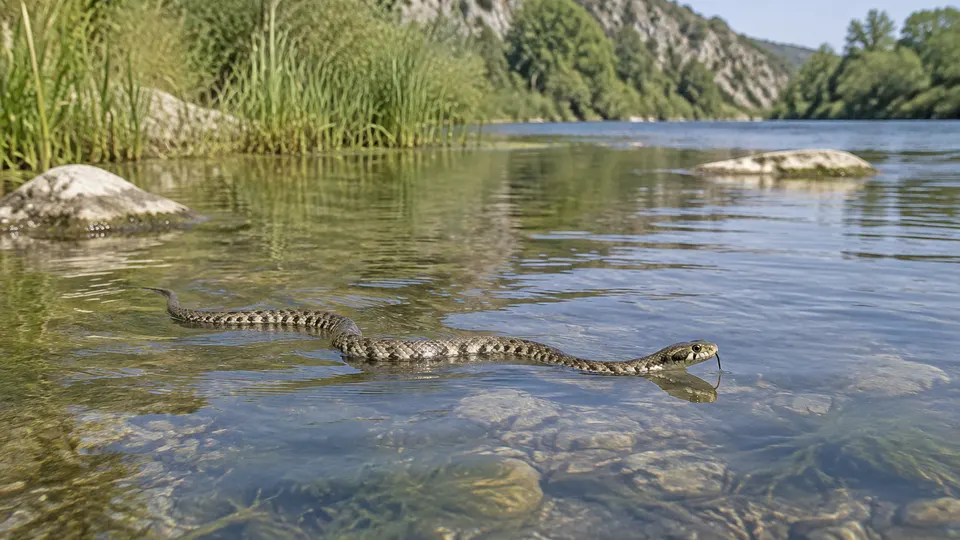
European pond turtle in wetland habitat — Danube, River Cruises wildlifeAI-modifiedEuropean Pond TurtleAesculapian Snake in wetland habitat — Danube, River Cruises wildlifeAI-modifiedAesculapian SnakeDice snake in wetland habitat — Danube, River Cruises wildlifeAI-modifiedDice Snake
Animal groupReptilesAnimal groupReptilesAnimal groupReptiles
DestinationsDanubeDestinationsDanubeDestinationsDanube
Scientific name
Emys orbicularis
Scientific name
Scientific name
Previous speciesEuropean Herring GullNext speciesEuropean Robin
All river wildlife
On this page
  • 01About
  • 02Behaviour & reproduction
  • 03Top wildlife locations
  • 04Fun facts
  • 05Best season
  • 06Season matrix by destination
  • 07Habitat
  • 08Diet
  • 09Species at a glance
  • 10Questions & answers
  • 11Compare

Find your river cruise

AI-modified
Plan your trip

Find your next river journey

Compare destinations, shore programs and dates with the animals and habitats you would love to see.

  • Daily shore excursions
  • Responsible wildlife watching
  • Boutique river ships
Explore river cruises