Bluerides – Blue Rides - Book Liveaboards worldwideOCEAN ADVENTURES
River CruisesRiversNature & WildlifeOur Promise
River CruisesRiversNature & WildlifeOur PromiseSign In

River destinations

  • River destinations
  • Amazon
  • Danube
  • Rhine
  • Mekong
  • Nile

Ships & departures

  • River Cruise Search
  • Deals

Nature & Wildlife

  • Nature & Wildlife

Travel support

  • Our Promise
  • Contact

Contact

Get in Touch

Get in touch anytime, we're happy to help you find the right trip or sort out any question.

EmailWrite us, we usually reply within a few hours.
contact@bluerides.com
WhatsAppChat with us on WhatsApp, Mon–Fri 10:00–16:00 (CET).
Start WhatsApp Chat
PhoneCall us, we're happy to help.
Free call, Mon–Fri 10 AM – 8 PM (CET).
Europe+49 800 1144 990USA+1 888 557 7735UK+44 800 707 4152Australia+61 2 8599 6113Canada+1 888 557 7735
Which river journey is yours?Answer 8 quick questions and find the river cruise that fits you.
8 questions, 1 minute·Plus Gift
Secure Payment MethodsYour payments are fully secured with AES-256 encryption.
Powered byStripeWiseAMEXPayGoogle PaySEPABank
Imprint·Terms & Conditions·Privacy Policy·About·Contact·Liability Waiver·Affiliate Program·Cruise·Blog·
Visit us here

© 2026 Blue Rides. All rights reserved.

Bluerides – Blue Rides - Book Liveaboards worldwideOCEAN ADVENTURES
River CruisesRiversNature & WildlifeOur Promise
River CruisesRiversNature & WildlifeOur PromiseSign In
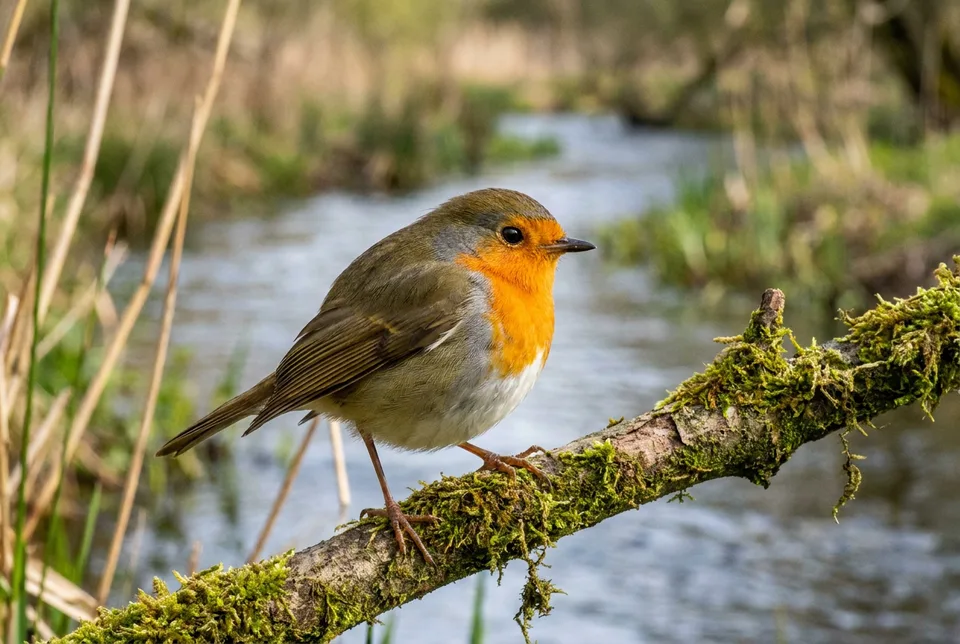
European Robin in wetland habitat — Saone, Douro, River Cruises wildlifeAI-modified
Home›River Cruises›River Wildlife›European Robin

European RobinErithacus rubeculaWhere and when to see them

Previous speciesEuropean Pond TurtleNext speciesEuropean Stonechat

European Robin at a glance

The European robin is a small territorial insect-eater that often lives close to people without becoming domesticated or dependent on them. Its orange-red face and breast are familiar, but its ecological story lies in low cover, accessible ground and defended feeding space. Both sexes can sing and adults look alike, while newly fledged juveniles are speckled and lack the red breast. This age difference can make a family group appear to contain two species. The registry has two distinct associations: the lower Saône promenade upstream of the Rhône confluence and the Porto–Vila Nova de Gaia Douro estuary reserve. In both, search the terrestrial vegetation and sheltered edges rather than open river water. Northern and eastern migrants can alter European winter populations, but neither a friendly bird beside a path nor a general migration statement establishes the origin or residency of the individual being watched.

Behaviour & reproduction

Size
Species-specific measurement not verified in retrieved sources
Weight
Species-specific weight not verified
Lifespan
Species-specific lifespan not verified
Status
See sourced assessment

Robins defend territories with song, displays and sometimes direct aggression. A bird that approaches closely may be defending space or inspecting disturbed ground, not expressing social attachment to a visitor. Both sexes can maintain territories outside breeding, so hearing song does not automatically identify a male or a nesting pair. Breeding involves a concealed cup nest, often in a bank, cavity or sheltered structure. BTO gives four or five eggs as typical, incubation by the female for fourteen to sixteen days and fledging about two weeks after hatching. Two broods are usual, with a third possible. The young leave as dependent, speckled birds and gain the adult appearance later. Short movements between a low perch and the ground are common during feeding. Repeated alarm notes or food carrying should be observed without approaching the hidden site that may explain them.

Top wildlife locations

Saone river landscape — River Cruises wildlife habitatAI-modified

Saone

Lower Saône: Grand Lyon Rives de Saône promenade, Rochetaillée-sur-Saône–Fontaines-sur-Saône–Lyon, upstream of the Rhône confluence.

Explore river cruises
Douro river landscape — River Cruises wildlife habitatAI-modified

Douro

Porto / Vila Nova de Gaia: Douro estuary reserve, Afurada–Cabedelo–São Paio; NOT a claim for inland Régua–Pinhão

Explore river cruises

Destinations describe the species' habitat, not guaranteed cruise stops. Some animals require an optional inland excursion or are found in restricted reserves.

Fun facts about the European Robin

  • Adult males and females look alike.
  • Juveniles are speckled and lack the red breast.
  • Both sexes can sing and defend territories.
  • Low perches are used to watch for ground-level prey.
  • Worms and small invertebrates are important foods.
  • The female incubates four or five eggs.
  • Incubation lasts roughly two weeks.
  • Two broods are usual and a third is possible.
  • Residency and migration coexist within European populations.

Best time to see the European Robin

Robins combine residency and migration across Europe, and the balance differs among regions. BTO describes winter arrivals from northern and eastern Europe into Britain, but those origins cannot be assigned to birds on the Saône or Douro without appropriate local evidence. Both river entries retain empty numerical month lists because their sources do not provide verified local monthly occurrence patterns. Breeding activity, juvenile plumage and winter territorial singing offer different observational opportunities, not a single transferable best season. On a visit, sheltered low vegetation and accessible ground are practical search clues. A bird present in the same garden on two walks may still not be demonstrably the same individual, and singing outside spring does not prove an active nest. Current local records could refine the seasonal account separately for Lyon and Porto; the two should not be merged simply because the species is widespread and familiar.

European Robin: season matrix by destination

Highlighted months reflect the stated local evidence, not guaranteed encounters. Neutral months mean no verified monthly viewing window, not absence. Observation records and recommended viewing windows are distinct.

Saone

Exact local species-specific monthly viewing evidence has not been verified; no monthly calendar is inferred.

JanFebMarAprMayJunJulAugSepOctNovDec
Explore river cruises

Douro

Exact local species-specific monthly viewing evidence has not been verified; no monthly calendar is inferred.

JanFebMarAprMayJunJulAugSepOctNovDec
Explore river cruises

Where the European Robin lives

Robins favour a combination of cover and accessible feeding ground. Woodland understorey, hedges, gardens, banks and scrubby park edges can supply shaded litter, exposed soil and low perches. A uniformly open lawn without nearby refuge is less representative than its boundary with shrubs. On the lower Saône promenade, search planted edges, sheltered banks and adjoining gardens. At the Douro estuary reserve, the relevant areas are terrestrial margins and scrub rather than the tidal flats used by waders. The same reserve name can therefore contain very different robin and curlew microhabitats. A low perch overlooking a small bare patch is particularly useful for watching feeding. The registry evidence does not map territories along either reach, and an apparently suitable shrub does not demonstrate occupation. Keep observations tied to the actual bank or vegetation patch, especially where a broad estuary label might otherwise suggest an aquatic association.

What the European Robin eats

Robins take worms, insects and other small invertebrates from or close to the ground. A bird may watch from a low perch, drop to seize prey and return to cover or another lookout. Leaf litter and recently disturbed soil can expose food, explaining why a robin sometimes attends a person working nearby. This is opportunistic foraging, not evidence that human disturbance is necessary for its survival. Fruits and other foods supplement the diet when available, especially outside the main invertebrate-rich period. Compare a robin's brief ground visits with the prolonged seed handling of finches: the species may share a park but use its resources differently. Do not offer food merely to induce an approach or assume that a visible item is being eaten when it may be carried to young. Neither retained river source provides a local diet study or measured seasonal food proportions.

Species at a glance

Common name
European Robin
Scientific name
Erithacus rubecula
Animal group
Birds
Size
Species-specific measurement not verified in retrieved sources
Weight
Species-specific weight not verified
Lifespan
Species-specific lifespan not verified
Status
Current global category not independently verified; regional conservation statements must not be presented as a global assessment.
Identification
Adults have an orange-red face and breast bordered by greyish tones, with brown upperparts and a paler belly. The shape is compact, with a fine insect-eating bill rather than a finch's seed-cracking bill. Males and females look alike in ordinary field conditions, so a bright breast is not a dependable male character. Newly fledged birds are brown and speckled, lacking the adult orange-red patch; this is the most useful age distinction for a casual observer. A juvenile can therefore be identified by structure, mottling and association with adults rather than breast colour alone. Song includes varied thin phrases and trills, while short ticking alarm notes may come from dense cover. Artificial lighting can be associated with night singing, so hearing a robin after dark is not inherently anomalous. Confirm a visual identification where calls overlap with other small birds in a busy riverside soundscape.

European Robin: frequently asked questions

Where can I see the European Robin?
Saone, Douro. Pause beside low shrubs or a sheltered bank and watch the ground beneath the vegetation. A robin often reveals itself by moving between a low lookout and a small feeding patch, so broad scans of the canopy may miss it. Remain still if it approaches and let it choose the distance; do not repeatedly disturb soil or offer food to manufacture a close encounter. Speckled birds near an adult may be juveniles rather than an unrelated species. Listen for short alarm notes and avoid following food-carrying adults towards a concealed nest. At Porto, separate observations in scrub from the wader watch on the flats. On the Saône, record the specific promenade section upstream of the Rhône junction. Include whether the bird was singing, feeding or carrying prey, because those details are more informative than simply recording that a robin was present near a river.
When is the best time to see the European Robin?
Robins combine residency and migration across Europe, and the balance differs among regions. BTO describes winter arrivals from northern and eastern Europe into Britain, but those origins cannot be assigned to birds on the Saône or Douro without appropriate local evidence. Both river entries retain empty numerical month lists because their sources do not provide verified local monthly occurrence patterns. Breeding activity, juvenile plumage and winter territorial singing offer different observational opportunities, not a single transferable best season. On a visit, sheltered low vegetation and accessible ground are practical search clues. A bird present in the same garden on two walks may still not be demonstrably the same individual, and singing outside spring does not prove an active nest. Current local records could refine the seasonal account separately for Lyon and Porto; the two should not be merged simply because the species is widespread and familiar.
How big does the European Robin get?
Species-specific measurement not verified in retrieved sources. Adult weight: Species-specific weight not verified. Size varies with age, sex and population.
How should I behave around the European Robin?
Pause beside low shrubs or a sheltered bank and watch the ground beneath the vegetation. A robin often reveals itself by moving between a low lookout and a small feeding patch, so broad scans of the canopy may miss it. Remain still if it approaches and let it choose the distance; do not repeatedly disturb soil or offer food to manufacture a close encounter. Speckled birds near an adult may be juveniles rather than an unrelated species. Listen for short alarm notes and avoid following food-carrying adults towards a concealed nest. At Porto, separate observations in scrub from the wader watch on the flats. On the Saône, record the specific promenade section upstream of the Rhône junction. Include whether the bird was singing, feeding or carrying prey, because those details are more informative than simply recording that a robin was present near a river.
What does the European Robin eat?
Robins take worms, insects and other small invertebrates from or close to the ground. A bird may watch from a low perch, drop to seize prey and return to cover or another lookout. Leaf litter and recently disturbed soil can expose food, explaining why a robin sometimes attends a person working nearby. This is opportunistic foraging, not evidence that human disturbance is necessary for its survival. Fruits and other foods supplement the diet when available, especially outside the main invertebrate-rich period. Compare a robin's brief ground visits with the prolonged seed handling of finches: the species may share a park but use its resources differently. Do not offer food merely to induce an approach or assume that a visible item is being eaten when it may be carried to young. Neither retained river source provides a local diet study or measured seasonal food proportions.
Are wildlife sightings guaranteed on a river cruise?
No. Animals move freely and routes, weather, access restrictions and local conditions influence every outing. Confirm the actual itinerary and shore program before booking.

Compare wildlife in the same destinations

Explore other birds recorded in these destinations. Similar surroundings do not mean the animals share the same habits or viewing season.

Species comparison by animal group and destination
European Robin in wetland habitat — Saone, Douro, River Cruises wildlifeAI-modifiedEuropean RobinAlpine Swift in wetland habitat — Saone, River Cruises wildlifeAI-modifiedAlpine SwiftBar-tailed godwit in wetland habitat — Douro, River Cruises wildlifeAI-modifiedBar-tailed godwit
Animal groupBirdsAnimal groupBirdsAnimal groupBirds
DestinationsSaone, DouroDestinationsSaoneDestinationsDouro
Scientific name
Erithacus rubecula
Scientific name
Scientific name
Previous speciesEuropean Pond TurtleNext speciesEuropean Stonechat
All river wildlife
On this page
  • 01About
  • 02Behaviour & reproduction
  • 03Top wildlife locations
  • 04Fun facts
  • 05Best season
  • 06Season matrix by destination
  • 07Habitat
  • 08Diet
  • 09Species at a glance
  • 10Questions & answers
  • 11Compare

Find your river cruise

AI-modified
Plan your trip

Find your next river journey

Compare destinations, shore programs and dates with the animals and habitats you would love to see.

  • Daily shore excursions
  • Responsible wildlife watching
  • Boutique river ships
Explore river cruises