Bluerides – Blue Rides - Book Liveaboards worldwideOCEAN ADVENTURES
River CruisesRiversNature & WildlifeOur Promise
River CruisesRiversNature & WildlifeOur PromiseSign In

River destinations

  • River destinations
  • Amazon
  • Danube
  • Rhine
  • Mekong
  • Nile

Ships & departures

  • River Cruise Search
  • Deals

Nature & Wildlife

  • Nature & Wildlife

Travel support

  • Our Promise
  • Contact

Contact

Get in Touch

Get in touch anytime, we're happy to help you find the right trip or sort out any question.

EmailWrite us, we usually reply within a few hours.
contact@bluerides.com
WhatsAppChat with us on WhatsApp, Mon–Fri 10:00–16:00 (CET).
Start WhatsApp Chat
PhoneCall us, we're happy to help.
Free call, Mon–Fri 10 AM – 8 PM (CET).
Europe+49 800 1144 990USA+1 888 557 7735UK+44 800 707 4152Australia+61 2 8599 6113Canada+1 888 557 7735
Which river journey is yours?Answer 8 quick questions and find the river cruise that fits you.
8 questions, 1 minute·Plus Gift
Secure Payment MethodsYour payments are fully secured with AES-256 encryption.
Powered byStripeWiseAMEXPayGoogle PaySEPABank
Imprint·Terms & Conditions·Privacy Policy·About·Contact·Liability Waiver·Affiliate Program·Cruise·Blog·
Visit us here

© 2026 Blue Rides. All rights reserved.

Bluerides – Blue Rides - Book Liveaboards worldwideOCEAN ADVENTURES
River CruisesRiversNature & WildlifeOur Promise
River CruisesRiversNature & WildlifeOur PromiseSign In
European Stonechat in wetland habitat — Douro, River Cruises wildlifeAI-modified
Home›River Cruises›River Wildlife›European Stonechat

European StonechatSaxicola rubicolaWhere and when to see them

Previous speciesEuropean RobinNext speciesFerruginous Duck

European Stonechat at a glance

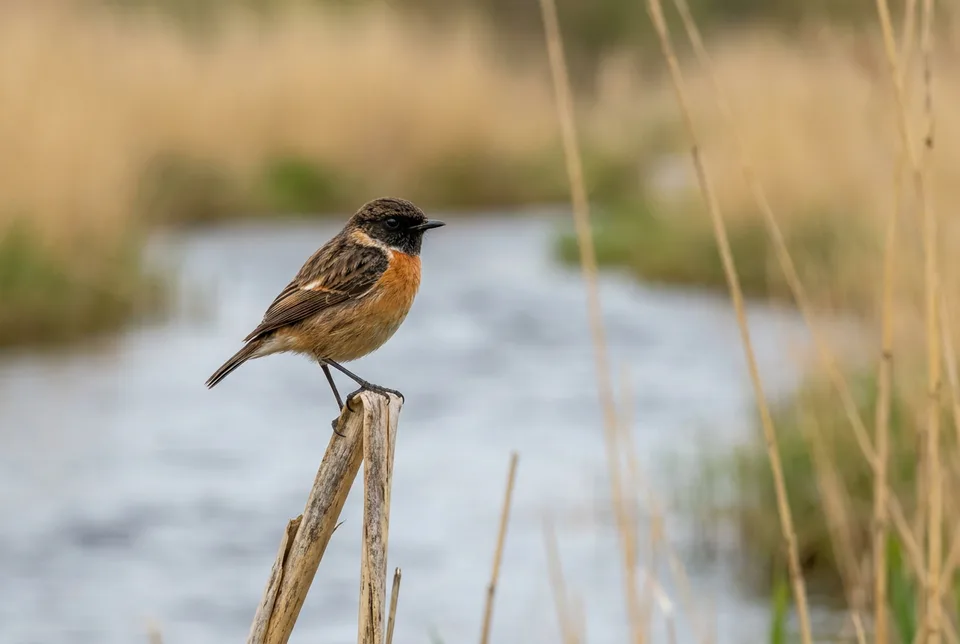
The European stonechat is a bird of open, low vegetation punctuated by lookout perches. Its habit of sitting upright on a prominent stem makes it conspicuous, but the surrounding rough ground is just as important as the perch itself. From a suitable vantage point it searches for small animal prey, then drops or darts out to capture it. The familiar call resembles two small stones being struck together, explaining the English name. Males and females differ noticeably, and young birds add another, more mottled appearance to the identification problem. The Douro registry entry concerns the Porto–Vila Nova de Gaia estuary reserve, where terrestrial rough margins should be distinguished from mudflat feeding habitat. A stonechat beside an estuary is not a tidal wader. Its occurrence there does not extend the evidence to inland Régua–Pinhão or demonstrate continuous occupation of every riverside scrub patch.

Behaviour & reproduction

Size
Species-specific measurement not verified in retrieved sources
Weight
Species-specific weight not verified
Lifespan
Species-specific lifespan not verified
Status
See sourced assessment

Stonechats often use exposed perches repeatedly, scanning the surrounding ground and returning after short feeding flights. Tail and wing movements can make a stationary bird appear restless, while repeated stone-like calls draw attention to a pair in low scrub. Nesting takes place close to the ground in concealed vegetation rather than on the conspicuous lookout stem. BTO's species account documents dependent nestlings and the potential for repeated broods, illustrating how a productive open habitat must provide both food and secure cover. Adults carrying prey may disappear into vegetation some distance from the most obvious perch. Watch that pattern without tracing the exact route to a nest. Young birds can remain near adults after fledging, so several stonechats in one patch need not be an aggregation of unrelated territorial adults. The open-perch habit makes behaviour observable from a path without needing a close approach.

Top wildlife locations

Douro river landscape — River Cruises wildlife habitatAI-modified

Douro

Porto / Vila Nova de Gaia: Douro estuary reserve, Afurada–Cabedelo–São Paio; NOT a claim for inland Régua–Pinhão

Explore river cruises

Destinations describe the species' habitat, not guaranteed cruise stops. Some animals require an optional inland excursion or are found in restricted reserves.

Fun facts about the European Stonechat

  • Prominent perches are used to scan for prey.
  • Hunting includes drops to the ground and short outward flights.
  • Insects and spiders form important prey.
  • Nests are concealed near ground level.
  • The male has stronger head and neck contrast than the female.
  • Females are browner and less sharply patterned.
  • Juveniles are mottled.
  • The call resembles stones striking together.
  • Whinchat usually shows a more conspicuous pale eyebrow.

Best time to see the European Stonechat

Stonechat movements vary among European populations, with residency and migration both occurring. BTO's British account describes patterns that cannot by themselves establish the timing of birds at Porto. The retained Douro site evidence does not contain a verified local monthly series, so the numerical month list remains empty. Breeding pairs, recently fledged families and nonbreeding birds can create different patterns of visibility without proving a local seasonal peak. For a visit, inspect current rough-ground habitat and ask where birds have recently been seen using lookout perches. Vegetation cutting or disturbance can shift the useful search area even when birds remain nearby. A clear view of an adult male may be easier than identifying a quiet juvenile, but this is a detectability difference rather than evidence that only one age class occurs. Local guidance should separate those observational issues from claims about arrival, departure or nesting dates.

European Stonechat: season matrix by destination

Highlighted months reflect the stated local evidence, not guaranteed encounters. Neutral months mean no verified monthly viewing window, not absence. Observation records and recommended viewing windows are distinct.

Douro

Exact local species-specific monthly viewing evidence has not been verified; no monthly calendar is inferred.

JanFebMarAprMayJunJulAugSepOctNovDec
Explore river cruises

Where the European Stonechat lives

A useful stonechat patch has rough grass or low shrubs for cover and scattered raised perches for hunting and signalling. Stems, bushes and fence posts can all serve as lookout points. Uniformly tall dense vegetation may obstruct views of prey, while a completely bare surface lacks the concealment needed for nesting. The habitat is therefore a structured mosaic, not simply any field containing a post. Around the Douro estuary reserve, examine terrestrial rough margins, scrub edges and open grassy patches rather than deep water or exposed tidal mud alone. An estuary can support stonechats and waders in adjacent but ecologically different places. The retained site list does not identify a present-day territory or guarantee that a specific perch remains occupied. Vegetation management can quickly alter the balance of cover and open feeding ground, so current patch condition should guide the search more than a previous photograph's background.

What the European Stonechat eats

Stonechats take small invertebrates, including insects and spiders, using a perch to survey the surrounding area. A bird may drop onto the ground, make a short outward dart or briefly pursue an airborne item before returning to a lookout. This sit-and-search method makes prominent perches part of the feeding system rather than merely display platforms. Watch the point at which a bird leaves its perch and whether it lands, hovers briefly or returns with visible prey. The prey is often too small to identify, especially if swallowed quickly. Open ground near low cover allows several hunting options, whereas a perch above inaccessible dense vegetation may be less useful. The Douro source documents occurrence rather than food composition, so local insect species and dietary percentages remain unverified. A seedhead used as a lookout does not show that the stonechat is eating its seeds.

Species at a glance

Common name
European Stonechat
Scientific name
Saxicola rubicola
Animal group
Birds
Size
Species-specific measurement not verified in retrieved sources
Weight
Species-specific weight not verified
Lifespan
Species-specific lifespan not verified
Status
Current global category not independently verified; regional conservation statements must not be presented as a global assessment.
Identification
An adult male typically combines a dark head with white neck patches and a warm orange breast, set against darker upperparts. Females are browner and less sharply contrasted, so the male pattern should not be demanded of every bird. Juveniles are more mottled and can lack the clean adult contrasts. The upright posture on a low exposed perch and the stone-tapping call provide useful supporting evidence. Whinchat is an important comparison: its pale supercilium is generally more conspicuous, whereas European stonechat lacks that strong eyebrow in the typical adult appearance. Plumage changes with wear, age and season, so a dull bird should be assessed through several features rather than brightness alone. Closely related stonechat taxa can be difficult, particularly in atypical plumages; photographs and expert review are preferable to assigning an unfamiliar migrant from a single distant view at the estuary.

European Stonechat: frequently asked questions

Where can I see the European Stonechat?
Douro. Scan the tops of low shrubs, sturdy stems and fence posts around the terrestrial margins of the Porto–Gaia estuary reserve. Once a bird is found, hold the view long enough to see a hunting trip and its return, which often reveals the relationship between the perch and feeding ground. Listen for the repeated tapping call if the bird drops into cover. Compare any accompanying birds carefully: a female or mottled juvenile need not share the male's black-headed appearance. Do not approach a hidden nest by following food-carrying adults through the vegetation. A stable position on a public path usually gives a better behavioural sequence than moving from perch to perch after the bird. Record the precise habitat patch and distinguish feeding, alarm and simple perching. Keep the observation attached to the estuary reserve, not the full inland Douro route.
When is the best time to see the European Stonechat?
Stonechat movements vary among European populations, with residency and migration both occurring. BTO's British account describes patterns that cannot by themselves establish the timing of birds at Porto. The retained Douro site evidence does not contain a verified local monthly series, so the numerical month list remains empty. Breeding pairs, recently fledged families and nonbreeding birds can create different patterns of visibility without proving a local seasonal peak. For a visit, inspect current rough-ground habitat and ask where birds have recently been seen using lookout perches. Vegetation cutting or disturbance can shift the useful search area even when birds remain nearby. A clear view of an adult male may be easier than identifying a quiet juvenile, but this is a detectability difference rather than evidence that only one age class occurs. Local guidance should separate those observational issues from claims about arrival, departure or nesting dates.
How big does the European Stonechat get?
Species-specific measurement not verified in retrieved sources. Adult weight: Species-specific weight not verified. Size varies with age, sex and population.
How should I behave around the European Stonechat?
Scan the tops of low shrubs, sturdy stems and fence posts around the terrestrial margins of the Porto–Gaia estuary reserve. Once a bird is found, hold the view long enough to see a hunting trip and its return, which often reveals the relationship between the perch and feeding ground. Listen for the repeated tapping call if the bird drops into cover. Compare any accompanying birds carefully: a female or mottled juvenile need not share the male's black-headed appearance. Do not approach a hidden nest by following food-carrying adults through the vegetation. A stable position on a public path usually gives a better behavioural sequence than moving from perch to perch after the bird. Record the precise habitat patch and distinguish feeding, alarm and simple perching. Keep the observation attached to the estuary reserve, not the full inland Douro route.
What does the European Stonechat eat?
Stonechats take small invertebrates, including insects and spiders, using a perch to survey the surrounding area. A bird may drop onto the ground, make a short outward dart or briefly pursue an airborne item before returning to a lookout. This sit-and-search method makes prominent perches part of the feeding system rather than merely display platforms. Watch the point at which a bird leaves its perch and whether it lands, hovers briefly or returns with visible prey. The prey is often too small to identify, especially if swallowed quickly. Open ground near low cover allows several hunting options, whereas a perch above inaccessible dense vegetation may be less useful. The Douro source documents occurrence rather than food composition, so local insect species and dietary percentages remain unverified. A seedhead used as a lookout does not show that the stonechat is eating its seeds.
Are wildlife sightings guaranteed on a river cruise?
No. Animals move freely and routes, weather, access restrictions and local conditions influence every outing. Confirm the actual itinerary and shore program before booking.

Compare wildlife in the same destinations

Explore other birds recorded in these destinations. Similar surroundings do not mean the animals share the same habits or viewing season.

Species comparison by animal group and destination
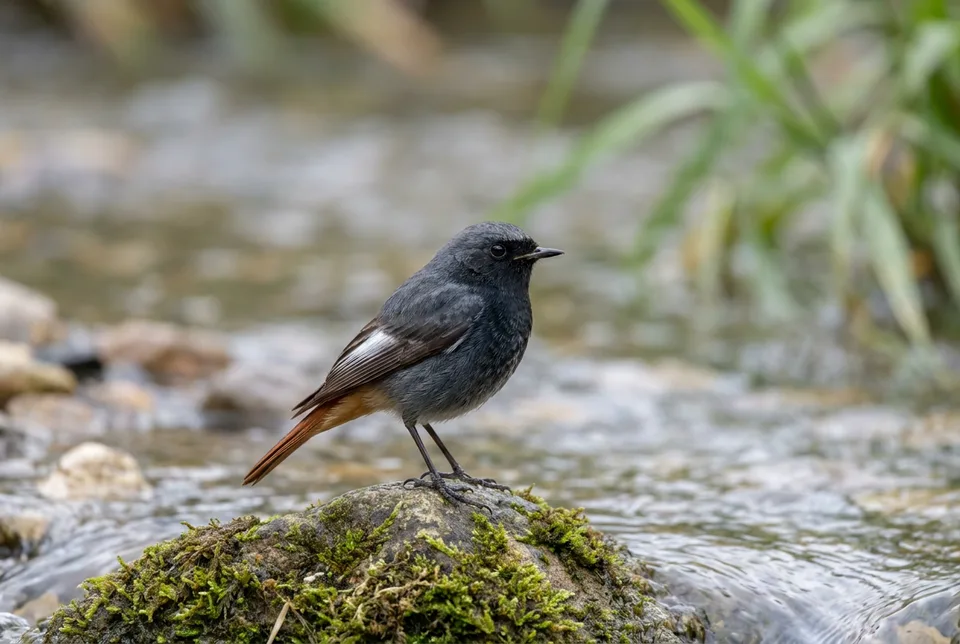
European Stonechat in wetland habitat — Douro, River Cruises wildlifeAI-modifiedEuropean StonechatBar-tailed godwit in wetland habitat — Douro, River Cruises wildlifeAI-modifiedBar-tailed godwitBlack Redstart in wetland habitat — Saone, Douro, River Cruises wildlifeAI-modifiedBlack Redstart
Animal groupBirdsAnimal groupBirdsAnimal groupBirds
DestinationsDouroDestinationsDouroDestinationsSaone, Douro
Scientific name
Saxicola rubicola
Scientific name
Scientific name
Previous speciesEuropean RobinNext speciesFerruginous Duck
All river wildlife
On this page
  • 01About
  • 02Behaviour & reproduction
  • 03Top wildlife locations
  • 04Fun facts
  • 05Best season
  • 06Season matrix by destination
  • 07Habitat
  • 08Diet
  • 09Species at a glance
  • 10Questions & answers
  • 11Compare

Find your river cruise

AI-modified
Plan your trip

Find your next river journey

Compare destinations, shore programs and dates with the animals and habitats you would love to see.

  • Daily shore excursions
  • Responsible wildlife watching
  • Boutique river ships
Explore river cruises