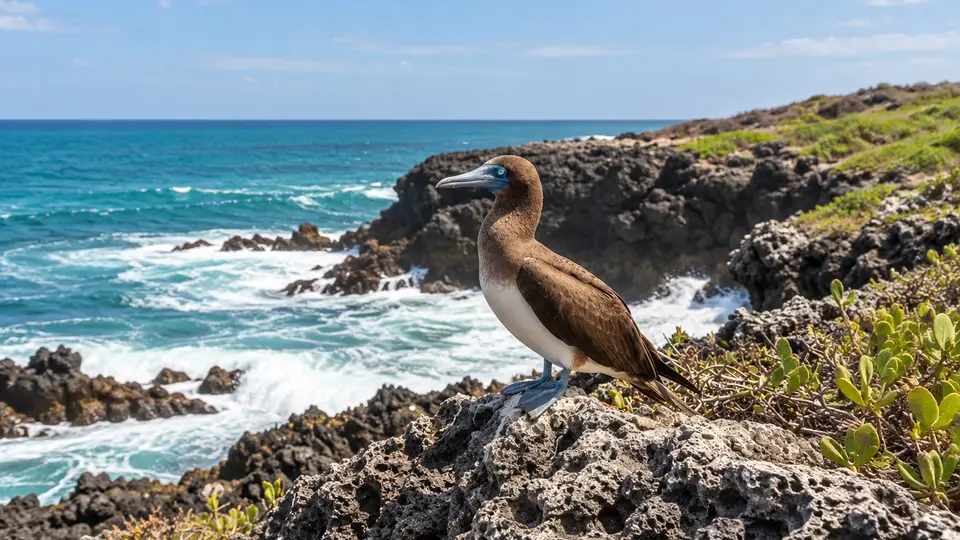
Western Reef Heron in its natural habitat, AI illustration
Size55–65 cm body lengthLifespanNot reliably establishedStatusLeast Concern

Western Reef Heron: where and when to see them

Egretta gularis

Western Reef Heron at a glance

The western reef heron is a coastal egret found along parts of western Africa and from the Red Sea toward southern Asia. In Egypt it is associated chiefly with the Red Sea coast rather than the Nile's typical freshwater bird communities. Birds occur in dark and white forms, creating identification challenges where little egrets are also present. Its dependence on shallow shoreline feeding areas makes undisturbed tidal margins especially valuable within heavily developed coastal landscapes.

Behaviour & reproduction

Size
55–65 cm body length
Weight
280–710 g
Lifespan
Not reliably established
Status
Least Concern

Reef herons hunt by standing alert, walking slowly or making short runs after visible prey. Individuals may defend profitable stretches of shoreline, although several can gather where feeding conditions are favourable. They adjust their activity to tides and local water depth rather than following a simple daily timetable. Breeding birds nest in sheltered coastal vegetation or on islands, and both members of a pair contribute to incubation and feeding the young. They are typically solitary foragers but may form loose aggregations when prey is abundant or during high tide when feeding areas are limited. Post breeding, juveniles often disperse more widely, seeking new foraging grounds and potentially colonizing new areas.

Top wildlife locations

Egypt wildlife habitat

Egypt

Quiet Red Sea lagoons, rocky tidal pools and mangrove margins offer plausible shore habitat. Occurrence is local, and protected or remote stretches may be inaccessible; Nile-focused inland excursions are less suitable.

Adventure cruises in Egypt
Destinations describe the species' habitat, not guaranteed cruise stops. Some animals require an optional inland excursion or are found in restricted reserves.

Fun facts about the Western Reef Heron

  • Dark and white plumage forms belong to the same species.
  • Dark adults commonly retain a contrasting white throat patch.
  • Its hunting schedule can follow tides more closely than daylight hours.
  • White individuals can be difficult to separate from little egrets.

Best time to see the Western Reef Heron

Egypt's Red Sea coast can support reef herons throughout the year. October to April generally provides more comfortable shore-watching temperatures, but this is not a defined breeding season. Suitable tide levels and quiet feeding margins often matter more than the calendar month. Breeding activities in the Red Sea region are largely asynchronous and can occur over an extended period, often peaking during warmer months when food resources are more abundant. Observing these adaptable birds is less about specific dates and more about finding suitable tidal conditions and undisturbed feeding areas.

Western Reef Heron: season matrix by destination

Travel and observation windows vary by region. Highlighted months are an orientation for planning, not confirmed sightings or a guarantee of access.

Egypt

These months favour comfortable coastal observation; birds may occur year-round, and local tides are more informative than travel season.

JanFebMarAprMayJunJulAugSepOctNovDec
Cruise ships in Egypt

Where the Western Reef Heron lives

Typical habitat includes rocky intertidal shores, reef flats, sheltered lagoons, mangrove edges and tidal pools. In Egypt, suitable Red Sea coastline is more relevant than inland wetlands. Feeding birds require shallow water, while nesting sites benefit from seclusion and nearby foraging habitat. They are often found on small, isolated islets or sandbars, providing secure roosting and nesting locations away from terrestrial predators. While primarily coastal, individuals may occasionally venture short distances up estuaries or saline wetlands, though this is less common in Egypt.

What the Western Reef Heron eats

Small fish form a major component of the diet, accompanied by crabs, shrimps and other shoreline invertebrates. Prey is captured with quick bill strikes in shallow water or exposed pools. Local tides determine which feeding patches are available at any moment. Occasionally, they will also consume insects caught near the water's edge or small reptiles. They exhibit various feeding strategies, including 'foot-stirring' or 'wing-spreading' to flush out hidden prey from the substrate or water surface.

Species at a glance

Common name
Western Reef Heron
Scientific name
Egretta gularis
Animal group
Birds
Size
55–65 cm body length
Weight
280–710 g
Lifespan
Not reliably established
Status
Least Concern
Identification
Dark birds usually show slate plumage and a white throat, while white birds require careful comparison with little egrets using their generally heavier bill, leg colour and structure. The Western reef heron typically exhibits a bicolored bill, dark on the upper mandible and yellowish at the base of the lower mandible. Note the shaggy crest feathers and the yellowish or greenish tint to the legs, which can vary with age and breeding condition.

Western Reef Heron: frequently asked questions

Where can I see the Western Reef Heron?
Egypt. Observe tidal pools from firm shore without walking across fragile reef flats. Keep well back from nesting vegetation and avoid pushing feeding birds along the beach. A telescope helps assess white birds without approaching closely enough to disturb them. When viewing from a boat, approach slowly and maintain a respectful distance, using binoculars for detailed observation. Scan rocky outcrops and low-lying vegetation on islands or peninsulas, as these are preferred roosting and nesting sites.
When is the best time to see the Western Reef Heron?
Egypt's Red Sea coast can support reef herons throughout the year. October to April generally provides more comfortable shore-watching temperatures, but this is not a defined breeding season. Suitable tide levels and quiet feeding margins often matter more than the calendar month. Breeding activities in the Red Sea region are largely asynchronous and can occur over an extended period, often peaking during warmer months when food resources are more abundant. Observing these adaptable birds is less about specific dates and more about finding suitable tidal conditions and undisturbed feeding areas.
How big does the Western Reef Heron get?
55–65 cm body length. Adult weight: 280–710 g. Size varies with age, sex and population.
How should I behave around the Western Reef Heron?
Observe tidal pools from firm shore without walking across fragile reef flats. Keep well back from nesting vegetation and avoid pushing feeding birds along the beach. A telescope helps assess white birds without approaching closely enough to disturb them. When viewing from a boat, approach slowly and maintain a respectful distance, using binoculars for detailed observation. Scan rocky outcrops and low-lying vegetation on islands or peninsulas, as these are preferred roosting and nesting sites.
What does the Western Reef Heron eat?
Small fish form a major component of the diet, accompanied by crabs, shrimps and other shoreline invertebrates. Prey is captured with quick bill strikes in shallow water or exposed pools. Local tides determine which feeding patches are available at any moment. Occasionally, they will also consume insects caught near the water's edge or small reptiles. They exhibit various feeding strategies, including 'foot-stirring' or 'wing-spreading' to flush out hidden prey from the substrate or water surface.
Are wildlife sightings guaranteed on an adventure cruise?
No. Animals move freely and routes, weather, access restrictions and local conditions influence every outing. Confirm the actual itinerary and shore programme before booking.

Compare wildlife in the same destinations

Explore other birds recorded in these destinations. Similar surroundings do not mean the animals share the same habits or viewing season.

Species comparison by animal group and destination
Western Reef HeronWestern Reef HeronBrown BoobyBrown BoobyCrab-ploverCrab-plover
Animal groupBirdsAnimal groupBirdsAnimal groupBirds
DestinationsEgyptDestinationsCosta Rica, Cape Verde, Egypt, Fiji, PolynesiaDestinationsEgypt, Seychelles
All wildlife destinations
Plan your trip

Find your next wildlife adventure

Compare destinations, shore programmes and dates with the animals and habitats you would love to see.

  • Naturalist-led shore excursions
  • Responsible wildlife watching
  • Small expedition ships

Newsletter

Take Blue Rides with you

Adventure cruise offers, last-minute deals and trip inspiration.

Free, unsubscribe anytime. Details: Privacy Policy

Partner with Blue Rides

Affiliate Program

Recommend adventure cruises and earn commission on every confirmed booking.

Share. Track. Earn.