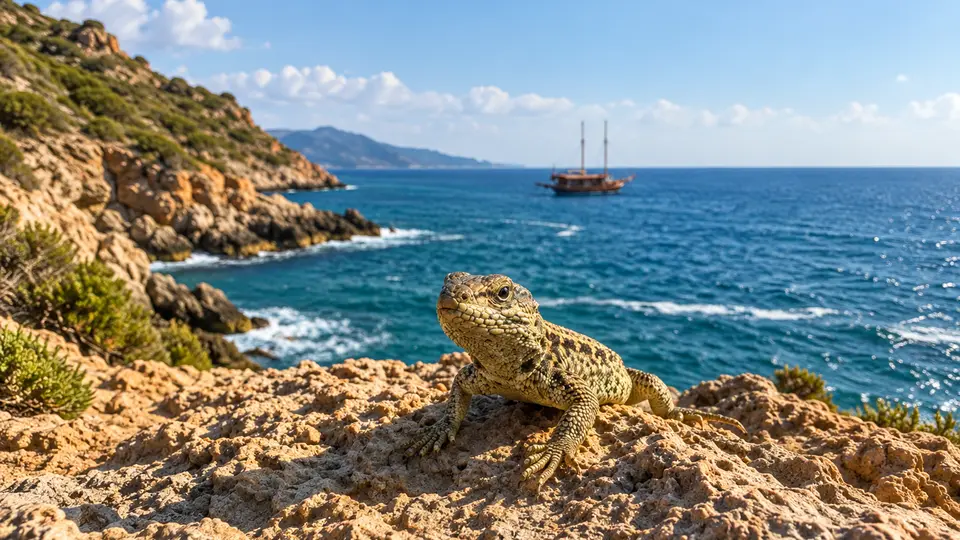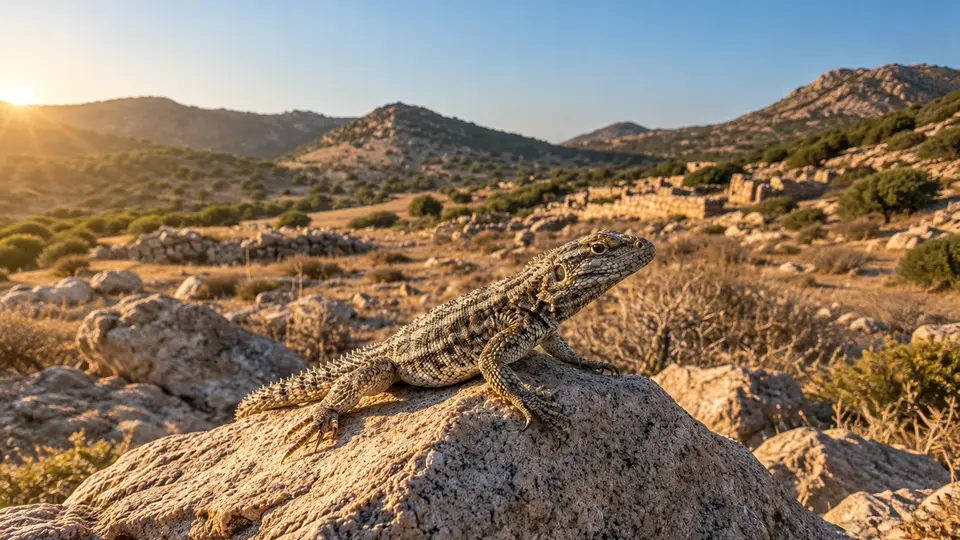
Stellion in its natural habitat, AI illustration
SizeTotal length 20–35 cmLifespanNot reliably establishedStatusLeast Concern

Stellion: where and when to see them

Stellagama stellio

Stellion at a glance

The stellion is a robust, rough-scaled agama lizard of the eastern Mediterranean and nearby western Asia. In Turkey it is associated with sunlit rocks, stone walls and ruins, where its mottled colouring helps it blend into textured surfaces. A broad triangular head and spiny tail give it a miniature dragon-like appearance. It is a native wild reptile, not an animal to catch or move for a closer photograph.

Behaviour & reproduction

Size
Total length 20–35 cm
Weight
Not reliably established
Lifespan
Not reliably established
Status
Least Concern

Stellions spend much of their active day alternating between basking, feeding and retreating into shade or crevices. Elevated rocks provide lookout points from which males display with head and body movements. When alarmed, a lizard often runs rapidly to a familiar crack and wedges itself inside. Activity falls during cool weather and extreme midday heat, so apparently empty rocky habitat may still hold concealed animals nearby. Males are territorial and will actively defend their basking sites from rivals, often performing push-ups as part of their display repertoire. During cooler periods or at night, they retreat deep into rock crevices to maintain a stable body temperature and avoid predators.

Top wildlife locations

Turkey wildlife habitat

Turkey

Sunlit coastal rocks, dry slopes and permitted paths beside old stone walls offer plausible viewing within its range. Inland excursions may broaden habitat options, but shaded beaches and heavily developed waterfronts are less suitable.

Adventure cruises in Turkey
Destinations describe the species' habitat, not guaranteed cruise stops. Some animals require an optional inland excursion or are found in restricted reserves.

Fun facts about the Stellion

  • The tail bears conspicuous whorls of spiny scales.
  • Males use elevated rocks as display stations.
  • Crevices provide both predator refuge and protection from temperature extremes.
  • The species can occupy old stone structures as well as natural cliffs.

Best time to see the Stellion

Spring through early autumn offers the best chance of active stellions in Turkey's warmer regions. Mild mornings are often preferable to the hottest part of summer days. Elevation and local climate alter the season substantially, and warm coastal conditions do not guarantee visible animals. In the arid interior of Turkey, the cooler mornings and late afternoons of spring and autumn offer optimal viewing conditions. Coastal populations may remain active for longer periods due to the milder year-round temperatures.

Stellion: season matrix by destination

Travel and observation windows vary by region. Highlighted months are an orientation for planning, not confirmed sightings or a guarantee of access.

Turkey

A broad warm-season activity window for lower elevations; cooler uplands and exceptionally hot days can substantially reduce surface activity.

JanFebMarAprMayJunJulAugSepOctNovDec
Cruise ships in Turkey

Where the Stellion lives

Rocky slopes, cliffs, dry scrub and old masonry provide the crevices and basking sites this species needs. It can live around villages and archaeological landscapes where shelter remains available. Vegetated edges add food resources, while heavily shaded or waterlogged ground is generally unsuitable. Stellions are often found in xerothermic environments, thriving where sunlight is abundant and vegetation is sparse. They can tolerate a wide range of altitudes, from sea level up into mountainous areas where suitable rocky outcrops exist.

What the Stellion eats

Stellions eat a broad range of insects and other invertebrates, supplemented by plant material such as leaves, flowers and fruit. Diet shifts with local availability and season. Their feeding flexibility helps them occupy both natural rocky habitats and some human-modified stone landscapes. Juvenile stellions typically consume a higher proportion of insects, while adults are more opportunistic and may incorporate more plant matter as they grow. They are known to occasionally prey on smaller lizards or young snakes if the opportunity arises.

Species at a glance

Common name
Stellion
Scientific name
Stellagama stellio
Animal group
Reptiles
Size
Total length 20–35 cm
Weight
Not reliably established
Lifespan
Not reliably established
Status
Least Concern
Identification
Its broad head, strongly keeled scales and conspicuous rings of tail spines distinguish it from Turkey's smoother, more slender wall lizards. Beyond the keeled scales, their head is distinctly triangular, and older individuals often develop a more robust, almost spiky appearance. Some regional variations in color and pattern also exist, ranging from grey to brown or even reddish hues.

Stellion: frequently asked questions

Where can I see the Stellion?
Turkey. Watch sunny walls and rocks without touching or surrounding the lizard. Do not pull animals from crevices or climb unstable masonry; preserve escape routes and respect access rules at archaeological sites. Their excellent camouflage often makes them difficult to spot against rocky backgrounds, so patience and a keen eye are essential. Look for slight movements or the distinctive shape of their head emerging from a crack.
When is the best time to see the Stellion?
Spring through early autumn offers the best chance of active stellions in Turkey's warmer regions. Mild mornings are often preferable to the hottest part of summer days. Elevation and local climate alter the season substantially, and warm coastal conditions do not guarantee visible animals. In the arid interior of Turkey, the cooler mornings and late afternoons of spring and autumn offer optimal viewing conditions. Coastal populations may remain active for longer periods due to the milder year-round temperatures.
How big does the Stellion get?
Total length 20–35 cm. Adult weight: Not reliably established. Size varies with age, sex and population.
How should I behave around the Stellion?
Watch sunny walls and rocks without touching or surrounding the lizard. Do not pull animals from crevices or climb unstable masonry; preserve escape routes and respect access rules at archaeological sites. Their excellent camouflage often makes them difficult to spot against rocky backgrounds, so patience and a keen eye are essential. Look for slight movements or the distinctive shape of their head emerging from a crack.
What does the Stellion eat?
Stellions eat a broad range of insects and other invertebrates, supplemented by plant material such as leaves, flowers and fruit. Diet shifts with local availability and season. Their feeding flexibility helps them occupy both natural rocky habitats and some human-modified stone landscapes. Juvenile stellions typically consume a higher proportion of insects, while adults are more opportunistic and may incorporate more plant matter as they grow. They are known to occasionally prey on smaller lizards or young snakes if the opportunity arises.
Are wildlife sightings guaranteed on an adventure cruise?
No. Animals move freely and routes, weather, access restrictions and local conditions influence every outing. Confirm the actual itinerary and shore programme before booking.

Compare wildlife in the same destinations

Explore other reptiles recorded in these destinations. Similar surroundings do not mean the animals share the same habits or viewing season.

Species comparison by animal group and destination
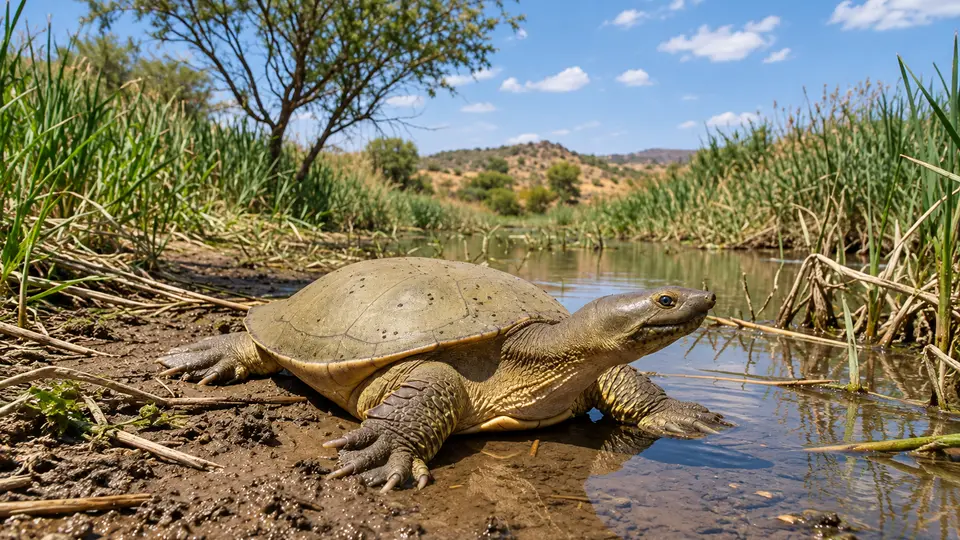
StellionStellionAfrican Softshell TurtleAfrican Softshell TurtleAnatolian Rock LizardAnatolian Rock Lizard
Animal groupReptilesAnimal groupReptilesAnimal groupReptiles
DestinationsTurkeyDestinationsTurkeyDestinationsTurkey
All wildlife destinations
Plan your trip

Find your next wildlife adventure

Compare destinations, shore programmes and dates with the animals and habitats you would love to see.

  • Naturalist-led shore excursions
  • Responsible wildlife watching
  • Small expedition ships

Newsletter

Take Blue Rides with you

Adventure cruise offers, last-minute deals and trip inspiration.

Free, unsubscribe anytime. Details: Privacy Policy

Partner with Blue Rides

Affiliate Program

Recommend adventure cruises and earn commission on every confirmed booking.

Share. Track. Earn.