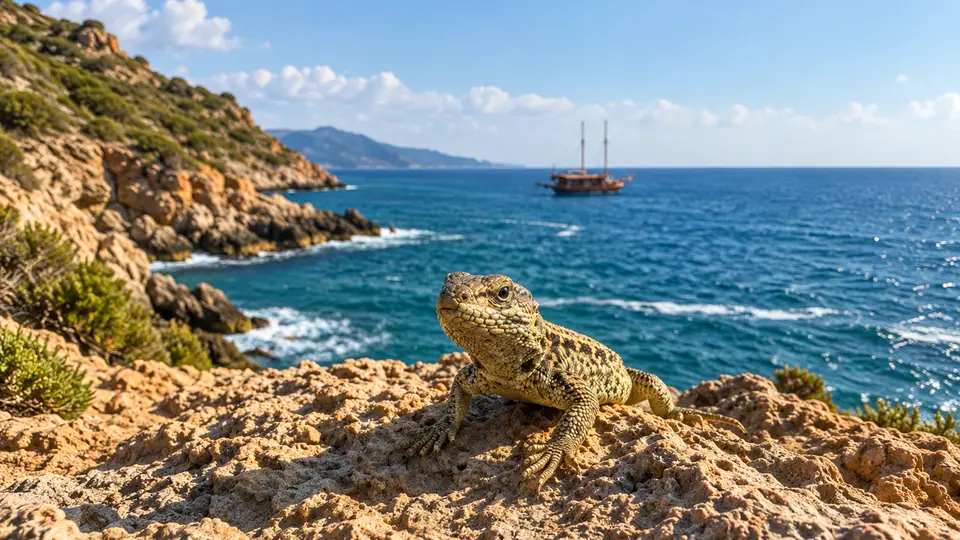
Anatolian Rock Lizard in its natural habitatAI-modified

Anatolian Rock LizardAnatololacerta anatolicaWhere and when to see them

Anatolian Rock Lizard at a glance

The Anatolian rock lizard is an agile lacertid associated with rocky landscapes in western Anatolia and nearby parts of the eastern Aegean. Its patterned back, long tail and strong climbing ability suit a life among fissures and broken stone. Classification within Anatololacerta has changed as closely related populations have been studied, so older records may refer to a broader species concept. Accurate locality information is therefore important when interpreting observations or conservation assessments.

Behaviour & reproduction

Size
20-25 cm (7.9-9.8 in) total length
Weight
Not reliably established
Lifespan
Up to 10 years
Status
Check current assessment

These lizards emerge to bask, warming themselves on exposed stone before making short foraging movements nearby. They retreat rapidly into cracks when alarmed and usually remain close to escape cover. Activity shifts with temperature, becoming concentrated in suitable morning or afternoon conditions during hot weather. Males may defend small areas and display toward rivals. Like many related lizards, they can shed the tail when seized, although replacement requires energy and does not recreate the original structure exactly. Thermoregulation is a critical daily activity, with lizards frequently adjusting their position to optimize body temperature by moving between sun and shade. Males exhibit head-bobbing and push-up displays during territorial encounters or courtship, signaling their presence and fitness to rivals and potential mates. The autotomized tail continues to twitch for a short time, serving as a distraction to predators while the lizard escapes.

Top wildlife locations

Turkey wildlife habitatAI-modified

Turkey

Western Anatolian rocky woodland edges and old stone walls offer plausible land observation. An inland excursion may be needed from the coast, and locality must be checked because similar related lizards occupy neighbouring regions.
Destinations describe the species' habitat, not guaranteed cruise stops. Some animals require an optional inland excursion or are found in restricted reserves.

Fun facts about the Anatolian Rock Lizard

  • Its genus name combines Anatolia with a reference to lizards.
  • Taxonomic revisions have narrowed the interpretation of some older records.
  • Rock fissures serve as both escape cover and thermal shelter.
  • A regenerated tail differs internally from the original vertebra-bearing tail.

Best time to see the Anatolian Rock Lizard

Spring and early autumn usually provide useful temperatures for watching active lizards in western Turkey. In midsummer, early morning is often preferable to midday heat. Elevation and local weather shift activity, and cooler upland sites may have a shorter observable season. In higher elevations, the active season may be significantly shorter, with lizards emerging later in spring and retreating earlier in autumn due to colder temperatures. Conversely, coastal regions may allow for earlier emergence and later activity periods. Optimal viewing times often coincide with the flowering of local flora, which can attract more insect prey.

Anatolian Rock Lizard: season matrix by destination

Travel and observation windows vary by region. Highlighted months are an orientation for planning, not confirmed sightings or a guarantee of access.

Turkey

These months offer plausible temperatures for lowland observation; elevation, weather and identification uncertainty prevent a universal species-specific viewing window.

JanFebMarAprMayJunJulAugSepOctNovDec
Cruise ships in Turkey

Where the Anatolian Rock Lizard lives

Rock outcrops, stone walls, boulder fields and rocky woodland edges provide shelter and basking surfaces. Suitable sites occur from lower elevations into upland terrain. Precise identification requires attention to geographic range because neighbouring regions support closely related Anatololacerta species. Anatolian rock lizards typically prefer sun-drenched, open rocky areas, frequently utilizing both natural rock formations and human-made stone structures like walls and ruins. Their presence is strongly linked to the availability of sufficient cracks and crevices for refuge from predators and extreme temperatures. These microhabitats are critical for thermoregulation and safety.

What the Anatolian Rock Lizard eats

Small insects and other terrestrial arthropods form the main diet. Lizards search rock surfaces, crevices and adjacent vegetation for suitably sized prey. Feeding opportunities vary with temperature and local invertebrate activity, so sunny conditions alone do not necessarily produce sustained foraging. Beyond insects, their diet includes other small invertebrates such as spiders, snails, and isopods, reflecting an opportunistic feeding strategy tied to local abundance. Juveniles typically consume smaller prey items, gradually expanding their diet as they grow. They are primarily visual hunters, relying on movement to detect prey.

Species at a glance

Common name
Anatolian Rock Lizard
Scientific name
Anatololacerta anatolica
Animal group
Reptiles
Size
20-25 cm (7.9-9.8 in) total length
Weight
Not reliably established
Lifespan
Up to 10 years
Status
Check current assessment
Identification
Its mottled lacertid pattern and long tail resemble other Anatololacerta, so locality and detailed scalation are more reliable than colour alone for separating related species. While colour can vary, a key identification feature for Anatololacerta anatolica is the often pale, sometimes blue or green, ventral side that extends to the throat. The number and arrangement of dorsal scales, particularly around the collar and head shields, are crucial for distinguishing it from very similar species in adjacent ranges. Pay attention to the pattern of spots or reticulations on the back, which can be species-specific.

Anatolian Rock Lizard: frequently asked questions

Where can I see the Anatolian Rock Lizard?
Turkey. Wait quietly beside rocky habitat and let lizards emerge rather than lifting stones or probing cracks. Never catch one by the tail. Use stable paths, since following a retreating lizard across loose rock risks injury and disturbance. Approaching slowly and minimizing sudden movements will increase the chances of observing natural lizard behaviour. Binoculars can be very helpful for detailed observation from a respectful distance without causing disturbance. Look for slight movements or flashes of colour among the rocks, especially on sunny rock faces.
When is the best time to see the Anatolian Rock Lizard?
Spring and early autumn usually provide useful temperatures for watching active lizards in western Turkey. In midsummer, early morning is often preferable to midday heat. Elevation and local weather shift activity, and cooler upland sites may have a shorter observable season. In higher elevations, the active season may be significantly shorter, with lizards emerging later in spring and retreating earlier in autumn due to colder temperatures. Conversely, coastal regions may allow for earlier emergence and later activity periods. Optimal viewing times often coincide with the flowering of local flora, which can attract more insect prey.
How big does the Anatolian Rock Lizard get?
20-25 cm (7.9-9.8 in) total length. Adult weight: Not reliably established. Size varies with age, sex and population.
How should I behave around the Anatolian Rock Lizard?
Wait quietly beside rocky habitat and let lizards emerge rather than lifting stones or probing cracks. Never catch one by the tail. Use stable paths, since following a retreating lizard across loose rock risks injury and disturbance. Approaching slowly and minimizing sudden movements will increase the chances of observing natural lizard behaviour. Binoculars can be very helpful for detailed observation from a respectful distance without causing disturbance. Look for slight movements or flashes of colour among the rocks, especially on sunny rock faces.
What does the Anatolian Rock Lizard eat?
Small insects and other terrestrial arthropods form the main diet. Lizards search rock surfaces, crevices and adjacent vegetation for suitably sized prey. Feeding opportunities vary with temperature and local invertebrate activity, so sunny conditions alone do not necessarily produce sustained foraging. Beyond insects, their diet includes other small invertebrates such as spiders, snails, and isopods, reflecting an opportunistic feeding strategy tied to local abundance. Juveniles typically consume smaller prey items, gradually expanding their diet as they grow. They are primarily visual hunters, relying on movement to detect prey.
Are wildlife sightings guaranteed on an adventure cruise?
No. Animals move freely and routes, weather, access restrictions and local conditions influence every outing. Confirm the actual itinerary and shore program before booking.

Compare wildlife in the same destinations

Explore other reptiles recorded in these destinations. Similar surroundings do not mean the animals share the same habits or viewing season.

Species comparison by animal group and destination
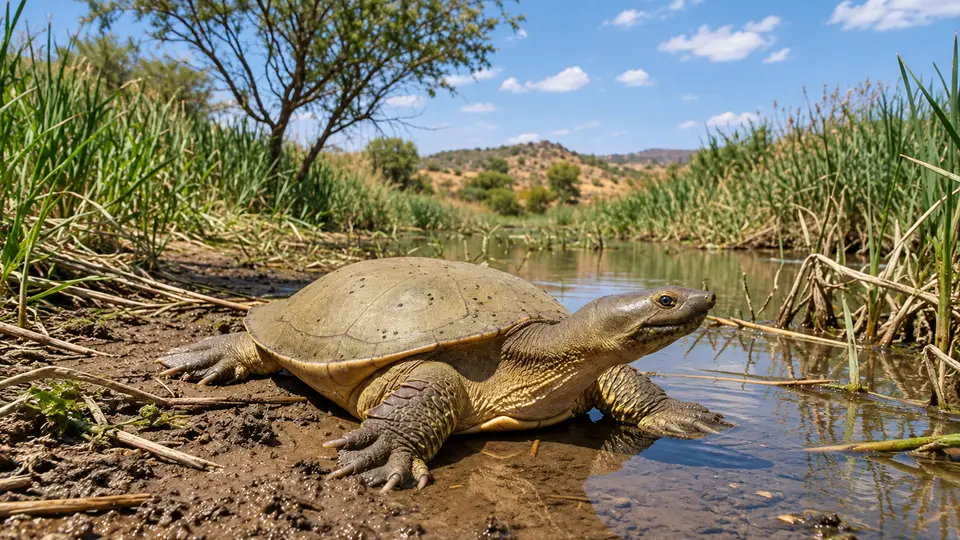
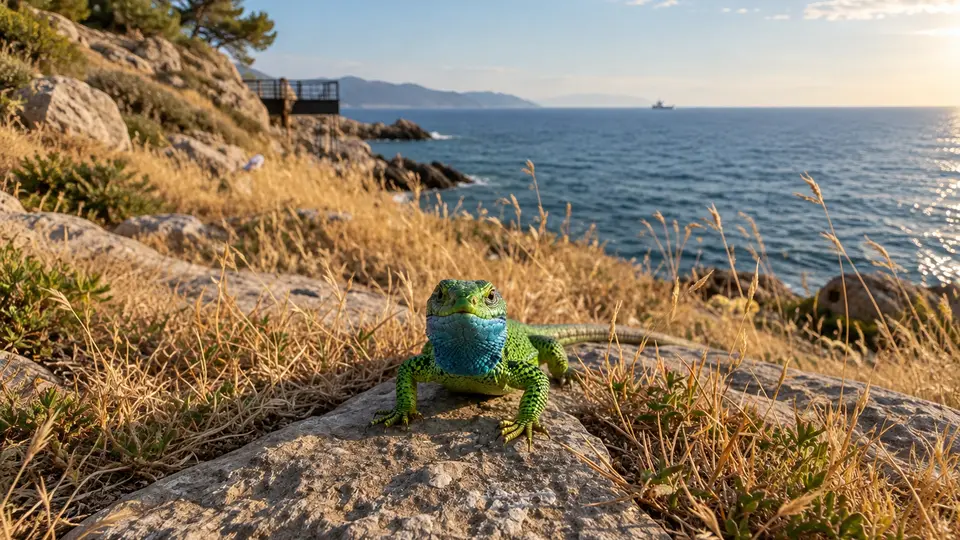
Anatolian Rock LizardAI-modifiedAnatolian Rock LizardAfrican Softshell TurtleAI-modifiedAfrican Softshell TurtleBalkan Green LizardAI-modifiedBalkan Green Lizard
Animal groupReptilesAnimal groupReptilesAnimal groupReptiles
DestinationsTurkeyDestinationsTurkeyDestinationsTurkey
Scientific nameAnatololacerta anatolicaScientific nameScientific name
All wildlife destinations
AI-modified
Plan your trip

Find your next wildlife adventure

Compare destinations, shore programs and dates with the animals and habitats you would love to see.

  • Naturalist-led shore excursions
  • Responsible wildlife watching
  • Small expedition ships