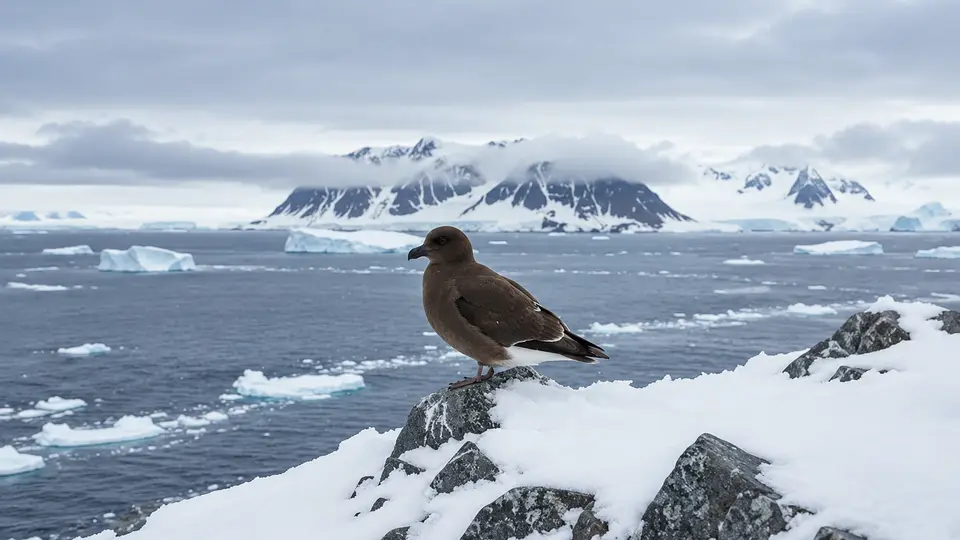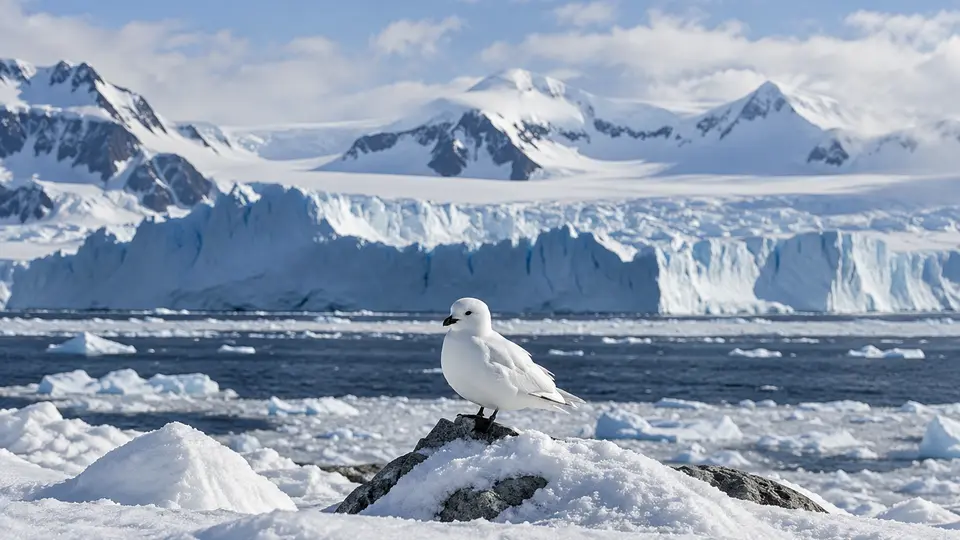
Snow Petrel in its natural habitat, AI illustration

Snow PetrelPagodroma niveaWhere and when to see them

Snow Petrel at a glance

The snow petrel is an entirely white Antarctic seabird with black eyes and a small black bill. Closely associated with sea ice, it travels between marine feeding grounds and nests hidden in rocky cavities. Some colonies lie surprisingly far inland, requiring long journeys to reach food. Its clean plumage can make it difficult to follow against snow or bright ice, while its graceful flight is often conspicuous against dark cliffs and water.

Behaviour & reproduction

Size
30-40 cm long; 75-95 cm wingspan
Weight
240-460 g
Lifespan
Not reliably established
Status
Least Concern

Snow petrels fly with quick wingbeats and buoyant glides, often moving low above ice-strewn water. At breeding colonies, pairs occupy sheltered rock cavities and exchange soft calls. Both parents share incubation of a single egg and later feed the chick. When threatened at a nest, adults or chicks can eject defensive stomach oil, a strong reason to keep well away from occupied crevices. Snow petrels exhibit colonial breeding, often forming small to large colonies in remote and inaccessible locations. During foraging flights, they often skim the water surface, performing graceful, arcing maneuvers. Adults display strong fidelity to their breeding sites, returning to the same nests year after year.

Top wildlife locations

Antarctica wildlife habitat

Antarctica

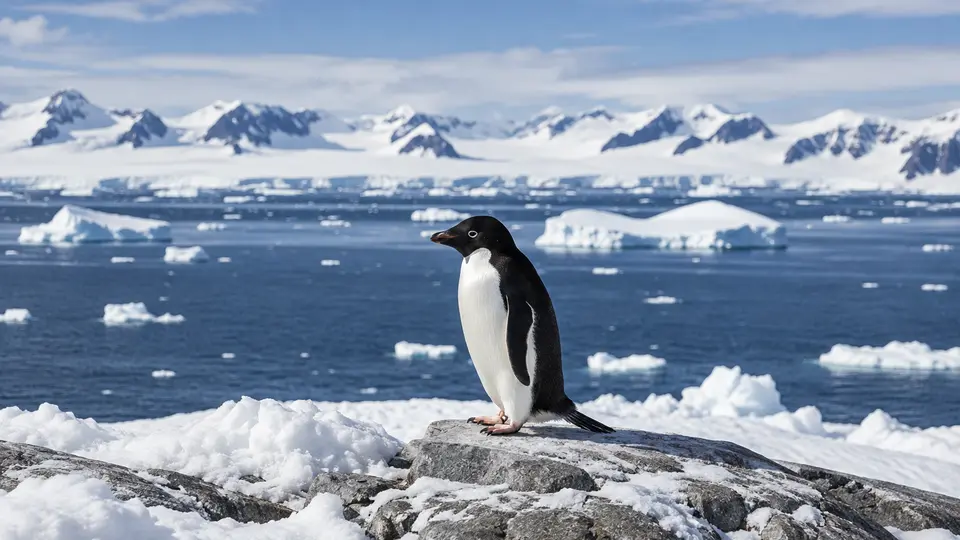
Ice-fringed coastal waters and rocky cliffs offer plausible distant shore or deck views. Many nesting colonies are remote or inaccessible, and visitors should not seek entry to breeding crevices.
Destinations describe the species' habitat, not guaranteed cruise stops. Some animals require an optional inland excursion or are found in restricted reserves.

Fun facts about the Snow Petrel

  • It is one of the few birds recorded breeding deep inland in Antarctica.
  • A pair normally lays a single egg.
  • Defensive stomach oil can foul an intruder's plumage.
  • Like other petrels, it has tubular nostrils on its bill.

Best time to see the Snow Petrel

November through March is the main practical Antarctic visitor window and overlaps the breeding period. Birds can be encountered near suitable ice habitat during these months, but route, visibility and changing pack ice strongly influence opportunities for distant observation. Prime viewing opportunities occur during the austral summer when adults are actively breeding, from November to March. Early season expeditions may witness courtship and nest selection, while later trips offer chances to see chicks being fed. Weather conditions and sea ice extent can greatly influence accessibility to their typical habitats.

Snow Petrel: season matrix by destination

Travel and observation windows vary by region. Highlighted months are an orientation for planning, not confirmed sightings or a guarantee of access.

Antarctica

The months describe the usual visitor season and broad breeding overlap; ice conditions and itinerary determine access, and no particular colony visit is implied.

JanFebMarAprMayJunJulAugSepOctNovDec
Cruise ships in Antarctica

Where the Snow Petrel lives

The species uses Antarctic pack ice, ice edges and nearby cold ocean waters. Nesting takes place in rock cracks, boulder fields and cliffs on coastal sites and inland nunataks. Suitable cavities offer protection from wind, snow accumulation and potential predators. The species shows a high affinity for sea ice, often found far into the pack ice zone. Its preference for ice makes it one of the most southerly breeding birds, with some colonies over 300 kilometers inland. They create nests in sheltered spots within rocky outcrops on remote islands and the Antarctic continent.

What the Snow Petrel eats

Antarctic silverfish, krill and other small marine animals form much of the diet. Birds collect prey around openings and edges in sea ice and may also scavenge. Food availability shifts with ice conditions and access to productive feeding areas. Snow petrels filter surface water for prey using lamellae inside their bills, a method particularly effective for krill. They are opportunistic feeders and have been observed foraging near seals and whales, capitalizing on disturbed prey. Their diet composition can vary geographically and seasonally depending on the abundance of prey species.

Species at a glance

Common name
Snow Petrel
Scientific name
Pagodroma nivea
Animal group
Birds
Size
30-40 cm long; 75-95 cm wingspan
Weight
240-460 g
Lifespan
Not reliably established
Status
Least Concern
Identification
Its completely white plumage combined with black eyes and a small black bill separates the snow petrel from other Antarctic petrels and from the stockier, pigeonlike sheathbills. The snow petrel's completely white body plumage, including underwings, distinguishes it from the partially white plumage of other petrel species like the Cape petrel. Its short, black, conical bill and small, dark eyes are key features, providing a stark contrast against its pristine white feathers. Juveniles resemble adults, but may have a faint dusky wash on the head and neck.

Snow Petrel: frequently asked questions

Where can I see the Snow Petrel?
Antarctica. Use binoculars from shore or deck, keeping clear of nesting crevices. Never provoke defensive oil-spitting, and avoid walking beneath occupied ledges or following birds into fragile, restricted rocky breeding areas. When viewing from a ship, scan ice floes and the sea surface for their distinctive white forms against the blue-grey water or ice. From zodiacs, maintain a respectful distance from nesting sites to avoid disturbing the birds, particularly during the breeding season. Binoculars are essential for observing their delicate features and movements from a distance.
When is the best time to see the Snow Petrel?
November through March is the main practical Antarctic visitor window and overlaps the breeding period. Birds can be encountered near suitable ice habitat during these months, but route, visibility and changing pack ice strongly influence opportunities for distant observation. Prime viewing opportunities occur during the austral summer when adults are actively breeding, from November to March. Early season expeditions may witness courtship and nest selection, while later trips offer chances to see chicks being fed. Weather conditions and sea ice extent can greatly influence accessibility to their typical habitats.
How big does the Snow Petrel get?
30-40 cm long; 75-95 cm wingspan. Adult weight: 240-460 g. Size varies with age, sex and population.
How should I behave around the Snow Petrel?
Use binoculars from shore or deck, keeping clear of nesting crevices. Never provoke defensive oil-spitting, and avoid walking beneath occupied ledges or following birds into fragile, restricted rocky breeding areas. When viewing from a ship, scan ice floes and the sea surface for their distinctive white forms against the blue-grey water or ice. From zodiacs, maintain a respectful distance from nesting sites to avoid disturbing the birds, particularly during the breeding season. Binoculars are essential for observing their delicate features and movements from a distance.
What does the Snow Petrel eat?
Antarctic silverfish, krill and other small marine animals form much of the diet. Birds collect prey around openings and edges in sea ice and may also scavenge. Food availability shifts with ice conditions and access to productive feeding areas. Snow petrels filter surface water for prey using lamellae inside their bills, a method particularly effective for krill. They are opportunistic feeders and have been observed foraging near seals and whales, capitalizing on disturbed prey. Their diet composition can vary geographically and seasonally depending on the abundance of prey species.
Are wildlife sightings guaranteed on an adventure cruise?
No. Animals move freely and routes, weather, access restrictions and local conditions influence every outing. Confirm the actual itinerary and shore program before booking.

Compare wildlife in the same destinations

Explore other birds recorded in these destinations. Similar surroundings do not mean the animals share the same habits or viewing season.

Species comparison by animal group and destination
Snow PetrelSnow PetrelAdélie PenguinAdélie PenguinAntarctic PetrelAntarctic Petrel
Animal groupBirdsAnimal groupBirdsAnimal groupBirds
DestinationsAntarcticaDestinationsAntarcticaDestinationsAntarctica
All wildlife destinations
Plan your trip

Find your next wildlife adventure

Compare destinations, shore programs and dates with the animals and habitats you would love to see.

  • Naturalist-led shore excursions
  • Responsible wildlife watching
  • Small expedition ships

Newsletter

Take Blue Rides with you

Adventure cruise offers, last-minute deals and trip inspiration.

Free, unsubscribe anytime. Details: Privacy Policy

Partner with Blue Rides

Affiliate Program

Recommend adventure cruises and earn commission on every confirmed booking.

Share. Track. Earn.

Your footage, our stage

Send us your videos or pictures.

Captured remarkable nature or wildlife on your journey? Share it with us, we may feature it on Blue Rides.