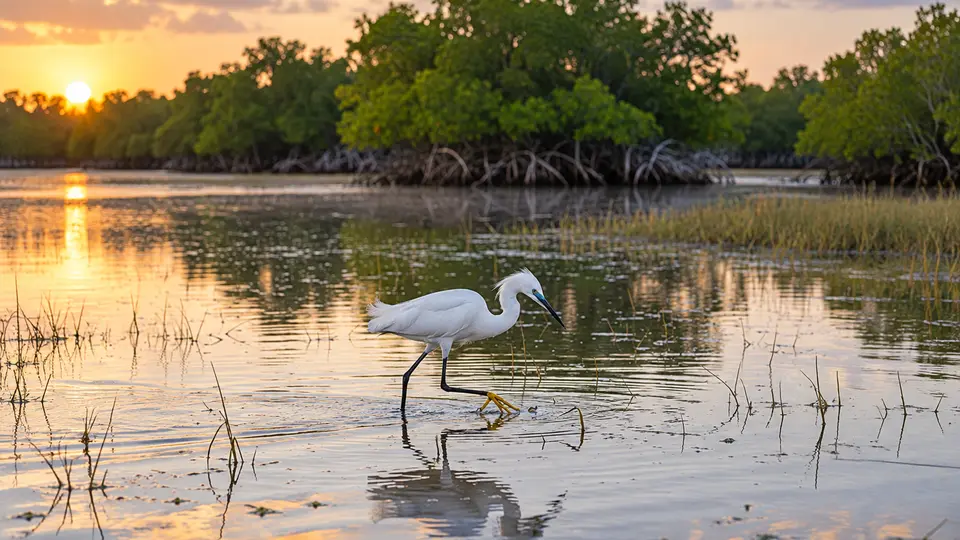
Snowy Egret in its natural habitatAI-modified

Snowy EgretEgretta thulaWhere and when to see them

Snowy Egret at a glance

The snowy egret is a small white heron of the Americas, familiar in Florida's shallow wetlands and sheltered coastal margins. Its black legs and bright yellow feet are especially useful field marks. Elegant breeding plumes once made it a major target of the feather trade, contributing to the growth of bird-protection campaigns. Today it benefits from protected nesting sites, but wetland loss, disturbance and altered water levels still affect local feeding and breeding opportunities.

Behaviour & reproduction

Size
56-66 cm (22-26 in) long
Weight
300-400 g (11-14 oz)
Lifespan
Not reliably established
Status
Least Concern

Snowy egrets are energetic hunters, often walking briskly, stirring the bottom with one foot or making short dashes after prey. They may feed near other wading birds that disturb small animals. Breeding occurs in colonies, frequently alongside other herons. Courtship includes plume displays and movements of the head and neck, while both parents help incubate eggs and feed the young at the nest. They are often seen foraging alone or in loose groups, but they roost communally, sometimes in large numbers. During breeding season, males perform elaborate dances and bowing displays to attract mates.

Top wildlife locations

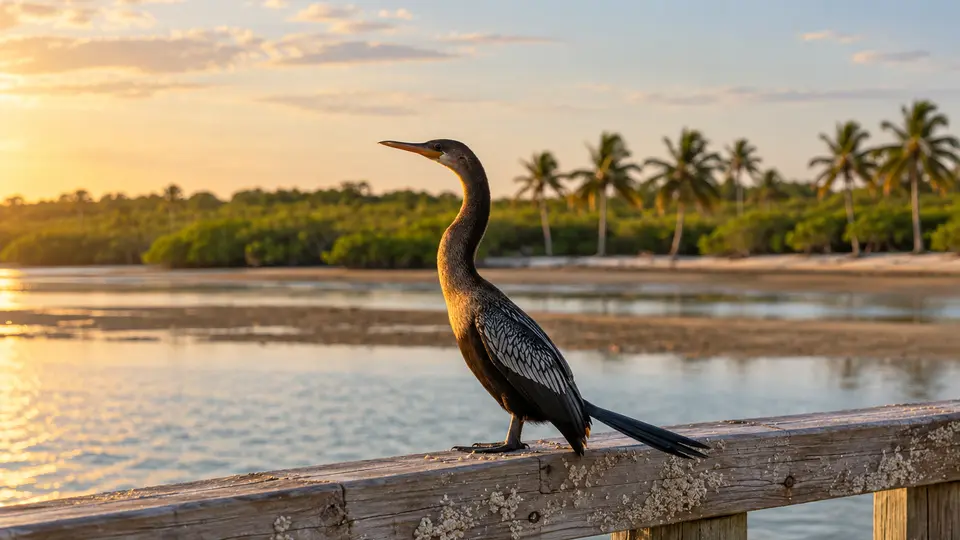
Florida wildlife habitatAI-modified

Florida

Public coastal boardwalks, tidal creek overlooks and mangrove-edge trails offer accessible viewing habitat. No inland excursion is essential, although freshwater wetland reserves provide additional opportunities away from crowded beaches.

Destinations describe the species' habitat, not guaranteed cruise stops. Some animals require an optional inland excursion or are found in restricted reserves.

Fun facts about the Snowy Egret

  • Its yellow feet can help disturb prey during feeding.
  • Breeding adults grow long ornamental plumes on the back and neck.
  • Feather-trade persecution helped inspire early American bird-protection efforts.
  • It often nests in mixed colonies with other wading birds.

Best time to see the Snowy Egret

Florida supports snowy egrets throughout the year. November through April often offers comfortable wetland walking and useful feeding concentrations, while spring and summer bring nesting activity. Local tides and water depth can matter more than the calendar. During colder months, some northern populations may migrate south, increasing concentrations in Florida. Early morning and late afternoon are generally the most active feeding times, offering prime viewing opportunities.

Snowy Egret: season matrix by destination

Travel and observation windows vary by region. Highlighted months are an orientation for planning, not confirmed sightings or a guarantee of access.

Florida

Year-round residency supports this window; cooler months are often more comfortable, while tides, water levels and temporary nesting-area closures shape actual observation opportunities.

JanFebMarAprMayJunJulAugSepOctNovDec
Cruise ships in Florida

Where the Snowy Egret lives

Salt marshes, mangrove margins, tidal creeks, lagoons and freshwater wetlands all support snowy egrets. They favor shallow water with accessible prey and nearby roosting or nesting cover. Suitable feeding conditions can change within hours as tides expose or flood mudflats. They are highly adaptable, utilizing both natural and artificial wetlands, including agricultural ditches and urban ponds. Their presence often indicates healthy, productive wetland ecosystems capable of supporting a variety of life.

What the Snowy Egret eats

Small fish, shrimp and other crustaceans are frequent prey, supplemented by aquatic insects, frogs and similar small animals. Foot stirring and rapid pursuit help flush concealed food. Diet varies between marine-influenced shorelines, freshwater marshes and seasonally flooded habitats. They employ various fishing techniques, sometimes 'canopy feeding' by shading the water with their wings to reduce glare and attract fish. Their keen eyesight allows them to spot even subtle movements of prey underwater.

Species at a glance

Common name
Snowy Egret
Scientific name
Egretta thula
Animal group
Birds
Size
56-66 cm (22-26 in) long
Weight
300-400 g (11-14 oz)
Lifespan
Not reliably established
Status
Least Concern
Identification
Unlike the larger great egret with its yellow bill, the snowy egret has a slender black bill, black legs and bright yellow feet. Juvenile snowy egrets typically have a duller bill and legs than adults, sometimes showing a greenish-yellow tinge on the back of the legs. In flight, their black legs trail straight back, contrasting with their white body.

Snowy Egret: frequently asked questions

Where can I see the Snowy Egret?
Florida. Watch from boardwalks or established banks without wading toward feeding birds. Keep clear of nesting colonies, never offer bait, and remain alert for alligators along Florida's freshwater and brackish wetland edges. From a distance, observe their characteristic bright yellow feet which stand out against dark muddy bottoms or shallow water. Note their relatively small size compared to other wading birds, which helps distinguish them in mixed flocks.
When is the best time to see the Snowy Egret?
Florida supports snowy egrets throughout the year. November through April often offers comfortable wetland walking and useful feeding concentrations, while spring and summer bring nesting activity. Local tides and water depth can matter more than the calendar. During colder months, some northern populations may migrate south, increasing concentrations in Florida. Early morning and late afternoon are generally the most active feeding times, offering prime viewing opportunities.
How big does the Snowy Egret get?
56-66 cm (22-26 in) long. Adult weight: 300-400 g (11-14 oz). Size varies with age, sex and population.
How should I behave around the Snowy Egret?
Watch from boardwalks or established banks without wading toward feeding birds. Keep clear of nesting colonies, never offer bait, and remain alert for alligators along Florida's freshwater and brackish wetland edges. From a distance, observe their characteristic bright yellow feet which stand out against dark muddy bottoms or shallow water. Note their relatively small size compared to other wading birds, which helps distinguish them in mixed flocks.
What does the Snowy Egret eat?
Small fish, shrimp and other crustaceans are frequent prey, supplemented by aquatic insects, frogs and similar small animals. Foot stirring and rapid pursuit help flush concealed food. Diet varies between marine-influenced shorelines, freshwater marshes and seasonally flooded habitats. They employ various fishing techniques, sometimes 'canopy feeding' by shading the water with their wings to reduce glare and attract fish. Their keen eyesight allows them to spot even subtle movements of prey underwater.
Are wildlife sightings guaranteed on an adventure cruise?
No. Animals move freely and routes, weather, access restrictions and local conditions influence every outing. Confirm the actual itinerary and shore program before booking.

Compare wildlife in the same destinations

Explore other birds recorded in these destinations. Similar surroundings do not mean the animals share the same habits or viewing season.

Species comparison by animal group and destination
Snowy EgretAI-modifiedSnowy EgretAnhingaAI-modifiedAnhingaBald EagleAI-modifiedBald Eagle
Animal groupBirdsAnimal groupBirdsAnimal groupBirds
DestinationsFloridaDestinationsFloridaDestinationsAlaska, Florida, New England
Scientific nameEgretta thulaScientific nameScientific name
All wildlife destinations
AI-modified
Plan your trip

Find your next wildlife adventure

Compare destinations, shore programs and dates with the animals and habitats you would love to see.

  • Naturalist-led shore excursions
  • Responsible wildlife watching
  • Small expedition ships