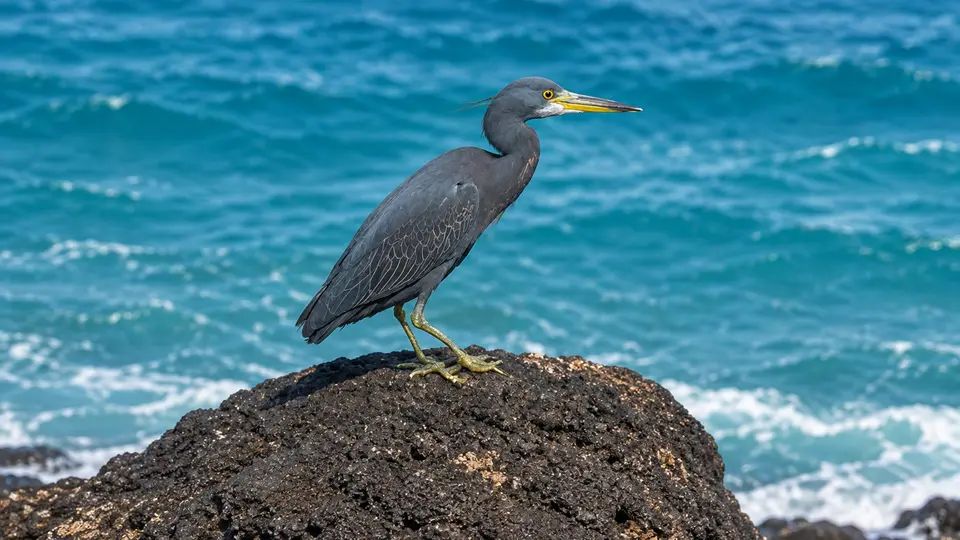
Pacific reef heron in its natural habitat, AI illustration

Pacific reef heron: where and when to see them

Egretta sacra

Pacific reef heron at a glance

The Pacific reef heron is a compact coastal heron adapted to feeding along wave-washed shores. Adults occur in dark grey and white forms, with their relative frequency varying geographically. Despite the name, it is not confined to coral reefs and readily uses rocky coasts and tidal margins. Its sturdy legs and purposeful movements suit a setting where small fish and crustaceans become briefly exposed between waves or as the tide retreats.

Behaviour & reproduction

Size
57-66 cm long
Weight
330-700 g
Lifespan
Not reliably established
Status
Least Concern

Usually feeding alone, a reef heron walks slowly, crouches or makes quick runs before striking at prey. It adjusts its position to waves and changing water levels, sometimes working a small stretch of shoreline repeatedly. Birds may rest on rocks, branches or sheltered coastal structures between feeding bouts. Nesting can occur singly or in loose groups, with platforms placed in trees, shrubs or protected rocky situations according to local conditions. This species exhibits two distinct feeding strategies: a 'stand and wait' approach and active 'strike and chase' tactics. It often holds its wings partially open or uses them to create shade to reduce glare and improve visibility for hunting.

Top wildlife locations

Thailand wildlife habitat

Thailand

Rocky coastal viewpoints, tidal pools and mangrove-fringed island shores offer plausible habitat. Birds are localized, and some nesting islands are inaccessible or protected rather than appropriate places for shore access.

Adventure cruises in Thailand
Destinations describe the species' habitat, not guaranteed cruise stops. Some animals require an optional inland excursion or are found in restricted reserves.

Fun facts about the Pacific reef heron

  • White and dark adults belong to the same species.
  • Both colour forms can occur within the same coastal population.
  • It often times feeding movements to the wash and retreat of waves.
  • Its range stretches across tropical and subtropical Indo-Pacific coastlines.

Best time to see the Pacific reef heron

On Thailand's Andaman coast, the generally drier November to April period offers easier shore access and clearer viewing conditions. Gulf coast weather differs. The state of the tide often matters more than the month, and resident birds may be encountered throughout the year. In Thailand, the availability of exposed reef flats during lower tides often provides prime feeding opportunities, irrespective of the time of year. Consider tidal charts for specific locations to maximize viewing potential.

Pacific reef heron: season matrix by destination

Travel and observation windows vary by region. Highlighted months are an orientation for planning, not confirmed sightings or a guarantee of access.

Thailand

This chiefly reflects favourable Andaman coast access; Gulf weather differs, and resident herons are not limited to these months.

JanFebMarAprMayJunJulAugSepOctNovDec
Cruise ships in Thailand

Where the Pacific reef heron lives

Rocky shores, reef flats, tidal pools, mangrove edges and small coastal islands are characteristic habitats. It also uses sandy or muddy margins where prey is available. Exposed feeding surfaces and nearby sheltered roosting or nesting places are particularly valuable. This species exhibits a strong preference for coastal habitats, rarely venturing far inland from salt or brackish water. Its distribution is generally restricted to the Indo-Pacific region, emphasizing its reliance on tropical and subtropical marine environments.

What the Pacific reef heron eats

Small fish, crabs and other marine crustaceans dominate the diet, supplemented by molluscs and other available shoreline animals. Most prey is seized in shallow pools or along the water's edge. Feeding opportunities shift rapidly with tidal exposure and wave action. It is an opportunistic feeder, readily consuming any small marine animals it can catch, often probing crevices with its bill. Chicks are typically fed regurgitated fish and crustaceans by both parents.

Species at a glance

Common name
Pacific reef heron
Scientific name
Egretta sacra
Animal group
Birds
Size
57-66 cm long
Weight
330-700 g
Lifespan
Not reliably established
Status
Least Concern
Identification
Its stocky build, relatively short yellowish-green legs and heavy bill separate it from the slimmer little egret, while dark adults are slate grey rather than white. Both dark and white morphs occur, sometimes in the same population, which can initially confuse observers. The dark morph is far more common, while the white morph is rarer and should not be confused with the Great Egret which is much larger and has black legs.

Pacific reef heron: frequently asked questions

Where can I see the Pacific reef heron?
Thailand. Scan tidal rocks from dry, stable ground and avoid following a feeding bird along its shoreline. Slippery algae and unexpected waves are significant hazards; keep clear of occupied nest ledges and island roosts. Be aware that this heron can be quite cryptic, especially the dark morph, blending well with volcanic rock or shadowed mangrove roots. Look for movement or its distinctive, often hunched, silhouette against the water.
When is the best time to see the Pacific reef heron?
On Thailand's Andaman coast, the generally drier November to April period offers easier shore access and clearer viewing conditions. Gulf coast weather differs. The state of the tide often matters more than the month, and resident birds may be encountered throughout the year. In Thailand, the availability of exposed reef flats during lower tides often provides prime feeding opportunities, irrespective of the time of year. Consider tidal charts for specific locations to maximize viewing potential.
How big does the Pacific reef heron get?
57-66 cm long. Adult weight: 330-700 g. Size varies with age, sex and population.
How should I behave around the Pacific reef heron?
Scan tidal rocks from dry, stable ground and avoid following a feeding bird along its shoreline. Slippery algae and unexpected waves are significant hazards; keep clear of occupied nest ledges and island roosts. Be aware that this heron can be quite cryptic, especially the dark morph, blending well with volcanic rock or shadowed mangrove roots. Look for movement or its distinctive, often hunched, silhouette against the water.
What does the Pacific reef heron eat?
Small fish, crabs and other marine crustaceans dominate the diet, supplemented by molluscs and other available shoreline animals. Most prey is seized in shallow pools or along the water's edge. Feeding opportunities shift rapidly with tidal exposure and wave action. It is an opportunistic feeder, readily consuming any small marine animals it can catch, often probing crevices with its bill. Chicks are typically fed regurgitated fish and crustaceans by both parents.
Are wildlife sightings guaranteed on an adventure cruise?
No. Animals move freely and routes, weather, access restrictions and local conditions influence every outing. Confirm the actual itinerary and shore program before booking.

Compare wildlife in the same destinations

Explore other birds recorded in these destinations. Similar surroundings do not mean the animals share the same habits or viewing season.

Species comparison by animal group and destination
Pacific reef heronPacific reef heronBrahminy kiteBrahminy kiteBrown-winged kingfisherBrown-winged kingfisher
Animal groupBirdsAnimal groupBirdsAnimal groupBirds
DestinationsThailandDestinationsIndonesia, Thailand, VietnamDestinationsThailand
All wildlife destinations
Plan your trip

Find your next wildlife adventure

Compare destinations, shore programs and dates with the animals and habitats you would love to see.

  • Naturalist-led shore excursions
  • Responsible wildlife watching
  • Small expedition ships

Newsletter

Take Blue Rides with you

Adventure cruise offers, last-minute deals and trip inspiration.

Free, unsubscribe anytime. Details: Privacy Policy

Partner with Blue Rides

Affiliate Program

Recommend adventure cruises and earn commission on every confirmed booking.

Share. Track. Earn.

Your footage, our stage

Send us your videos or pictures.

Captured beautiful landscapes or wildlife? Share your videos and pictures with us, we may feature them on Blue Rides.