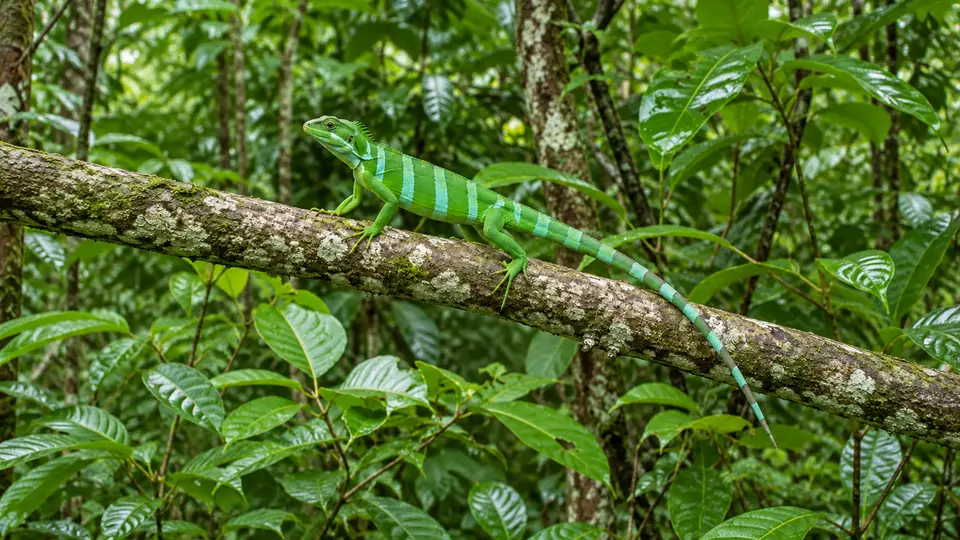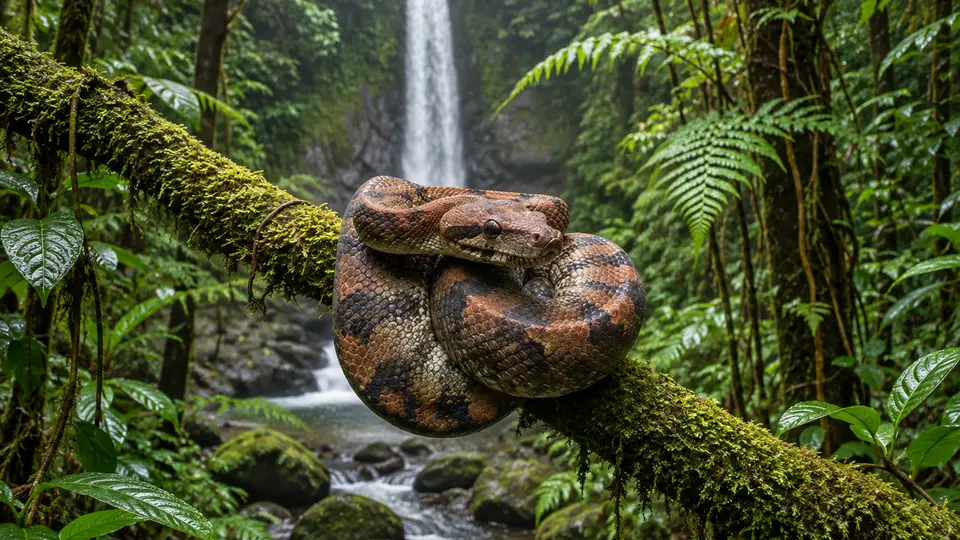
Pacific boa in its natural habitat

Pacific boaCandoia bibroniWhere and when to see them

Pacific boa at a glance

The Pacific boa is a nonvenomous snake native to several southwestern Pacific island groups, including Fiji. It is a muscular constrictor with highly variable coloration, ranging through browns, greys and reddish tones that blend with branches and leaf litter. Despite its broad island distribution, it is not an animal visitors should expect to encounter casually. Local populations depend on suitable cover and prey, and introduced predators can alter the island ecosystems supporting them.

Behaviour & reproduction

Size
1-2 m long
Weight
Not reliably established
Lifespan
Not reliably established
Status
Check current assessment

Pacific boas are mainly nocturnal and can use both trees and the ground. They move slowly through vegetation or wait in ambush for prey, relying on camouflage rather than conspicuous pursuit. A captured animal may bite defensively, despite lacking venom. Females give birth to live young rather than laying eggs. Daytime observations usually involve a resting snake concealed among branches, foliage or sheltered ground cover, where unnecessary handling would expose it to stress. This species exhibits a 'sit-and-wait' predatory strategy, relying on their cryptic coloration to remain undetected by unsuspecting prey. When threatened, they may coil tightly, hiss loudly, and strike to deter predators. Unlike egg-laying snakes, females retain eggs internally and give birth to live young, typically a clutch of 5-15 offspring.

Top wildlife locations

Fiji wildlife habitat

Fiji

Coastal woodland and forest-edge paths on islands within its range offer plausible habitat, but encounters are uncommon. A guided inland woodland excursion may be needed; open beaches and resort lawns are poor targets.
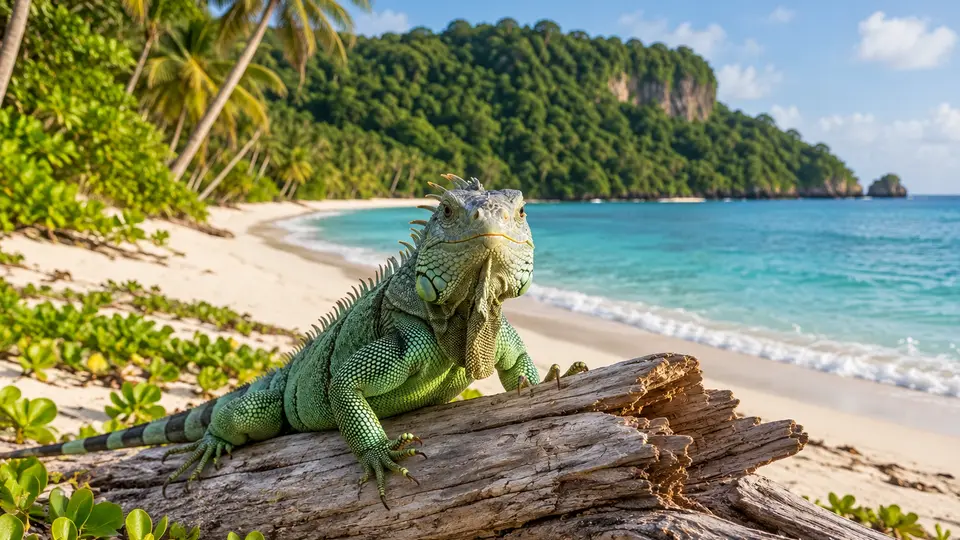
Destinations describe the species' habitat, not guaranteed cruise stops. Some animals require an optional inland excursion or are found in restricted reserves.

Fun facts about the Pacific boa

  • It gives birth to live young.
  • It captures prey by constriction rather than venom.
  • Its coloration can differ markedly between individuals.
  • The species name honors French zoologist Gabriel Bibron.

Best time to see the Pacific boa

There is no well-established tourist observation season for this secretive snake in Fiji. May to October generally offers more comfortable walking conditions, but does not establish higher boa activity. Local temperature, rainfall and time of day influence encounters, which remain unpredictable throughout the year. Encounters are largely opportunistic; however, their activity might increase during warmer, more humid periods following rain, as prey animals become more active. Night walks are generally more productive for observing these nocturnal snakes in their active state. There is no specific time of year that significantly increases the likelihood of an encounter due to their secretive nature.

Pacific boa: season matrix by destination

Travel and observation windows vary by region. Highlighted months are an orientation for planning, not confirmed sightings or a guarantee of access.

Fiji

This is a generally drier walking window, not a demonstrated boa activity peak; island distribution and nocturnal habits limit predictability.

JanFebMarAprMayJunJulAugSepOctNovDec
Cruise ships in Fiji

Where the Pacific boa lives

Forest, wooded edges, secondary vegetation and some cultivated landscapes provide suitable cover. On islands retaining coastal woodland, habitat can extend close to the shore, but open beaches are unsuitable. Encounters are more plausible along established forest paths than in heavily developed waterfront areas. They are often found near streams, in rocky outcrops, or under leaf litter and logs, which provide both shelter and hunting opportunities. While primarily terrestrial, they are also excellent climbers, allowing them to exploit arboreal habitats for foraging or resting. They can be found in a range of elevations from sea level to several hundred meters.

What the Pacific boa eats

Pacific boas take small vertebrates, including lizards, birds and mammals, subduing prey by constriction before swallowing it whole. Diet varies with island fauna and snake size. Younger animals generally consume smaller prey, while larger individuals can handle proportionately larger birds or mammals. Prey is detected using heat-sensing pits located on their upper labial scales. Young boas typically feed on skinks and geckos, while adults expand their diet to include a wider variety of birds and mammals. The specific composition of their diet can vary significantly across the different islands they inhabit, reflecting local prey availability.

Species at a glance

Common name
Pacific boa
Scientific name
Candoia bibroni
Animal group
Reptiles
Size
1-2 m long
Weight
Not reliably established
Lifespan
Not reliably established
Status
Check current assessment
Identification
Its thick body, broad head and irregular blotched pattern distinguish it from Fiji's much smaller, slender burrowing snakes and the paddle-tailed sea kraits found near coasts. Their scales are keeled and dull, providing a non-glossy appearance. Their coloration varies widely, ranging from uniform brown, grey, or black to complex patterns of blotches, bands, and spots. The head is distinct from the neck, and they possess heat-sensing pits along the upper jaw, though these are not typically visible from a distance.

Pacific boa: frequently asked questions

Where can I see the Pacific boa?
Fiji. Use a local naturalist on established woodland paths and watch without handling. Keep hands out of concealed branches and cavities, give any snake an escape route, and avoid trampling vegetation to obtain photographs. When searching, carefully inspect leaf litter, under logs, and in tree crevices, as they are masters of camouflage. Observe from a respectful distance to avoid disturbing the snake and allow it to continue its natural behaviors. Using a red-light headlamp can minimize disturbance during nocturnal searches.
When is the best time to see the Pacific boa?
There is no well-established tourist observation season for this secretive snake in Fiji. May to October generally offers more comfortable walking conditions, but does not establish higher boa activity. Local temperature, rainfall and time of day influence encounters, which remain unpredictable throughout the year. Encounters are largely opportunistic; however, their activity might increase during warmer, more humid periods following rain, as prey animals become more active. Night walks are generally more productive for observing these nocturnal snakes in their active state. There is no specific time of year that significantly increases the likelihood of an encounter due to their secretive nature.
How big does the Pacific boa get?
1-2 m long. Adult weight: Not reliably established. Size varies with age, sex and population.
How should I behave around the Pacific boa?
Use a local naturalist on established woodland paths and watch without handling. Keep hands out of concealed branches and cavities, give any snake an escape route, and avoid trampling vegetation to obtain photographs. When searching, carefully inspect leaf litter, under logs, and in tree crevices, as they are masters of camouflage. Observe from a respectful distance to avoid disturbing the snake and allow it to continue its natural behaviors. Using a red-light headlamp can minimize disturbance during nocturnal searches.
What does the Pacific boa eat?
Pacific boas take small vertebrates, including lizards, birds and mammals, subduing prey by constriction before swallowing it whole. Diet varies with island fauna and snake size. Younger animals generally consume smaller prey, while larger individuals can handle proportionately larger birds or mammals. Prey is detected using heat-sensing pits located on their upper labial scales. Young boas typically feed on skinks and geckos, while adults expand their diet to include a wider variety of birds and mammals. The specific composition of their diet can vary significantly across the different islands they inhabit, reflecting local prey availability.
Are wildlife sightings guaranteed on an adventure cruise?
No. Animals move freely and routes, weather, access restrictions and local conditions influence every outing. Confirm the actual itinerary and shore program before booking.

Compare wildlife in the same destinations

Explore other reptiles recorded in these destinations. Similar surroundings do not mean the animals share the same habits or viewing season.

Species comparison by animal group and destination
Pacific boaPacific boaBrachylophus bulabulaBrachylophus bulabulaCentral Fijian banded iguanaCentral Fijian banded iguana
Animal groupReptilesAnimal groupReptilesAnimal groupReptiles
DestinationsFijiDestinationsFijiDestinationsFiji
All wildlife destinations
Plan your trip

Find your next wildlife adventure

Compare destinations, shore programs and dates with the animals and habitats you would love to see.

  • Naturalist-led shore excursions
  • Responsible wildlife watching
  • Small expedition ships

Newsletter

Take Blue Rides with you

Adventure cruise offers, last-minute deals and trip inspiration.

Free, unsubscribe anytime. Details: Privacy Policy

Partner with Blue Rides

Affiliate Program

Recommend adventure cruises and earn commission on every confirmed booking.

Share. Track. Earn.

Your footage, our stage

Send us your videos or pictures.

Captured remarkable nature or wildlife on your journey? Share it with us, we may feature it on Blue Rides.