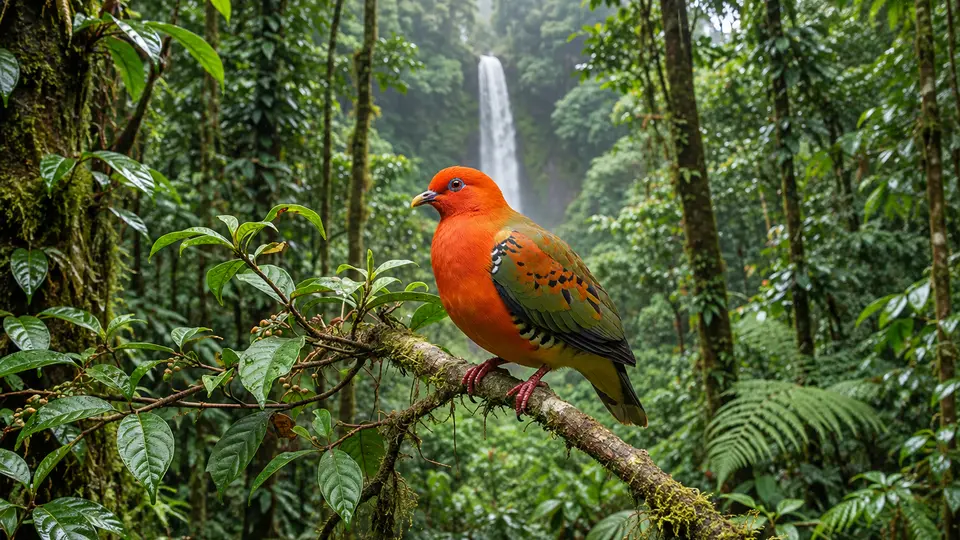
Orange fruit dove in its natural habitat, AI illustration

Orange fruit dove: where and when to see them

Ptilinopus victor

Orange fruit dove at a glance

The orange fruit dove is a striking pigeon endemic to Fiji. Adult males have an olive head and brilliant orange body, whereas females are predominantly green and much easier to overlook. It occurs on several northern Fijian islands rather than throughout the entire country. Despite the male's vivid plumage, canopy foliage can conceal it remarkably well. As a fruit eater, it contributes to seed movement within the forests and wooded landscapes it inhabits.

Behaviour & reproduction

Size
20-22 cm long
Weight
Not reliably established
Lifespan
Not reliably established
Status
Least Concern

Orange fruit doves spend much of their time in the canopy, moving between fruiting trees and resting quietly among leaves. They are often noticed by voice before they are seen, producing unusual short calls rather than the familiar cooing expected of many pigeons. Birds may feed alone or alongside others at productive trees. Males and females differ strongly in appearance, which can make a pair seem to represent two different species. Their cryptic plumage and quiet demeanor when not calling make them challenging to spot amidst dense foliage, often blending seamlessly with the canopy. Unlike many pigeons, their movements within the canopy can be deliberate and agile as they navigate branches to access fruit. The striking sexual dimorphism, where males are vibrantly orange and females are predominantly green, is among the most pronounced in the avian world and serves various ecological functions, including potential mate selection.

Top wildlife locations

Fiji wildlife habitat

Fiji

Forested slopes and wooded margins on Taveuni or Vanua Levu provide plausible viewing habitat. A guided land excursion is usually needed from the waterfront, and the species does not occur on every Fijian island.

Adventure cruises in Fiji
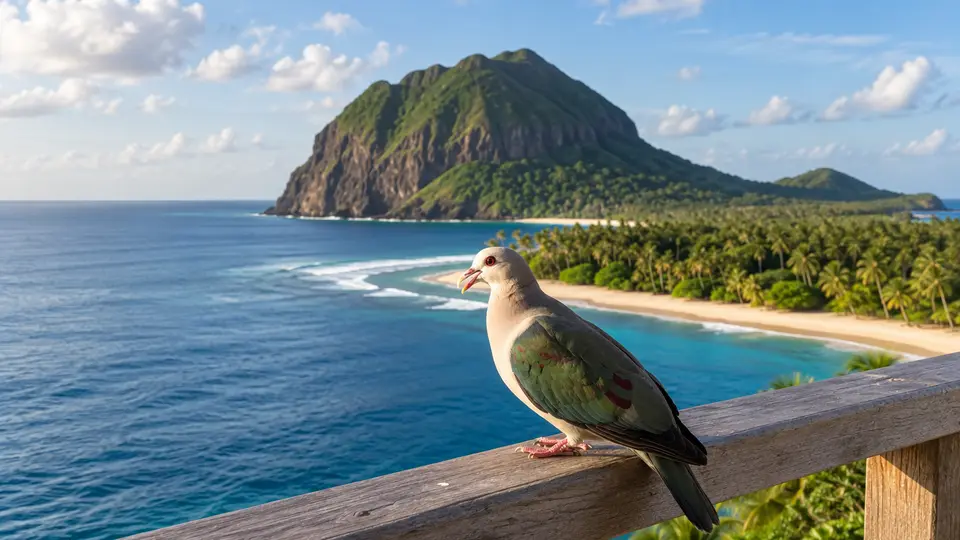
Destinations describe the species' habitat, not guaranteed cruise stops. Some animals require an optional inland excursion or are found in restricted reserves.

Fun facts about the Orange fruit dove

  • The male and female have dramatically different plumage.
  • The species occurs naturally only in Fiji.
  • Its calls can sound surprisingly unlike conventional pigeon coos.
  • Its fruit-based diet makes it a forest seed disperser.

Best time to see the Orange fruit dove

May through October often offers relatively practical conditions for forest walks in Fiji, although rain remains possible, especially on wetter islands. The species is resident, and fruit availability influences local detectability. This travel window should not be treated as a defined breeding season. During the austral winter months (May-October), cooler temperatures and reduced humidity can enhance comfort during extended forest exploration. While rain is always possible, this period generally offers more consistent weather for walking and wildlife viewing compared to the hot, wet season. Keep in mind that fruit availability, and thus dove detectability, can vary regionally and inter-annually.

Orange fruit dove: season matrix by destination

Travel and observation windows vary by region. Highlighted months are an orientation for planning, not confirmed sightings or a guarantee of access.

Fiji

These are generally convenient travel months, not a confirmed breeding peak; wet island climates and changing fruit supplies still affect observation.

JanFebMarAprMayJunJulAugSepOctNovDec
Cruise ships in Fiji

Where the Orange fruit dove lives

The species inhabits forest and other well-wooded habitats on islands including Vanua Levu and Taveuni. Fruiting trees and canopy continuity are important. It can occur in modified wooded landscapes, but open beaches, treeless resort grounds and dense urban waterfronts are poor habitat. They prefer primary and mature secondary forests, including lowland rain forest and montane forest up to 1,200 meters elevation. The species is restricted to the larger eastern islands of Fiji, and not found on the smaller western islands or the Lau group. Its reliance on extensive forested areas makes it vulnerable to habitat fragmentation and deforestation.

What the Orange fruit dove eats

Small fruits and berries form the diet, usually taken directly from trees and shrubs. Figs and other locally available fruiting plants can attract feeding birds. By swallowing fruits and transporting seeds, the dove supports ecological connections among patches of island woodland. Fruits are typically swallowed whole, aiding in the dispersal of seeds and contributing significantly to forest regeneration. While figs are a favored food, they also consume a variety of other small drupes and berries from native trees and vines. This specialized frugivory highlights their ecological role as key seed dispersers in the Fijian forest ecosystem.

Species at a glance

Common name
Orange fruit dove
Scientific name
Ptilinopus victor
Animal group
Birds
Size
20-22 cm long
Weight
Not reliably established
Lifespan
Not reliably established
Status
Least Concern
Identification
The adult male's orange body and olive head distinguish it from Fiji's golden and whistling fruit doves, while green females require closer attention to island range and plumage. The adult male's fiery orange plumage extends across most of its body, creating a striking contrast with its olive-green head and a small yellow patch at the vent. Females are primarily green but possess a distinctive greyish-green head and a yellowish wash on the belly, helping to differentiate them from other female fruit doves. Noting the specific island is crucial, as its range does not overlap with Fiji's other orange-colored bird, the Golden Fruit-Dove, which inhabits different islands.

Orange fruit dove: frequently asked questions

Where can I see the Orange fruit dove?
Fiji. Watch fruiting canopy from established trails with binoculars and a local guide. Avoid playback and nest disturbance; wet roots and steep tracks require careful footing even during relatively drier months. Listen for their distinctive, froglike 'wuk' or 'woot' calls emanating from the canopy, which often betrays their presence before they are seen. Patience is key; scan the upper branches of fruiting trees carefully with binoculars for movement or the tell-tale shape of a feeding bird. Early morning and late afternoon are often the most active times for foraging.
When is the best time to see the Orange fruit dove?
May through October often offers relatively practical conditions for forest walks in Fiji, although rain remains possible, especially on wetter islands. The species is resident, and fruit availability influences local detectability. This travel window should not be treated as a defined breeding season. During the austral winter months (May-October), cooler temperatures and reduced humidity can enhance comfort during extended forest exploration. While rain is always possible, this period generally offers more consistent weather for walking and wildlife viewing compared to the hot, wet season. Keep in mind that fruit availability, and thus dove detectability, can vary regionally and inter-annually.
How big does the Orange fruit dove get?
20-22 cm long. Adult weight: Not reliably established. Size varies with age, sex and population.
How should I behave around the Orange fruit dove?
Watch fruiting canopy from established trails with binoculars and a local guide. Avoid playback and nest disturbance; wet roots and steep tracks require careful footing even during relatively drier months. Listen for their distinctive, froglike 'wuk' or 'woot' calls emanating from the canopy, which often betrays their presence before they are seen. Patience is key; scan the upper branches of fruiting trees carefully with binoculars for movement or the tell-tale shape of a feeding bird. Early morning and late afternoon are often the most active times for foraging.
What does the Orange fruit dove eat?
Small fruits and berries form the diet, usually taken directly from trees and shrubs. Figs and other locally available fruiting plants can attract feeding birds. By swallowing fruits and transporting seeds, the dove supports ecological connections among patches of island woodland. Fruits are typically swallowed whole, aiding in the dispersal of seeds and contributing significantly to forest regeneration. While figs are a favored food, they also consume a variety of other small drupes and berries from native trees and vines. This specialized frugivory highlights their ecological role as key seed dispersers in the Fijian forest ecosystem.
Are wildlife sightings guaranteed on an adventure cruise?
No. Animals move freely and routes, weather, access restrictions and local conditions influence every outing. Confirm the actual itinerary and shore program before booking.

Compare wildlife in the same destinations

Explore other birds recorded in these destinations. Similar surroundings do not mean the animals share the same habits or viewing season.

Species comparison by animal group and destination
Orange fruit doveOrange fruit doveBarking imperial pigeonBarking imperial pigeonBrown BoobyBrown Booby
Animal groupBirdsAnimal groupBirdsAnimal groupBirds
DestinationsFijiDestinationsFijiDestinationsCosta Rica, Cape Verde, Egypt, Fiji, Polynesia
All wildlife destinations
Plan your trip

Find your next wildlife adventure

Compare destinations, shore programs and dates with the animals and habitats you would love to see.

  • Naturalist-led shore excursions
  • Responsible wildlife watching
  • Small expedition ships

Newsletter

Take Blue Rides with you

Adventure cruise offers, last-minute deals and trip inspiration.

Free, unsubscribe anytime. Details: Privacy Policy

Partner with Blue Rides

Affiliate Program

Recommend adventure cruises and earn commission on every confirmed booking.

Share. Track. Earn.

Your footage, our stage

Send us your videos or pictures.

Captured beautiful landscapes or wildlife? Share your videos and pictures with us, we may feature them on Blue Rides.